
Key Takeaways:
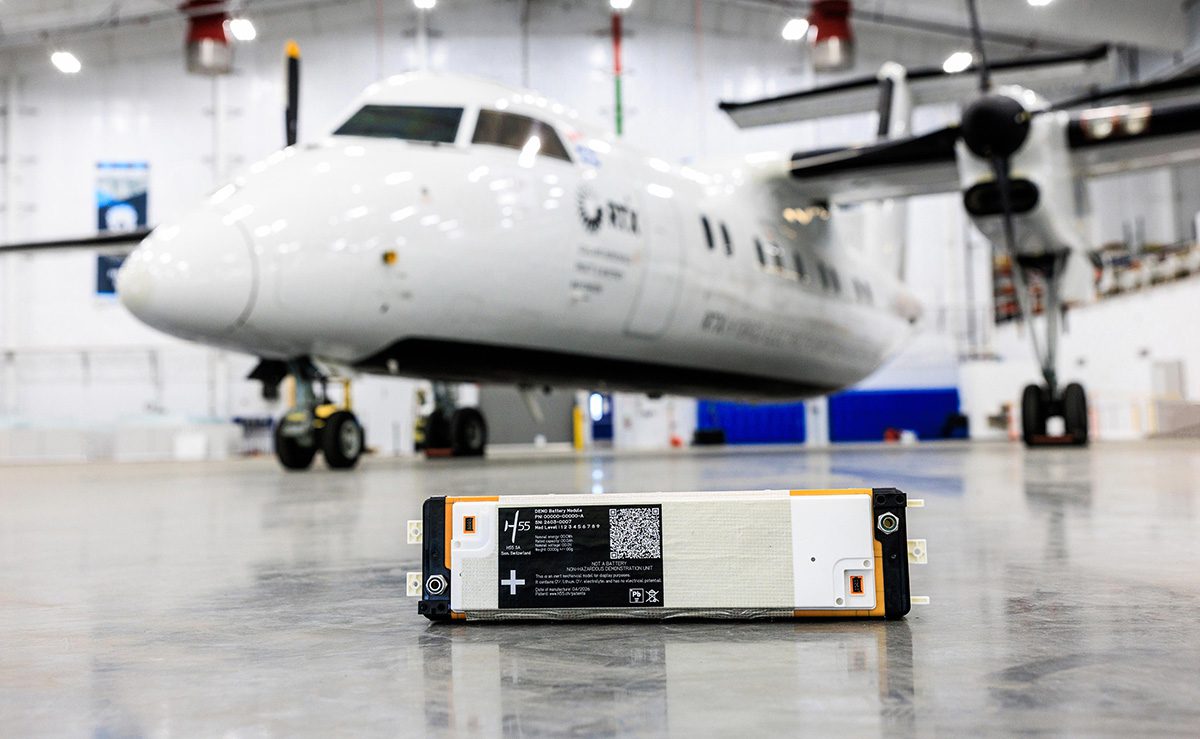
- H55 has delivered its Adagio propulsion battery modules to Pratt & Whitney Canada for the RTX Hybrid-Electric Flight Demonstrator.
- This marks the first delivery of production-conforming battery systems, not merely prototypes, to an active aerospace integration and flight-test program.
- H55 claims to be the first company to complete regulator-required aerospace battery certification testing, underpinning its commercial strategy.
- The battery architecture incorporates redundant safety, independent cell characterization, and rigorous testing tailored for aviation certification.
- With over 2,000 flight hours across multiple programs and zero battery-related incidents, H55 establishes a strong safety record critical for OEM confidence.
Pioneering Hybrid-Electric Aviation: H55 Delivers Certified Battery Modules
In a significant stride towards sustainable aviation, H55, a Swiss aerospace company, has officially delivered its advanced Adagio propulsion battery modules to Pratt & Whitney Canada. These crucial components are earmarked for the RTX Hybrid-Electric Flight Demonstrator, marking a pivotal moment in the development of hybrid-electric aircraft technology. This delivery represents a crucial milestone, showcasing the maturation of electric propulsion systems within the rigorous framework of aerospace engineering.

The collaboration highlights a critical phase in the journey towards cleaner flight, where innovative battery solutions are indispensable. The modules supplied by H55 are not merely experimental prototypes but production-conforming systems, a distinction that carries immense weight in the highly regulated aerospace industry. This achievement underscores H55’s capabilities in meeting stringent manufacturing and quality control standards essential for flight integration.
Breaking Ground with Production-Conforming Systems
The distinction between engineering prototypes and production-conforming systems is fundamental in aviation. While prototypes are vital for initial concept validation and testing, production-conforming systems signify hardware manufactured to the exact specifications and processes required for eventual certification and commercial deployment. Their delivery to an active flight-test program signals a mature stage of development, where the technology is ready for real-world application under operational conditions.
This achievement by H55 demonstrates its readiness to transition from research and development to supplying flight-ready components. Aerospace Original Equipment Manufacturers (OEMs) demand this level of maturity before integrating supplier hardware into certified flight programs, ensuring the highest standards of safety and reliability are met from the outset. This careful progression is a cornerstone of aerospace battery certification processes globally.

Setting the Standard for Aerospace Battery Certification
H55 has positioned itself at the forefront of electric aviation innovation by claiming to be the first company to successfully complete regulator-required propulsion battery certification testing. This extensive testing regime is a prerequisite for any electrical system destined for aircraft, covering a broad spectrum of safety, performance, and environmental compliance parameters. The successful completion of such rigorous certification is a testament to the robustness and reliability of H55’s battery technology.
This critical milestone not only validates the technical capabilities of H55’s Adagio modules but also forms the bedrock of its commercial strategy. The ability to navigate and successfully clear the complex hurdles of aerospace battery certification offers a significant competitive advantage, instilling confidence in potential partners and accelerating the integration of their systems into future aircraft designs. It provides a credible pathway for other companies to follow as the industry evolves.
Engineered for Uncompromising Safety and Reliability
The inherent demands of aviation necessitate an unparalleled focus on safety. H55’s battery architecture has been meticulously developed with these certification constraints in mind, integrating multiple layers of safety and reliability features. These design philosophies are crucial for mitigating risks and ensuring stable operation even under challenging flight conditions.
Key architectural principles include redundant safety architectures, which ensure that in the event of a component failure, backup systems can maintain critical operations. Independent cell characterization allows for precise monitoring and management of individual battery cells, optimising performance and detecting anomalies early. Furthermore, rigorous incoming screening processes for materials and components, alongside comprehensive worst-case failure scenario testing, are aligned precisely with regulator requirements, demonstrating a proactive approach to flight safety.
Such a detailed and safety-centric design methodology is paramount in an industry where even minor failures can have catastrophic consequences. The commitment to these stringent engineering principles is a non-negotiable aspect of achieving aerospace battery certification and securing the trust of aviation authorities and manufacturers alike.
A Track Record of Unblemished Flight Safety
One of H55’s most compelling competitive assets is its exceptional safety record. The company reports having accumulated more than 2,000 flight hours across multiple aircraft programs without a single battery-related incident. This extensive flight time, coupled with an impeccable safety history, provides invaluable validation of their technology’s reliability and resilience in operational settings.
This proven track record is instrumental in OEM qualification discussions, where manufacturers scrutinise every aspect of a supplier’s product and processes. A demonstrated history of safe operation in diverse flight conditions provides concrete evidence of reliability, significantly de-risking the integration of new technologies into complex aircraft systems. It directly addresses one of the primary concerns for any new aviation technology: its ability to perform safely and consistently under real-world pressures.
Industry Voices Affirming the Milestone
The significance of H55’s delivery and its approach to certification has been recognised by industry leaders. Jean Thomassin, Executive Director, New Product and Service Introduction at Pratt & Whitney Canada, underscored the importance of this development. He stated, “H55’s ability to deliver aviation-grade battery systems within a rigorous certification and production framework plays a crucial role in demonstrating hybrid-electric technology in flight.”
This statement reinforces the collaborative effort and the strategic importance of H55’s capabilities in advancing the broader agenda of hybrid-electric flight. It highlights that the successful demonstration of such technology hinges on the availability of robust, certified components that meet the exacting standards of aerospace. The partnership between H55 and Pratt & Whitney Canada, a division of RTX, exemplifies how innovation and stringent compliance can converge to push the boundaries of aviation.
The Path Ahead for Hybrid-Electric Aviation
The successful integration of H55’s production-conforming battery modules into the RTX Hybrid-Electric Flight Demonstrator marks a tangible step towards the commercial viability of electric and hybrid-electric aircraft. This development not only accelerates the testing phase for Pratt & Whitney Canada but also provides a blueprint for other companies navigating the complex landscape of aerospace battery certification.
As the aviation industry continues its journey towards decarbonisation, the role of reliable and certified electric propulsion systems will only grow. This milestone demonstrates that the technical challenges, though significant, are surmountable with dedicated engineering and a commitment to regulatory compliance. The lessons learned from this program will undoubtedly inform future designs and accelerate the adoption of sustainable flight technologies across the globe, paving the way for a new era of environmentally conscious air travel.
FAQ Section
What is the significance of H55’s delivery to Pratt & Whitney Canada?
The delivery marks H55’s first provision of production-conforming propulsion battery modules, rather than prototypes, to an active aerospace flight-test program. This signifies a major step towards the maturation and certification of hybrid-electric flight technology for future aircraft.
Why are ‘production-conforming systems’ important in aerospace?
Production-conforming systems are manufactured to final specifications and processes required for certification, unlike prototypes. This distinction is crucial because aerospace OEMs require this level of maturity before integrating hardware into certified flight programs, ensuring adherence to strict safety and reliability standards.
What does H55 claim about its aerospace battery certification?
H55 claims to be the first company to complete regulator-required propulsion battery certification testing. This pioneering achievement provides a foundational basis for its commercial positioning and demonstrates its ability to meet the stringent safety and performance standards of aviation authorities.
How does H55 ensure the safety of its battery architecture?
H55’s battery architecture is designed with redundant safety systems, independent cell characterization for optimal monitoring, incoming screening for quality control, and rigorous worst-case failure scenario testing. These measures are meticulously aligned with aerospace regulator requirements to ensure maximum safety and reliability in flight.
What is H55’s safety record with its battery systems?
H55 has accumulated over 2,000 flight hours across multiple aircraft programs with zero battery-related incidents. This robust safety record is a critical competitive asset, building trust with OEMs and regulators, and demonstrating the reliability and integrity of their propulsion battery modules for aviation applications.
What is the RTX Hybrid-Electric Flight Demonstrator?
The RTX Hybrid-Electric Flight Demonstrator is a program led by Pratt & Whitney Canada, part of RTX, aimed at advancing hybrid-electric propulsion technology for aircraft. It serves as a testbed for integrating and evaluating innovative solutions like H55’s battery modules to achieve more sustainable and efficient flight.