
KEY TAKEAWAYS
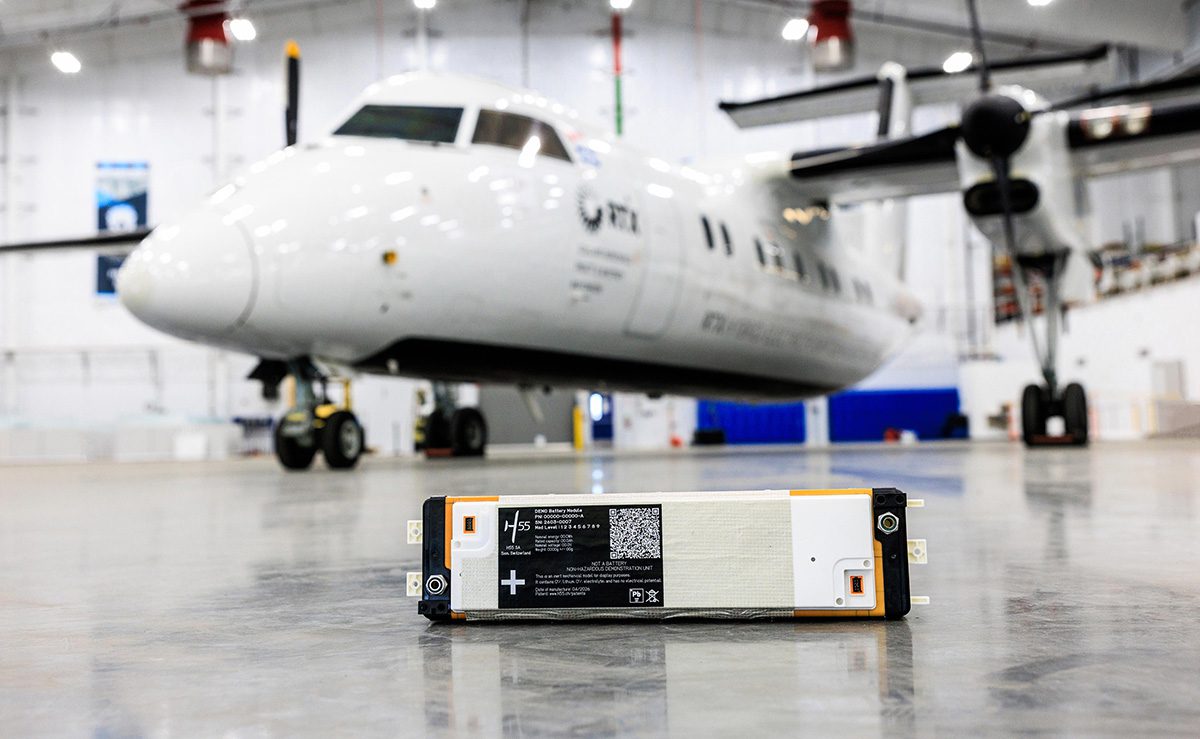
- H55 has supplied its Adagio propulsion battery modules to Pratt & Whitney Canada for the RTX Hybrid-Electric Flight Demonstrator.
- These are production-conforming systems, not prototypes, produced in a regulator-approved facility, signifying a critical step towards certified flight programs.
- H55 claims to be the first company to complete regulator-required propulsion battery certification testing, a milestone for commercial readiness.
- The company’s battery architecture emphasizes redundant safety, independent cell characterization, and rigorous failure testing, accumulating over 2,000 flight hours with zero battery-related incidents.
- This delivery underscores the growing maturity and trustworthiness of advanced battery technology for aerospace applications.
In a significant advancement for the future of sustainable aviation, H55, a Swiss pioneer in electric aviation solutions, has announced the delivery of its Adagio propulsion battery modules to Pratt & Whitney Canada. These state-of-the-art modules are specifically designated for integration into the RTX Hybrid-Electric Flight Demonstrator program, marking a pivotal moment in the industry’s pursuit of greener flight.

This delivery represents H55’s inaugural supply of production-conforming systems to an active aerospace integration and flight-test initiative. It highlights a critical transition from developmental prototypes to validated, flight-ready components, a benchmark keenly observed by leading aerospace original equipment manufacturers (OEMs).
Pioneering Certified Aerospace Propulsion Battery Modules
The propulsion battery modules supplied by H55 were not merely engineering prototypes but full production-conforming systems. This distinction is crucial in the highly regulated aerospace sector, where components must meet stringent quality and manufacturing standards before integration into a certified flight program. The modules were meticulously produced within a regulator-approved facility, underscoring adherence to the highest safety and operational protocols.
H55 asserts its unique position as the first company to successfully complete regulator-required propulsion battery certification testing. This significant achievement precedes the current delivery and establishes a robust foundation for the company’s commercial offerings in the electric aviation market.

Such rigorous testing and regulatory compliance are paramount for the widespread adoption of electric and hybrid-electric propulsion systems in aircraft, ensuring both reliability and the safety of flight operations.
Advanced Battery Architecture and Unrivaled Safety Record
The proprietary battery architecture developed by H55 has been engineered with the exacting certification constraints of electric and hybrid-electric propulsion squarely in mind. This innovative design incorporates multiple layers of safety and performance assurance, setting a new standard for aerospace applications.
Key features of this advanced architecture include redundant safety mechanisms, ensuring operational integrity even in the event of component failure. It also integrates independent cell characterization and incoming screening processes, meticulously evaluating each battery cell for optimal performance and consistency. Furthermore, the design undergoes rigorous worst-case failure scenario testing, aligning precisely with stringent regulator requirements to mitigate potential risks.
H55 proudly highlights its impressive safety record, having accumulated over 2,000 flight hours across a diverse portfolio of aircraft programs. Crucially, the company reports zero battery-related incidents throughout this extensive testing period. This impeccable safety track record is a core competitive asset, providing invaluable reassurance to OEMs during qualification discussions and bolstering confidence in the reliability of H55’s aerospace propulsion battery modules.
The Significance for Pratt & Whitney Canada’s Demonstrator
The collaboration with Pratt & Whitney Canada on the RTX Hybrid-Electric Flight Demonstrator represents a crucial step in validating hybrid-electric propulsion technology for commercial aviation. Flight demonstrators are instrumental platforms that allow aerospace companies to test and refine cutting-edge technologies in real-world flight conditions, bridging the gap between laboratory development and commercial application.
The integration of H55’s certified aerospace propulsion battery modules into this demonstrator program is a testament to their maturity and the confidence placed in H55’s engineering capabilities. It signifies a collective effort to advance towards more sustainable and efficient air travel solutions.
Jean Thomassin, Executive Director, New Product and Service Introduction at Pratt & Whitney Canada, acknowledged the pivotal role of H55’s contribution, stating, “H55’s ability to deliver aviation-grade battery systems within a rigorous certification and production framework plays a crucial role in demonstrating hybrid-electric technology in flight.” This statement underscores the strategic importance of H55’s regulatory compliance and production capabilities.
The Broader Impact on Electric Aviation
The delivery of these production-conforming aerospace propulsion battery modules marks a significant milestone not just for H55 and Pratt & Whitney Canada, but for the entire electric aviation industry. It demonstrates that advanced battery technology is progressing rapidly from conceptual designs and prototypes to certified, flight-ready components capable of powering future hybrid-electric aircraft.
This development paves the way for accelerated innovation in electric propulsion systems, potentially leading to quieter, more fuel-efficient, and environmentally friendly aircraft. The focus on robust safety architectures and extensive flight testing addresses key concerns within aviation regarding new power sources, building trust among regulators, airlines, and the flying public.
As the aerospace industry intensifies its efforts to decarbonize, the availability of certified and reliable battery modules like those from H55 will be essential. They are fundamental building blocks for the next generation of aircraft, from regional commuter planes to larger commercial jets incorporating hybrid-electric designs. The ongoing advancements in battery cell design, manufacturing, and supply chain management are critical to realizing this future.
The collaboration between specialized battery technology firms like H55 and established aerospace OEMs such as Pratt & Whitney Canada (a division of RTX) is crucial for translating innovative electric vehicle engineering into practical, safe, and certified aviation solutions.
Source: H55
Frequently Asked Questions (FAQ)
What is the significance of H55 delivering “production-conforming systems”?
Production-conforming systems are fully manufactured units that meet all design specifications and regulatory standards for intended use, unlike prototypes. For aerospace, this means the battery modules are built to the same strict quality and safety standards as components for certified aircraft, ready for integration into a flight program with a clear path to certification.
What is the RTX Hybrid-Electric Flight Demonstrator?
The RTX Hybrid-Electric Flight Demonstrator is a project led by Pratt & Whitney Canada, a division of RTX, aimed at testing and validating hybrid-electric propulsion technologies for future aircraft. It serves as a crucial platform to demonstrate the performance, safety, and efficiency of new power systems in real flight conditions.
Why is H55’s completion of “regulator-required propulsion battery certification testing” important?
Completing this testing signifies that H55’s propulsion battery modules have undergone and passed rigorous evaluations mandated by aviation authorities. This milestone is essential for commercial viability, as it proves the batteries meet the stringent safety and performance requirements necessary for aerospace applications, fostering trust for OEM integration.
What safety features are integrated into H55’s battery architecture?
H55’s battery architecture is designed with redundant safety systems, ensuring operational continuity. It also includes independent cell characterization and screening processes to guarantee individual cell quality, alongside comprehensive worst-case failure scenario testing. These features collectively enhance the overall safety and reliability required for flight.
How does H55’s safety record benefit its commercial positioning?
H55 has accumulated over 2,000 flight hours across various aircraft programs with zero battery-related incidents. This proven track record of safety and reliability is a powerful asset in discussions with aerospace OEMs, demonstrating the company’s expertise, trustworthiness, and compliance with the high safety standards expected in the aviation industry.