
Key Takeaways:
- ArcBest, a prominent integrated logistics company, is significantly expanding its evaluation of Tesla Semi Class 8 electric heavy-duty trucks for its ABF Freight less-than-truckload (LTL) operations.
- The move follows a successful 2025 pilot program where the Tesla Semi demonstrated positive driver feedback and an energy efficiency of approximately 1.55 kWh per mile, even on challenging routes like the Donner Pass.
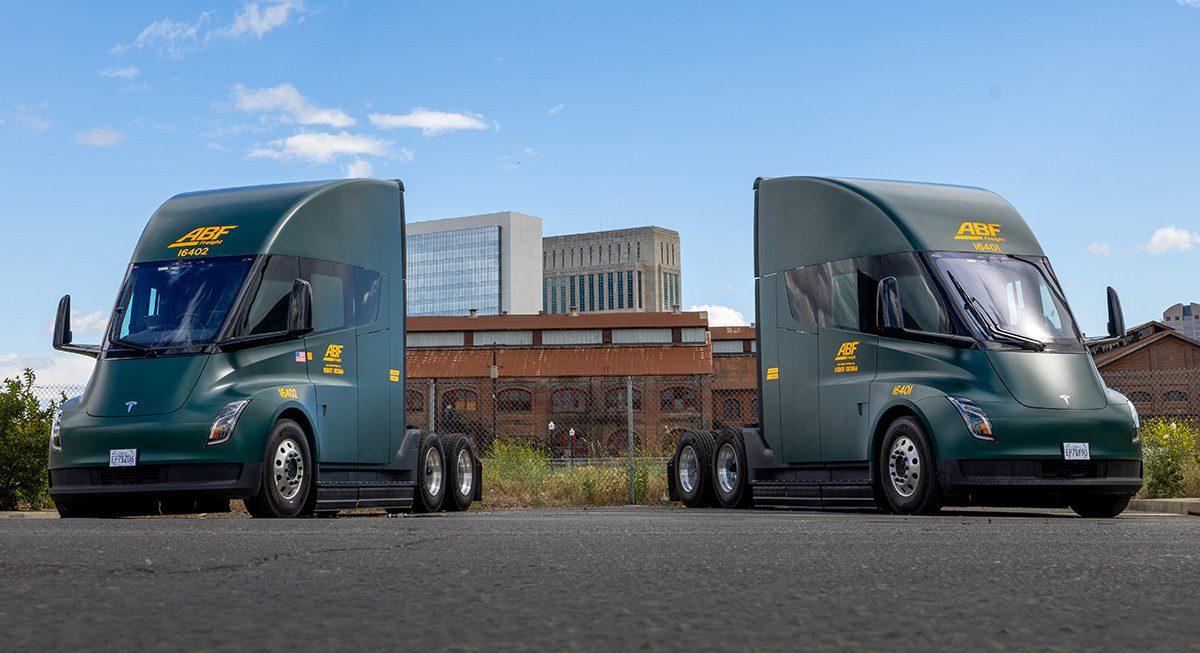
- ArcBest has acquired two Tesla Semis for this expanded testing phase, aiming to deploy them across a broader segment of its network.
- The evaluation will rigorously benchmark the electric trucks against the existing diesel fleet, focusing on crucial metrics such as total cost of ownership, operational efficiency, safety, and employee experience.
- This strategic investment underscores the growing industry trend towards fleet electrification and sustainable heavy-duty transport solutions, as logistics firms seek to reduce emissions and enhance operational performance.
ArcBest Pushes Forward with Tesla Semi Integration at ABF Freight
In a significant step towards modernizing its fleet and embracing sustainable transport solutions, ArcBest, a leading integrated logistics company, has announced a deepened commitment to evaluating the Tesla Semi Class 8 electric heavy-duty truck.

Through its less-than-truckload (LTL) carrier, ABF Freight, ArcBest has procured two Tesla Semis. This acquisition marks an expansion of the firm’s ongoing efforts to integrate advanced electric heavy-duty trucks into its extensive operational network.
Insights from the Initial Pilot Program
The decision to further invest in the Tesla Semi follows a comprehensive pilot program conducted in 2025. This initial evaluation primarily focused on the demanding Reno-Sacramento corridor, a route known for its varied terrain, including significant elevations.
During this critical pilot phase, the Tesla Semi demonstrated notable performance. It achieved an average energy efficiency of approximately 1.55 kilowatt-hours (kWh) per mile, a key metric for assessing operational viability in electric heavy-duty transport.

Crucially, driver feedback from the 2025 pilot was overwhelmingly positive. Operators highlighted several aspects that enhanced their experience, including superior visibility from the cab, improved comfort during long hauls, and robust overall performance.
The truck’s capability to operate effectively on challenging routes, such as the arduous 7,200-foot climb over the Donner Pass, particularly impressed the drivers, underscoring its potential for demanding logistics operations.
Expanding the Evaluation: A Deeper Dive into Performance
With the initial pilot yielding promising results, ABF Freight is now poised to embark on the next phase of testing. This involves deploying the newly acquired Tesla Semis across a broader segment of its network, moving beyond the concentrated corridor of the first trial.
The expanded deployment aims to gather additional, more comprehensive insights into the everyday performance of these electric heavy-duty trucks under various operating conditions and with a wider pool of driver groups.
ArcBest’s strategy involves a rigorous benchmarking process. The company plans to evaluate the electric trucks against its established diesel fleet, applying the same stringent approach to key performance indicators that guide all its fleet investments.
These critical benchmarks include total cost of ownership (TCO), operational efficiency, safety protocols, and employee experience. This holistic approach ensures that any future large-scale investment in electric heavy-duty trucks aligns seamlessly with the company’s long-term business objectives and service standards.
Strategic Vision: Sustainability Meets Operational Excellence
The commitment by ArcBest to meticulously evaluate the Tesla Semi reflects a broader industry trend among logistics firms towards fleet electrification. Companies are increasingly exploring electric heavy-duty trucks not only for their environmental benefits but also for potential operational advantages.
Reducing carbon emissions is a significant driver, aligning with global sustainability goals and corporate social responsibility initiatives. Beyond environmental concerns, electric vehicles offer the promise of lower operating costs through reduced fuel consumption and potentially less maintenance compared to traditional diesel engines.
Matt Godfrey, President of ABF Freight, articulated the strategic importance of this expanded evaluation. He stated, “Our 2025 pilot gave us valuable insight into how electric Class 8 equipment can perform in real-world LTL operations.”
Godfrey further elaborated on the company’s forward-looking approach: “Adding Tesla Semis to our lineup allows us to expand that across more lanes and operating conditions to evaluate whether heavy-duty electric vehicles meet the same standards for safety, reliability and performance across our existing fleet.” This statement underscores ArcBest’s methodical and data-driven approach to fleet transformation.
The Broader Landscape of Electric Logistics
The integration of electric heavy-duty trucks like the Tesla Semi represents a transformative shift in the logistics and transportation sector. While the transition presents challenges, particularly concerning charging infrastructure development, battery range, and initial investment costs, the long-term benefits are compelling.
Logistics companies are actively seeking solutions that can enhance operational efficiency, mitigate fluctuating fuel prices, and meet increasingly stringent environmental regulations. The performance of electric heavy-duty trucks in demanding LTL operations, as being assessed by ArcBest, will provide crucial data for the wider industry.
Successful deployment of electric trucks in varied networks could pave the way for accelerated adoption across the heavy-duty transport segment, fundamentally altering how goods are moved. It also highlights the growing maturity of electric vehicle technology beyond passenger cars, extending into the core of commercial freight.
As logistics providers like ArcBest continue to lead with rigorous testing and evaluation, the insights gained will be invaluable. They will not only shape ArcBest’s future fleet composition but also contribute significantly to the broader understanding of electric heavy-duty trucks’ capabilities and commercial viability in real-world applications, driving the future of sustainable freight.
FAQ Section
What is ArcBest’s role in the logistics industry?
ArcBest is an integrated logistics company that provides a wide range of services, including less-than-truckload (LTL) freight, truckload, supply chain management, and residential delivery. Its subsidiary, ABF Freight, is a prominent LTL carrier.
Why is ArcBest evaluating electric heavy-duty trucks like the Tesla Semi?
ArcBest is evaluating electric heavy-duty trucks to assess their potential for enhancing operational efficiency, reducing fuel costs, meeting sustainability goals, and ensuring long-term fleet viability in the evolving transportation landscape. This aligns with a broader industry trend towards fleet electrification.
What were the key findings from the 2025 Tesla Semi pilot?
The 2025 pilot revealed an average energy efficiency of approximately 1.55 kWh per mile and garnered positive driver feedback regarding visibility, comfort, and overall performance, particularly on challenging routes such as the 7,200-foot climb over the Donner Pass.
How will the expanded evaluation of the Tesla Semi be conducted?
The expanded evaluation will involve deploying two newly acquired Tesla Semis across a broader segment of ABF Freight’s network and with additional driver groups. Performance will be benchmarked against the existing diesel fleet, focusing on total cost of ownership, operational efficiency, safety, and employee experience.
What are the primary benefits and challenges of adopting electric heavy-duty trucks in logistics?
Primary benefits include potential reductions in fuel costs and emissions, and enhanced corporate sustainability. Key challenges involve establishing robust charging infrastructure, addressing battery range concerns for long-haul routes, and managing the initial capital investment required for fleet electrification.