
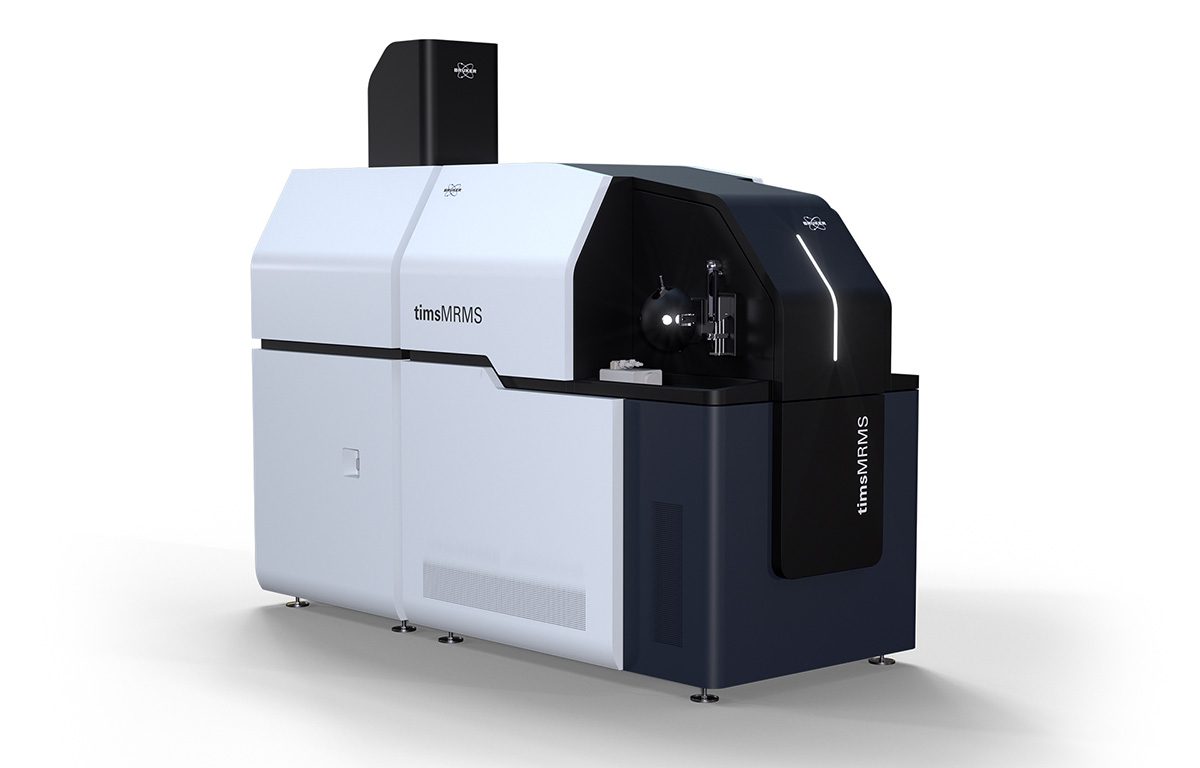
Key Takeaways
- Bruker has launched its innovative timsMRMS platform, a advanced mass spectrometry system.
- The platform uniquely combines trapped ion mobility spectrometry (TIMS) with magnetic resonance mass spectrometry (MRMS).
- It targets ultra-complex molecular mixtures found in next-generation battery materials and alternative fuels.
- The timsMRMS offers unprecedented molecular-level analysis for battery electrolyte formulations and the solid-electrolyte interphase (SEI).
- With resolution exceeding 10 million and sub-parts-per-million mass accuracy, it addresses critical challenges in energy research, including SEI degradation and biofuel characterisation.
Global analytical instrument major, Bruker, has introduced a groundbreaking solution for advanced materials science and energy research with the launch of its new timsMRMS platform. This state-of-the-art mass spectrometry system integrates trapped ion mobility spectrometry (TIMS) with magnetic resonance mass spectrometry (MRMS), marking a significant leap in the capability to characterise the ultra-complex molecular mixtures critical to next-generation battery materials and diverse biofuel applications.

The timsMRMS platform is poised to empower researchers in the rapidly evolving field of electric vehicle (EV) battery technology and sustainable energy. Its unique combination of technologies promises to unlock deeper insights into material performance, degradation pathways, and the development of more efficient and safer energy solutions.
Advancing Battery Technology with Precision Analysis
For battery researchers, the advent of the timsMRMS platform represents a pivotal development. It is specifically engineered to facilitate molecular-level analysis of critical components, including electrolyte formulations and, crucially, the degradation mechanisms of the solid-electrolyte interphase (SEI).
The SEI is a thin, dynamic layer that forms on the anode surface of a battery during its initial charge cycles. Despite its microscopic nature, the SEI exerts a disproportionately large influence on the battery’s overall performance, directly impacting its capacity fade, intrinsic safety features, and overall lifespan.

Understanding the precise chemical composition of the SEI and how it evolves under varying cycling conditions has historically presented a formidable challenge. Conventional mass spectrometry tools often struggle to provide the necessary detail due to the extreme chemical complexity inherent in these interfaces.
The new Bruker system aims to overcome these limitations. It boasts an exceptional resolution of greater than 10 million, coupled with sub-parts-per-million (sub-ppm) mass accuracy. Furthermore, its ability to deliver isotope fine structure identification provides an unparalleled level of detail, enabling scientists to decipher the intricate molecular structures within these complex systems.
Tackling Extreme Chemical Complexity in Energy Research
The innovation embedded within the timsMRMS is specifically designed to address some of the most pressing analytical challenges in contemporary energy research. By combining the separation power of TIMS with the ultra-high resolution and accuracy of MRMS, the platform offers a multi-dimensional approach to molecular characterisation.
Trapped ion mobility spectrometry (TIMS) separates ions based on their collision cross-section, providing an additional dimension of separation orthogonal to mass-to-charge ratio. When coupled with magnetic resonance mass spectrometry (MRMS), known for its exceptional mass resolution and accuracy, the result is an analytical tool capable of distinguishing compounds even within highly isomerically complex mixtures.
This advanced capability is particularly vital for understanding the minute chemical changes that dictate the performance and longevity of advanced materials. From identifying new electrolyte degradation products to characterising complex macromolecular structures, the timsMRMS offers a comprehensive view.
Expert Perspective on the New Platform
Highlighting the profound impact of this new technology, Dr. Paul Speir, Senior Vice President, Global MRMS Business at Bruker, underscored its significance for the scientific community. He articulated the inherent difficulties faced in various energy applications and how the new platform directly addresses these obstacles.
“Many application areas in energy research present extreme levels of chemical diversity that are incredibly challenging,” stated Dr. Speir. He further added, “With the timsMRMS, we are equipping energy researchers with a complete unique tool that provides greater clarity and confidence in characterizing the extreme chemical complexity of next-generation batteries and alternative fuels.”
This sentiment underscores Bruker’s commitment to providing advanced analytical tools that push the boundaries of scientific discovery, enabling a deeper understanding of materials critical for a sustainable future.
Broader Applications Beyond Battery Materials
While the focus on next-generation battery materials is paramount, the versatility of the timsMRMS platform extends significantly to other critical areas of energy research, most notably in the analysis of alternative fuels.
Biofuels, derived from biomass, represent a promising avenue for reducing reliance on fossil fuels. However, their production, optimisation, and quality control often involve dealing with incredibly complex molecular matrices. The chemical diversity within biofuels, ranging from various fatty acid methyl esters to complex lignocellulosic derivatives, presents a formidable analytical challenge.
The high-resolution and multi-dimensional separation capabilities of the timsMRMS are ideally suited for dissecting these intricate mixtures. Researchers can precisely identify and quantify components, monitor reaction pathways, and assess the purity and consistency of biofuel products, thereby accelerating the development and commercialisation of sustainable energy sources.
Impact on Future Energy Solutions and EV Advancements
The introduction of the timsMRMS platform arrives at a crucial juncture for global energy transitions. As the world accelerates its shift towards electric mobility and renewable energy sources, the demand for high-performance, safe, and durable batteries continues to escalate.
The ability to perform in-depth molecular characterisation of battery components, particularly the SEI, is not merely an academic exercise. It directly translates into practical improvements in battery design, manufacturing processes, and ultimately, the performance and reliability of electric vehicles and grid-scale energy storage systems.
Similarly, enhanced analytical capabilities for biofuels can drive innovation in sustainable aviation fuels, advanced biodiesels, and other renewable energy carriers. This technological advancement from Bruker promises to be a cornerstone for scientists and engineers working at the forefront of energy innovation.
By providing greater clarity and confidence in analysing these complex systems, the timsMRMS platform is set to accelerate the discovery and optimisation of materials that will power future generations, making significant contributions to the ongoing global efforts in sustainable energy and advanced EV technology.
FAQ Section
What is the Bruker timsMRMS platform?
The Bruker timsMRMS is an advanced mass spectrometry system that integrates trapped ion mobility spectrometry (TIMS) with magnetic resonance mass spectrometry (MRMS). It is designed to characterise ultra-complex molecular mixtures found in next-generation battery materials and alternative fuels with unprecedented precision.
How does timsMRMS benefit battery research?
For battery researchers, the timsMRMS enables detailed molecular-level analysis of electrolyte formulations and the critical solid-electrolyte interphase (SEI). By providing high-resolution insights into the SEI’s composition and degradation, it helps improve battery capacity, safety, and lifespan, addressing challenges difficult for conventional tools.
What is the Solid-Electrolyte Interphase (SEI) and why is its analysis important?
The SEI is a thin layer formed on a battery’s anode during initial charge cycles. It profoundly affects battery performance, capacity fade, safety, and lifespan. Analysing the SEI’s exact composition and changes under cycling conditions is crucial for developing more efficient and durable next-generation batteries.
What are the key technical specifications of the timsMRMS?
The timsMRMS system boasts a resolution greater than 10 million and offers sub-parts-per-million (sub-ppm) mass accuracy. These high specifications, combined with isotope fine structure identification capabilities, allow for highly detailed and confident characterisation of complex chemical mixtures.
Can the timsMRMS be used for applications beyond batteries?
Yes, the timsMRMS platform is also highly effective for the analysis of alternative fuels, such as biofuels. Its ability to characterise ultra-complex molecular mixtures makes it a valuable tool for understanding the chemical diversity and optimising the production of sustainable energy sources.
Why is this technology considered groundbreaking by Bruker?
According to Dr. Paul Speir of Bruker, the timsMRMS provides a unique tool to tackle the extreme levels of chemical diversity in energy research. It offers greater clarity and confidence in characterising the complexity of next-generation batteries and alternative fuels, pushing the boundaries of analytical science.