
Key Takeaways:
- A Tesla Semi equipped with ground truth validation gear was recently sighted in Sunnyvale, California.
- This spotting signifies advanced stages of development for a Full Self-Driving (FSD) model tailored for Tesla’s commercial electric truck.
- Ground truth validation is crucial for training supervised algorithms to ensure reliable autonomous performance, typically preceding a vehicle’s official market release.
- The integration of autonomous capabilities could revolutionize the logistics sector by mitigating issues related to driver fatigue, stringent driving hour regulations, and operational efficiency.
- Companies like PepsiCo and Frito-Lay have successfully utilized the Tesla Semi in pilot programs, reporting notable improvements in efficiency and reduced operating costs.
Ground Truth Validation Marks Significant Step for Tesla Semi Launch
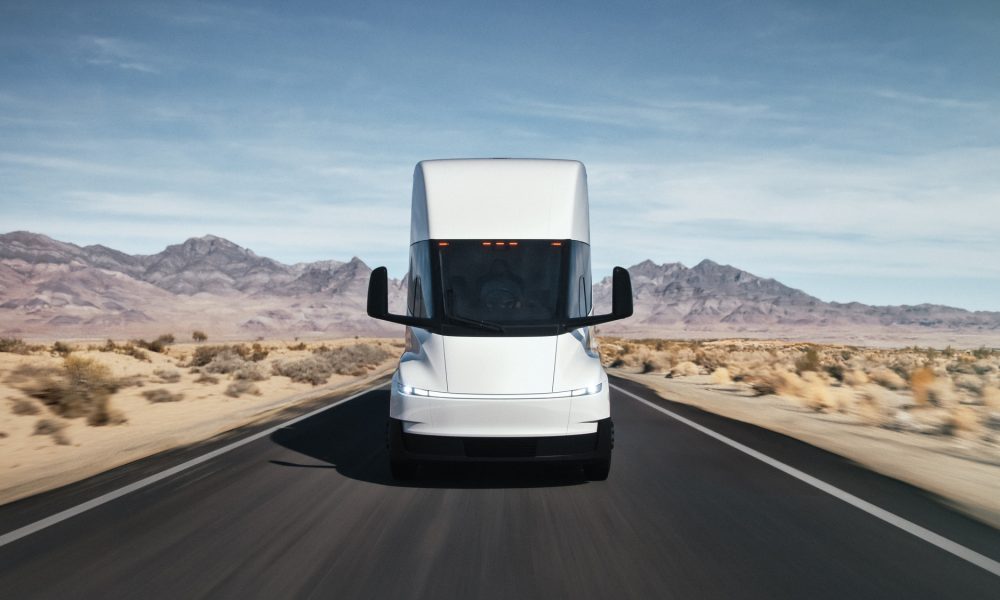
The highly anticipated Tesla Semi, the automaker’s Class 8 all-electric truck, has reached a pivotal phase in its development, with a unit recently spotted in Sunnyvale, California, equipped with specialized ground truth validation equipment. This sighting, on June 21, 2026, signals that Tesla is moving closer to the widespread commercial launch of its heavy-duty electric vehicle and is actively refining its autonomous capabilities for the freight transport sector.

Ground truth validation is a rigorous process essential for training and validating supervised algorithms, ensuring that autonomous systems can perform consistently and reliably in real-world scenarios. Tesla routinely deploys such validation units on vehicles slated for imminent release, underscoring the advanced stage of the Semi’s software and hardware integration.
Understanding Ground Truth Validation in Autonomous Vehicles
At its core, ground truth validation involves comparing the data captured by a vehicle’s sensors (like cameras, radar, and lidar) against an objective, independently verified reality. This ‘ground truth’ data is meticulously collected by specialized equipment, often mounted directly onto the vehicle, to provide an accurate baseline.
Engineers then use this validated data to fine-tune the algorithms that govern a vehicle’s Full Self-Driving (FSD) system. The goal is to minimize discrepancies between what the vehicle ‘perceives’ through its sensors and the actual conditions of its environment, thereby enhancing the safety and precision of its autonomous driving functions. For a large, complex machine like the Tesla Semi, this validation is even more critical due to the significant implications for cargo and road safety.

Spotted the new semi adorned with ground truthing equipment. Haven’t seen anyone post this so figured I’d share.
The future is autonomous!!
@SawyerMerritt @wholemars pic.twitter.com/qkPDHPUQZ6
— Danny (@dannywinner1) June 21, 2026
The Transformative Potential of Autonomous Tesla Semis in Logistics
The integration of advanced autonomous capabilities into the Tesla Semi represents a potentially transformative development for the global logistics and freight transportation industry. The commercial trucking sector is grappling with persistent challenges, including a shortage of skilled drivers, escalating operational costs, and stringent regulatory frameworks governing driver hours of service.
Autonomous technology offers a compelling solution to these issues. By reducing the reliance on continuous human intervention, FSD features can help mitigate driver fatigue, a leading cause of accidents in long-haul trucking. Furthermore, autonomous operation could allow for more optimized routes and continuous transit, potentially increasing the overall productivity of the logistics chain.
Addressing Driver Regulations and Operational Efficiency
Current regulations impose strict limits on the number of hours commercial truck drivers can operate within a given period. While these rules are vital for safety, they can constrain logistical efficiency and lead to delays. A robust semi-autonomous or fully autonomous platform, as envisioned for the Tesla Semi, could dramatically alter this landscape.
Even if initial deployments involve a human safety operator, the ability of the vehicle to handle significant portions of the journey autonomously could reduce the physical and mental stress on drivers. This, in turn, could enable longer effective travel distances within a permissible timeframe, directly contributing to increased freight movement capacity and faster delivery times across supply chains. The promise of the Tesla Semi launch extends beyond electrification to intelligent automation.
Early Successes: Tesla Semi Pilot Programs
Before its broader market introduction, the Tesla Semi has already demonstrated its significant advantages through pilot programs with prominent companies such as PepsiCo and Frito-Lay. These early adopters have integrated the electric trucks into their daily operations, providing invaluable real-world data and validating the vehicle’s performance claims.
Reports from these companies have consistently highlighted the Semi’s ability to enhance operational efficiency and substantially reduce operating costs. Electrification eliminates fuel expenses, while the truck’s advanced drivetrain and regenerative braking contribute to lower maintenance requirements compared to traditional diesel trucks. These tangible benefits underscore why the commercial sector is eagerly awaiting the full-scale Tesla Semi launch.
Lessons from Cybertruck’s FSD Development
Developing Full Self-Driving capabilities for a diverse range of vehicles, especially those with unique form factors, presents distinct engineering challenges. Tesla encountered specific hurdles with the Cybertruck’s FSD implementation, primarily due to the vehicle’s unconventional height and sensor placement.
These unique characteristics necessitated significant adjustments to existing FSD algorithms, leading to a staggered rollout of certain features. For instance, ‘Actually Smart Summon’ (ASS) for the Cybertruck was launched nearly three years after initial vehicle deliveries, illustrating the meticulous and iterative nature of Tesla’s software development process. Such experiences provide crucial insights that are likely being applied to the Tesla Semi to ensure a smoother and more robust FSD integration.
The Road Ahead for Autonomous Commercial Transport
The spotting of ground truth validation equipment on the Tesla Semi reinforces the company’s commitment to advancing autonomous driving beyond passenger vehicles into the commercial domain. This move is not merely about launching an electric truck; it’s about pioneering a new era of logistics where artificial intelligence and advanced sensor fusion play a central role in optimizing freight movement.
As regulatory bodies worldwide begin to formulate frameworks for autonomous commercial vehicles, Tesla’s proactive approach to validation and testing positions it at the forefront of this evolving industry. The ultimate vision for the Tesla Semi launch includes a vehicle that is not only electric but also intelligent, capable of navigating complex road networks with minimal human intervention, thereby reshaping the future of cargo transport.
Frequently Asked Questions (FAQ)
What is ground truth validation for autonomous vehicles?
Ground truth validation is a process where data collected by a vehicle’s sensors is compared against an independently verified, highly accurate dataset. This comparison helps train and refine the autonomous driving algorithms, ensuring they precisely interpret the environment and make reliable decisions, which is critical for safety and performance.
Why is this validation significant for the Tesla Semi?
The presence of ground truth validation equipment on the Tesla Semi indicates that Tesla is nearing the final stages of developing and testing its Full Self-Driving (FSD) system for commercial trucks. It’s a strong signal that the widespread market launch of the Tesla Semi, complete with advanced autonomous features, is imminent.
How will autonomous features benefit the logistics industry?
Autonomous capabilities in trucks like the Tesla Semi can significantly benefit logistics by addressing driver shortages, reducing operational costs, and increasing efficiency. They can potentially mitigate driver fatigue, adhere to driving hour regulations more flexibly, and optimize routes for faster, more predictable freight deliveries.
Have any companies used the Tesla Semi in pilot programs?
Yes, major companies such as PepsiCo and Frito-Lay have been utilizing the Tesla Semi in pilot programs. These companies have reported positive outcomes, including increased operational efficiency and reduced operating costs, showcasing the practical advantages of the all-electric commercial truck in real-world scenarios.
What challenges might Tesla face with FSD for the Semi?
Tesla may encounter unique challenges adapting FSD to the Semi, similar to the Cybertruck, due to its size, weight, and potentially different sensor placement requirements. These factors demand specialized algorithm adjustments and extensive testing to ensure robust performance across various driving conditions and cargo loads.
When is the Tesla Semi expected to officially launch?
While an exact date for the broader Tesla Semi launch remains officially unconfirmed, the recent sighting of ground truth validation equipment strongly suggests that the commercial rollout is nearing. This critical testing phase typically precedes a vehicle’s official market availability, indicating a launch could be expected in the coming months.