
Key Takeaways
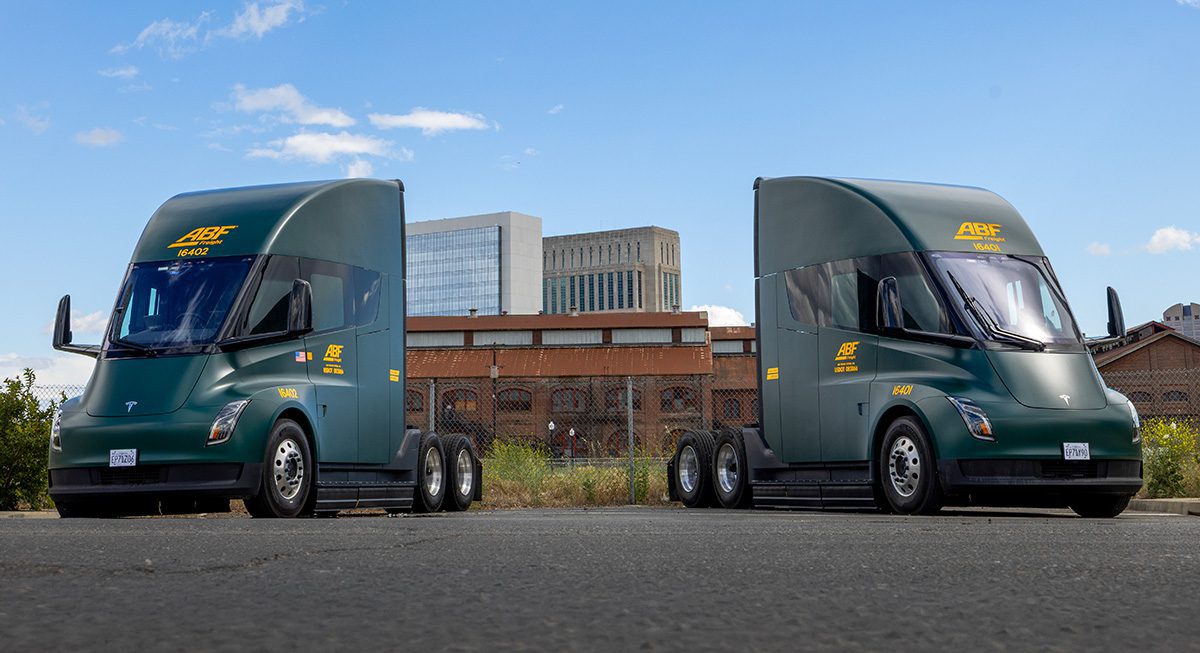
- Integrated logistics firm ArcBest, through its less-than-truckload (LTL) carrier ABF Freight, has acquired two Tesla Semi Class 8 electric trucks.
- This acquisition follows a successful 2025 pilot program primarily conducted along the Reno-Sacramento corridor.
- The initial pilot demonstrated an average energy efficiency of approximately 1.55 kWh per mile and garnered positive feedback from drivers regarding comfort, visibility, and performance on challenging routes.
- ABF Freight is now expanding the evaluation across a broader segment of its network and with additional driver groups to assess operational performance, safety, reliability, and total cost of ownership against its existing diesel fleet.
- The move signifies a growing commitment within the logistics sector to explore and integrate sustainable, heavy-duty electric vehicle technologies for future operations.
Fort Smith, Arkansas — ArcBest, a prominent integrated logistics company, has announced a significant step in its fleet modernization and sustainability efforts with the purchase of two Tesla Semi Class 8 electric trucks for its less-than-truckload (LTL) carrier division, ABF Freight. This strategic investment marks an expansion of the company’s commitment to evaluating electric heavy-duty vehicles in real-world commercial operations, building upon insights gained from an earlier pilot program.
The acquisition positions ABF Freight at the forefront of exploring advanced electric vehicle technology within the demanding LTL sector. The integration of these state-of-the-art Tesla Semi Class 8 electric trucks is expected to provide critical data for future fleet investment decisions, aligning with broader industry trends towards decarbonization and operational efficiency.

Building on a Successful Pilot Program
The decision to procure the Tesla Semis comes after a comprehensive pilot conducted by ABF Freight in 2025. This initial evaluation primarily focused on the bustling Reno-Sacramento corridor, a strategic region for logistics operations. The pilot aimed to assess the viability and performance of electric Class 8 equipment under typical operating conditions.
During this crucial testing phase, the Tesla Semi achieved an impressive average energy efficiency of approximately 1.55 kWh per mile. This metric is vital for understanding the operational costs and environmental benefits associated with electric propulsion compared to traditional diesel counterparts. Beyond raw data, the pilot also collected invaluable qualitative feedback from the drivers operating the vehicles.
Operators uniformly provided positive feedback, highlighting several key attributes of the electric trucks. They specifically praised the enhanced visibility from the cab, the overall comfort offered by the vehicle’s design, and its robust performance. Notably, the Tesla Semi demonstrated its capabilities even on challenging terrains, successfully navigating demanding routes, including the significant 7,200-foot climb over the Donner Pass, a well-known test of a truck’s power and endurance.

Expanding the Evaluation: A Broader Network Assessment
With the initial pilot yielding encouraging results, ABF Freight is now transitioning into an expanded phase of testing. This next stage will see the Tesla Semis deployed across a broader segment of the company’s extensive network, moving beyond the specific corridor of the pilot program. The objective is to gather more comprehensive data on their performance in a wider variety of operational scenarios and geographical conditions.
This expansion will also involve additional lanes and driver groups, providing a more diverse set of insights into the daily performance and adaptability of the electric trucks. By exposing the Tesla Semi Class 8 electric trucks to varied routes, load types, and driver experiences, ABF Freight aims to build a robust understanding of how these vehicles integrate into its complex LTL operations.
Rigorous Evaluation Metrics: Upholding Standards
ABF Freight is committed to applying the same stringent evaluation criteria to these electric heavy-duty vehicles as it does to its entire fleet. This rigorous approach is centered on a holistic assessment that covers several critical areas. The company plans to benchmark the electric trucks against its existing diesel fleet using a consistent methodology for total cost of ownership (TCO), operational efficiency, safety, and employee experience.
Total Cost of Ownership (TCO)
TCO is a paramount consideration for any fleet investment. For electric vehicles, this calculation involves more than just the upfront purchase price. It encompasses projected fuel savings (electricity vs. diesel), potential maintenance cost reductions due to fewer moving parts, battery replacement costs over the vehicle’s lifespan, and the impact of government incentives or charging infrastructure investments. ABF Freight’s evaluation will meticulously analyze these factors to determine the long-term economic viability of the Tesla Semis.
Operational Efficiency
Efficiency in logistics is measured by more than just energy consumption. It includes factors like uptime, charging logistics, route optimization, and the ability to meet strict delivery schedules. The expanded testing will provide critical data on how the electric trucks perform in terms of range, charging times, and their ability to integrate seamlessly into existing LTL network planning and scheduling without compromising service levels or increasing dwell times.
Safety Standards
Safety remains a non-negotiable priority for ABF Freight. The evaluation will scrutinize the safety features inherent in the Tesla Semi Class 8 electric trucks, including advanced driver-assistance systems (ADAS), braking performance, and overall vehicle stability. Driver feedback during the pilot already highlighted positive aspects, but the expanded deployment will provide further validation of these vehicles’ safety performance across varied conditions and driver proficiencies.
Employee Experience
Driver satisfaction and comfort are crucial for retention and productivity in the trucking industry. The initial positive feedback from operators regarding visibility and comfort is a strong indicator. The next phase will gather broader insights into how different drivers adapt to the electric trucks, assessing factors like cabin ergonomics, noise levels, ease of operation, and the overall driving experience over extended periods. A positive employee experience can significantly contribute to operational success and driver recruitment efforts.
Leadership Insights on Electrification
Matt Godfrey, President of ABF Freight, underscored the strategic importance of this expanded evaluation. “Our 2025 pilot gave us valuable insight into how electric Class 8 equipment can perform in real-world LTL operations,” Godfrey stated. “Adding Tesla Semis to our lineup allows us to expand that across more lanes and operating conditions to evaluate whether heavy-duty electric vehicles meet the same standards for safety, reliability and performance across our existing fleet.”
Godfrey’s remarks highlight the methodical approach ABF Freight is taking. The company is not merely adopting new technology but rigorously testing its alignment with established operational benchmarks. This careful assessment ensures that any large-scale transition to electric vehicles would maintain, if not enhance, the company’s strong legacy of reliable and efficient service.
The Broader Implications for Logistics and Sustainability
The trucking industry, a backbone of global supply chains, is increasingly under pressure to reduce its carbon footprint. The deployment and evaluation of Tesla Semi Class 8 electric trucks by major players like ArcBest’s ABF Freight signal a significant shift towards sustainable transportation solutions.
Electrification of heavy-duty trucks offers numerous benefits, including reduced tailpipe emissions, lower operational noise, and the potential for decreased reliance on volatile fossil fuel prices. However, it also presents challenges such as the need for robust charging infrastructure, managing battery range anxiety for long-haul routes, and the substantial upfront capital investment.
ArcBest’s move demonstrates a proactive stance in addressing these challenges and exploring the opportunities presented by cutting-edge EV technology. The data and insights gleaned from this expanded evaluation will not only inform ABF Freight’s future fleet decisions but will also contribute valuable knowledge to the wider logistics and transportation sectors as they collectively navigate the transition to an electrified future.
The insights from ArcBest’s deployment of Tesla Semi Class 8 electric trucks will be crucial in understanding the practicalities of integrating heavy-duty electric vehicles into complex LTL operations. This initiative underscores the industry’s commitment to innovation and sustainability, paving the way for a more environmentally conscious and efficient future for freight transportation.
FAQ Section
What is ArcBest’s ABF Freight doing with Tesla Semis?
ArcBest, through its subsidiary ABF Freight, has purchased two Tesla Semi Class 8 electric trucks. This acquisition is part of an expanded evaluation program to assess the performance, efficiency, safety, and driver experience of these heavy-duty electric vehicles in real-world less-than-truckload (LTL) operations.
What were the results of the 2025 pilot program?
The 2025 pilot program, conducted mainly in the Reno-Sacramento corridor, demonstrated an average energy efficiency of approximately 1.55 kWh per mile. Driver feedback was highly positive, praising the visibility, comfort, and overall performance, including the truck’s capability on demanding routes like the Donner Pass.
What is the energy efficiency reported for the Tesla Semi?
During ABF Freight’s 2025 pilot, the Tesla Semi achieved an average energy efficiency of around 1.55 kWh per mile. This metric is a key indicator of the electric truck’s fuel economy compared to traditional diesel-powered heavy-duty vehicles.
What factors is ABF Freight evaluating in the next phase?
In the next phase, ABF Freight will rigorously evaluate the Tesla Semi Class 8 electric trucks against its diesel fleet using the same approach for total cost of ownership, operational efficiency, safety, and employee experience. The assessment will cover a broader range of lanes and operating conditions.
Why is the adoption of electric Class 8 trucks significant for logistics?
The adoption of electric Class 8 trucks is significant for logistics due to their potential to reduce carbon emissions, lower operational costs through energy and maintenance savings, and improve driver experience. It represents a crucial step towards sustainable transportation and modernizing freight operations.
What did drivers say about the Tesla Semi during the pilot?
Driver feedback from the pilot was overwhelmingly positive. Operators specifically highlighted the Tesla Semi’s superior visibility, enhanced comfort, and strong overall performance. They noted its capability to handle challenging routes, such as the steep climb over the Donner Pass, effectively.
How does ArcBest decide on fleet investments?
ArcBest makes fleet investment decisions based on a comprehensive approach that considers total cost of ownership, operational efficiency, safety, and employee experience. This ensures that any new vehicle technology, like the Tesla Semi Class 8 electric trucks, meets stringent standards for reliability and performance across its business.