
Key Takeaways
The Tesla Cybercab, an engineering vehicle, has been observed featuring a triangular side repeater camera housing equipped with an integrated washer mechanism. This hardware addition is crucial for the reliability of Tesla’s vision-only Full Self-Driving (FSD) system, ensuring uninterrupted camera clarity in diverse environmental conditions. It addresses a significant challenge for autonomous operations, particularly for Robotaxis designed to function 24/7 without human intervention. The development raises questions about potential retrofits or future hardware iterations for existing AI4-equipped Tesla vehicles to achieve similar all-weather FSD readiness. This pragmatic enhancement underscores Tesla’s commitment to real-world robustness in autonomous technology deployment.
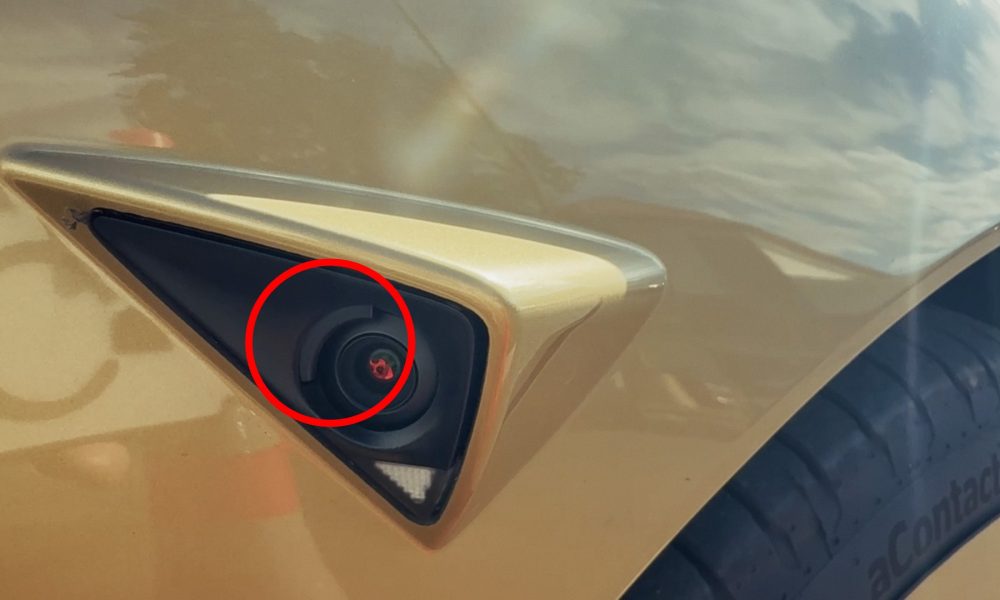
A recent close-up examination of a Tesla Cybercab engineering vehicle in Peabody, Massachusetts, has unveiled a seemingly minor yet profoundly significant design detail: a compact triangular side repeater camera housing featuring an integrated washer mechanism. This hardware innovation, while subtle, is poised to become a cornerstone for achieving reliable, unsupervised Full Self-Driving (FSD) capabilities, not only for the dedicated Robotaxi platform but potentially for existing AI4-equipped vehicles already on the road.
The integration of a targeted washer system addresses a fundamental challenge inherent in Tesla’s vision-only autonomy approach. In this system, cameras serve as the exclusive sensory input, feeding crucial environmental data to the neural networks that power FSD. Their uncompromised clarity is paramount for accurate perception and safe navigation.
The Imperative of Pristine Vision for Autonomous Driving
For any advanced autonomous system, especially one relying solely on visual data, environmental factors pose a constant threat to operational integrity. Camera lenses are susceptible to accumulation of rain, snow, mud, dust, road spray, and other debris that can rapidly obscure their view.
Many Tesla owners, particularly those navigating regions with challenging winter weather or frequent adverse conditions, are familiar with the common alert signaling obstructed cameras. These warnings underscore a critical vulnerability in the current FSD architecture when faced with real-world contaminants.
While brief obstructions might be infrequent in causing safety disengagements or requiring the vehicle to pull over, they often necessitate manual intervention from the driver. An owner typically has to wipe the camera lens the next time the car is stopped, a task incompatible with the demands of a fully autonomous fleet.
Cybercab’s Solution: Automated Camera Cleaning
Unlike human drivers who can intuitively clear their field of view, a Robotaxi operating 24 hours a day, seven days a week, without a steering wheel or traditional mirrors, must autonomously maintain pristine visual input. The Tesla Cybercab’s side repeater washer system provides a direct solution to this operational imperative.
This system is engineered to deliver precise, targeted cleaning bursts directly to the camera lens. Such capability is indispensable for critical driving functions like merging, lane changes, and blind-spot monitoring, all of which demand uninterrupted visibility from the external cameras.
A specific observation shared on social media platform X (formerly Twitter) by Tobias Goebel (@tpgoebel) on June 17, 2026, showcased the side camera and its integrated washer on an engineering Cybercab vehicle undergoing testing in Peabody, Massachusetts.
This hardware directly tackles a known vulnerability in current FSD deployments where camera-related alerts are frequently reported during inclement weather. While such occurrences are understandable given environmental variables, they represent a barrier to a truly unsupervised autonomous experience.
Enhancing Robotaxi Reliability and Operational Efficiency
For a production Robotaxi fleet, the goals are high utilization rates and minimal downtime. Robust, integrated washer systems are not merely an enhancement; they represent a foundational reliability upgrade. They are, in essence, a non-negotiable feature for autonomous vehicles intended for commercial, 24/7 service.
Early visual evidence further suggests that this innovative design might extend to rear cameras as well. Such a comprehensive cleaning architecture would ensure that the entire vision suite remains operational and effective, even in the most demanding environmental conditions. Without such systems, even the most sophisticated neural networks powering autonomous driving will struggle when their primary ‘eyes’ are compromised by external factors.
Implications for Existing AI4-Equipped Tesla Vehicles
The revelation of the Tesla Cybercab’s integrated camera washer prompts significant questions regarding the future of AI4-equipped vehicles currently on the road. While Tesla’s Hardware 4 (HW4) platform delivers substantial improvements in compute power and camera resolution compared to its predecessors, standard production models typically lack dedicated side and rear camera washers.
Notably, Tesla has already incorporated similar washer features on certain Model Y Robotaxis deployed within its internal fleet, indicating a prior recognition of this need for autonomous operations. However, this feature remains absent from most consumer-grade AI4 vehicles.
As Tesla progresses towards a broader release of unsupervised FSD capabilities, the disparity in environmental resilience between the Cybercab and current AI4 consumer models becomes increasingly apparent. While software improvements can undoubtedly mitigate some vision-related issues, they cannot fully substitute the physical cleaning capability offered by a dedicated washer system in heavy rain, snow, or muddy conditions.
Industry analysts and Tesla owners alike are now speculating whether AI4 vehicles may eventually require similar washer retrofits to match the Cybercab’s all-weather readiness. Alternatively, a future AI4.5 or AI5 hardware variant might integrate these crucial components from the factory, enabling a uniform level of autonomy across the fleet.
A Pragmatic Step Towards Ubiquitous Autonomy
As the rigorous testing and development of the Cybercab continue, the prominent inclusion of the camera washer mechanism underscores Tesla’s pragmatic focus on real-world robustness. This small but critical piece of hardware is a testament to the company’s commitment to ensuring that its autonomous systems function reliably in the unpredictable and often harsh conditions of everyday driving.
Ultimately, this design choice may prove to be a pivotal factor determining the speed and reliability with which FSD technology scales. It is not just about advancing neural networks and compute power, but also about ensuring the foundational hardware provides an uncompromised input stream. The Cybercab’s washer mechanism highlights a key element in the evolution from advanced prototypes to truly ubiquitous and dependable autonomous vehicles.
Frequently Asked Questions (FAQ)
What is the significance of the Tesla Cybercab’s camera washer?
The integrated camera washer on the Tesla Cybercab is crucial for maintaining clear camera vision, which is the sole sensory input for Tesla’s Full Self-Driving (FSD) system. It ensures reliable operation in various environmental conditions like rain, snow, and mud, which can obstruct camera lenses and impair autonomous capabilities.
Why is a camera washer particularly important for Robotaxis?
Robotaxis are designed to operate 24/7 without human intervention. Unlike human drivers who can manually clean obstructed cameras, Robotaxis must maintain pristine vision autonomously to ensure continuous, safe operation. The washer system facilitates this by providing targeted, on-demand cleaning.
How do current Tesla owners experience camera obstructions?
Many current Tesla owners, especially in adverse weather, frequently receive alerts indicating obstructed cameras. While FSD software attempts to mitigate these, such obstructions often require the owner to manually wipe the cameras, highlighting a limitation in environments where human intervention isn’t possible.
Will existing AI4-equipped Tesla vehicles get this camera washer feature?
Currently, most AI4-equipped Tesla consumer vehicles do not have dedicated side or rear camera washers. There is speculation that similar retrofits might be offered or that future hardware iterations (e.g., AI4.5 or AI5) could integrate these washers to achieve the same level of all-weather FSD readiness as the Cybercab.
Does this hardware addition align with Tesla’s broader FSD strategy?
Yes, the camera washer reflects Tesla’s pragmatic approach to autonomous driving. While software and neural network advancements are critical, ensuring the reliability of core hardware inputs in real-world conditions is equally important for the widespread and safe deployment of unsupervised FSD technology.