
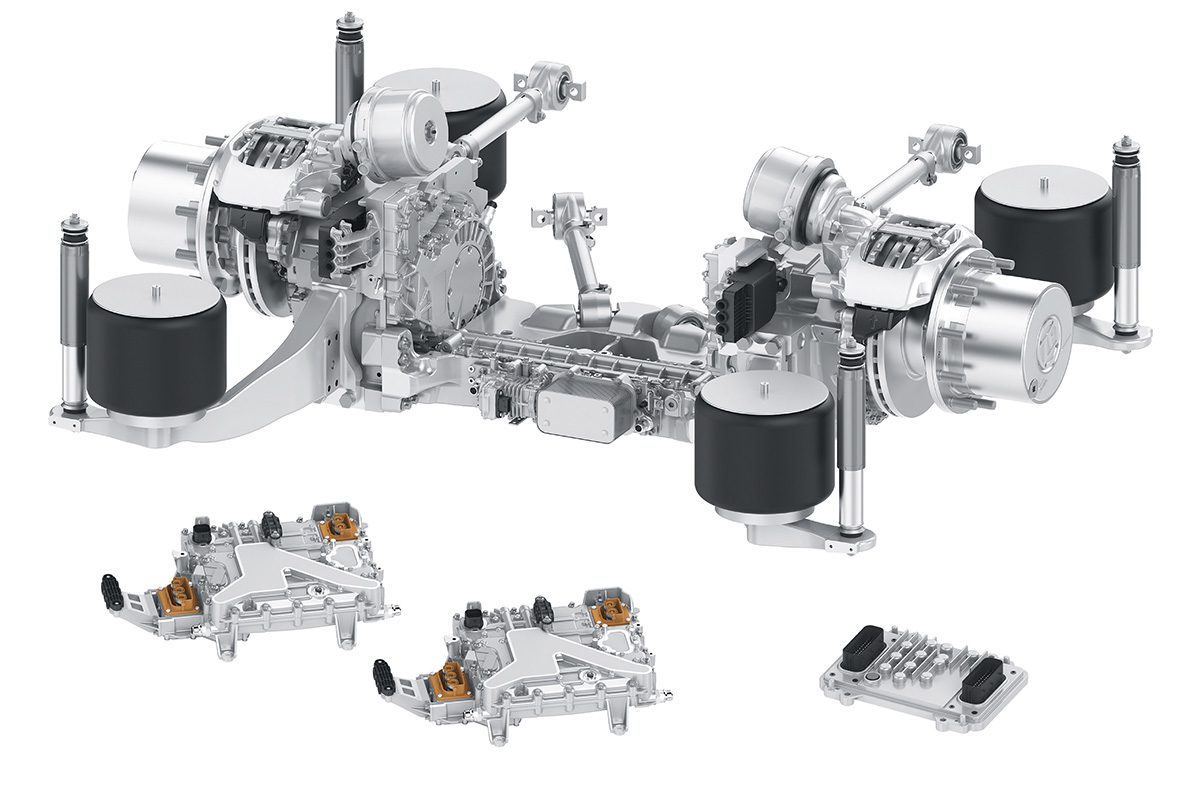
Key Takeaways (TL;DR):
- ZF’s cutting-edge AxTrax 2 LF electric portal axle is poised for production, significantly advancing electric mobility in urban transport.
- This new axle promises an average energy consumption reduction of 20% in standard SORT cycles, enhancing operational efficiency and increasing range for city buses.
- It forms the core of a new, integrated electric driveline kit, featuring standardized components and shared software for simplified vehicle configuration and reduced total cost of ownership.
- Accompanying innovations include a health check software for predictive maintenance, an ultra-quiet oil-free air compressor (e-comp Scroll), and a comprehensive General Safety Regulation (GSR)-compliant Advanced Driver Assistance Systems (ADAS) suite.
- The ZF Bus Connect telematics platform provides holistic fleet monitoring, enabling optimized performance and proactive maintenance across an entire fleet.
ZF, a global technology company, is on the cusp of launching its latest innovation in electric mobility for public transport: the AxTrax 2 LF electric portal axle. This advanced drive unit, specifically designed for city buses, is moving into production, heralding a new era of efficiency and sustainability for urban fleets worldwide.

The AxTrax 2 LF represents a significant leap forward from its predecessor, demonstrating an impressive 20 percent reduction in average energy consumption during standard SORT (Standardized On-Road Test) cycles. This substantial improvement is set to empower bus operators to lower their battery capacity requirements, consequently reducing initial investment costs, while simultaneously extending the operational range of their electric city buses.
Revolutionizing Electric Drivelines for City Buses
At the heart of ZF’s new offering is an integrated electric driveline kit, built around the AxTrax 2 LF. This comprehensive solution emphasizes standardization, utilizing common components and shared software modules across various applications. Such an approach significantly improves overall performance, streamlines the complex process of vehicle configuration, and ultimately contributes to a lower total cost of ownership (TCO) across diverse bus models.
The integration of standardized hardware and software components ensures that manufacturers and operators benefit from enhanced compatibility and ease of maintenance. This not only simplifies supply chain management but also accelerates the deployment of new electric bus fleets, making the transition to sustainable urban transport more accessible and economically viable.

Intelligent Diagnostics and Predictive Maintenance
Complementing the advanced driveline is a new ZF health check software package. This sophisticated software-as-a-service (SaaS) tool offers remote analysis of e-drive data, providing invaluable insights for condition monitoring and early fault detection. By continuously analyzing critical parameters, the system can identify potential issues before they escalate into costly failures.
This capability provides fleets, original equipment manufacturers (OEMs), and independent fleet-management systems with a detailed, real-time understanding of the axle’s condition. The outcome is improved vehicle availability, reduced unplanned downtime, and significantly lower operating costs, allowing for more efficient scheduling and resource allocation within a demanding urban environment.
Innovating Auxiliary Systems: The Oil-Free e-comp Scroll
Beyond the core driveline, ZF is also introducing an innovative oil-free air compressor tailored for electrified commercial vehicles. Named the e-comp Scroll, this component is engineered for medium- and heavy-duty hybrid, battery-electric (BEV), and fuel-cell vehicles (FCV), underscoring ZF’s commitment to holistic electric mobility solutions.
The e-comp Scroll generates compressed air using two precisely engineered interlocking scrolls, a design that minimizes friction and eliminates the need for lubricating oil. This oil-free operation translates into reduced maintenance requirements and contributes to a cleaner environmental footprint for electric city buses.
A notable feature of this new compressor is its remarkably low noise emission. At a nominal operating point of 250 liters per minute, the e-comp Scroll maintains noise levels around 67 dB(A). As electric buses inherently operate much quieter than their diesel counterparts, ancillary components like air compressors become more prominent noise sources. The low noise profile of the e-comp Scroll is crucial for enhancing passenger comfort and reducing urban noise pollution, aligning perfectly with the silent operation expected from modern electric transport.
Enhancing Safety with Advanced Driver Assistance Systems (ADAS)
Safety remains a paramount concern in urban transport, and ZF addresses this with a new suite of General Safety Regulation (GSR)-compliant advanced driver assistance systems (ADAS) for buses. This scalable portfolio integrates cutting-edge camera, radar, and software functions into a cohesive, coordinated system, moving beyond standalone features to provide truly intelligent safety assistance.
The ADAS suite includes critical functionalities such as Intelligent Speed Assist, which helps drivers maintain appropriate speeds, and a Blind Spot Information System, designed to alert drivers to vehicles or objects in their blind spots, especially crucial in busy city environments. Furthermore, new Driver Monitoring System functions enhance awareness by detecting driver fatigue or distraction, while Event Data Recorder capabilities provide vital information in the event of an incident.
These coordinated safety systems are meticulously designed to protect not only drivers and passengers but also vulnerable road users such as pedestrians and cyclists, who are particularly susceptible in urban settings. By leveraging advanced sensor fusion and intelligent algorithms, ZF aims to significantly reduce the risk of accidents and enhance overall road safety for public transport vehicles.
ZF Bus Connect: The Telematics Backbone for Smart Fleets
Tying together these hardware and software innovations is ZF Bus Connect, a powerful telematics platform specifically developed for the unique demands of bus operations. This platform establishes a crucial link between the driveline, braking systems, and various auxiliary systems, providing a unified ecosystem for comprehensive vehicle management.
ZF Bus Connect enables operators and manufacturers to continuously monitor vehicle status in real time, offering granular data on performance metrics. This data is instrumental in optimizing fleet performance, identifying inefficiencies, and supporting sophisticated predictive maintenance strategies. Recent enhancements to the platform include advanced battery analytics and detailed condition monitoring for ZF drivetrain hardware, such as the new AxTrax 2 LF.
By providing a centralized hub for critical operational data, ZF Bus Connect empowers fleet managers to make informed decisions, ensuring maximum uptime, optimizing energy consumption, and proactively addressing maintenance needs before they impact service delivery. This digital infrastructure is key to unlocking the full potential of electrified bus fleets.
Frank Burkhart, Senior Vice President of Sales Bus & Coach at ZF’s Commercial Vehicle Solutions division, emphasized the strategic vision behind these integrated offerings. He stated, “Our focus is on aligning these areas into integrated systems to improve efficiency, safety and reliability while helping to reduce operating costs.” This statement encapsulates ZF’s holistic approach to developing solutions that not only advance technology but also provide tangible operational and economic benefits for the public transport sector.
The impending production of the AxTrax 2 LF electric portal axle, coupled with these complementary technological advancements, positions ZF as a key enabler for the global transition to more efficient, safer, and sustainable urban electric mobility. These innovations are poised to redefine the standards for modern city bus operations.
Frequently Asked Questions (FAQs)
What is the primary benefit of ZF’s AxTrax 2 LF electric portal axle?
The AxTrax 2 LF’s main benefit is a 20% reduction in average energy consumption in SORT cycles compared to the previous generation. This allows bus operators to use smaller batteries, increase vehicle range, and significantly lower operational costs for their electric city bus fleets.
How does ZF’s new electric driveline kit simplify operations for bus companies?
The new driveline kit employs standardized components and shared software modules. This approach simplifies vehicle configuration, reduces integration complexity across different bus models, and ultimately lowers the total cost of ownership by streamlining maintenance and parts management.
What is the purpose of ZF’s health check software package?
The health check software is a SaaS tool for remote analysis of e-drive data. Its purpose is to provide condition monitoring and early fault detection for the electric axle. This proactive insight helps improve vehicle availability, prevents unexpected breakdowns, and reduces operating costs for fleets.
What makes the ZF e-comp Scroll air compressor innovative for electric vehicles?
The e-comp Scroll is an oil-free air compressor designed for electrified commercial vehicles. Its innovative use of interlocking scrolls ensures quiet operation, emitting only around 67 dB(A). This low noise is crucial for maintaining the quiet environment of electric buses and reducing urban noise pollution.
What safety features are included in ZF’s new ADAS suite for buses?
ZF’s new ADAS suite is GSR-compliant and integrates camera, radar, and software. Key features include Intelligent Speed Assist, a Blind Spot Information System, a Driver Monitoring System, and Event Data Recorder functions, all designed to protect drivers, passengers, and vulnerable road users in urban settings.
How does ZF Bus Connect contribute to efficient fleet management?
ZF Bus Connect is a telematics platform specifically for buses that connects driveline, braking, and auxiliary systems. It allows operators to monitor vehicle status, optimize fleet performance, and support predictive maintenance. Recent additions include battery analytics and condition monitoring for ZF drivetrain hardware, enhancing overall fleet efficiency.