
Key Takeaways
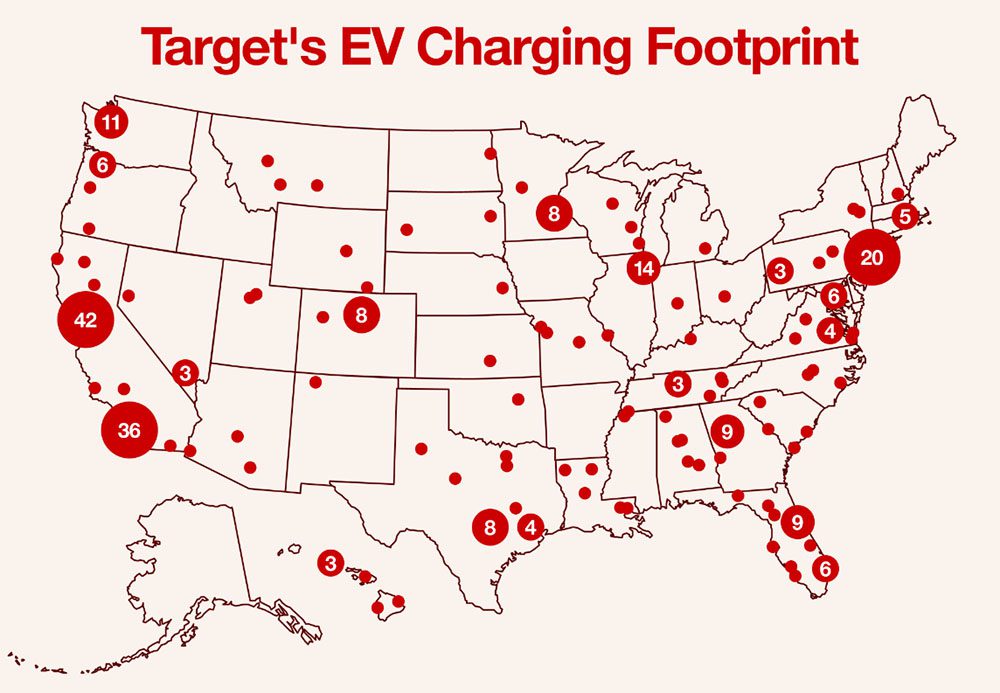
- Target is significantly expanding its electric vehicle (EV) charging network, with 35 new sites under construction and over 100 more in development.
- This expansion builds on Target’s existing network of 300 sites and more than 3,000 charging stalls across 42 US states.
- The initiative positions big-box retailers as crucial hubs for public EV charging, enhancing customer convenience and supporting broader EV adoption.
- Site selection prioritizes market dynamics, local EV penetration, and utility availability, ensuring strategic placement of new EV charging facilities.
- The move reflects a growing trend among major US retailers to integrate charging infrastructure as a core part of their service offering.
Minneapolis, Minnesota — Target, a prominent US retail giant, is significantly intensifying its commitment to electric vehicle infrastructure by announcing a substantial expansion of public EV charging facilities across its national store network. This strategic move aims to add dozens more charging sites, building upon its already considerable footprint and reinforcing the critical role of retail locations in supporting the burgeoning electric vehicle market.
The latest announcement outlines plans for 35 new EV charging sites currently under construction, with an additional 100-plus sites actively in development. This aggressive expansion signals a clear intent from Target to cement its position as a key player in the evolving landscape of electric mobility, providing essential services to a growing base of EV owners.
Retailers Emerge as Pivotal Charging Hubs
Big-box retailers, by their very nature, present an ideal environment for the deployment of public EV charging facilities. Strategically situated near major highways and within bustling urban centers, these locations offer unparalleled accessibility for electric vehicle drivers. Furthermore, the typical duration of a customer’s visit to such stores aligns perfectly with the time required for a convenient and efficient charging session, transforming shopping trips into productive charging stops.
While the potential for retail-based charging has long been recognized, the pace of implementation initially lagged behind ambitious sustainability goals. Reports from 2024 indicated that installations by many big-name retailers fell considerably short of their stated green ambitions, highlighting a nascent stage of infrastructure development.
However, the tide has demonstrably turned. In recent times, a growing number of US retail chains, convenience stores, and fast-food restaurants have embarked on a noticeable acceleration of their public EV charging initiatives. Companies such as Walmart, Wawa, and Bojangles are among those actively promoting new charging deployments, underscoring a broader industry shift towards integrating electric vehicle charging as a standard customer amenity.
Target’s Evolving Commitment to EV Infrastructure
Target’s journey into the realm of electric vehicle charging infrastructure began in 2017 with the commissioning of its first fast charging site at a store in San Mateo, California. This initial step laid the groundwork for what has since become an extensive network. Today, Target boasts EV charging facilities at 300 of its stores, collectively offering over 3,000 individual charging stalls. This network spans 42 states, making it one of the largest retail-hosted charging ecosystems in the United States.
The company’s commitment is not merely about numbers; it is deeply rooted in understanding customer needs. Internal feedback consistently reveals that customers frequently identify the availability of EV charging as a significant value-add, substantially enhancing their overall shopping experience. This customer-centric approach underpins Target’s continued investment in expanding its EV charging facilities.
Strategic Planning for Future Expansion
The expansion of Target’s EV charging network is a carefully orchestrated process. The retailer collaborates closely with specialized partners to identify optimal store locations for new installations. This meticulous site selection process involves a comprehensive evaluation of several key factors, ensuring that new EV charging facilities are placed where they can deliver maximum utility and impact.
Foremost among these considerations are prevailing market dynamics, which involve assessing regional demand for electric vehicles and the potential for increased EV adoption. Local EV penetration rates are also critically examined, guiding decisions on where charging infrastructure is most urgently needed and where it can serve the largest existing base of EV drivers.
Furthermore, the availability and capacity of local utility infrastructure play a crucial role. Ensuring that a site can reliably support the power demands of multiple fast chargers is paramount to the successful and sustainable operation of new EV charging facilities. This integrated planning approach is vital for the long-term viability and efficiency of the expanded network.
Driving National EV Adoption through Retail Charging
The concerted efforts by major retailers like Target to roll out extensive public EV charging facilities are instrumental in addressing one of the primary barriers to wider electric vehicle adoption: range anxiety. By providing ubiquitous, reliable, and convenient charging options at familiar shopping destinations, these initiatives empower more consumers to confidently transition to electric vehicles.
The presence of thousands of charging stalls at hundreds of locations transforms everyday errands into opportunities for effortless vehicle replenishment. This seamless integration of charging into daily routines is critical for normalizing EV ownership and fostering an environment where electric vehicles are not just an alternative, but a preferred mode of transportation.
Moreover, the strategic placement of these facilities contributes significantly to the national charging infrastructure. As the number of electric vehicles on the roads continues its upward trajectory, a robust and accessible charging network becomes increasingly vital. Retailers, with their vast geographical presence and high footfall, are uniquely positioned to meet this growing demand, supplementing dedicated charging stations and bolstering the overall EV ecosystem.
The Future of Convenient Electric Vehicle Charging
Target’s ongoing expansion of its EV charging facilities represents more than just a corporate initiative; it is a significant contribution to the broader movement towards sustainable transportation. By leveraging its extensive retail footprint, the company is not only enhancing the convenience for its shoppers but also playing a pivotal role in accelerating the nationwide adoption of electric vehicles.
As the electric vehicle market matures, the integration of public EV charging into everyday commercial spaces will become an increasingly expected feature. Retailers that proactively invest in and expand their EV charging infrastructure are likely to attract a growing segment of environmentally conscious consumers, demonstrating foresight and a commitment to future-ready services. This trend underscores a promising future where access to electric vehicle charging is as common and convenient as parking itself.
Source: Target
Frequently Asked Questions About Target’s EV Charging Expansion
What is Target’s latest announcement regarding EV charging?
Target recently announced plans to significantly expand its EV charging facilities, with 35 new sites currently under construction and more than 100 additional sites in various stages of development. This initiative aims to add dozens more public EV charging locations across its stores nationwide, bolstering the existing network.
How extensive is Target’s current EV charging network?
Target presently hosts EV charging facilities at 300 of its stores, offering a total of over 3,000 charging stalls. These charging points are distributed across 42 states in the US, establishing Target as a key provider of retail-based electric vehicle charging infrastructure.
When did Target begin offering EV charging at its stores?
Target commissioned its very first fast charging site at a store in San Mateo, California, in 2017. This initial installation marked the beginning of the company’s commitment to integrating electric vehicle charging as a service for its customers.
Why are big-box retailers like Target ideal locations for EV charging facilities?
Big-box retailers are excellent locations for public EV charging because they are typically situated near major highways and urban centers, offering easy access. Additionally, customers usually spend a significant amount of time shopping, allowing for convenient and productive charging sessions while they are on-site.
What factors does Target consider when selecting new EV charging sites?
Target works with partners to strategically determine the best locations for new EV charging facilities. Key factors considered include prevailing market dynamics, the local penetration rate of electric vehicles, and the availability and capacity of utility infrastructure to support the charging demands.
How does Target’s EV charging expansion benefit customers and the EV market?
Target’s expansion provides enhanced convenience for EV owners by integrating charging into their shopping routines. This helps alleviate range anxiety, encourages broader EV adoption, and strengthens the overall national electric vehicle charging infrastructure, making sustainable transportation more accessible to a wider audience.