
Key Takeaways
- Target is significantly expanding its public EV charging infrastructure, planning dozens of new installations at stores nationwide.
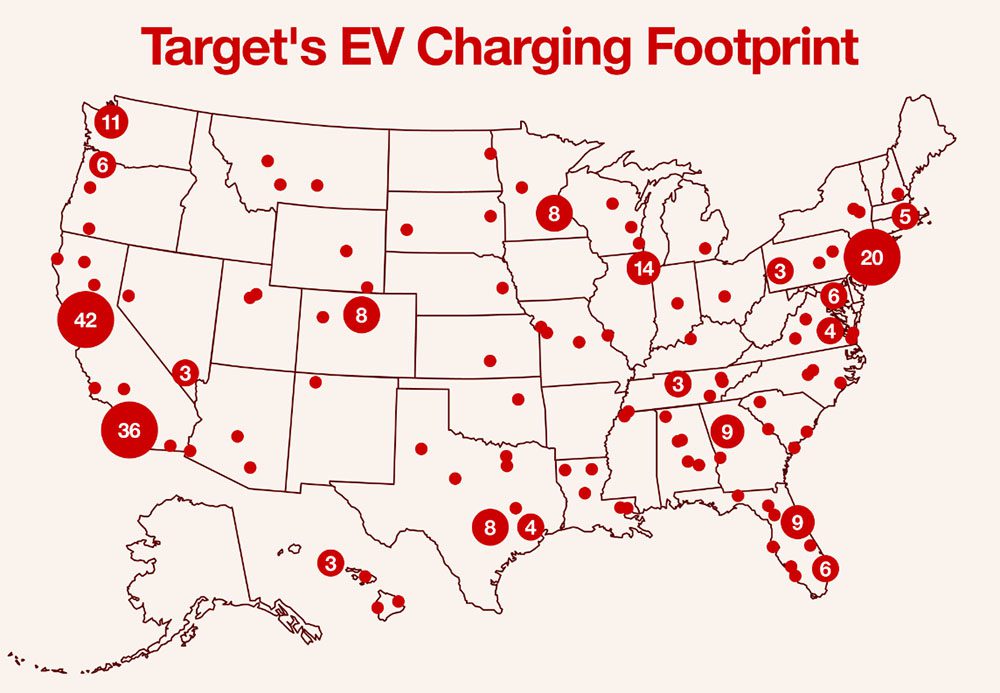
- The retail giant currently hosts over 3,000 charging stalls at 300 sites across 42 states, with 35 more sites under construction and over 100 in development.
- This expansion reinforces a growing trend among big-box retailers, convenience stores, and fast-food chains to offer public EV charging as a key customer amenity.
- Retail locations are strategically valuable for EV charging due to their accessibility, proximity to urban centers and highways, and the typical duration of customer visits.
- Target collaborates with partners, evaluating market dynamics, local EV adoption rates, and utility availability to select optimal charging locations.
Minneapolis, Minnesota — Major retail chain Target is significantly accelerating its commitment to electric vehicle (EV) infrastructure, announcing plans to add dozens more public EV charging facilities across its stores nationwide. This strategic expansion builds on an existing network and signals a growing recognition among large-scale retailers of the critical role they play in supporting the nation’s transition to electric mobility.
The move by Target aligns with a broader industry trend where big-box retailers, often situated near key transportation arteries and urban hubs, are increasingly seen as ideal locations for convenient public EV charging solutions. Such sites offer EV drivers the dual benefit of recharging their vehicles while engaging in shopping, seamlessly integrating convenience with sustainability efforts.
Expanding the National Charging Network
Target’s journey into EV charging began in 2017 with the commissioning of its first fast-charging site at a store in San Mateo, California. Since then, the company has steadily expanded its footprint, now boasting charging facilities at 300 locations across 42 states. These sites collectively offer more than 3,000 charging stalls, providing widespread access for a substantial number of electric vehicle owners.
In a recent announcement, the retailer confirmed that this extensive network is poised for rapid growth. Currently, 35 new public EV charging sites are under active construction, with an additional 100-plus sites in various stages of development. This aggressive expansion underscores Target’s strategic focus on enhancing the customer experience through sustainable amenities and supporting the rising adoption of electric vehicles.
Customer feedback has consistently highlighted public EV charging as a valuable convenience, directly contributing to an improved shopping experience. This insight likely fuels Target’s continued investment, positioning the company as a proactive player in the evolving landscape of electric mobility infrastructure.
The Strategic Advantage of Retail Locations for EV Charging
The decision by retailers like Target to host public EV charging facilities is driven by several compelling strategic advantages. Firstly, many big-box stores are geographically well-positioned, often located within easy reach of major highways and densely populated urban and suburban areas. This accessibility makes them convenient stops for commuters and shoppers alike.
Secondly, the typical duration of a shopping trip at a Target store — often ranging from 30 minutes to an hour or more — perfectly aligns with the time required for a significant top-up using fast chargers or even a full charge with Level 2 chargers. This allows EV drivers to make productive use of their charging time, transforming what could be a chore into an integrated part of their daily routine.
Furthermore, offering public EV charging can attract a growing demographic of environmentally conscious consumers and EV owners, potentially increasing foot traffic and sales. It also reinforces a brand’s commitment to sustainability, resonating with customers who prioritize eco-friendly businesses.
A Broader Industry Shift Towards Electrification
Target’s robust expansion is not an isolated incident but rather a significant component of a wider movement within the retail and service sectors to integrate electric vehicle charging. Several other prominent U.S. retail chains, convenience stores, and fast-food restaurants have also made substantial strides in rolling out their own public EV charging initiatives.
Companies such as Walmart, a key competitor in the retail space, have been actively expanding their charging networks for years. Similarly, convenience store giants like Wawa and regional fast-food chains like Bojangles have recently touted new efforts to deploy charging stations, recognizing the increasing demand from electric vehicle drivers.
This collective effort by diverse businesses creates a more robust and accessible charging ecosystem, crucial for addressing range anxiety and accelerating the mainstream adoption of zero-emission vehicles. The presence of charging points at familiar retail destinations makes the transition to electric easier and more practical for a broader segment of the population.
Careful Site Selection and Collaborative Partnerships
The successful deployment of public EV charging infrastructure requires careful planning and strategic execution. Target emphasizes that it works closely with various partners to determine the most viable locations for new charging sites. This meticulous process involves evaluating several critical factors to ensure optimal utility and impact.
Key considerations include local market dynamics, which assess the demand for EV charging based on regional EV penetration rates and growth projections. The availability and capacity of local utility grids are also paramount, as robust electrical infrastructure is essential to support high-power charging installations without causing grid strain.
This collaborative approach, leveraging external expertise and comprehensive data analysis, ensures that Target’s investments in public EV charging are strategically sound and maximize benefits for both the company and the electric vehicle community. It underscores the complexity of scaling EV infrastructure, often requiring partnerships between retailers, energy providers, and charging technology companies.
Driving Consumer Convenience and Sustainability Goals
The expansion of public EV charging at major retail destinations like Target marks a pivotal step in normalizing electric vehicle ownership. By providing convenient and reliable charging options, these initiatives directly contribute to alleviating one of the primary barriers to EV adoption: the perceived lack of charging infrastructure.
As electric vehicle sales continue to climb, driven by technological advancements and environmental imperatives, the availability of easily accessible charging points becomes increasingly vital. Target’s commitment not only enhances the convenience for its customers but also plays a role in fostering sustainable transportation practices across the nation.
Ultimately, the synergy between retail and electric mobility infrastructure creates a win-win scenario: retailers enhance customer loyalty and brand image, while EV drivers gain greater freedom and flexibility, pushing the collective agenda towards a cleaner, more electrified future.
Frequently Asked Questions (FAQ)
What is Target’s current public EV charging footprint?
Target currently hosts EV charging facilities at 300 store locations across 42 U.S. states. These sites collectively offer more than 3,000 individual charging stalls, providing widespread access for electric vehicle owners during their shopping trips.
How many new EV charging sites is Target planning?
Target has announced significant expansion plans, with 35 new EV charging sites presently under construction. Additionally, over 100 more sites are in various stages of development, indicating a robust commitment to growing its charging network.
Why are big-box retailers good locations for public EV charging?
Big-box retailers like Target are ideal due to their strategic locations near highways and urban centers. Customers typically spend ample time shopping, allowing for convenient vehicle charging while they are on-site, enhancing their overall experience.
What factors does Target consider when selecting new charging locations?
Target collaborates with partners to carefully select sites, considering several key factors. These include local market dynamics, the penetration rate of electric vehicles in the area, and the availability and capacity of the local utility grid to support charging infrastructure.
Are other retailers also expanding their EV charging options?
Yes, Target is part of a broader trend. Other major retailers, convenience stores, and fast-food restaurants, including Walmart, Wawa, and Bojangles, are also actively rolling out new public EV charging initiatives to meet growing consumer demand.
How does EV charging benefit Target’s customers?
Customers frequently cite public EV charging as a highly valued added convenience that significantly enhances their shopping experience. It allows them to multitask, charging their vehicle while they shop, thereby saving time and reducing range anxiety.
When did Target install its first fast-charging site?
Target commissioned its very first fast-charging site for electric vehicles at one of its stores in San Mateo, California, in the year 2017. This marked the beginning of its journey into providing EV charging infrastructure.