
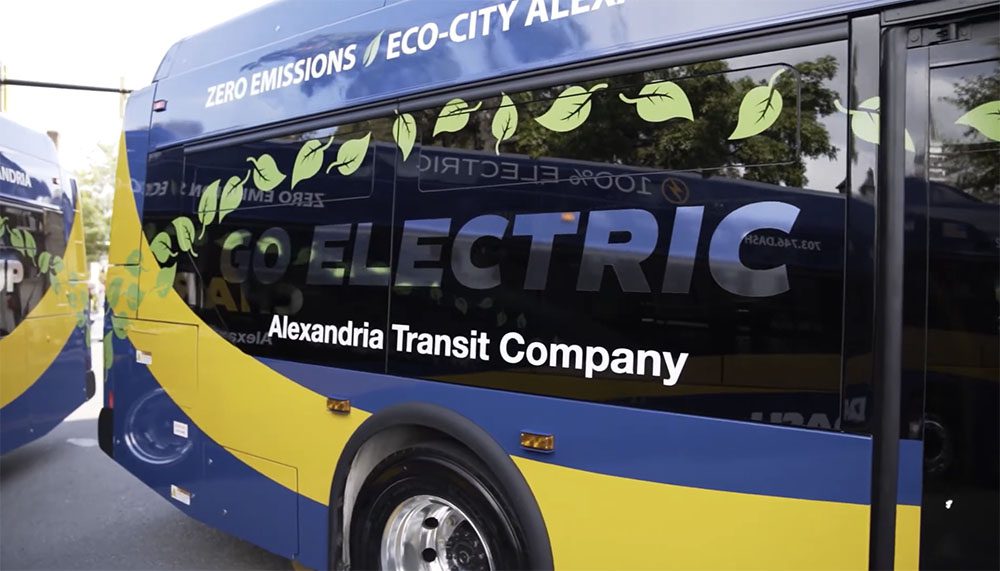
Alexandria, Virginia — In a significant move towards revolutionizing urban mobility and embracing sustainable transportation, DASH, the public transit agency serving the City of Alexandria, Virginia, has commenced construction on what is set to become the Washington DC metropolitan region’s inaugural en-route electric bus charging infrastructure. This pioneering project marks a crucial milestone in the journey towards fully electrified public transit.
The groundbreaking initiative focuses on deploying advanced charging solutions that will enable electric buses to receive power strategically during their operational routes. This capability is poised to transform the operational dynamics of electric bus fleets, enhancing their efficiency and service delivery.

Key Takeaways
- DASH has initiated construction of the DC metro region’s first en-route electric bus chargers in Alexandria, Virginia.
- These overhead pantograph chargers will deliver speeds up to 360 kilowatts, enabling partial charges at bus stops.
- En-route charging extends vehicle range, maximizes fleet utilization, and significantly reduces service interruptions.
- The project received $1 million in federal funding, complementing a partnership between DASH and the City of Alexandria.
- ABM, a facilities management provider, is supplying the electric charging services for DASH’s West Alexandria Transit Center.
- The infrastructure will support DASH’s existing 16 battery-electric buses and an additional 20 in procurement, ensuring fleet compatibility.
- Construction is underway and the system is expected to be fully operational by 2027, marking a significant step towards an all-electric fleet.
Pioneering En-Route Charging: A Leap for DC Metro Transit
The commencement of construction on these innovative charging stations by DASH signifies a monumental step for public transportation in the Washington DC metropolitan area. While overnight charging at terminals is standard for electric buses, the introduction of en-route charging adds a critical layer of operational flexibility and efficiency.
This advanced charging method allows electric buses to receive supplementary power boosts at designated stops along their routes. This strategic replenishment of battery charge is instrumental in extending the operational range of these vehicles, a key factor in deploying electric buses on longer or more demanding routes without the need for frequent returns to the depot.
Enhancing Operational Efficiency and Service Reliability
The benefits of integrating en-route electric bus charging infrastructure are multifaceted. By enabling mid-route charging, transit agencies like DASH can maximize the utilization of their existing electric fleet. This means buses can spend more time in service, transporting commuters, and less time undergoing extensive charging cycles at depots.

Furthermore, the ability to top up batteries during service significantly reduces the potential for service interruptions linked to battery depletion. This ensures a more reliable and consistent public transport experience for passengers, reinforcing the commitment to seamless urban mobility.
State-of-the-Art Technology for Rapid Power Delivery
The chosen technology for this pioneering deployment at DASH’s West Alexandria Transit Center involves two overhead pantograph chargers. These sophisticated units are engineered to deliver a substantial amount of power, with charging speeds reaching up to 360 kilowatts.
The rapid charging capability is essential for the en-route model, as it allows buses to receive a meaningful charge in a short timeframe, minimizing any impact on route schedules. This high-power delivery system underscores the commitment to efficient and effective electric vehicle charging solutions.
Collaborative Funding and Strategic Partnerships Drive Electrification
The realization of this ambitious project is a testament to strong collaborative efforts and strategic financial backing. The deployment of the en-route electric bus charging infrastructure was made possible through a robust partnership between DASH and the City of Alexandria.
Federal Support Bolsters Sustainable Infrastructure
A significant portion of the funding for this innovative project has come from federal sources, with approximately $1 million allocated to support its development. This federal investment highlights the broader national commitment to fostering sustainable transportation solutions and reducing carbon emissions in public transit.
The infusion of federal capital, combined with local agency and municipal collaboration, creates a powerful model for accelerating the transition to cleaner energy in public fleets across the nation.
ABM’s Expertise in Electric Vehicle Charging Solutions
For the provision of electric charging services at DASH’s West Alexandria Transit Center, the agency has partnered with ABM. ABM, a recognized facilities management provider with a comprehensive suite of services, brings specialized expertise in electric vehicle charging infrastructure.
This partnership ensures that the charging solutions implemented are robust, reliable, and integrated seamlessly into DASH’s operational framework, leveraging ABM’s experience in eMobility to support the transition to an electrified transit network.
DASH’s Comprehensive Strategy for an All-Electric Fleet
The introduction of en-route charging is a critical component of DASH’s broader strategic vision: a complete transition to an all-electric bus fleet. The agency is systematically building the necessary operational foundations to support this ambitious goal.
Integrating Current and Future Electric Bus Deployments
Currently, DASH operates 16 battery-electric buses as part of its growing fleet. Demonstrating a proactive approach to fleet modernization, an additional 20 electric buses are already in the procurement pipeline. This steady expansion necessitates a robust and adaptable charging ecosystem.
A key aspect of DASH’s planning has been ensuring that the new en-route charging infrastructure is fully compatible with both its existing electric fleet and all future vehicle acquisitions. This foresight guarantees long-term operational consistency and maximizes the return on infrastructure investment.
Leadership Perspectives on a Cleaner Transit Future
The significance of this project has been underscored by statements from the leadership involved. Josh Baker, DASH General Manager and CEO, articulated the strategic depth behind the initiative.
“This project reflects years of planning and collaboration to support our transition to an all-electric fleet,” said DASH General Manager and CEO Josh Baker. He further emphasized the pioneering aspect, stating, “As the first en-route electric bus chargers in Northern Virginia and the DC region, this is a significant step toward a cleaner transit system.” His remarks highlight the extensive groundwork and cooperative spirit that have driven this transformative effort.
Echoing this sentiment, Mark Hawkinson, President of Technical Solutions at ABM, lauded DASH’s forward-thinking approach. “Transit agencies like DASH are demonstrating that successful electrification starts with the right infrastructure,” said Hawkinson. He further added, “By investing in charging solutions, DASH is building the operational foundation needed to support an electrified transit network for years to come.” This perspective reinforces the critical role of robust infrastructure as the bedrock of sustainable fleet electrification.
Paving the Way for Sustainable Urban Transportation by 2027
With construction now in progress, the innovative en-route electric bus charging infrastructure is anticipated to be fully completed and operational by 2027. This timeline positions DASH at the forefront of public transit innovation in the Mid-Atlantic region.
The project not only serves as a model for other transit agencies contemplating fleet electrification but also significantly contributes to cleaner air, reduced noise pollution, and enhanced energy independence for the City of Alexandria and the broader DC metropolitan area. It represents a tangible commitment to a more sustainable and efficient public transportation future.
Source: ABM
Frequently Asked Questions (FAQ)
What makes DASH’s new charging stations significant?
DASH’s new charging stations are significant because they represent the first en-route electric bus chargers in the Washington DC metropolitan region. This technology allows electric buses to receive partial charges at stops during their routes, a crucial innovation for extending range and maximizing operational efficiency.
How do en-route chargers benefit electric bus operations?
En-route chargers enhance electric bus operations by extending vehicle range, which allows buses to cover longer distances without returning to the depot. They also maximize fleet utilization by reducing downtime for charging and help to minimize service interruptions, ensuring more reliable schedules for commuters.
What type of technology is being used for these chargers?
The project utilizes advanced overhead pantograph chargers. These units are capable of delivering high-speed charging, providing up to 360 kilowatts of power. This rapid charging capability is vital for efficient mid-route power replenishment, minimizing delays during transit.
How is the en-route charging project being funded?
The deployment of these chargers is funded through a partnership between DASH and the City of Alexandria. The project also received substantial support from federal sources, contributing approximately $1 million to the overall funding, underscoring its importance to sustainable infrastructure.
Who is providing the electric charging services for DASH?
ABM, a prominent facilities management provider, has been contracted to supply the electric charging services for DASH’s West Alexandria Transit Center. ABM brings specialized expertise in EV charging solutions, ensuring the reliable implementation and operation of the new infrastructure.
How many electric buses does DASH currently operate, and how many are planned?
DASH currently operates 16 battery-electric buses. Furthermore, the agency has an additional 20 electric buses in procurement, demonstrating a clear commitment to expanding its zero-emission fleet. The new infrastructure is designed to be compatible with both current and future vehicles.
When is the en-route charging infrastructure expected to be completed?
Construction of the new en-route electric bus charging infrastructure is presently underway. The project is projected to reach completion and become fully operational by the year 2027, marking a pivotal moment for electric public transit in the region.