
Key Takeaways
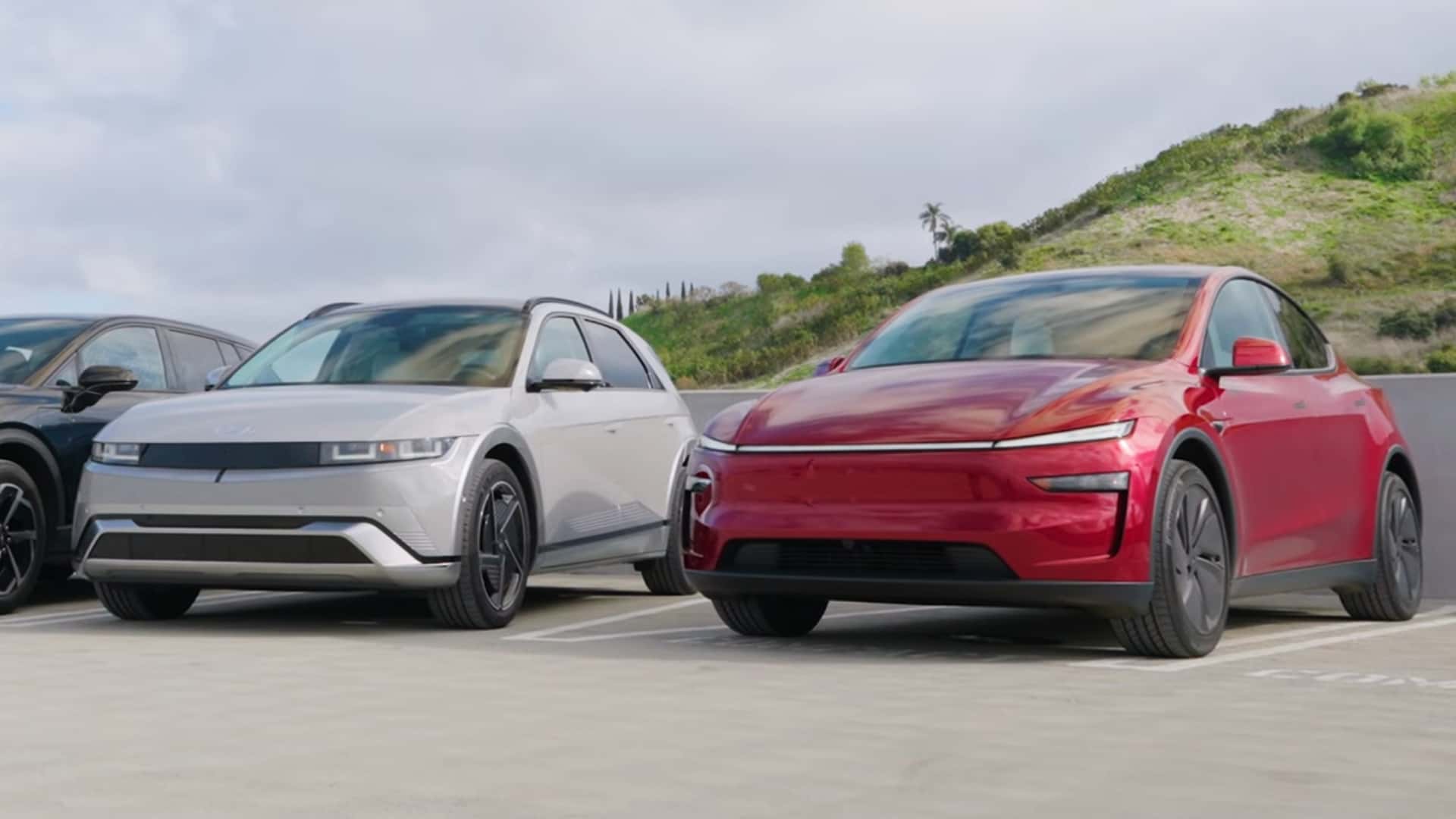
The updated Tesla Model Y ‘Juniper’ squared off against top rivals – the Honda Prologue, Chevrolet Equinox EV, and updated Hyundai Ioniq 5 – in a comprehensive Edmunds comparison test.
While the Model Y has long been a segment leader, the test concluded in a significant tie for first place between the Model Y Juniper and the Hyundai Ioniq 5, signaling a substantial shift in the competitive landscape for electric family SUVs.
The Hyundai Ioniq 5, with its user-friendly design, NACS compatibility, and robust performance, emerged as an equally compelling option, challenging Tesla’s ‘uncompromising minimalism’ with its own ‘futuristic familiarity’.
The Chevrolet Equinox EV impressed with its exceptional value proposition and range, securing a strong position, while the Honda Prologue offered notable practicality and design.
This comparison underscores the rapid advancements by competing brands, offering consumers increasingly diverse and competitive choices in the booming electric vehicle crossover segment.
The Shifting Landscape of Electric Family SUVs: Tesla Model Y Meets Its Match
For years, the Tesla Model Y has stood as an undisputed titan in the electric vehicle (EV) market. Often heralded as the ‘iPhone of cars’, Tesla’s midsize electric crossover has consistently dominated sales charts, becoming the world’s best-selling electric vehicle and, remarkably, the best-selling single model of car overall.
Its ascendancy has been attributed to an impressive confluence of factors: superior range capabilities, robust power delivery, cutting-edge technological features, competitive pricing, and undeniable practicality for families. This combination has made the Model Y a benchmark in the burgeoning electric family SUVs segment.
However, the automotive industry is witnessing a dramatic evolution. As an updated iteration of the Model Y, dubbed ‘Juniper’, makes its highly anticipated debut, a growing segment of consumers is exploring alternatives. This shift coincides with the emergence of a new generation of highly competitive electric vehicles from established brands, which are now not only closing the gap but, in some respects, surpassing Tesla’s offerings.
Automotive experts at Edmunds recently delved into this evolving competition, conducting a thorough video comparison test. They rigorously evaluated four highly-rated electric family crossovers: the new Model Y ‘Juniper’, the Honda Prologue, the Chevrolet Equinox EV, and the updated Hyundai Ioniq 5. The objective was clear: to determine which vehicle truly stands on par with, or even outshines, the dominant Tesla.
The findings from this comprehensive comparison offer a compelling narrative for the future of the electric vehicle crossover market, highlighting a fierce contest where a clear challenger has stepped forward to meet the Model Y head-on.
The Contenders: A Closer Look at the Modern Electric Crossover Field
The Edmunds test assembled a diverse array of contenders, each bringing unique strengths to the table in the electric family SUVs category. The results, particularly in the lower rankings, shed light on the broad advancements being made across the industry.
Honda Prologue: Practicality with a GM Foundation
Securing a fourth-place finish in the rigorous comparison was the 2024 Honda Prologue, an EV that has already garnered significant attention as a surprise success story in the current model year. This vehicle represents a strategic collaboration, featuring a General Motors EV platform underneath its distinct Honda styling.
The Prologue adeptly combines GM’s electric vehicle architecture with characteristic Honda design sensibilities. Notably, it retains Apple CarPlay integration, a feature not found in GM’s proprietary infotainment systems, which could be a significant draw for many buyers.
Praised for its interior space, the Prologue offers ample room for passengers and a generous cargo capacity, making it a highly practical choice for families. Its design also incorporates the ‘biggest cupholders in the test’, a detail underscoring Honda’s keen understanding of American consumer preferences.
The Prologue Elite variant, as tested by Edmunds, carried a price tag of $59,295 and delivered a respectable range of up to 283 miles, positioning it as a strong, albeit not class-leading, option in the electric family SUVs segment.
Chevrolet Equinox EV: Unmatched Value Proposition
The Chevrolet Equinox EV followed closely, demonstrating its prowess as a formidable contender. This model was recognized as the 2024 Breakthrough Award winner by Edmunds, and it continues to impress as one of the most compelling electric bargains available in the American market today.
The tested Equinox EV showcased an astonishing price point of $34,995. Beyond its aggressive pricing, the vehicle has recently achieved remarkable range figures in independent tests, with one recording a stunning 356-mile result. It’s important to note, as the original author highlighted, that Edmunds‘ testing conditions in Southern California’s favorable weather might contribute to such optimistic figures, exceeding typical real-world experiences.
Distinguishing itself from its competitors in the test, the Equinox EV is both smaller and the sole contender featuring a single-motor, front-wheel-drive configuration. This setup likely contributes to its efficiency and impressive range results compared to its all-wheel-drive counterparts.
According to tester Brian Wong, the Chevrolet Equinox EV ‘almost gets to the top spot on its value proposition,’ a testament to its compelling blend of affordability and performance in the competitive EV crossover market.
The Head-to-Head: Tesla Model Y Juniper vs. Hyundai Ioniq 5
The true highlight of the Edmunds comparison test emerged in the fiercely contested battle for the top spot, culminating in an unprecedented dead heat. For an electric family SUV to genuinely match the Tesla Model Y has long been a significant challenge, yet the updated Hyundai Ioniq 5 proved itself to be exactly that.
The Updated Tesla Model Y ‘Juniper’: Refined Dominance
The Model Y, which has historically been the vehicle to beat in this segment, presented its updated ‘Juniper’ iteration. This refreshed model, as evaluated, continues to uphold Tesla’s reputation for excellence, signaling considerable improvements over its predecessor.
The Edmunds-tested Model Y Launch Series (a variant since discontinued) was priced at $61,635 and boasted an impressive estimated range of 327 miles. Key enhancements in the Juniper include a noticeably nicer and quieter cabin, revised aesthetics, and, critically, significantly improved ride quality compared to the previous Model Y.
Brian Wong described the updated Model Y as ‘one of the most comfortable EVs you can buy today,’ a notable departure from common criticisms of its earlier iterations. While Tesla’s advanced technology and software suite remain a strong selling point, observations were made that its Full Self-Driving system ‘makes some questionable decisions,’ indicating areas for further refinement.
The advancements are so significant that Wong concluded the Juniper is a ‘big improvement’ for the Model Y, stating that the previous generation ‘would have only gotten third place in this test. But now, it is on equal footing with the Ioniq 5.’ This particular phrasing underscores the heightened level of competition Tesla now faces.
The Updated Hyundai Ioniq 5: User-Friendly Innovation
Tying with the Model Y Juniper for the top position, the updated Hyundai Ioniq 5 showcased why it is now considered one of Tesla’s most formidable rivals. Hyundai has strategically enhanced the Ioniq 5, making it an incredibly compelling choice in the electric family SUVs landscape.
A significant upgrade for the Ioniq 5 is its standard inclusion of a Tesla-style North American Charging Standard (NACS) plug, along with native access to Tesla’s Supercharger network without the need for an adapter. This integration greatly enhances its user convenience and broadens charging accessibility for owners.
The tested Ioniq 5, fully loaded, came in at $60,285 and offered a range of 282 miles. Its interior design received high praise for being more user-friendly than Tesla’s minimalist, screen-centric approach, incorporating physical buttons, knobs, and traditional air vents that simplify operation.
Further enhancing its appeal are features like wireless Apple CarPlay and Android Auto, a clever sliding center console that optimizes interior flexibility, a comfortable cabin environment, and robust, punchy performance on the road. The Ioniq 5 effectively blends advanced technology with intuitive controls, offering what Wong described as ‘futuristic familiarity’ in contrast to Tesla’s ‘uncompromising minimalism’.
The question of whether the updated Ioniq 5 now represents Tesla’s most fearsome competition in the U.S. market appears to be answered affirmatively. This tie verdict from Edmunds clearly signals that the Model Y is no longer the automatic top choice in the competitive EV crossover world, marking a significant advancement for the entire field of electric family SUVs.
The Evolving Electric Vehicle Crossover Market: What This Means for Consumers
The recent comparison test by Edmunds provides crucial insights into the dynamic and rapidly maturing electric vehicle crossover market. The draw between the updated Tesla Model Y ‘Juniper’ and the updated Hyundai Ioniq 5 signifies a pivotal moment, confirming that consumers now have an array of truly excellent options beyond Tesla.
This heightened competition is a significant win for potential EV buyers. It fosters continued innovation, drives down prices, and pushes manufacturers to offer more diverse features and improved quality across the board in the electric family SUVs segment.
Whether prioritizing Tesla’s sleek, minimalist interface and extensive charging network, or Hyundai’s intuitive controls, NACS integration, and distinctive design, the choice is now genuinely based on personal preference and priorities. The Chevrolet Equinox EV further broadens this choice, appealing strongly to those seeking exceptional value and impressive range.
As the electric vehicle ecosystem continues to expand and mature, comparison tests like these will become even more vital, helping consumers navigate a market that is increasingly rich with innovative and high-performing electric family SUVs.
Frequently Asked Questions (FAQ)
What was the main outcome of the Edmunds EV comparison test?
The Edmunds test concluded with a significant tie for first place between the updated Tesla Model Y ‘Juniper’ and the updated Hyundai Ioniq 5. This indicates that the Model Y now faces equally formidable competition in the electric family SUVs segment.
Which electric vehicles were included in the comparison?
The comparison included the heavily updated Tesla Model Y ‘Juniper’, the Honda Prologue, the Chevrolet Equinox EV, and the updated Hyundai Ioniq 5. These models represent leading options within the electric family SUVs category.
What were the key improvements in the updated Tesla Model Y ‘Juniper’?
The Tesla Model Y ‘Juniper’ features a nicer, quieter cabin, improved ride quality, and new looks. It also offers an impressive 327 miles of range, making it one of the most comfortable electric family SUVs available today, according to the tester.
What makes the updated Hyundai Ioniq 5 a strong competitor?
The updated Hyundai Ioniq 5 stands out with its standard NACS charging port, native Tesla Supercharger access, user-friendly interior with physical controls, wireless Apple CarPlay/Android Auto, and a comfortable, performing cabin. It offers a range of 282 miles.
How did the Chevrolet Equinox EV perform?
The Chevrolet Equinox EV impressed with its exceptional value proposition, priced at $34,995, and a tested range of 356 miles. While smaller and front-wheel-drive, its affordability and efficiency made it a strong contender in the electric family SUVs category.
Why is this comparison important for the EV market?
This comparison is crucial because it demonstrates that the Tesla Model Y is no longer the default top choice. It highlights the rapid advancements and increased competitiveness among other brands, offering consumers more diverse and equally compelling options in the electric vehicle crossover market.