
Key Takeaways
- Volkswagen Group’s Cariad software division reported an operating loss of $2.64 billion (€2.431 billion) in the past year, marking a third consecutive year of substantial deficits.
- Over the last three years (2022-2024), Cariad has accumulated more than $7.5 billion in operating losses, despite nearly $3.5 billion in total revenue during the same period.
- Software issues originating from Cariad have led to significant product delays, including the Porsche Macan Electric and Audi Q6 E-Tron, and initial glitches in models like the Volkswagen ID.4 and ID.5.
- Volkswagen Group is initiating a major restructuring at Cariad, including a leadership overhaul in 2023 and planned layoffs of 1,600 employees, to address operational inefficiencies.
- The group is pivoting its software strategy, leveraging its $5.8 billion investment in Rivian to integrate advanced software and Level 4 driver assistance systems into future flagship electric vehicles, moving away from previous internal development plans like Project Trinity.
Volkswagen Group’s dedicated software arm, Cariad, continues to navigate a turbulent period, posting an operating loss of $2.64 billion (€2.431 billion) in the past fiscal year. This marks the third consecutive year of significant financial setbacks for the division, initially hailed as a cornerstone of the German automotive giant’s digital transformation.
The latest financial report from Volkswagen Group underscores the persistent challenges faced by the Cariad software division. Despite an increase in sales revenue, the operational deficit widened, signaling deeper structural issues within the unit responsible for developing uniform operating systems and electrical architectures for upcoming Volkswagen Group vehicles.

Cariad’s Mounting Losses and Revenue Trends
The financial trajectory of the Volkswagen Group Cariad software division reveals a pattern of deepening losses. In the past year alone, Cariad’s operating loss of $2.64 billion surpassed the $2.6 billion (€2.392 billion) loss recorded in 2023.
This trend traces back to 2022, when the division reported a $2.28 billion (€2.1 billion) loss. Cumulatively, between 2022 and the past year, Cariad has amassed an operating deficit exceeding $7.5 billion.
Despite these substantial losses, Cariad’s sales revenue has shown an upward trend. The past year saw revenues reach $1.44 billion (€1.327 billion), an increase from $1.17 billion (€1.078 billion) in 2023 and $870 million (€800 million) in 2022.

This revenue growth, which totaled nearly $3.5 billion over the three-year period, is primarily attributed to higher licensing income stemming from increased sales of Volkswagen Group vehicles that integrate Cariad software.
However, this internal revenue boost occurred against a backdrop of declining overall vehicle sales for the Volkswagen Group. The company’s total sales figures dipped by 2.3%, from 9.24 million cars in 2023 to 9.02 million in the past year, indicating that Cariad’s revenue growth is not entirely mirroring the broader market performance of its parent company.
Operational Setbacks and Product Delays
The financial woes of the Volkswagen Group Cariad software division are inextricably linked to a series of operational setbacks and critical product delays. Cariad’s software development issues have directly impacted key product launches for Volkswagen Group’s luxury brands.
Notably, the market introductions of the highly anticipated Porsche Macan Electric and the Audi Q6 E-Tron were each delayed by a full year. These delays, attributed to software complexities originating from Cariad, represent significant commercial and reputational challenges for the respective brands, postponing their entry into critical electric vehicle segments.
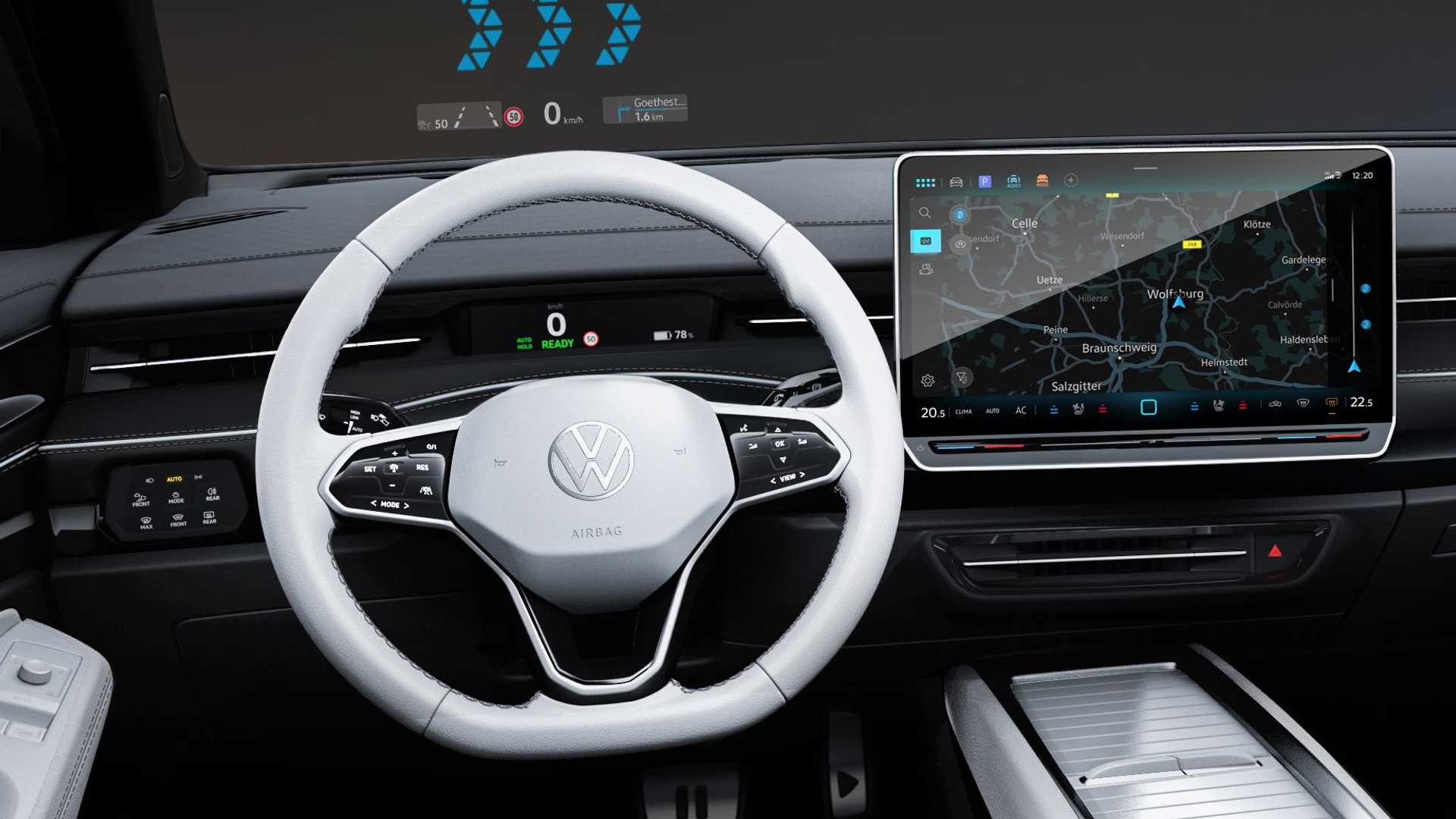
Beyond these high-profile delays, the initial software versions deployed in electric vehicles such as the Volkswagen ID.4 and ID.5 also faced considerable criticism. Reports indicated widespread issues with freezing and glitching, impacting early customer experience and the perception of Volkswagen’s nascent electric vehicle lineup.
These early software performance problems highlighted the critical need for robust and reliable software architecture in modern automobiles, particularly in the rapidly evolving electric vehicle market.
Strategic Restructuring and Leadership Changes
In response to the persistent challenges and escalating financial losses within the Volkswagen Group Cariad software division, Volkswagen Group has initiated a significant strategic restructuring. This extensive overhaul includes changes at the highest echelons of the division’s leadership.
In 2023, a comprehensive shakeup saw the appointment of a new chief operating officer, chief technology officer, and finance director. These leadership changes were implemented to inject fresh perspectives and expertise, aiming to streamline operations and accelerate software development processes.
Further demonstrating the severity of the situation and the commitment to recalibrating Cariad’s operations, Volkswagen Group plans substantial workforce reductions. A Handelsblatt report indicates that 1,600 employees are slated to be laid off at Cariad by the end of the year.
The Volkswagen Group’s 2024 financial results explicitly acknowledged this strategic move, stating that a “rescaling of operations is planned.” This indicates a concerted effort to optimize the division’s size and focus, aligning its resources more effectively with revised development priorities and cost-efficiency objectives.
Evolving Software Strategy and Rivian Partnership
Established in 2020 as the Car.Software Organization, Cariad was initially envisioned as the central hub for developing a cohesive, uniform operating system and a standardized electrical architecture for the entire Volkswagen Group. This ambitious goal aimed to unify software across diverse brands and models, from entry-level Volkswagens to high-performance Porsches.
However, the journey has been fraught with difficulties. The division’s initial mandate included developing Volkswagen’s flagship electric vehicle, internally known as Project Trinity. Multiple delays in software development for Project Trinity ultimately forced the group to reassess and effectively restart its approach, highlighting the immense complexities involved in pioneering proprietary automotive software at this scale.
In a significant strategic pivot, Volkswagen Group is now set to leverage its substantial $5.8 billion investment in American electric vehicle manufacturer Rivian. According to Automotive News, the revamped flagship architecture for future Volkswagen Group vehicles will incorporate Rivian’s renowned software know-how.
This collaboration is expected to integrate advanced functionalities, including sophisticated Level 4 driver assistance systems, into Volkswagen’s next generation of electric vehicles. This move signals a pragmatic shift from solely internal development to strategic partnerships, aiming to accelerate technological advancement and mitigate the risks associated with in-house software development challenges.
The integration of Rivian’s proven software capabilities is anticipated to provide a robust foundation for Volkswagen Group’s future software-defined vehicles, potentially addressing some of the core challenges that have beleaguered the Cariad software division in recent years. This strategic alliance is crucial for Volkswagen as it strives to compete effectively in an automotive landscape increasingly defined by advanced digital functionalities and autonomous driving capabilities.
The Broader Implications for Volkswagen Group
The ongoing struggles within the Volkswagen Group Cariad software division carry significant implications for the broader Volkswagen Group. Software development has become a central battleground in the global automotive industry, particularly for electric and autonomous vehicles.
The ability to deliver reliable, innovative, and seamlessly integrated software is now as critical as mechanical engineering excellence. Cariad’s difficulties have not only led to substantial financial losses but have also impacted market timelines and consumer confidence in Volkswagen’s advanced technological offerings.
As the automotive industry transitions rapidly towards software-defined vehicles, Volkswagen Group’s effective management of Cariad’s transformation will be paramount. The success of its future electric vehicle portfolio, its competitive standing against agile tech companies entering the automotive space, and its long-term profitability hinge significantly on resolving these software challenges.
The strategic shift towards integrating external expertise, as evidenced by the Rivian partnership, indicates a mature recognition of the need for adaptability and collaboration in this complex technological frontier. Volkswagen’s ability to execute this revised strategy will define its trajectory in the coming decade, solidifying its position as a leader in sustainable and intelligent mobility solutions.
FAQ Section
What is Cariad?
Cariad is Volkswagen Group’s dedicated software division, established in 2020. Its primary mission is to develop a uniform operating system and a standardized electrical architecture for all upcoming vehicles across the Volkswagen Group’s various brands, aiming to streamline software integration and enhance digital functionalities in modern automobiles.
How much money has Cariad lost?
Cariad reported an operating loss of $2.64 billion (€2.431 billion) in the past year. Over the last three years, from 2022 to the past year, the division has accumulated significant operating losses totaling over $7.5 billion, reflecting substantial investments and operational challenges in its software development initiatives.
Why is Cariad experiencing financial losses?
Cariad’s financial losses stem from high development costs, operational inefficiencies, and significant delays in software projects. These issues have led to postponed vehicle launches, such as the Porsche Macan Electric and Audi Q6 E-Tron, and initial software glitches in models like the VW ID.4 and ID.5, impacting both costs and market performance.
What impact have Cariad’s issues had on Volkswagen Group vehicles?
Cariad’s software challenges have directly caused a year-long delay for key electric vehicle launches like the Porsche Macan Electric and Audi Q6 E-Tron. Additionally, early Volkswagen ID.4 and ID.5 models experienced software issues like freezing and glitches, affecting customer satisfaction and the initial reputation of VW’s electric vehicle offerings.
Is Volkswagen Group making changes to Cariad?
Yes, Volkswagen Group is implementing significant changes at Cariad. This includes a major leadership overhaul in 2023, with new top executives appointed. Furthermore, plans are in place to lay off 1,600 employees by the end of the year, alongside a strategic “rescaling of operations” aimed at improving efficiency and performance.
How will the Rivian partnership affect Cariad’s future?
The $5.8 billion investment in Rivian signifies a strategic shift for Volkswagen Group and Cariad. Future flagship vehicles will integrate Rivian’s software know-how, particularly for advanced Level 4 driver assistance systems. This collaboration aims to accelerate software development and enhance technological capabilities, moving away from purely internal development for critical future platforms.