
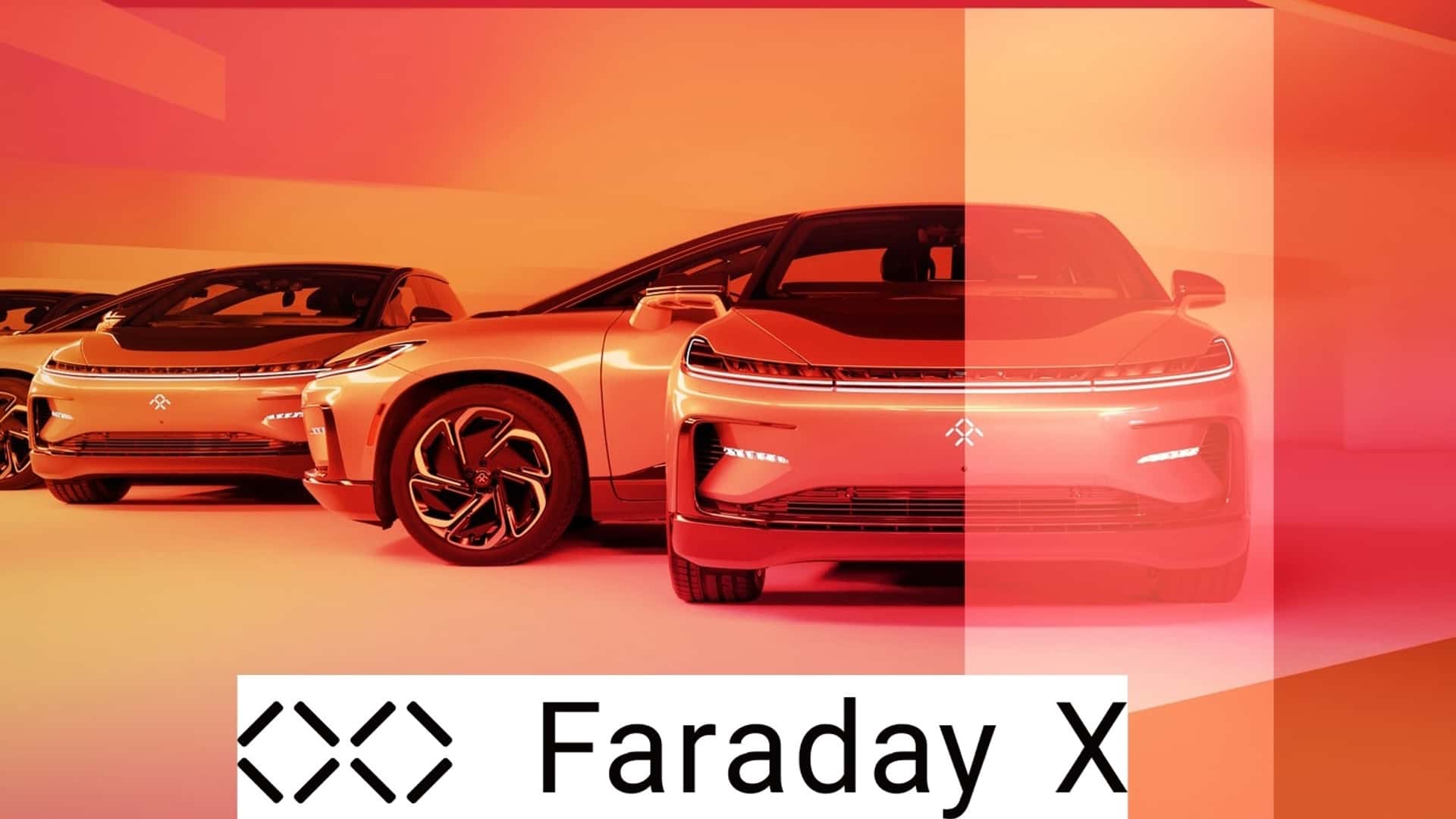
Key Takeaways:
- Faraday Future introduced Faraday X, a new sub-brand targeting the affordable electric vehicle (EV) market ($20,000-$50,000).
- Faraday X’s flagship, the ‘Super One’ luxury AI MPV, aims for production by late 2025, promising a blend of high-end comfort and integrated artificial intelligence.
- Despite compelling new promises, Faraday Future faces significant historical challenges, including a decade of unfulfilled commitments and the founder’s unresolved financial and legal issues.
- The company is heavily integrating AI, branding its vehicles as “AI-EVs” and “RE-AIEVs,” though initial prototypes revealed a disparity between AI claims and current implementation.
- Leadership acknowledges past reputational issues but expresses optimism for a “fresh start” and a plea for renewed trust from stakeholders.
LAS VEGAS, NEVADA — Faraday Future, the electric vehicle (EV) startup frequently at the centre of industry speculation, made a significant appearance at CES 2025, presenting a compelling vision for its future. Max Ma, CEO of the company’s newly unveiled sub-brand, Faraday X, articulated a narrative of overcoming persistent challenges to achieve its initial product launch and now, a strategic pivot towards higher-volume segments of the electric vehicle market.

Ma outlined plans for an array of affordable electric vehicles and plug-in hybrids, projected to range from $20,000 to $50,000. These upcoming models are slated to feature a deeply integrated artificial intelligence (AI) experience, aligning with the growing trend of smart mobility solutions. This hopeful and timely strategy, however, is shadowed by the company’s extensive and often turbulent history, which demands a substantial leap of faith from potential investors and consumers alike.
Faraday Future’s Tumultuous Journey and Unkept Promises
The name Faraday Future often evokes a complex and protracted history that extends over more than a decade. This intricate narrative is interwoven with corporate power struggles, geopolitical undercurrents, and a long list of promises that frequently went undelivered. Many of these commitments originated from Faraday Future’s controversial founder, Yueting “YT” Jia.
Jia, once lauded as one of China’s most innovative internet entrepreneurs, now faces significant discreditation in his home country due to a failure to repay considerable personal debts. His past ventures included Leshi, a Netflix-like streaming service, and LeEco, an ecosystem spanning televisions, smartphones, and even a distinct car enterprise, though the operational boundaries between these entities and Faraday Future were often indistinct.

The FF 91: A Symbol of Ambition and Delay
For those familiar with Faraday Future, the FF 91 luxury electric vehicle often comes to mind. Unveiled with much fanfare at CES in 2017, the FF 91 promised groundbreaking specifications: over 1,000 horsepower, an impressive 378 miles of electric range, and Level 4 autonomous driving capabilities. These were aspirational technologies, akin to those seen from leading EV manufacturers today.
Faraday Future initially announced that the FF 91 would enter production by 2018 at a planned Nevada factory. This facility was to be a greenfield development, contrasting with the retrofitted plants utilised by early Tesla and Rivian operations. Yet, the factory never fully materialised.
Work on the Nevada plant ceased even before the FF 91’s public unveiling, prompting the then-treasurer of Nevada to publicly label the enterprise a “Ponzi scheme,” according to a report by Fortune. Fast forward over eight years since the factory halt, seven years post-introduction, and six years past its projected production start date, Faraday Future has reportedly produced a mere 16 FF 91 units.
These limited vehicles have primarily been allocated to employees, paid spokespeople, and various advocates, including the perpetually embattled American singer Chris Brown. This distribution strategy further fuels questions regarding the company’s judgment and operational transparency.
Faraday X: A New Sub-Brand Targeting the Mass Market
At CES 2025, Faraday Future introduced Faraday X, its new sub-brand, signalling a decisive shift in market strategy. While the FF 91 commands a price tag exceeding $300,000, Max Ma stated that Faraday X would focus on the more accessible $20,000-$50,000 price bracket. The proposed lineup includes the FX 5, envisioned between $20,000 and $30,000, the FX 6, targeting $30,000 to $50,000, and the “Super One” minivan, with an undisclosed price point.
While details on the FX 5 and FX 6 remain scarce, a prototype of the Super One minivan was showcased. This vehicle, intended for assembly at Faraday Future’s California manufacturing facility, is expected to commence production by the close of 2025. The Super One aims to introduce American consumers to the “luxury MPV” segment, a category that has gained considerable popularity in China and other Asian markets.
The concept envisions Cadillac Escalade-level luxury within a Toyota Sienna-like form factor, featuring opulent reclining seats and advanced technological amenities. Max Ma, an engineer by training with extensive experience at Altran and Bosch, including work on high-performance Volkswagen Group engines, and a current Kia Carnival driver, sees a clear market gap.
“The same thing is going to happen here,” Ma told InsideEVs, drawing parallels to the transformation luxury MPVs brought to high-end Asian markets. He noted that while celebrities currently opt for large SUVs like Escalades, these vehicles often lack “real luxury, top luxury, or, you know, space and comfort. There’s no AI.” He observed a growing trend of celebrities customising Mercedes Sprinter vans to achieve the desired experience, a niche the Super One aims to fill.
The AI Imperative: Promises vs. Reality
Faraday Future’s strategic focus at CES 2025 heavily leaned into artificial intelligence. The company has historically been an early adopter of AI buzzwords, and at this year’s event, its commitment to AI integration was paramount. The FF 91 is not merely an EV; it is an “AI-EV.” The Super One is designated as a “Luxury AI MPV.” Given its anticipated plug-in hybrid specifications, it will be branded as a Range Extended Artificial Intelligence Electric Vehicle, or “RE-AIEV.”
During an hour-long introduction, both FX CEO Max Ma and Faraday Future CEO Matthias Aydt underscored AI’s central role in their mission. (It is notable that Jia was removed as CEO in 2022 following an internal investigation, though he remains with the company.) Positioning AI as a core differentiator is a reasonable strategy for a modern tech company, but a closer examination of the product offerings revealed some inconsistencies.
During a tour of the Super One prototype, a product representative demonstrated the vehicle to journalists. Faraday X openly acknowledges that the Super One is being developed with a Chinese partner, leveraging an existing design. Essentially, it appears to be a rebadged Chinese plug-in hybrid MPV, retrofitted with Faraday Future’s proprietary technology. However, the prototype presented was largely a standard Chinese MPV, potentially a Dongfeng Voyah Dream based on observations, although journalists were not permitted to photograph the interior.
The prototype lacked much of Faraday X’s specific equipment. The entire tech stack was unfinished, with the dashboard concealed by black cloth, a common practice for prototypes. The focus instead was on the plush, power-reclining, and massaging rear seats, which offered a superior comfort experience compared to top-tier Toyota Sienna or Kia Carnival models. Yet, tangible AI features were conspicuously absent.
When questioned about the AI capabilities, the product representative vaguely responded, “Well, it’s a general term,” adding that the vehicle would support voice controls and semi-autonomous driving features. This explanation contrasted sharply with Ma’s assertion that no other MPV product offers AI, as basic voice controls and semi-autonomous driving are standard features in many contemporary minivans.
For a more advanced demonstration, an FF 91 was showcased. Its voice command system was indeed impressive, allowing contextual queries such as “Find me an Italian restaurant with outdoor seating and at least four stars, exclude pizzerias.” The system accurately processed the request and understood subsequent commands like “Navigate to the third one.”
However, the “large language model” AI companion on the FF 91’s rear screen proved less reliable. A spokesperson attempted to demonstrate its ability to automatically display relevant stock tickers alongside videos. After several attempts, a CNBC YouTube video played, and the AI companion did display a stock ticker. Crucially, this information appeared to be either at least three months out of date or entirely fabricated, bearing no resemblance to current market prices. This incident served as a potent metaphor for potentially “shoehorned AI integration,” providing inaccurate information without explicit user request, even on a production model like the FF 91, let alone the developing Super One.
The Enduring Shadow of Yueting “YT” Jia
At the heart of Faraday Future’s prolonged saga remains Yueting “YT” Jia, its founder and chief product officer. A notable absence from the CES 2025 meeting, Jia reportedly continues to face legal complications in China, as confirmed by Max Ma. Jia’s substantial personal debt, which he collateralized with Faraday Future stock, led to a U.S. bankruptcy filing when he defaulted on creditors. His affairs in mainland China, however, remain unresolved.
Max Ma clarified that while “Under U.S. law, YT has been through a successful personal restructuring,” certain financial obligations persist under Chinese law. “And within [Chinese] law, there have been certain small amounts of funding that need to be further cleared. So that’s the reason why he’s still working very hard to, kind of through different means, to try to earn money and pay the debt back to the debt creditors,” Ma stated.
This situation places Jia in a precarious position, compounded by Faraday Future’s own history of financial instability, including a previous rescue by the now-collapsed Chinese property giant Evergrande. Despite these ongoing issues, Faraday Future’s leadership maintains Jia’s critical role. Matthias Aydt, the global CEO, told InsideEVs, “His role is pretty important. He’s the founder of the company.”
Aydt further emphasised, “He has given his ideas to the products. So from that perspective, he’s an essential and crucial element for our leadership team. He’s reporting in parallel to me, directly to the board, so his role is focusing very much on product and the user ecosystem.” Both Aydt and Ma dismissed concerns about Jia’s personal issues affecting the company, asserting that Faraday Future has no further financial exposure to his private life. They also expressed personal trust in Jia’s character.
The pivotal question for shareholders, prospective customers, and industry observers remains whether they can share the same level of trust in the company’s leadership and its future direction.
Charting the Course Ahead: A Plea for Trust
Max Ma concluded his address with an unusual appeal to the media for more positive sentiment surrounding the Faraday Future brand. He depicted a story of corporate resilience, a company that persevered despite widespread doubt. Having been with the company since its inception, Ma has navigated an attempted corporate takeover, the failure of the Nevada manufacturing plant, and eventually, the launch of the FF 91. His persistence, he suggested, is a testament to the company’s fighting spirit.
Acknowledging the difficulty in extending credibility to a company with Faraday Future’s track record, Ma expressed understanding. “We have been trained, with big hearts, with resilience, with hard [work.] We also want to have this big opportunity to prove that we can do it again, right?” he conveyed to InsideEVs.
He further affirmed the company’s commitment to addressing its past. “There’s also activities about a reputational issue. But today we have cleared up all those issues. It’s all behind us. We want to have a fresh start.” As Faraday Future seeks to reinvent itself and capture a new segment of the electric vehicle market, the challenge will be to translate these renewed promises into tangible successes that can finally earn the long-elusive trust of the industry and its consumers.
Frequently Asked Questions (FAQ) About Faraday Future
What is Faraday Future’s new sub-brand?
Faraday Future has launched a new sub-brand called Faraday X, which is focused on developing and producing more affordable electric vehicles and plug-in hybrids, targeting a broader consumer market than its initial luxury offering.
What price range will Faraday X vehicles target?
Faraday X aims to introduce vehicles in the $20,000 to $50,000 price range, significantly lower than Faraday Future’s current high-end FF 91 model. This strategy is intended to attract a larger customer base.
What is the “Super One” minivan?
The “Super One” is a luxury AI MPV prototype from Faraday X, designed to bring the premium minivan experience popular in Asian markets to the U.S. It promises high-end comfort, advanced technology, and AI integration, with production targeted for late 2025.
What are the AI capabilities promised by Faraday Future?
Faraday Future brands its vehicles as “AI-EVs” and “RE-AIEVs,” emphasising deeply integrated AI. This includes advanced voice commands for navigation and in-car functions, as well as AI companions, though real-world demonstrations have shown some inconsistencies in performance and accuracy.
What is the status of Faraday Future’s founder, Yueting “YT” Jia?
Founder Yueting “YT” Jia remains the chief product officer but faces unresolved personal debt and legal issues in China, despite having undergone successful personal restructuring under U.S. law. His situation contributes to ongoing skepticism about the company’s stability.
How many FF 91 vehicles has Faraday Future produced?
As of early 2025, Faraday Future has produced only 16 units of its flagship FF 91 vehicle. Most of these have been distributed to employees, paid spokespeople, and advocates, rather than widely sold to the public.
Is Faraday Future addressing its past reputational issues?
Faraday Future’s leadership, including Max Ma, acknowledges the company’s past reputational challenges. They express a strong desire for a “fresh start” and assert that previous issues have been cleared, seeking renewed trust from stakeholders and the public.
When was the FF 91 originally slated for production?
The Faraday Future FF 91 was first unveiled at CES in 2017 with an initial promise for production to begin sometime in 2018 at a new Nevada factory. However, this target was not met, and the factory plans were eventually halted.