
Key Takeaways
- Faraday Future’s new sub-brand, Faraday X, announced an ambitious EV strategy at CES 2025, targeting affordable electric vehicles and plug-in hybrids priced between $20,000 and $50,000.
- The company showcased a ‘Super One’ luxury AI MPV prototype, slated for production by year-end, aiming to introduce a new segment to the American market.
- Despite compelling promises, the rollout is shadowed by Faraday Future’s decade-long history of financial struggles, unfulfilled production targets, and significant leadership controversies.
- Observations during product demonstrations revealed discrepancies, particularly in the advertised advanced AI capabilities versus actual implementation, raising questions about the execution of Faraday Future’s EV strategy.
- The persistent legal and financial issues of founder Yueting ‘YT’ Jia continue to cast uncertainty over the company, despite assurances from current leadership.
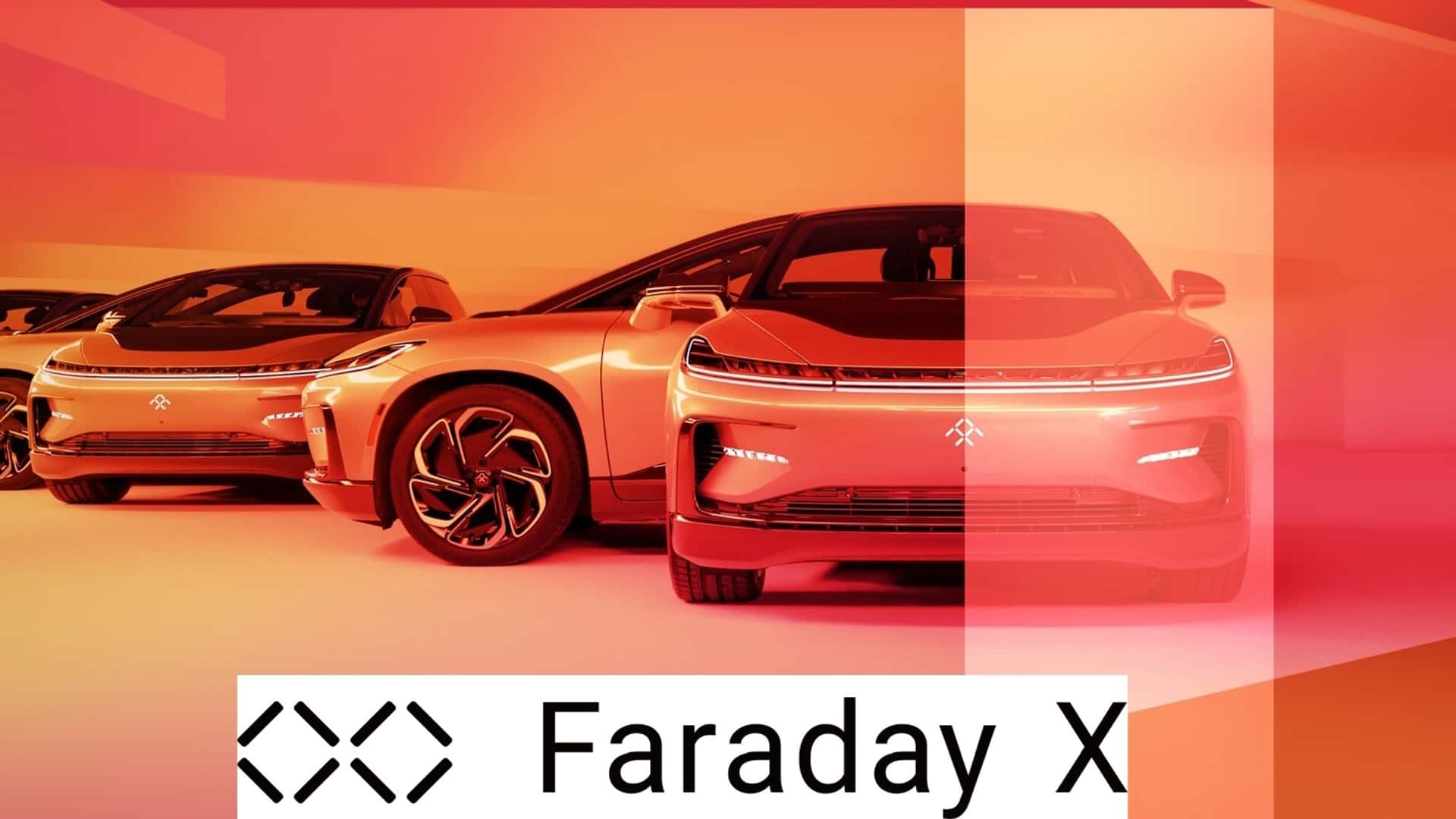
LAS VEGAS — At CES 2025, Faraday Future, an electric vehicle (EV) manufacturer with a turbulent corporate history, unveiled an optimistic new chapter through its sub-brand, Faraday X. The brand’s CEO, Max Ma, presented a vision of resilience, aiming to introduce a range of affordable electric vehicles and plug-in hybrids to the market.
These upcoming models are projected to be priced competitively, ranging from $20,000 to $50,000, and promise a deeply integrated artificial intelligence (AI) experience. This ambitious Faraday Future’s EV strategy, however, faces a significant challenge: overcoming the company’s complex past.

For over a decade, Faraday Future has been associated with a narrative of corporate takeovers, geopolitical intricacies, and a series of unfulfilled commitments. The company’s founder, Yueting “YT” Jia, once celebrated as a leading internet entrepreneur in China, now faces considerable debt issues, which have impacted his standing in his home country.
Faraday Future’s Tumultuous Journey: A Decade of Unfulfilled Promises
The name Faraday Future often evokes memories of the FF 91, an ambitious electric vehicle first unveiled at CES in 2017. This model promised groundbreaking specifications, including over 1,000 horsepower, an impressive 378 miles of electric range, and Level 4 autonomous driving capabilities.
These features were revolutionary for their time, aligning with the advanced offerings seen from top EV manufacturers today. The company had initially stated that the FF 91 would enter production by 2018 at a purpose-built factory in Nevada, distinguishing itself from other nascent EV players.

However, the promised Nevada factory never fully materialised. Work on the facility was halted even before the FF 91’s public debut, prompting the then-Treasurer of Nevada to describe the venture as a “Ponzi scheme,” according to a report by Fortune.
Eight years after the factory halt, seven years post its introduction, and six years beyond its projected production start date, Faraday Future has managed to produce only 16 units of the FF 91. A majority, if not all, of these vehicles have been allocated to employees, paid spokespeople, and various advocates.
Notably, perpetually troubled American singer Chris Brown was identified as one such spokesperson, a detail that has raised questions regarding the company’s judgment and associations over the years. This history forms a crucial backdrop against Faraday Future’s EV strategy for its new sub-brand.
Faraday X: A New Chapter with Ambitious EV Strategy
At CES 2025, Faraday Future introduced its new sub-brand, Faraday X, marking an apparent strategic pivot. In stark contrast to the FF 91’s price tag of over $300,000, Faraday X aims to tap into a more accessible market segment, with its models targeting the $20,000 to $50,000 range.
The announced lineup includes the FX 5, anticipated to be priced between $20,000 and $30,000, and the FX 6, projected to retail for $30,000 to $50,000. Additionally, a “Super One” minivan, with an undisclosed price, is part of this new Faraday Future’s EV strategy.
The ‘Super One’ MPV: Redefining Luxury Mobility?
While details on the FX 5 and FX 6 remain sparse, Faraday X showcased a prototype of the Super One minivan, a luxury multi-purpose vehicle (MPV). The company stated that this vehicle, which will be assembled at its manufacturing facility in California, is on track for production by the end of this year.
The Super One is designed to introduce American consumers to the concept of “luxury MPVs,” a segment that has gained considerable popularity in Asian markets, particularly in China. The vision is to offer Cadillac Escalade-level luxury within a Toyota Sienna-like package, featuring plush recliners and advanced technology.
Max Ma, an engineer with a decade of experience at Faraday Future and prior work for automotive suppliers like Altran (Porsche) and Bosch (Volkswagen Group V-8, W-12, W-16 engines), believes there is a market gap. He currently drives a Kia Carnival, observing a clear space between high-end minivans and super-luxury SUVs.
Ma described this moment as a “Nokia and iPhone moment” for the brand, suggesting that the “right product” can “open people’s hearts.” He anticipates a transformation in the American market, similar to how luxury MPVs redefined high-end automotive preferences in Asia.
“Today, the celebrities are using Escalades. [It’s] big, but there’s no real luxury, top luxury, or, you know, space and comfort. There’s no AI. And then if you want to drive yourself, it’s very hard to drive. It’s a big car, right? At the same time, celebrities are starting to modify their Mercedes Sprinter vans because they do want to have [this experience],” Ma explained.
The Centrality of AI: A Double-Edged Sword
Central to Faraday Future’s EV strategy and the Faraday X narrative is an intense focus on artificial intelligence. The company has been at the forefront of integrating AI buzzwords into its product branding, a trend evident across CES 2025.
The FF 91 is not merely an EV; it is an “AI-EV.” Similarly, the Super One is positioned as a “Luxury AI MPV.” With its projected plug-in hybrid specifications, the Super One will be known as a “Range Extended Artificial Intelligence Electric Vehicle” or “RE-AIEV.”
During an hour-long introduction, both FX CEO Max Ma and Faraday Future CEO Matthias Aydt underscored AI’s foundational role in their mission. It is important to note that Yueting Jia, though still at the company, was removed as CEO in 2022 following an internal investigation, with Aydt assuming the top leadership role.
While this strong emphasis on AI aligns with current technological trends and investor interests, an inspection of the product itself began to reveal potential inconsistencies, raising questions about the practical application of this aspect of Faraday Future’s EV strategy.
AI in Practice: From Impressive Voice Control to Outdated Data
A product representative conducted a tour of the Super One prototype for journalists. It was revealed that the vehicle is being developed with the assistance of a Chinese partner, utilising a mature design. Essentially, the Super One appears to be a rebadged Chinese plug-in hybrid MPV, integrated with FF’s proprietary technology.
The prototype showcased was, for all intents and purposes, a standard Chinese MPV, bearing a strong resemblance to models like the Dongfeng Voyah Dream. Despite the focus on AI, the vehicle’s tech stack remained unfinished, with the dashboard obscured by black cloth, typical of early prototypes.
The demonstration concentrated on the rear recliners, which offered significant comfort, power recline, and massage functions, surpassing features typically found in high-end minivans such as the Toyota Sienna or Kia Carnival. However, a crucial aspect of Faraday Future’s EV strategy – AI integration – was less apparent.
When questioned about the specific AI features within the Super One, the product representative offered a broad explanation: “Well, it’s a general term,” he stated, citing voice controls and semi-autonomous driving features. These, however, are standard offerings in many modern minivans, contradicting Ma’s assertion that no other MPV product incorporates AI.
For a more advanced AI demonstration, an FF 91 model was presented. Its voice command system proved impressive, accurately responding to complex requests such as: “Find me an Italian restaurant with outdoor seating and at least four stars, exclude pizzerias.” The system effectively processed the request and understood subsequent contextual commands like “Navigate to the third one.”
Yet, the “large language model” AI companion on the rear screen of the FF 91 showed limitations. A spokesperson demonstrated its ability to automatically display relevant stock tickers alongside streaming videos. After several attempts, a CNBC YouTube video played, and the AI companion indeed pulled up a stock ticker.
However, the displayed stock information was observed to be either “at least three months out of date or entirely fabricated,” bearing no resemblance to current market prices. This anomaly, present in a production-ready FF 91, serves as a poignant metaphor for the challenges in fully realizing and accurately integrating AI capabilities as part of Faraday Future’s EV strategy.
The Lingering Shadow of Yueting Jia
At the core of Faraday Future’s intricate narrative is its founder and Chief Product Officer, Yueting “YT” Jia. His absence from the recent CES meeting was notable, with Max Ma confirming his continued involvement in legal issues in China. Jia’s past includes founding prominent companies like Leshi, a streaming service akin to Netflix, and LeEco, an ecosystem spanning TVs to smartphones, alongside a distinct Le-branded automotive venture.
Once hailed as a billionaire and China’s answer to Elon Musk, Jia accumulated substantial personal debt. This debt was notably secured using Faraday Future stock. His failure to repay creditors led to a personal bankruptcy filing in the U.S., though his financial affairs in mainland China remain unresolved.
Ma clarified that “Under U.S. law, YT has been through a successful personal restructuring.” However, he added, “And within [Chinese] law, there have been certain small amounts of funding that need to be further cleared. So that’s the reason why he’s still working very hard to, kind of through different means, to try to earn money and pay the debt back to the debt creditors.”
This ongoing situation places Jia in a precarious position, facing significant domestic challenges while being associated with an American company that has previously encountered severe financial distress, requiring rescue by Evergrande—a Chinese property giant that itself faced collapse. Despite these issues, Faraday Future’s leadership continues to underscore Jia’s importance.
“His role is pretty important. He’s the founder of the company,” stated Matthias Aydt, the global CEO. “He has given his ideas to the products. So from that perspective, he’s an essential and crucial element for our leadership team. He’s reporting in parallel to me, directly to the board, so his role is focusing very much on product and the user ecosystem.”
Aydt dismissed concerns about Jia’s personal issues, categorizing them as strictly individual matters, and affirmed that Faraday Future has no further exposure to his personal financial entanglements. Both Aydt and Ma expressed their trust in Jia, portraying him as a person of good character.
The overarching question remains whether shareholders, prospective customers, and industry critics will adopt a similar level of trust in the context of Faraday Future’s EV strategy and the company’s future direction.
Charting the Path Forward: Can Trust Be Rebuilt?
Max Ma made a direct appeal for a more positive perception of the Faraday Future brand during the CES discussions. He underscored a narrative of corporate resilience, highlighting the company’s ability to navigate through widespread skepticism and formidable challenges.
Ma has been integral to Faraday Future since its inception, enduring an attempted corporate takeover, the failure of the Nevada manufacturing plant, and ultimately, the launch of the FF 91. His persistence in striving to achieve success for the company remains evident.
Acknowledging the difficulty in garnering public trust, particularly given the company’s historical trajectory, Ma admitted, “We have been trained, with big hearts, with resilience, with hard [work.] We also want to have this big opportunity to prove that we can do it again, right?”
He further articulated the company’s commitment to addressing its past. “There’s also activities about a reputational issue. But today we have cleared up all those issues. It’s all behind us. We want to have a fresh start.” The success of Faraday Future’s EV strategy hinges significantly on its ability to rebuild this crucial trust.
Frequently Asked Questions (FAQ)
What new products did Faraday Future announce at CES 2025?
At CES 2025, Faraday Future, through its sub-brand Faraday X, announced plans for the FX 5 (estimated $20,000-$30,000), FX 6 (estimated $30,000-$50,000), and the “Super One” luxury AI MPV. This new Faraday Future’s EV strategy aims to enter more affordable market segments, moving beyond its high-priced FF 91 model.
What is the ‘Super One’ MPV and when is it expected?
The ‘Super One’ is a luxury AI MPV prototype unveiled by Faraday X, designed to offer high-end comfort and technology similar to luxury SUVs but in an MPV form factor. It is slated for production by the end of 2025 at Faraday Future’s California manufacturing facility, aiming to introduce a new luxury segment to the US market.
What role does AI play in Faraday Future’s new vehicles?
Faraday Future extensively brands its new vehicles as “AI-EVs,” “Luxury AI MPVs,” and “RE-AIEVs,” emphasizing a deeply integrated AI experience. While impressive voice commands were demonstrated in the FF 91, the practical application and accuracy of other AI features, such as a rear-screen stock ticker, appeared inconsistent and outdated.
What is the history of Faraday Future’s FF 91 production?
The FF 91 was unveiled at CES 2017 with promises of high performance and autonomous capabilities, targeting 2018 production. However, its dedicated Nevada factory was never completed, and as of 2025, only 16 units have been produced, primarily distributed to employees and advocates, significantly missing original targets.
What are the ongoing concerns regarding Faraday Future founder Yueting “YT” Jia?
Yueting “YT” Jia, Faraday Future’s founder and Chief Product Officer, continues to face unresolved legal and financial issues in China stemming from significant personal debts. While his U.S. bankruptcy restructuring is complete, “small amounts of funding” still need clearance in China, casting a shadow over the company despite leadership’s assurances.
Can Faraday Future regain public and investor trust?
Faraday Future’s management, particularly Max Ma, acknowledges the company’s reputational challenges and has appealed for a fresh start, citing resilience and a determination to prove its capabilities. Rebuilding trust will depend heavily on consistent delivery of promised products, transparent operations, and demonstrating sustained financial stability in its future endeavors.