
America’s electric vehicle (EV) tax credits are set to undergo a significant transformation, making them more accessible to consumers from January 2024. This pivotal shift means prospective EV buyers will no longer need to wait for their annual tax refund to claim savings; instead, they can receive an immediate discount at the point of sale, effectively making clean vehicles more affordable upfront.
This major overhaul is a direct consequence of the Inflation Reduction Act (IRA), enacted in August 2022. While the original legislation introduced new credits for both new and used electric and plug-in hybrid cars, the crucial point-of-sale transfer mechanism was slated to begin in 2024. The Internal Revenue Service (IRS) has now made public the detailed rules governing this process, signaling a new era for EV adoption in the United States.

For individuals considering an EV purchase, this change could be the decisive factor. The ability to apply the EV tax credit directly to the vehicle’s price at the dealership or retail location streamlines the purchasing process and immediately reduces the financial burden, moving beyond the traditional tax refund system.
Key Takeaways: Instant EV Tax Credit Boosts Affordability
- Point-of-Sale Rebates: From January 2024, buyers can transfer the EV tax credit amount directly to the dealership, receiving an immediate discount on the vehicle’s purchase or lease price.
- Elimination of Tax Burden Limit: Unlike previous iterations, consumers can now fully utilise the credit (up to $7,500 for new, $4,000 for used) regardless of their annual tax liability.
- Streamlined Process for Dealers: Participating dealerships must register with the IRS Energy Credits Online platform to facilitate the immediate transfer and receive repayment from the IRS within 72 hours.
- Retained Eligibility Criteria: Vehicle MSRP caps ($55,000 for sedans, $80,000 for trucks/SUVs) and income limits (e.g., $300,000 for joint filers) remain in effect for new EV tax credit claims.
- Consequences for Exceeding Income Caps: Buyers who exceed income limits by year-end will be required to repay the credit received at the point of sale.
- Lease Buyout Loophole: Leasing an EV can bypass certain manufacturing location requirements, and a subsequent buyout under $25,000 can potentially yield both the new and used EV tax credits.
Evolution of Clean Vehicle Incentives
Federal tax credits for clean vehicles have been a cornerstone of US automotive policy since the late 2000s, offering up to $7,500 for new plug-in hybrids (PHEVs), fuel cell electric vehicles (FCEVs), and pure EVs. This framework largely remained consistent until January 1, 2023, when the Inflation Reduction Act introduced a more stringent set of requirements.
The IRA’s provisions sought to bolster domestic manufacturing and supply chains by favouring North American-built EVs and batteries. This legislative shift immediately impacted a range of electrified vehicles, causing several models to lose their eligibility for the EV tax credit. For instance, models such as the Chinese-made Polestar 2, the British-built Mini Cooper SE, and the German-built BMW i4 were disqualified solely due to their country of final assembly.

Beyond manufacturing location, the IRA also introduced specific MSRP caps. New EV purchases were subject to a $55,000 limit for sedans and an $80,000 cap for trucks and SUVs. Used vehicles faced an even stricter $25,000 price ceiling. These price constraints meant that some premium options, like those from Lucid, no longer qualified for the incentive, limiting choice for certain consumers.
Furthermore, the IRA established income thresholds for eligibility. New EV buyers were subjected to limits of $300,000 for joint filers, $225,000 for heads of household, and $150,000 for single filers. For used EV purchases, these limits were even tighter: $150,000 for joint, $112,500 for head-of-household, and $75,000 for single filers.
A significant characteristic of the initial IRA EV tax credit was its non-refundable nature, similar to previous credits. If a buyer, for example, purchased a Tesla Model Y in 2023 and owed $5,000 in taxes, they could only utilise $5,000 of the $7,500 credit, forfeiting the remaining $2,500. This limitation was a point of criticism, as it prevented individuals with lower tax burdens or significant write-offs from fully benefiting from the incentive. The forthcoming changes in 2024 directly address this challenge.
The 2024 Transformation: Instant Savings
The most impactful change for the EV tax credit in 2024 is the implementation of the point-of-sale transfer, effective next year. This means that when a consumer purchases or leases an eligible clean vehicle, the credit amount can be directly applied as a reduction in the vehicle’s price at the time of transaction.
To facilitate this, dealerships intending to transfer the credit must register with the new IRS Energy Credits Online platform. Once registered, the dealership can deduct the credit amount from the vehicle’s price, and the IRS will then reimburse the dealership directly, typically within 72 hours of a completed transaction.
This mechanism significantly benefits buyers who previously could not utilise the full credit due to their tax burden. A hypothetical buyer with an annual tax liability of $5,000, purchasing an EV eligible for a $7,500 credit, can now receive the full $7,500 reduction off the purchase price immediately. There will be no obligation to repay the difference to the IRS come tax season, making the full incentive accessible to a broader range of consumers.
However, it is crucial for buyers to remain cognizant of the income limits. If an individual exceeds their applicable income cap by the end of the year in which they claimed the point-of-sale credit, they will be required to repay the entire incentive amount to the IRS. For instance, a single filer earning $150,001 in a given year, after receiving a $7,500 point-of-sale credit, would be liable to repay that full $7,500.
Consumers who are close to these income thresholds still have the option to claim the EV tax credit in the traditional manner on their annual tax return, providing flexibility to manage potential income fluctuations.
New Vehicle Eligibility Requirements
For a new electrified vehicle to qualify for the EV tax credit in 2024, it must meet several criteria:
- Possess a battery capacity of at least 7-kilowatt hours.
- Undergo final assembly in North America.
- Comply with critical mineral and battery component sourcing requirements, largely aiming to reduce reliance on non-allied nations for supply chains.
The MSRP caps remain at $55,000 for sedans and $80,000 for trucks and SUVs. It is important to note that the final MSRP of the vehicle, including all options, must stay below these caps to secure the EV tax credit.
As of the latest updates, qualifying new vehicles and their applicable credit values include:
Vehicles With $55,000 Cap
- Chevrolet Bolt EV: $7,500 credit
- Chevrolet Bolt EUV: $7,500 credit
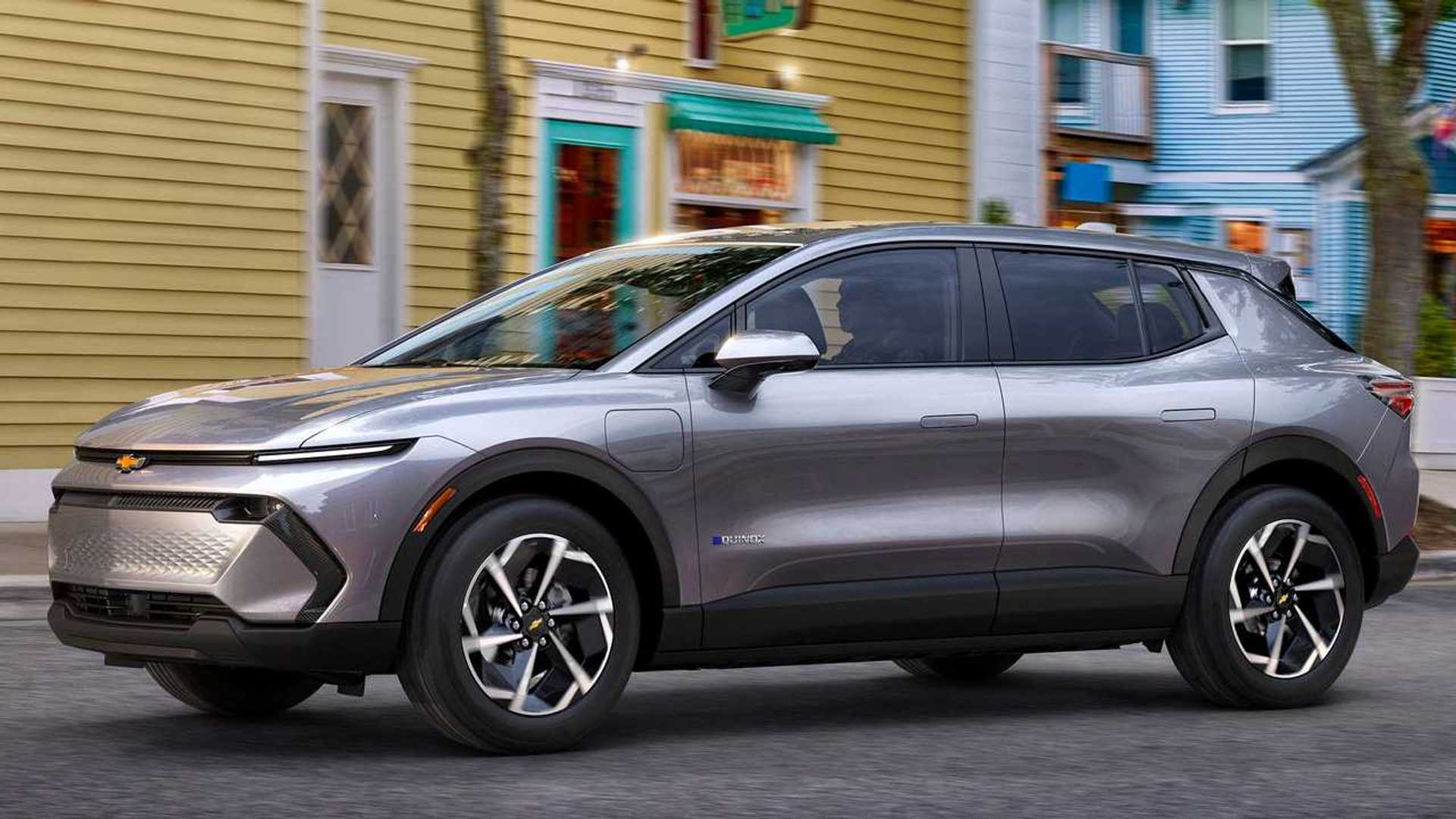
- Chevrolet Equinox EV: $7,500 credit
- Tesla Model 3: $7,500 credit
Vehicles With $80,000 Cap
- Cadillac Lyriq: $7,500 credit
- Chevrolet Blazer EV: $7,500 credit
- Chevrolet Silverado EV: $7,500 credit
- Chrysler Pacifica: $7,500 credit
- Corsair Grand Touring: $3,750 credit
- Ford E-Transit: $3,750 credit
- Ford Escape: $3,750 credit
- Ford F-150 Lightning: $7,500 credit
- Ford Mustang Mach-E: $3,750 credit
- Jeep Grand Cherokee 4xe: $3,750 credit
- Lincoln Aviator Grand Touring: $7,500 credit
- Rivian R1S: $3,750 credit
- Rivian R1T: $3,750 credit
- Tesla Model X Long Range: $7,500 credit
- Tesla Model Y: $7,500 credit
- Volkswagen ID.4: $7,500 credit
- X5 xDrive50e 2024: $3,750 credit
Used Vehicle EV Tax Credit Specifics
The used clean vehicle tax credit, capped at $4,000, also benefits from the point-of-sale transfer. Eligible used vehicles can be FCEVs, PHEVs, or pure EVs. They must have a battery size of at least 7 kilowatt-hours, be at least two model years old, and sell for under $25,000.
A crucial provision states that the vehicle must not have been transferred to a qualified buyer after August 16, 2022. This means a used electric vehicle that has already been purchased second-hand after this date, regardless of its price, will not qualify for the $4,000 credit again. Tools like Recurrent’s EV Qualification Tool are available to help prospective owners determine eligibility for their desired used vehicle.
Strategic Approaches to Maximise EV Incentives
For savvy consumers, a notable strategy exists to potentially maximise the total EV tax credits received. By leasing an EV, buyers can effectively bypass certain manufacturing location requirements, as the credit can be factored into the lease payments regardless of the vehicle’s origin.
If, at the end of the lease term, the individual chooses to buy out the vehicle and its purchase price is under $25,000, they could then qualify for the $4,000 used EV tax credit on that acquisition. This strategic approach could potentially result in combined incentives totalling up to $11,500 for the same vehicle over its lifecycle.
Looking Ahead: Impact on the Automotive Landscape
The revised EV tax credit represents the most substantial enhancement for both new and used electric vehicle consumers since the Inflation Reduction Act’s inception. By introducing a direct point-of-sale feature, consumers are poised to receive unprecedented purchasing stimuli, which could dramatically reduce the effective price of electric cars.
This increased accessibility for clean vehicles is anticipated to significantly influence consumer buying patterns and further accelerate the transition towards electric mobility, reshaping the automotive market landscape once again. As these updated rules come into effect, they are expected to play a crucial role in bolstering EV adoption rates and making sustainable transportation options more viable for a wider demographic.
Frequently Asked Questions
I’m buying an EV and have a tax burden less than the credit amount. Will I have to repay the IRS come tax season?
No. With the new point-of-sale EV tax credit, you will be able to receive the full benefit of the incentive as an immediate discount, regardless of your annual tax liability.
What happens if my income exceeds the limit after I receive a point-of-sale EV tax credit that year?
If your modified adjusted gross income surpasses the applicable thresholds by even a dollar in the year you claim the credit, you will be required to repay the entire incentive amount to the IRS.
If I buy an EV that has a starting MSRP below the cap but goes above it with options, would I still get the credit?
No. The final Manufacturer’s Suggested Retail Price (MSRP) of the vehicle, including all chosen options and packages, must remain under the specified cap to qualify for the EV tax credit.
Are all electric vehicles eligible for the point-of-sale EV tax credit?
No. New EVs must still meet specific criteria, including battery capacity, final assembly in North America, and critical mineral and battery component sourcing requirements, in addition to MSRP and income limits.
Can I claim the EV tax credit if I am leasing a vehicle?
Yes, if you lease an EV, the dealer can often pass the commercial clean vehicle tax credit (which has fewer restrictions) on to you through lower monthly payments, regardless of the vehicle’s manufacturing location.
How can I verify if a specific used EV qualifies for the $4,000 tax credit?
You can use specialized tools such as Recurrent’s EV Qualification Tool, which helps prospective owners determine if their desired used electric vehicle meets all the eligibility criteria for the tax credit.