
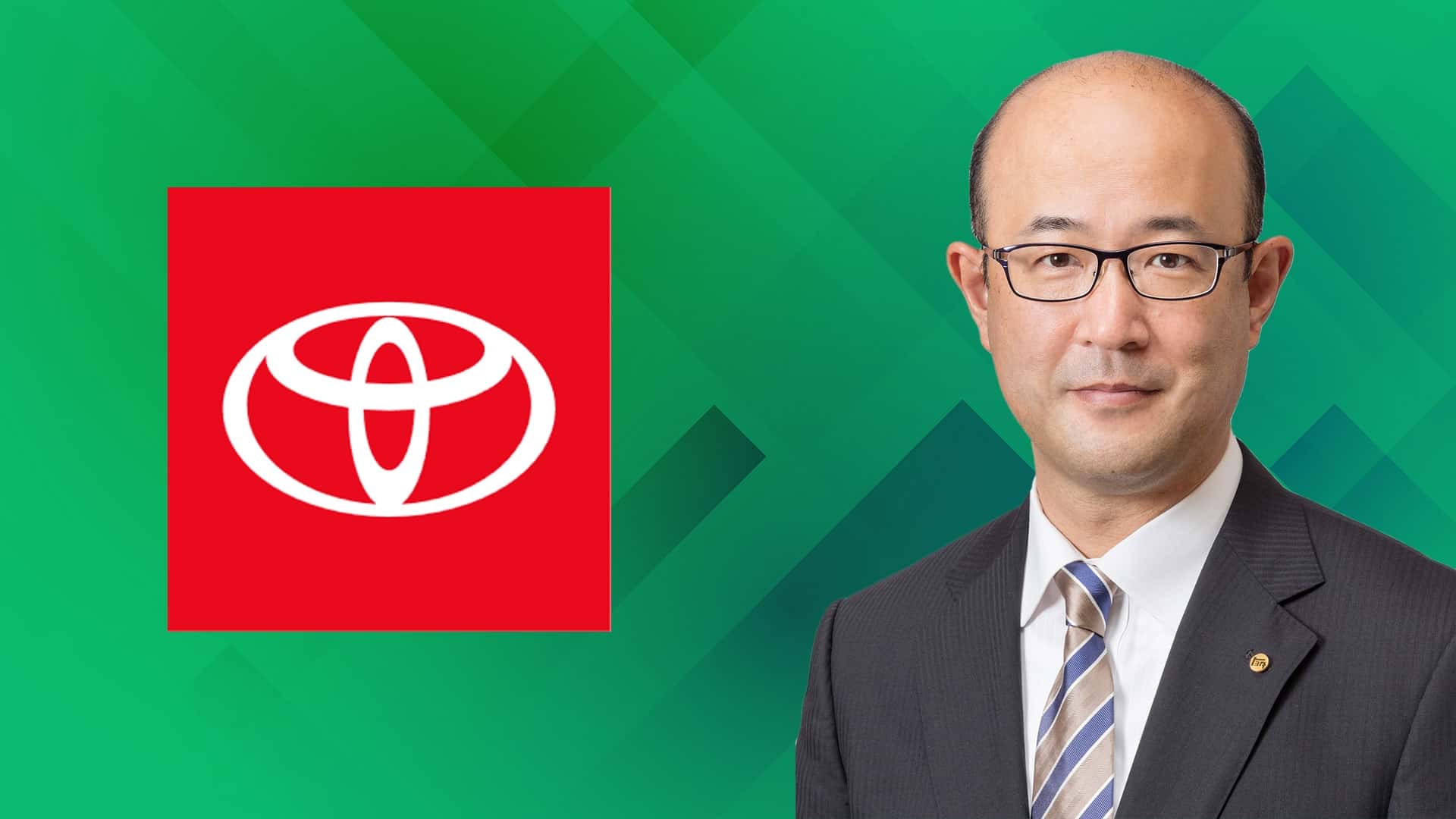
Key Takeaways (TL;DR)
- Toyota has appointed Kenta Kon, its Chief Financial Officer, as the new President and CEO, effective April 1.
- Kon’s appointment marks the first time since 2009 that a non-engineer or non-racer will lead the global automaker.
- Outgoing CEO Koji Sato, after a three-year tenure, will transition to Vice Chairman and Chief Industry Officer.
- This leadership change underscores Toyota’s strategic pivot towards financial stewardship and accelerated industry collaboration to bolster international competitiveness, particularly against rising Chinese rivals.
- Under Sato’s leadership, Toyota’s “multi-pathway” powertrain strategy proved successful, leading to a 111% increase in the automaker’s shares.
Toyota, the world’s largest automaker, is undergoing a significant leadership transition, appointing Kenta Kon, its current Chief Financial Officer, as the new President and Chief Executive Officer. This strategic move, effective April 1, brings a financial expert to the helm for the first time in over a decade, signaling a renewed focus on fiscal strength and market competitiveness in a rapidly evolving global automotive landscape. The appointment concludes Koji Sato’s tenure as CEO after just three years, a period marked by significant market performance and strategic alignment.

A Pivotal Leadership Shift at Toyota
The announcement confirms the end of Koji Sato’s leadership as CEO, a role he assumed in January 2023. Sato, an engineer by profession, inherited the position from Akio Toyoda, the grandson of Toyota’s founder, who now serves as Chairman. Toyoda, known for his deep involvement in automotive engineering and racing, had previously broken a similar mold when he took the top job.
The elevation of Kenta Kon, a seasoned financial expert, represents a notable departure from Toyota’s recent leadership tradition. For the first time since 2009, the company will be led by someone without a direct “car guy” background, indicating a strategic re-evaluation of the skills deemed most critical for navigating future challenges. This shift places an emphasis on robust financial management and strategic investment.
New Roles and Strategic Focus
As part of this corporate restructuring, Koji Sato will transition into new, influential roles within the organization. He is set to become Vice Chairman and Chief Industry Officer (CIO), focusing on broader industry collaborations and challenges. Concurrently, Kon will assume the dual responsibilities of President and Chief Executive Officer, concentrating on the internal management and operational efficiency of the company.
Beyond Toyota’s internal structure, Sato has also taken on significant external leadership positions, highlighting his continued importance to the wider Japanese automotive sector. Last month, he was appointed head of the Japanese Automobile Manufacturers Association (JAMA). Additionally, he has served as the Vice Chair of Keidanren (Japan Business Federation) since May of the previous year, further solidifying his role in shaping Japan’s industrial policy.
Complementing these changes, Yoichi Miyazaki, currently Toyota’s Operating Officer (OO), will step into Kon’s former role as CFO on April 1. Miyazaki will also retain his existing position, ensuring continuity and integrated financial and operational oversight. This comprehensive leadership revamp aims to streamline decision-making and foster a collaborative environment.
Addressing Industry Challenges: A Financial Helm
The automotive industry is grappling with unprecedented challenges, including accelerated technological shifts towards electric vehicles, intense global competition, and complex trade barriers. Toyota’s decision to appoint a finance chief as CEO is a clear response to these pressures. The company aims to fortify its financial resilience and strategic agility in a volatile market environment.
During a press conference, Kenta Kon and other Toyota officials addressed the rationale behind this significant leadership transition. According to Nikkei Asia, Toyota acknowledged the burgeoning threat from Chinese rivals, stating, “Recognizing the threat the Japanese car industry faces from Chinese rivals, Toyota added, ‘As the automotive industry faces a challenging business environment, there is a growing need to accelerate practical initiatives for industry collaboration to strengthen international competitiveness.'” This statement underlines the urgency to adapt and innovate within the global competitive landscape.
Kon further elaborated on his vision for the company’s future. He articulated his role as pivotal in empowering technological advancements led by engineers. “My role is to create a robust investment environment where they can freely experiment with various ideas,” Kon stated. This perspective suggests a strategy where financial prudence and strategic resource allocation will underpin technological exploration and innovation. Notably, Kon also holds the position of CFO for Woven by Toyota, the automaker’s advanced software unit, indicating his close involvement in future-oriented technologies.
Japan’s Automotive Sector and Global Competition
The “strengthen international competitiveness” directive holds particular significance for Japan’s broader automotive industry. Toyota’s immense influence cannot be overstated; the company holds strategic stakes in several major Japanese automakers, including Subaru, Mazda, Isuzu, and Suzuki. Furthermore, its extensive network of subsidiary companies supplies critical parts across the entire sector, making Toyota’s fortunes intrinsically linked to Japan’s overall car business.
In this context, the leadership transition can be interpreted as a strategic fortification against the rising dominance of players like BYD and other Chinese automakers. These rivals have rapidly advanced in electric vehicle technology and market penetration, posing a substantial challenge to established global manufacturers. By placing a financial expert at the helm, Toyota aims to optimize resource allocation, enhance cost efficiencies, and drive strategic investments that will bolster its competitive edge on the global stage. This proactive measure seeks to ensure the long-term sustainability and leadership of the Japanese automotive industry.
Sato’s Legacy: “Multi-Pathway” and Market Performance
Koji Sato’s tenure as CEO, though brief, was marked by distinct strategic successes and robust market performance. Under his leadership, Toyota deepened its commitment to the “multi-pathway” powertrain approach. This strategy emphasized offering a diverse range of vehicle technologies, including hybrid-electric, plug-in hybrid, fuel-cell electric, and battery-electric vehicles, rather than solely focusing on a rapid, all-in transition to EVs.
This diversified approach proved advantageous for the company. While many other global automakers made aggressive bets on pure battery-electric vehicles, often facing challenges related to evolving government policies, infrastructure development, and trade barriers, Toyota’s balanced portfolio allowed it to navigate market uncertainties more effectively. The wisdom of this strategy was reflected in the company’s financial performance; under Sato’s stewardship, Toyota’s shares notably increased by an impressive 111%.
Despite its measured approach, Toyota has consistently and strategically expanded its portfolio of all-electric vehicles. The company has publicly committed to further growing its EV offerings in the coming years, indicating a continuous adaptation to market demands while maintaining its core “multi-pathway” philosophy. Sato’s legacy will be remembered for successfully balancing innovation with market realities and delivering significant shareholder value.
The Road Ahead: EVs and Future Strategy
With Kenta Kon taking the reins, Toyota’s future strategy, particularly concerning electric vehicles, is expected to blend innovation with rigorous financial oversight. Kon’s emphasis on creating a “robust investment environment” for engineers suggests that EV development will continue to be a priority, but within a framework of fiscal discipline and strategic returns. The company’s commitment to expanding its all-electric vehicle portfolio remains, likely guided by market demand and profitability analyses.
The “multi-pathway” strategy, which proved highly effective under Sato, is anticipated to continue evolving under Kon’s leadership. This approach allows Toyota to hedge against market volatility and cater to diverse global consumer needs and regulatory environments. The challenge for the new CEO will be to accelerate electrification efforts while ensuring sustainable growth and maintaining the financial strength that has become a hallmark of the company’s performance. The strategic shift signifies an overarching goal to fortify the company’s position as a global automotive leader, resilient against present and future industry disruptions.
Analysing the Toyota Leadership Transition
The recent Toyota leadership transition underscores a sophisticated strategic pivot by the automotive giant. It reflects a nuanced understanding of the current global automotive climate, where technological advancement must be intricately linked with robust financial stewardship. By appointing a CFO to the top executive role, Toyota signals to the market and its stakeholders a strong commitment to efficiency, profitability, and prudent investment, even as it navigates the costly transition to next-generation powertrains.
This shift is not merely a change in personnel but a re-calibration of corporate priorities designed to enhance the company’s resilience and competitive standing. The focus on strengthening international competitiveness, especially against the backdrop of an assertive Chinese EV market, highlights a proactive stance. Toyota aims to protect its dominant position in Japan and globally, ensuring that its extensive industry footprint continues to thrive through periods of unprecedented change. The blend of experienced engineering leadership in advisory roles and financial expertise at the executive helm positions Toyota for sustained success in the evolving mobility ecosystem.
FAQ Section
Who is the new CEO of Toyota?
Kenta Kon, Toyota’s current Chief Financial Officer, has been appointed as the new President and Chief Executive Officer, effective April 1. His appointment marks a significant shift, as he is the first finance expert to lead the company since 2009, reflecting a strategic focus on financial stewardship in the evolving automotive industry.
What was Koji Sato’s role and tenure at Toyota?
Koji Sato served as CEO of Toyota for just three years, having been appointed in January 2023. During his tenure, he championed the “multi-pathway” powertrain strategy, which contributed to an impressive 111% increase in Toyota’s shares. Sato will now transition to Vice Chairman and Chief Industry Officer (CIO).
Why did Toyota appoint a financial expert as CEO?
Toyota’s appointment of CFO Kenta Kon as CEO is a strategic response to the challenging global automotive environment. The company aims to accelerate practical initiatives for industry collaboration and strengthen international competitiveness, particularly against rising Chinese rivals. Kon’s role will focus on creating a robust investment environment for technological development.
What is the “multi-pathway” strategy, and how did it perform?
The “multi-pathway” strategy involves offering a diverse range of powertrains, including hybrids, plug-in hybrids, fuel-cell electric, and battery-electric vehicles. Under Koji Sato’s leadership, this approach proved successful, enabling Toyota to navigate market shifts and trade barriers more effectively than many competitors who focused solely on EVs, leading to substantial shareholder gains.
How does this leadership change impact Toyota’s EV strategy?
While the new CEO Kenta Kon emphasizes financial prudence, Toyota is expected to continue expanding its portfolio of all-electric vehicles. Kon’s focus on a “robust investment environment” suggests that EV development will progress strategically, balancing innovation with fiscal discipline, ensuring sustainable growth within the company’s diversified “multi-pathway” approach.
What are Koji Sato’s new roles within Toyota and the industry?
Upon stepping down as CEO, Koji Sato will assume the roles of Vice Chairman and Chief Industry Officer (CIO) at Toyota, focusing on broader industry engagement. Additionally, he was recently appointed head of the Japanese Automobile Manufacturers Association (JAMA) and serves as Vice Chair of Keidanren, solidifying his influence in the Japanese industrial sector.
Who is the new Chief Financial Officer (CFO) of Toyota?
Yoichi Miyazaki, who currently serves as Toyota’s Operating Officer (OO), will take over Kenta Kon’s former role as Chief Financial Officer (CFO) on April 1. Miyazaki will also retain his existing position as Operating Officer, ensuring a seamless integration of financial and operational strategies.