
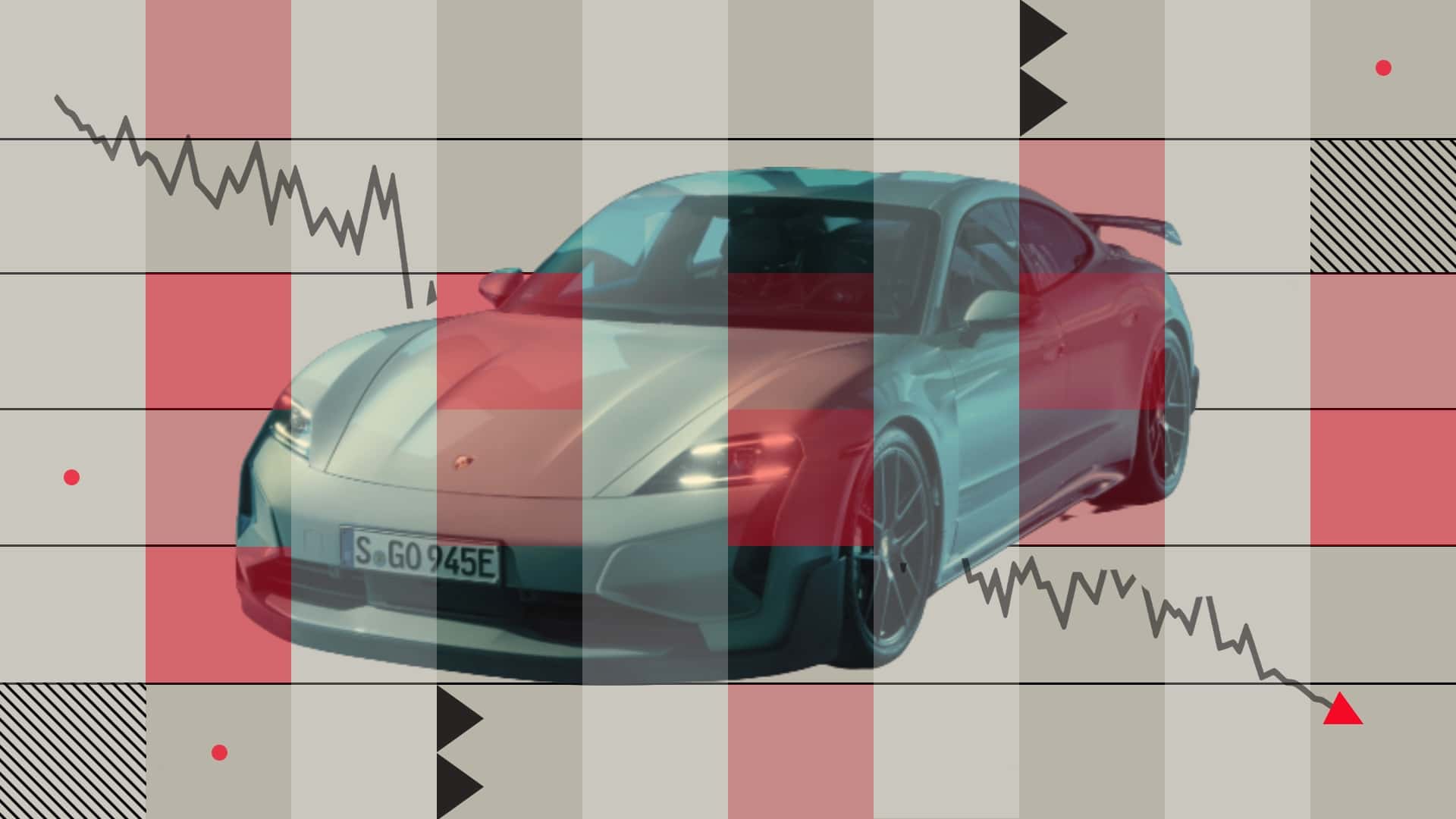
Stuttgart, Germany — Luxury sports car manufacturer Porsche is implementing significant job reductions, with plans to trim approximately 9,000 positions by 2035. This move, representing over 21% of its total workforce, underscores the profound challenges the company faces amidst a rapidly evolving automotive landscape, marked by a struggling business in China and a complex transition to electric vehicles (EVs).
The latest announcement from Porsche detailed an additional 5,000 job cuts, compounding the roughly 4,000 previously declared. These reductions are primarily intended to be managed through natural attrition, early retirement schemes, and voluntary buy-outs. The comprehensive measure reflects a strategic re-evaluation aimed at streamlining operations and managing capital as the global automotive industry navigates a period of unprecedented change.
For enthusiasts of electric vehicles, these financial pressures and strategic adjustments cast a shadow over the future of groundbreaking EV initiatives from the iconic German marque. The current climate makes Porsche less likely to invest in ambitious, high-risk ‘moonshot’ EV programs that could push technological boundaries and redefine performance in the electric era.
Key Takeaways
- Porsche plans to reduce its workforce by approximately 9,000 jobs through 2035, accounting for over 21% of its 42,066 employees (as per fiscal year 2025 data).
- The job cuts are a direct response to a significant downturn in its China market sales and the financial strains associated with its complex electric vehicle strategy.
- This strategic retrenchment suggests a reduced appetite for experimental, high-investment EV projects, potentially impacting the pace of innovation in Porsche’s electric lineup.
- Key EV models like the Macan, Boxster, and Cayman have experienced development delays and strategic pivots, indicating a cautious approach to full electrification.
- Porsche’s ‘whipsawing’ on electrification has led to considerable financial outlays and sales challenges, particularly in the competitive Chinese EV market.
Porsche’s Workforce Restructuring and Market Pressures
The decision to reduce its workforce by 9,000 positions by 2035 highlights the intense economic pressures confronting Porsche. This substantial workforce adjustment, equating to more than one-fifth of its 42,066 employees reported during fiscal year 2025, is a clear indicator of the company’s need to optimize its cost structure.
These job reductions are not merely about cutting immediate costs but are part of a broader strategy to navigate significant market headwinds. The methods for these cuts—natural attrition, early retirement, and voluntary buy-outs—suggest a managed approach to minimize disruption while achieving long-term efficiency goals.
The China Market Downturn
A primary catalyst for Porsche’s current financial challenges is the dramatic decline in its business within the crucial Chinese market. Once a bastion of growth for luxury automotive brands, China’s automotive sector has rapidly pivoted towards electric vehicles, often dominated by fast-moving domestic manufacturers.
Porsche’s sales figures in China starkly illustrate this downturn. Last year, the company sold just under 42,000 cars in the region. This represents a substantial contraction, being less than half of its peak sales of 95,671 units recorded in 2021. The competitive intensity and evolving consumer preferences in China’s EV landscape have posed significant hurdles for the brand.
Navigating the Electric Vehicle Strategy
Beyond the specific challenges in China, Porsche’s broader transition to electric vehicles has proven more arduous and costly than initially anticipated. The “tumultuous pivot to EVs,” as described, has involved substantial investments in research and development, new production processes, and adapting consumer perceptions, all while maintaining its premium brand identity.
The financial strain resulting from these dual pressures—a challenging market and a complex electrification journey—has necessitated the current round of austerity measures. These steps are crucial for the company to regain financial stability and ensure its long-term viability in a fiercely competitive global automotive arena.
The Taycan: A Glimpse into Porsche’s EV Ambition
The introduction of the Porsche Taycan in 2019 marked a significant moment in the automotive world. It was heralded as arguably the most sophisticated electric vehicle from a legacy automaker at its launch, showcasing Porsche’s formidable engineering prowess and its commitment to electric performance.
The Taycan’s advanced 800-volt architecture was a game-changer, enabling lightning-fast charge times and superior thermal management. This allowed the vehicle to withstand demanding conditions, including sustained on-track driving, a hallmark of Porsche’s performance heritage. Its consistent improvements over the years, including an enhanced charging curve and models capable of exceeding 300 miles on a single charge, further solidified its reputation.
The Taycan served as early, compelling proof that Porsche aimed to not just participate in the electric age, but to lead with innovative electric vehicle strategy and maintain its engineering edge in the premium segment. It set a high bar for what electric luxury sports cars could achieve.
Strategic Pivots and Model Line Ambiguities
Following the Taycan’s debut, Porsche outlined ambitious plans for further electrification across its product portfolio. This included the significant announcement that its high-volume Macan crossover would transition to an electric-only platform, alongside an all-electric Boxster and Cayman sports cars intended as direct replacements for their internal combustion engine (ICE) counterparts.
The Macan Electrification Experience
The rollout of the Macan EV, while technologically impressive, encountered market realities that led to a significant strategic adjustment. Despite its advanced features, the electric Macan’s high price point and a lingering affinity among Porsche buyers for gasoline-powered vehicles meant it did not fully meet sales expectations. This forced the company to initiate development of a new gas-powered Macan, acknowledging that it had inadvertently constrained its highest-selling model by attempting a full electrification too soon.
Uncertainty Surrounding Boxster and Cayman EVs
The planned electric Boxster and Cayman models have faced repeated delays, reflecting the ongoing complexities and reassessments within Porsche’s EV strategy. Initial plans for an all-electric lineup for these iconic sports cars evolved into announcements that ultra-high-performance versions would retain gas motor options. Subsequently, Porsche indicated plans for gas variants across the entire model line.
These fluctuations demonstrate a pragmatic response to market demand and the challenges of fully electrifying core performance models while maintaining brand appeal. As budget cutbacks now limit the brand’s maneuverability, the precise future configuration and timeline for these models remain subject to further evaluation, highlighting the difficulty in predicting consumer adoption of new electric platforms.
The Cayenne Electric’s Role
The new Cayenne Electric, which launched in U.S. showrooms this year, has been lauded for its impressive capabilities, including wireless charging, ultra-fast DC fast charging, and a highway range that surpassed 350 miles in independent testing. However, crucially, it is not positioned as a replacement for its gasoline-powered counterpart. Instead, a new internal combustion model of the Cayenne is set to follow, signaling a dual-powertrain approach.
This strategy suggests that while Porsche continues to innovate in the EV space, it is simultaneously hedging its bets by continuing to develop and offer popular ICE models. This dual approach aims to cater to diverse customer preferences and mitigate risks during the transition period, which is a critical aspect of Porsche’s electric vehicle strategy moving forward.
Economic Pressures and Future Ambitions
The consistent shifting in its electrification strategy, described as “whipsawing,” has exacted a considerable financial toll on Porsche. These strategic adjustments have resulted in significant monetary outlays and have impacted sales performance, creating a challenging environment for the luxury automaker.
The company’s past ability to undertake ambitious, unproven projects, such as establishing the Taycan as a beacon of tech leadership irrespective of immediate per-unit profit, relied on a different economic backdrop. The Porsche of 2017 or 2018 operated with greater capital flexibility, allowing for such significant investments in its electric vehicle strategy to secure future market positioning.
However, the current financial landscape paints a different picture. Today’s Porsche is capital-constrained and bears the marks of a half-decade characterized by confusing and costly back-and-forth decisions regarding its product development and market approach. This significantly impacts its capacity for future high-risk, high-reward endeavors.
Consequently, this constrained environment is likely to temper Porsche’s appetite for developing additional ‘moonshot’ EV products. It also suggests a reduced willingness to aggressively push its clientele towards full electrification across every model line. Instead, the company may gravitate towards a more conservative strategy, echoing a trend observed among many legacy automakers.
This revised approach could see Porsche prioritizing the maximization of profits from its robust internal combustion engine vehicle sales for as long as market conditions permit. Simultaneously, it would entail a more gradual and deliberate build-out of a profitable electric vehicle business for the future. While this strategy may align with shareholder interests and financial prudence, it represents a less aggressive and potentially slower trajectory for EV innovation, which may disappoint electric vehicle enthusiasts eager for cutting-edge developments from a brand synonymous with performance.
A spokesperson for Porsche declined to comment for this story.
FAQ Section
Q1: Why is Porsche cutting 9,000 jobs?
Porsche is implementing significant job cuts, totaling approximately 9,000 by 2035, primarily due to financial pressures stemming from a downturn in its crucial Chinese market and the substantial costs and complexities associated with its electric vehicle strategy. These measures aim to streamline operations and enhance cost efficiency amidst a challenging global automotive landscape.
Q2: How will Porsche manage these job reductions?
The job reductions, which represent over 21% of Porsche’s workforce (based on fiscal year 2025 data), are planned to be executed through a combination of natural attrition, early retirement programs, and voluntary buy-out schemes. This controlled approach seeks to minimize disruption while achieving the necessary workforce adjustments over a prolonged period.
Q3: How has the Chinese market impacted Porsche’s performance?
The Chinese market has significantly impacted Porsche’s performance, with sales declining to under 42,000 cars last year—less than half of its 2021 peak of 95,671 units. This downturn is largely attributed to China’s rapid shift towards a competitive EV market, where local manufacturers have gained significant traction and consumer preferences are rapidly evolving.
Q4: What challenges has Porsche faced with its EV transition?
Porsche’s transition to electric vehicles has been fraught with challenges, including high development costs, strategic pivots, and varying market acceptance. Models like the Macan EV faced high pricing and a preference for gasoline versions, leading to the reintroduction of an ICE variant. The Boxster and Cayman EVs have seen delays and a shift towards offering hybrid options or gas variants alongside electric.
Q5: How does this impact future Porsche EV models and innovation?
The current financial constraints and strategic recalibrations are expected to reduce Porsche’s appetite for developing highly experimental or “moonshot” EV products. While the company will continue its electrification efforts, a more cautious approach is anticipated, potentially slowing the pace of radical innovation and the aggressive push towards an all-electric lineup across all model segments.
Q6: Was the Porsche Taycan a successful EV?
Yes, the Porsche Taycan was a highly successful and pioneering EV, lauded for its sophisticated 800-volt architecture, fast charging capabilities, and robust performance suitable for track use. It initially served as a strong testament to Porsche’s engineering prowess and commitment to leading in the electric sports car segment, proving the brand could maintain its performance edge in the EV era.
Q7: Will Porsche stop producing gasoline cars?
Based on recent strategic adjustments, Porsche is not planning to cease production of gasoline cars entirely in the near future. While advancing its electric vehicle strategy, the company has indicated a dual-powertrain approach for several models, including the Macan and Cayenne, and has even reintroduced or retained gas options for others like the Boxster and Cayman, to cater to diverse market demands and maximize profitability.