
Key Takeaways:
- BMW is commencing mass production of high-voltage battery packs for its iX5 electric SUV in the U.S. starting December.
- The new Plant Woodruff in South Carolina will handle this in-house production, a strategic move amidst a fluctuating EV market.
- This multi-billion-dollar investment aims to establish a local supply chain, reduce logistical costs, and mitigate geopolitical risks for BMW.
- The iX5’s battery pack features advanced Gen6 cylindrical cells, offering 144 kWh (usable) capacity and an estimated 435 miles of range.
- The state-of-the-art facility will utilize approximately 300 human workers and 250 robots, incorporating virtual reality and AI for quality control.
- The localized battery assembly supports BMW’s global ‘local for local’ production strategy, enhancing efficiency and supply chain resilience.
Despite a period marked by fluctuating electric vehicle (EV) sales across the United States, German luxury automaker BMW is making a significant stride forward by localizing a crucial component of its EV future: battery production. The company officially announced plans to commence mass production of the high-voltage battery pack for its new iX5 model directly within the U.S., with operations set to begin in December at its recently inaugurated Plant Woodruff in South Carolina.
This strategic move sees BMW embracing in-house battery production, diverging from the common industry practice of relying solely on pre-assembled or imported packs from external suppliers. This substantial undertaking, representing a multi-billion-dollar investment, has been attempted by only a select few automakers in the U.S. While capital-intensive upfront, BMW views it as a critical long-term strategic bet designed to cultivate a robust local supply chain, shield itself from potential geopolitical disruptions, and ultimately drive down production costs.
Furthermore, the decision to co-locate battery production at Plant Woodruff, which is situated a mere 15 miles from the existing Plant Spartanburg where the iX5 is assembled, promises considerable savings in logistics and transportation costs. This geographical proximity streamlines the entire manufacturing process for BMW’s next generation of electric X models.
Strategic Imperative: Localizing Battery Manufacturing
BMW’s commitment to local battery production underscores a broader strategic vision aimed at securing its future in the rapidly evolving electric vehicle landscape. The automotive giant recognizes the intrinsic value of controlling key components of its EV ecosystem, particularly the high-voltage battery, which accounts for a substantial portion of an electric vehicle’s cost and performance.

By bringing this manufacturing process in-house, BMW is taking decisive steps to strengthen its operational independence. This vertical integration allows for greater control over quality, design iterations, and the overall efficiency of its electric vehicle supply chain. Such a strategy is increasingly vital in a global automotive market grappling with supply chain vulnerabilities and the imperative for sustainable manufacturing practices.
Robert Engelhorn, the president and CEO of BMW Manufacturing, articulated the significance of this development in a recent statement. “With Plant Woodruff, we are further expanding our footprint in South Carolina and strengthening the close integration of battery and vehicle production,” he said. “This creates the ideal foundation for the next generation of fully electric BMW X models assembled at Plant Spartanburg.”
Cutting-Edge Production at Plant Woodruff
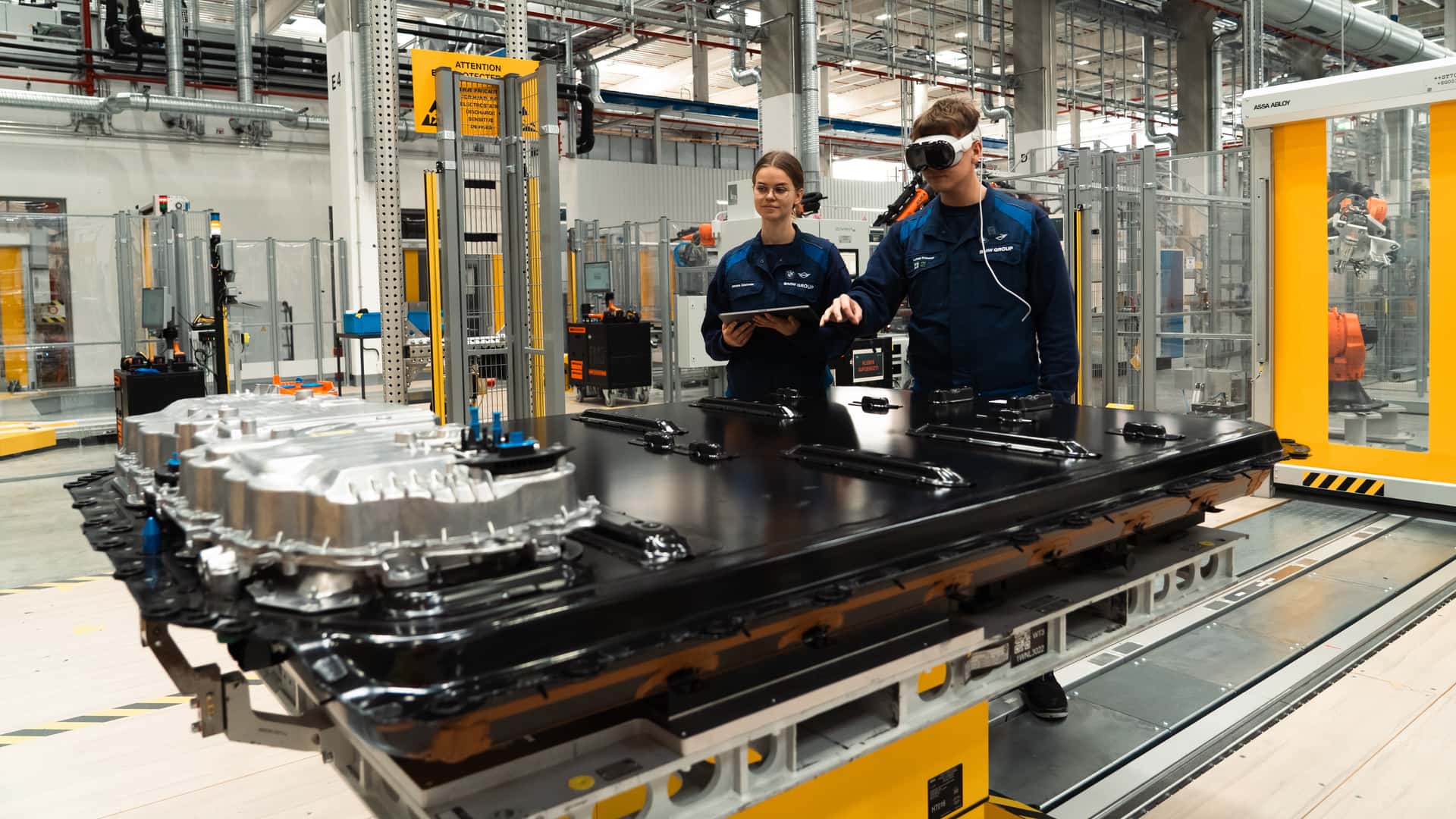
The newly established Plant Woodruff facility represents the forefront of modern manufacturing, blending human expertise with advanced robotics and artificial intelligence. BMW has confirmed that approximately 300 skilled human workers will collaborate with an impressive fleet of 250 robots to assemble these complex high-voltage battery packs.
To ensure unparalleled precision and quality throughout the assembly process, the plant will leverage sophisticated tools such as virtual reality (VR) for training and process simulation, alongside artificial intelligence (AI) for real-time error detection and quality assurance. This fusion of human ingenuity and technological innovation is expected to set new benchmarks in efficient and reliable battery manufacturing.
The Role of Battery Cell Sourcing
The core components of the iX5’s battery packs, the cylindrical cells, will be supplied by Japanese battery maker Automotive Energy Supply Corp. (AESC). AESC, now predominantly owned by China’s Envision Group, is a pivotal partner in BMW’s electrification strategy. While AESC had initially planned to establish its cell production facility in South Carolina, that project was reportedly paused in 2022 amidst a broader trend of battery project reconsiderations in the U.S. following changes in EV incentive policies by the previous administration.
Despite the change in location for cell production, AESC remains committed to supplying BMW with its advanced Gen6 battery cells. These next-generation cells are central to the iX5’s impressive performance metrics. Measuring 120 millimeters tall, they boast a substantial 30 percent more usable energy compared to the 95 mm cells found in the BMW iX3, signaling a significant leap in energy density and efficiency.
The Gigantic BMW iX5 Battery Pack: Performance and Charging
The BMW iX5’s battery pack is designed to deliver exceptional range and rapid charging capabilities, positioning it competitively within the burgeoning electric SUV segment. The pack itself is notably large, offering an impressive 144 kilowatt-hours (kWh) of usable energy capacity in the U.S. market, with the European variant rated at 141 kWh.
This substantial capacity translates directly into an extended driving range. BMW estimates the iX5 will achieve approximately 435 miles on a single charge, a figure that underscores the efficiency and energy density of its Gen6 battery technology. Beyond its formidable range, the iX5 also promises industry-leading charging speeds.
Thanks to a peak charging rate of 460 kilowatts (kW), the iX5 can replenish its battery from 10 percent to 80 percent in a mere 22 minutes. This rapid charging capability significantly enhances the practicality and convenience of electric vehicle ownership, addressing a key concern for many potential EV buyers regarding charging times and infrastructure.
Precision Assembly: How Each Pack Comes Together
The assembly of each high-voltage battery pack for the BMW iX5 is a meticulous multi-step process, engineered for both performance and durability. BMW’s engineers have designed a workflow that combines automated precision with human oversight to ensure every pack meets the company’s stringent quality standards.
Step-by-Step Production Process
- Initial Cell Inspection: The process commences with a thorough inspection of each individual cell upon its arrival from the supplier. This critical first step involves meticulously checking each cell’s voltage to ensure it adheres to specified parameters before proceeding.
- Cell Clustering and Cooling: Following inspection, workers precisely cluster the individual cylindrical cells together. These clusters are then carefully integrated with the necessary cooling components, which are essential for maintaining optimal battery temperatures during operation and charging, thereby enhancing longevity and performance.
- Laser Welding and Solidification: Once the cells and cooling elements are in place, they are welded together using advanced laser technology. This creates robust and precise connections. Subsequent to welding, the entire assembly is filled with a specialized foam. This foam hardens around the cells, effectively locking everything into one solid, protective block, providing structural integrity and enhanced safety against impacts.
- Sealing and Control Unit Installation: The final stage of physical assembly involves sealing the pack housing securely. After sealing, the ‘Energy Master’ — essentially the battery’s sophisticated brain and control unit — is bolted onto the pack. This crucial component manages power flow, monitors cell health, and communicates with the vehicle’s central systems.
- Insulation and Final Checks: The Energy Master itself requires its own specialized glue and seal to ensure it is properly locked in place and completely insulated from external elements. Every completed battery pack then undergoes a rigorous final check, encompassing a series of diagnostic tests to confirm its functionality and safety before it embarks on its short 15-mile journey from Plant Woodruff to the Spartanburg facility for integration into the BMW iX5.
BMW’s ‘Local for Local’ Global Production Philosophy
The inauguration of battery production at Plant Woodruff in South Carolina is not an isolated event but a key component of BMW’s broader global manufacturing strategy, dubbed the “local for local” approach. This philosophy dictates assembling battery packs in close proximity to where the electric vehicles themselves are built.
Beyond the U.S., BMW is actively assembling battery packs at several other strategic locations worldwide. These include Debrecen, Hungary; Lower Bavaria, Germany; Shenyang, China; and San Luis Potosi, Mexico. By decentralizing battery assembly and aligning it with vehicle production hubs, BMW aims to achieve significant supply chain efficiencies, reduce logistical complexities, and build resilience against regional disruptions.
This localized production model also allows BMW to better adapt to specific regional market demands, regulatory frameworks, and incentive programs, granting the automaker substantial competitive advantages and operational flexibility for decades to come in the rapidly expanding global electric vehicle market.
FAQs About BMW’s US Battery Production
What is BMW producing at Plant Woodruff?
BMW’s Plant Woodruff in South Carolina is set to mass produce high-voltage battery packs for the upcoming BMW iX5 electric SUV. This marks a significant move for the automaker to localize a crucial component of its electric vehicle manufacturing process in the United States, enhancing its control over the supply chain and reducing reliance on imported components.
When will BMW begin battery production in the U.S.?
BMW is scheduled to commence mass production of the iX5’s high-voltage battery packs at its newly opened Plant Woodruff in South Carolina starting in December. This timeline highlights BMW’s accelerated strategy to strengthen its electric vehicle manufacturing capabilities within the domestic market, aligning with its global electrification goals.
Why is BMW investing in U.S. battery production?
BMW’s investment in U.S. battery production is a multi-billion-dollar strategic move to establish a local supply chain, reduce long-term costs, and mitigate geopolitical risks. By producing batteries close to where the iX5 is assembled at Plant Spartanburg, BMW also expects to achieve significant savings in logistics and transportation expenses, improving overall efficiency.
What are the specifications of the BMW iX5’s battery pack?
The BMW iX5’s battery pack features advanced Gen6 cylindrical cells, standing 120 millimeters tall, which provide 30% more usable energy than the 95mm cells in the iX3. The pack offers a usable capacity of 144 kWh in the U.S. (141 kWh in Europe), translating to an estimated 435 miles of range. It supports rapid charging at 460 kW, achieving 10-80% charge in just 22 minutes.
How is BMW ensuring quality in its battery assembly process?
BMW ensures quality at Plant Woodruff by employing approximately 300 human workers alongside 250 robots. The facility integrates cutting-edge technologies like virtual reality for training and artificial intelligence to detect errors throughout the assembly process. Each pack undergoes rigorous final checks before being transported to the Spartanburg plant for vehicle integration, ensuring high standards.
What is BMW’s ‘local for local’ strategy?
BMW’s ‘local for local’ strategy involves assembling battery packs in facilities located geographically close to the electric vehicle production plants. This approach is implemented globally, with battery assembly sites in places like Hungary, Germany, China, Mexico, and now the U.S. It aims to optimize supply chains, reduce logistical costs, and enhance the overall efficiency and resilience of BMW’s global manufacturing network.