
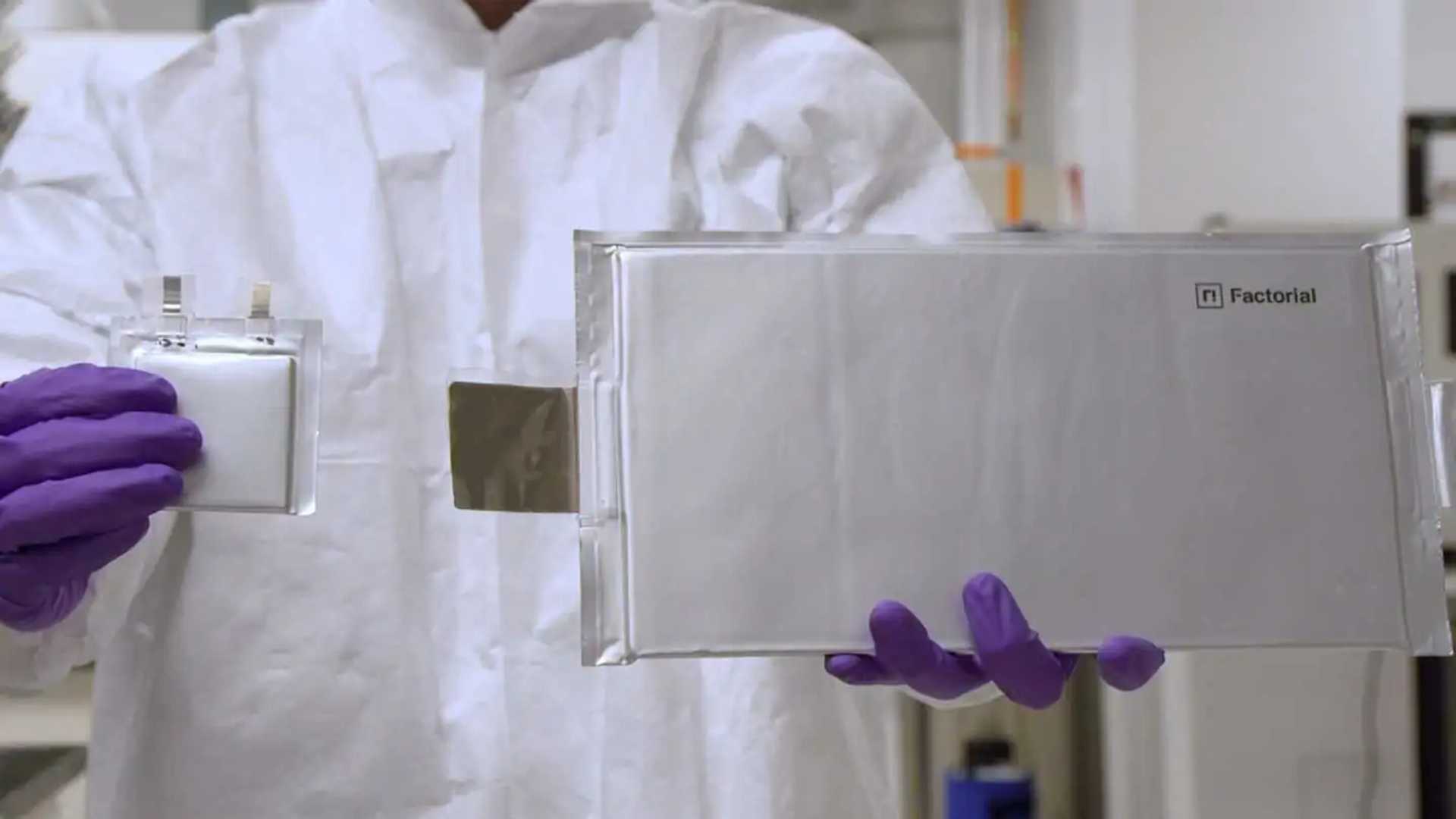
The race to mass-produce next-generation battery technology has reached a critical juncture. Massachusetts-based battery innovator Factorial Energy has officially partnered with South Korean battery manufacturing giant SK On, a prominent supplier to Hyundai, in a pivotal move to overcome the most significant hurdle facing solid-state batteries: scalable production. This collaboration aims to leverage SK On’s extensive global manufacturing infrastructure to transition Factorial’s advanced solid-state cell technology from promising prototypes to widespread commercial availability.
Solid-state batteries are widely hailed as a potential game-changer for electric vehicles (EVs) and other applications, promising enhanced energy density, quicker charging capabilities, and superior safety compared to conventional lithium-ion batteries. However, their complex chemical composition and delicate manufacturing requirements have historically made them notoriously difficult to produce at scale without incurring defects. This new memorandum of understanding (MOU) between Factorial and SK On directly addresses this challenge, signaling a strategic effort to unlock the full potential of solid-state technology for the automotive industry.
Key Takeaways
- Factorial Energy and SK On have signed a non-binding agreement to explore the mass production of solid-state batteries.
- The partnership focuses on adapting SK On’s existing lithium-ion manufacturing lines for solid-state cell production.
- Factorial’s semi-solid-state batteries have already demonstrated impressive range in prototype EVs, including a Mercedes-Benz EQS that traveled 749 miles on a single charge.
- SK On brings vast manufacturing capacity and expertise, supplying major automakers like Hyundai, Kia, Ford, Volkswagen, and Ferrari.
- The collaboration seeks to resolve the critical challenge of scaling solid-state battery technology for widespread commercialization.
The Promise and Peril of Solid-State Technology
Solid-state batteries represent a significant departure from current lithium-ion designs, primarily by replacing the flammable liquid electrolyte with a solid material. This fundamental change is central to their allure, offering several compelling advantages. The solid electrolyte is non-combustible, drastically reducing the risk of thermal runaway and enhancing battery safety.
Furthermore, solid-state designs typically allow for higher energy density, meaning more power can be packed into a smaller, lighter battery pack. This translates directly into extended driving ranges for electric vehicles, a crucial factor for consumer adoption. The potential for faster charging rates is another significant draw, addressing one of the common concerns among prospective EV owners.
Despite these clear benefits, the path to commercializing solid-state batteries has been fraught with engineering and manufacturing complexities. Creating a stable, durable, and highly conductive solid electrolyte that can withstand numerous charge-discharge cycles has proven challenging. Moreover, integrating these novel materials into a production process that is both cost-effective and capable of high volume has been the ultimate barrier to entry.
Factorial Energy: A Frontrunner in Advanced Battery Development
Factorial Energy has emerged as a leading innovator in the competitive landscape of next-generation battery technology. The Massachusetts-based startup has dedicated years to the research and development of both solid-state and semi-solid-state batteries, positioning itself at the forefront of the commercialization race. Their proprietary F.E.S.S.™ (Factorial Electrolyte System for Solid-state) technology is designed to be compatible with existing lithium-ion battery manufacturing infrastructure, which is a key differentiator and a major reason for the interest from established industry players.
The company’s advancements are not merely theoretical. Factorial has already established significant partnerships with some of the world’s largest automotive groups, including Mercedes-Benz, Stellantis, and Hyundai. These collaborations are crucial, as they involve testing Factorial’s cutting-edge cells in real-world prototype electric vehicles, providing invaluable data and validation for the technology.
Impressive Real-World Testing Results
Earlier this year, Mercedes-Benz publicly highlighted the remarkable performance of an EQS prototype fitted with Factorial’s semi-solid-state battery. The vehicle achieved an extraordinary feat, traveling 749 miles on a single charge. Crucially, an estimated 84 miles of range still remained upon reaching its destination, underscoring the significant range extension potential that Factorial’s technology offers. Such results directly address range anxiety, one of the primary concerns hindering broader EV adoption.
In parallel, Stellantis, another automotive behemoth, has also integrated Factorial’s battery technology into a prototype Dodge Charger Daytona. This prototype is undergoing rigorous on-road testing as part of Stellantis’s comprehensive evaluation program, demonstrating the automotive industry’s serious commitment to exploring and validating advanced battery solutions for its future EV lineup.
SK On: A Manufacturing Powerhouse for Global Integration
The strategic importance of SK On in this collaboration cannot be overstated. As a South Korean battery manufacturing giant, SK On possesses an immense global footprint and profound expertise in large-scale battery production. The company is a crucial supplier to a roster of major global automakers, including Hyundai, Kia, Ford, Volkswagen, and Ferrari, underscoring its pivotal role in the electric vehicle supply chain.
SK On’s annual battery manufacturing capacity currently stands at approximately 200 gigawatt-hours (GWh worldwide. A substantial portion of this capacity, roughly half or about 100 GWh, is strategically located in the United States. This extensive manufacturing capability, coupled with decades of operational experience, makes SK On an ideal partner for Factorial Energy to bridge the gap between laboratory innovation and mass market availability.
Navigating Market Dynamics and Strategic Shifts
While SK On boasts considerable manufacturing prowess, the company has also demonstrated agility in responding to evolving market conditions. Recent adjustments saw SK On scale back some of its U.S. operations following the Trump administration’s decision to discontinue federal EV incentives. This policy shift led to a re-evaluation of EV demand, prompting strategic recalibrations within the industry.
Notably, SK On and Ford concluded their joint venture, opting instead to pivot their focus towards the rapidly expanding stationary energy storage market. This strategic flexibility highlights SK On’s capacity to adapt its production capabilities to meet diverse market demands, a trait that could prove invaluable in the intricate process of industrializing solid-state battery technology.
The Strategic Imperative: Mass Production on Existing Lines
The core objective of the Factorial-SK On partnership is to determine the feasibility of mass-producing solid-state batteries by utilizing and adapting SK On’s existing lithium-ion manufacturing lines. This approach is critical for accelerating the adoption of new battery chemistries, as building entirely new production facilities for a nascent technology can be prohibitively expensive and time-consuming.
Siyu Huang, CEO of Factorial, articulated the strategic vision behind this collaboration, stating, “A battery breakthrough only matters if it can be manufactured at scale.” She further emphasized SK On’s indispensable role: “[SK On’s] manufacturing footprint spans some of the world’s most advanced battery facilities, and their expertise will be critical in shaping how solid-state battery technology integrates into global production ecosystems.” This statement underscores the shared understanding that scalable production is the ultimate determinant of a technology’s impact.
The ability to retrofit or minimally modify existing production lines would significantly reduce the capital expenditure and lead time required to bring solid-state batteries to market. This efficiency is paramount for automakers eager to integrate advanced battery solutions into their future electric vehicle platforms and gain a competitive edge.
Broader Collaborative Efforts and Industry Outlook
The agreement with SK On is not an isolated initiative for Factorial Energy. The startup has actively pursued a multi-pronged strategy of forming alliances with various industry leaders to advance its technology. Factorial has previously signed similar non-binding agreements with other significant players in the battery ecosystem, including LG Chem, another South Korean chemical and battery company, and South Korean battery materials suppliers Philenergy and Posco Future M.
These diverse partnerships demonstrate Factorial’s comprehensive approach to de-risking the commercialization process. By collaborating with different segments of the battery supply chain—from manufacturing giants to material specialists—Factorial aims to secure robust pathways for both the production and supply of its advanced battery components.
It is important to note that the memorandum of understanding with SK On, like its other alliances, is non-binding. This structure provides both companies with the flexibility to explore the collaboration without firm commitments, allowing for a phased approach to research, development, and eventual manufacturing integration. This is a common practice in the early stages of commercializing complex, innovative technologies, where iterative testing and validation are essential.
The ultimate success of this partnership holds immense implications for the electric vehicle industry. Overcoming the mass production challenge for solid-state batteries could unleash a new era of EVs with significantly longer ranges, faster charging, and enhanced safety, accelerating the global transition to sustainable transportation.
FAQ Section
What are solid-state batteries and why are they important?
Solid-state batteries replace the liquid electrolyte in traditional lithium-ion batteries with a solid material. This design offers higher energy density for longer EV range, faster charging, and significantly improved safety due to the elimination of flammable liquids, making them a crucial next-generation technology.
What is the main challenge in manufacturing solid-state batteries?
The primary challenge for solid-state batteries is mass production without defects. While they offer superior performance, the complex materials and precision required to manufacture them at scale and cost-effectively have proven difficult to achieve with existing methods.
What role will SK On play in this partnership?
SK On, a major battery manufacturer for leading automakers like Hyundai and Ford, will evaluate its extensive global manufacturing footprint to determine how its existing lithium-ion battery production lines can be adapted or utilized to mass-produce Factorial’s solid-state battery cells.
What achievements has Factorial Energy made with its battery technology?
Factorial Energy has developed semi-solid-state batteries that have been successfully tested in prototype electric vehicles. Notably, a Mercedes-Benz EQS prototype equipped with Factorial’s battery achieved 749 miles on a single charge, with 84 miles of range still remaining, demonstrating significant range capabilities.
Is this agreement a binding commitment?
No, the agreement between Factorial Energy and SK On is a memorandum of understanding (MOU), which is a non-binding agreement. This allows both companies to thoroughly explore the feasibility of mass production and the integration of solid-state technology without immediate firm obligations, providing flexibility as the research progresses.
How does this partnership benefit the electric vehicle (EV) industry?
This partnership is crucial for the EV industry because it directly addresses the hurdle of solid-state batteries’ mass production. If successful, it could lead to the widespread adoption of safer, higher-range, and faster-charging batteries, accelerating the global transition to electric vehicles and enhancing their appeal to consumers.