
Key Takeaways
- Mouser Electronics has launched a dedicated online transportation resource center.
- The hub is specifically designed to support EV and mobility engineers developing electric and autonomous systems.
- It consolidates a wealth of technical content, including articles, blogs, e-books, and product listings.
- The resources tackle critical design challenges such as power management, functional safety, real-time decision-making, and infrastructure integration.
- The platform covers a broad spectrum of emerging technologies, from urban air mobility to hydrogen fuel cell systems and robotaxis.
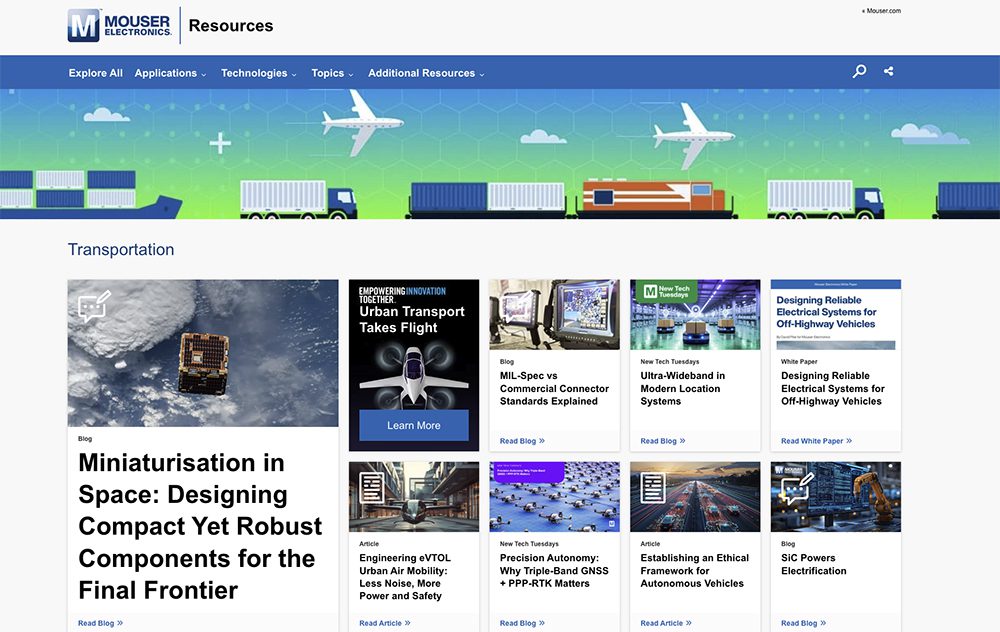
NEW DELHI – Mouser Electronics, a leading global authorized distributor of electronic components, has officially launched a comprehensive transportation resource center tailored for EV and mobility engineers. This new digital hub is meticulously designed to support professionals engaged in the intricate development of cutting-edge electric and autonomous mobility systems.
The initiative by Mouser Electronics aims to centralize vital information, offering a one-stop destination for engineers navigating the complexities of modern transportation design. The platform underscores the accelerating pace of innovation in the electric vehicle (EV) and autonomous sectors, where robust engineering resources are paramount.

A Curated Knowledge Hub for Advanced Mobility
The newly unveiled resource center stands as a curated repository of technical knowledge. It aggregates a diverse range of materials, including insightful articles, informative blogs, in-depth e-books, and detailed product listings. This content is meticulously selected and organized by Mouser’s expert technical team in collaboration with its extensive network of manufacturing partners.
This strategic curation ensures that EV and mobility engineers have access to the most relevant and up-to-date information, streamlining the research and development process. The focus is on providing practical solutions and deep technical insights required for designing the next generation of transport systems.
Addressing Critical Design Challenges for EV and Mobility Engineers
Mouser Electronics highlights that its new resource directly confronts several formidable design challenges inherent in advanced mobility systems. These critical areas include sophisticated power management, stringent functional safety protocols, efficient real-time decision-making capabilities, and seamless infrastructure integration.
Effective power management is fundamental for the longevity and performance of electric vehicles, encompassing everything from battery charging and discharge cycles to energy conversion efficiencies. For EV and mobility engineers, optimizing power systems means enhancing range, reducing charging times, and ensuring overall system reliability.
Functional safety is another cornerstone, particularly in autonomous vehicles and advanced driver-assistance systems (ADAS). Designing systems that can reliably detect and mitigate potential hazards requires adherence to rigorous industry standards and robust component selection. The resource center provides guidance on achieving these critical safety objectives.
Furthermore, real-time decision-making is indispensable for autonomous systems to navigate dynamic environments safely and efficiently. This demands high-performance microcontrollers and sophisticated sensor technology capable of processing vast amounts of data instantaneously. The hub offers insights into selecting the appropriate electronic components and architectural approaches for these demanding applications.
Finally, the challenge of infrastructure integration—connecting vehicles to smart cities, charging networks, and communication grids—is increasingly vital. The resource center addresses how EV and mobility engineers can design systems that are not only technologically advanced but also seamlessly compatible with evolving smart transportation ecosystems.
Exploring a Spectrum of Emerging Technologies
The breadth of topics covered within the transportation resource center reflects the multifaceted nature of the modern mobility landscape. It delves into groundbreaking areas such as emerging urban air mobility (UAM) platforms, which promise to revolutionize personal and cargo transport in urban environments.
Engineers can also find extensive information on hydrogen fuel cell systems, an alternative propulsion technology gaining traction for its zero-emission potential and rapid refueling capabilities. The hub also covers the advancements in robotaxis and autonomous transportation, detailing the complex electronic systems that enable self-driving capabilities.
Beyond these transformative applications, the center provides in-depth content on foundational electronic components. This includes semiconductors, the backbone of all modern electronics; microcontrollers, essential for embedded control systems; and various connectors, critical for reliable electrical connections in harsh automotive environments.
Further topics extend to smart ports, which are adopting automation and electrification for greater efficiency, and the growing segment of off-road EVs, designed for demanding industrial and recreational applications. Green freight transport, focusing on sustainable logistics solutions, and telematics systems, which enable vehicle tracking and data communication, are also extensively covered.
These diverse categories collectively encompass a wide array of transport- and sustainability-related technologies, ensuring that EV and mobility engineers have access to comprehensive materials, irrespective of their specific area of focus within the rapidly evolving mobility sector.
Mouser’s Commitment to Innovation in Mobility
As an authorized distributor, Mouser Electronics plays a pivotal role in the supply chain of electronic components vital for these advanced applications. The launch of this resource center reinforces Mouser’s commitment to supporting engineering innovation and accelerating the development cycle for its global customer base.
By providing expert-curated content alongside access to a vast inventory of components, Mouser aims to empower EV and mobility engineers to overcome design hurdles, identify optimal solutions, and bring their innovative projects to fruition more efficiently. This strategic initiative is poised to become an indispensable tool for professionals driving the future of transportation.
Frequently Asked Questions (FAQ)
What is the new Mouser transportation resource center?
The new Mouser transportation resource center is an online platform launched by Mouser Electronics. It serves as a comprehensive hub providing articles, blogs, e-books, and product listings specifically curated to assist engineers in designing electric and autonomous mobility systems.
Who is the primary audience for this resource center?
The primary audience for this new hub is EV and mobility engineers. This includes professionals involved in the design, development, and integration of electric vehicles, autonomous driving systems, and other advanced transportation technologies.
What types of content are available on the platform?
The platform offers a variety of content formats, including in-depth articles, informative blog posts, detailed e-books, and product listings. These resources are carefully selected by Mouser’s technical team and manufacturing partners to ensure relevance and quality.
Which key design challenges does the resource center address?
The resource center is designed to address critical design challenges faced by EV and mobility engineers. These include complex power management strategies, ensuring functional safety in advanced systems, facilitating real-time decision-making, and achieving seamless infrastructure integration for new mobility solutions.
What specific technologies and topics are covered?
The hub covers a wide array of topics, such as urban air mobility (UAM), hydrogen fuel cell systems, robotaxis, autonomous transportation, and the role of semiconductors, microcontrollers, and connectors. It also includes sections on smart ports, off-road EVs, green freight transport, and telematics systems.
How does this resource benefit EV and mobility engineers?
EV and mobility engineers benefit from centralized access to expert knowledge and product information. This helps them navigate complex design challenges, stay updated on emerging technologies, make informed component selections, and accelerate their development timelines for innovative electric and autonomous systems.