
Key Takeaways:
- The United States witnessed a moderated pace in the expansion of its public EV fast-charging stations during the second quarter, a shift signaling an industry focus on operational excellence and driver experience.
- While the rate of new installations saw a year-over-year decline, quarter-over-quarter growth remained robust, indicating continued momentum in infrastructure development.
- For the first time, Tesla Superchargers accounted for less than 50% of the total public fast-charging market share, reflecting the growing presence and competition from alternative charging networks.
- Despite the adjusted growth rate, average utilization rates for charging ports held steady, suggesting that newly installed capacity is being effectively absorbed by the increasing number of electric vehicle drivers.
- The geographic distribution of new EV fast-charging stations highlights a concentration in key states, potentially exacerbating disparities in charging access across different regions.
The buildout of public EV fast-charging stations across the United States experienced a notable recalibration in the second quarter of the year. Data from the charging data platform Paren reveals that while thousands of new ports were added, the overall rate of expansion slowed compared to previous periods.

This measured approach signifies a strategic shift within the electric vehicle charging industry. Companies are increasingly prioritizing profitability, enhancing the reliability of charging services, and elevating the overall customer experience for EV drivers, moving away from a sole focus on rapid volumetric expansion.
Understanding the Q2 Deployment Trends
During the second quarter, charging companies deployed 4,382 new public fast-charging ports across 806 new stations. This figure represents a 10% year-over-year decline when compared to the 4,865 ports and 891 stations that were installed during the same quarter last year.
Furthermore, these Q2 figures fell short of the industry’s record-setting performance in the fourth quarter of the preceding year, which saw the addition of 5,966 new ports and 937 new stations. This comparison underscores the current moderation in the pace of growth for EV fast-charging stations.

A Strategic Pivot by Charging Providers
Loren McDonald, chief analyst at the reputable charging data analytics firm Chargeonomics, offered insight into this evolving landscape. He noted that the observed slowdown is not necessarily a definitive indicator of a long-term slump in the EV fast-charging station market.
“A two-quarter year-over-year decline is not definitive proof of a slowdown,” McDonald stated in the Paren report. He elaborated, “Combined with recent CPO layoffs and pullbacks, it reinforces the industry’s new mantra: operations, customer experience, and profitability.”
This perspective highlights a critical shift in the operational strategies of charging infrastructure providers. Instead of merely increasing the number of EV fast-charging stations, companies are now concentrating on optimizing existing networks and ensuring a seamless experience for users.
Elevating the Charging Experience
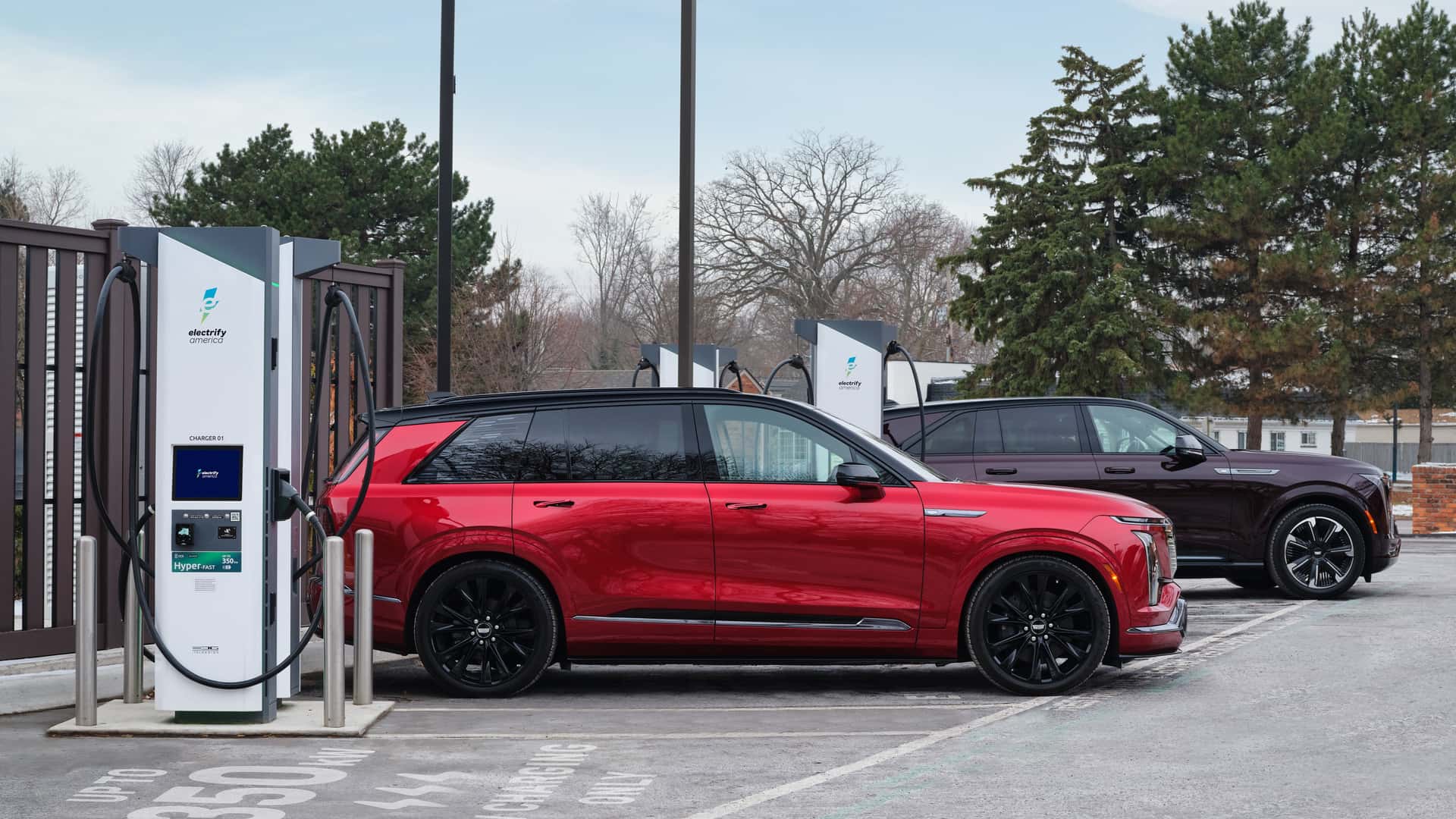
The industry’s renewed emphasis on the broader charging experience is evident in the design and amenities offered at many new EV fast-charging stations. Operators are increasingly installing fewer stations, but equipping them with a greater number of high-powered ports.
Beyond technical specifications, these next-generation charging hubs are integrating amenities such as restrooms, cafes, and Wi-Fi access. Certain advanced networks, including Ionna, are even introducing air-conditioned lounges at select locations, allowing drivers to wait in comfort while their electric vehicles charge.
Robust Quarter-Over-Quarter Growth
Despite the year-over-year deceleration, the growth from the first quarter to the second quarter remained notably strong for EV fast-charging stations. The first quarter saw the installation of 3,521 new ports across the nation.
This indicates a substantial 24% increase in new port installations during the second quarter compared to the preceding three-month period. Such quarter-on-quarter growth underscores the underlying strength and continued investment in the public charging ecosystem.
Evolving Market Share Dynamics
Tesla has long been a dominant force in the public fast-charging sector, primarily through its extensive Supercharger network. However, the second quarter marked a significant milestone, as Tesla’s all-time market share in public EV fast-charging stations dipped below 50% for the very first time.
This shift signals a maturing market where rival charging networks are substantially accelerating their deployment efforts. The increasing competition is a positive development for EV drivers, offering more choices and potentially better service across the charging landscape.
Key Players in Q2 Deployments
In Q2, Tesla continued to lead in raw numbers of new deployments, contributing 1,185 new ports, which represented 27% of the total new EV fast-charging stations added. However, other companies demonstrated significant investment and expansion.
Walmart emerged as a strong contender, adding 368 new ports, followed closely by ChargePoint with 333 new ports. Red E and Electrify America also made substantial contributions, installing 315 and 202 new ports, respectively, rounding out the top five deployers for the quarter.
Utilization Rates and Demand Absorption
A crucial metric for assessing the health of the charging infrastructure is the utilization rate, which measures the proportion of time charging stations are actively in use. In Q2, the average utilization rates for public EV fast-charging stations held steady at 15.8%.
This stability is an important indicator for the industry. It suggests that the new charging capacity coming online is being effectively absorbed by the growing number of EV drivers at a rate roughly consistent with the expansion of EV fast-charging stations. In essence, the supply of charging options appears to be keeping pace with the escalating demand.
Geographic Disparities in Charging Access
The expansion of EV fast-charging stations in the second quarter was not uniformly distributed across the United States. A significant 40% of all newly installed ports were concentrated in just five states, highlighting regional disparities in infrastructure development.
California, a leading state in EV adoption, continued to lead by a substantial margin, adding 120 new stations. It was followed by Texas, Florida, Illinois, and New York. This geographical distribution closely mirrors the uneven pattern of electric vehicle adoption across America, which tends to skew towards coastal metropolitan areas, followed by the industrial Midwest, the Southeast, and specific regions of Texas.
Addressing Charging Deserts
The uneven deployment trajectory raises concerns about so-called ‘charging deserts’—areas with limited or no access to public EV fast-charging stations. For instance, North Dakota reported zero new public fast-charging ports added in Q2.
Similarly, states like Montana, Wyoming, and South Dakota each saw the addition of only one new station during the same period. If this trend persists, the gap in charging infrastructure between high-demand and low-demand regions could widen, potentially hindering broader EV adoption in underserved areas.
Industry Outlook Amidst Shifting EV Sales
Despite fluctuations in US EV sales, which have at times been sensitive to policy shifts and economic factors, the charging industry has largely maintained a strong pace of construction. This resilience is underpinned by a long-term conviction that demand for electric vehicles will rebound and grow significantly in the coming years.
The second-quarter sales figures for electric vehicles provided a boost to this optimistic outlook. EV sales grew at their fastest rate since the federal tax credit expired, with rising gasoline prices—partially linked to global geopolitical events—providing a fresh impetus for consumers to consider battery-powered models.
The continued investment in robust EV fast-charging stations, coupled with a focus on reliability and user experience, positions the industry to support this anticipated surge in electric vehicle ownership, thereby accelerating the nation’s transition to sustainable transportation.
Frequently Asked Questions About EV Fast-Charging Stations
What defines an EV fast-charging station?
An EV fast-charging station, also known as a DC fast charger, delivers high-power direct current (DC) directly to an EV’s battery, enabling significantly quicker charging times compared to Level 2 (AC) chargers. These stations are crucial for long-distance travel and rapid top-ups.
Why did the growth rate of EV fast-charging stations slow in Q2?
The slowdown in the rate of new installations during Q2 was attributed by industry analysts to a strategic shift. Charging companies are now prioritizing profitability, operational efficiency, and enhancing the customer experience over mere expansion, focusing on quality and reliability.
What does Tesla’s market share drop below 50% signify?
Tesla’s Supercharger network falling below 50% of the total public fast-charging market share indicates increased competition and significant investment from other charging networks like Walmart, ChargePoint, and Electrify America. This diversification benefits EV drivers with more options.
What is a charging desert, and why is it a concern?
A charging desert refers to a geographic area with limited or no public EV fast-charging stations. This is a concern because it can deter EV adoption in those regions, create range anxiety for drivers, and exacerbate inequities in access to essential infrastructure.
How do utilization rates impact EV charging infrastructure?
Utilization rates measure how often charging stations are in use. Steady utilization rates, like the 15.8% observed, suggest that new charging capacity is being absorbed by drivers at a healthy pace. This indicates that supply is meeting demand, optimizing infrastructure investment.
Are new EV fast-charging stations offering more amenities?
Yes, many new EV fast-charging stations are incorporating enhanced amenities such as restrooms, cafes, and Wi-Fi. Some premium networks are even introducing air-conditioned lounges, reflecting a broader industry trend to improve the overall comfort and convenience of the charging experience for drivers.