
Key Takeaways:
- Samsung SDI has acquired General Motors’ 49.99% stake in SynergyCells, their joint battery venture in New Carlisle, Indiana, making it Samsung SDI’s first independently operated battery production base in North America.
- The decision stems from evolving market conditions, including slower-than-expected growth in electric vehicle (EV) demand, prompting a strategic pivot from the original joint venture structure.
- The Indiana plant, initially planned for EV battery production, will now prioritize manufacturing cells for energy storage systems (ESS), capitalizing on robust demand in the US storage market.
- A new joint development agreement between Samsung SDI and GM for prismatic cells for future EV applications signals a continued, albeit restructured, partnership.
- Samsung SDI secured a significant contract in December 2025, valued at over 2 trillion won ($1.35 billion), to supply prismatic LFP cells for North American ESS projects starting in 2027.
In a significant strategic realignment within the burgeoning battery industry, South Korean conglomerate Samsung SDI has completed the acquisition of General Motors’ (GM) 49.99% share in SynergyCells, the joint venture established by the two automotive and technology giants.

This move transforms the New Carlisle, Indiana, facility into Samsung SDI’s inaugural independently operated battery production base across North America. The decision marks a pivotal shift from the original joint venture framework.
Strategic Realignment Amid Evolving Market Dynamics
The ownership change reflects the dynamic nature of the global automotive and energy sectors. Samsung SDI has indicated that recent market shifts, notably a deceleration in the anticipated growth trajectory of electric vehicle (EV) demand, played a crucial role in this decision.
Consequently, both partners have opted to explore alternative avenues for collaboration rather than maintaining the initial joint venture structure. This strategic pivot underscores the industry’s responsiveness to fluctuating market signals and investment priorities.

New Focus on Energy Storage Systems (ESS)
The Indiana plant, which is currently under construction, will now initially focus its production efforts on manufacturing cells specifically designed for energy storage systems (ESS).
This redirection of manufacturing priority is a direct response to the strong and growing demand within the United States’ energy storage market. The plant’s output will cater to the increasing need for reliable and efficient grid-scale and industrial battery solutions.
While the immediate focus is on ESS, Samsung SDI has confirmed that prismatic cells developed through a renewed joint development agreement with GM could potentially be produced at the facility at a later stage, signaling a flexible long-term strategy that retains options for EV battery supply.
Enhanced Partnership and Future Collaborations
Despite the dissolution of the original joint venture, the strategic alliance between Samsung SDI and General Motors remains robust. The two companies have formalized a new joint development agreement.
This agreement specifically covers the advancement of prismatic cells tailored for potential future electric vehicle applications. Such a collaborative framework allows both entities to leverage their respective expertise in battery technology and automotive integration while adapting to market realities.
A Samsung SDI official affirmed the ongoing commitment, stating, “While reflecting recent market changes, this acquisition decision is to continue the strategic partnership with GM.” This statement highlights the intention to maintain a productive working relationship despite changes in the manufacturing ownership structure.
Commitment to the North American Storage Market
Samsung SDI has already cemented its significant commitment to the North American energy storage sector. In December 2025, the company secured a substantial three-year contract.
This agreement entails the supply of prismatic Lithium Iron Phosphate (LFP) cells for energy storage systems across North America, with deliveries slated to commence in 2027. The deal is valued at an impressive figure exceeding 2 trillion won, which translates to approximately $1.35 billion.
This major contract underscores Samsung SDI’s confidence in the regional demand for ESS solutions and positions the Indiana plant strategically to fulfill these commitments.
Technological Nuances: Prismatic Cells and ESS Optimization
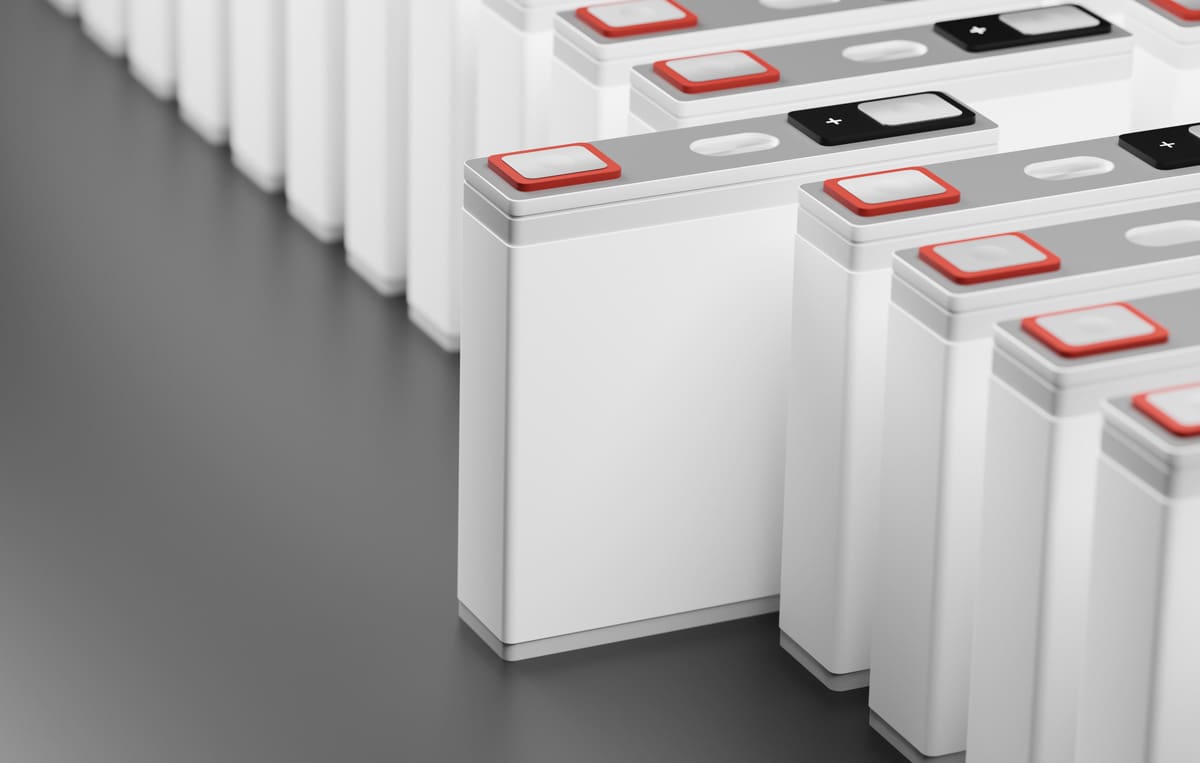
The choice of prismatic cells for both potential EV and confirmed ESS applications is a deliberate engineering decision. Prismatic cells offer distinct advantages in terms of packaging efficiency.
Their rectangular shape allows them to pack into a battery module with significantly less wasted volume compared to traditional cylindrical cells. Furthermore, their rigid can structures inherently require less external support than the more flexible pouch cells, simplifying module design and potentially reducing overall costs.
Optimizing for Cycle Life and Cost
The fundamental requirements for cells used in stationary storage applications, such as ESS, differ considerably from those designed for electric vehicles. For ESS, the primary optimization parameters are cycle life and cost per kilowatt-hour.
The ability of a battery to undergo many charge and discharge cycles over its lifespan is paramount for grid stability and long-term economic viability in energy storage projects. Similarly, minimizing the cost per unit of stored energy directly impacts the feasibility and return on investment for large-scale deployments.
Conversely, EV cells prioritize specific energy — the amount of energy stored per unit of weight — to maximize vehicle range without adding excessive mass. This divergence in optimization strategies explains Samsung SDI’s decision to tailor the Indiana plant’s initial output specifically for ESS demand.
Background of the Original Joint Venture
The original joint venture between General Motors and Samsung SDI, named SynergyCells, was officially finalized in August 2024. This ambitious partnership represented a significant investment in North American battery manufacturing, with both companies committing approximately $3.5 billion.
The initial plan for the New Carlisle plant projected an annual production capacity of 27 GWh, with the potential for expansion to 36 GWh. The facility was slated to commence production in 2027 and was intended to manufacture nickel-rich NCA (nickel-cobalt-aluminum) prismatic cells, a chemistry commonly favored for its high energy density in EV applications.
The restructuring of this venture highlights the dynamic interplay between original strategic intent, evolving market realities, and the agility required to adapt to a rapidly changing global energy landscape.
Frequently Asked Questions (FAQ)
What prompted Samsung SDI to acquire GM’s stake in the Indiana plant?
Samsung SDI acquired GM’s stake due to shifts in market conditions, particularly slower-than-expected growth in EV demand. Both companies decided to pursue alternative forms of cooperation, leading to Samsung SDI taking full ownership to independently operate the facility and adjust its production focus.
What will the Indiana battery plant produce initially?
Initially, the Indiana plant will produce cells for energy storage systems (ESS). This pivot is driven by the robust demand within the US storage market, providing a strategic direction for the plant’s commencement of operations. EV battery production is a potential future endeavor.
What type of cells will be manufactured for energy storage systems?
The plant will manufacture prismatic LFP (Lithium Iron Phosphate) cells for energy storage systems. LFP chemistry is highly favored for ESS applications due to its excellent cycle life, safety characteristics, and cost-effectiveness, which are critical factors for grid-scale and industrial storage.
What is the nature of the continued partnership between Samsung SDI and GM?
Samsung SDI and GM have signed a new joint development agreement. This agreement focuses on collaborating on prismatic cells for potential future EV applications. This ensures that while the manufacturing ownership has changed, the strategic partnership in battery technology innovation remains active.
When was the original joint venture finalized, and what were its initial plans?
The original joint venture was finalized in August 2024, with a commitment of approximately $3.5 billion. It aimed for an initial annual production capacity of 27 GWh, expandable to 36 GWh, manufacturing nickel-rich NCA prismatic cells for EVs, with production slated to begin in 2027.
Why are ESS cells optimized differently from EV cells?
ESS cells prioritize cycle life and cost per kilowatt-hour, as they need to perform many charge-discharge cycles over a long lifespan at optimal cost for grid applications. EV cells, conversely, prioritize specific energy (energy per unit of weight) to maximize vehicle range and performance.