
Key Takeaways
- The 75-kWh Zeekr 7GT surpassed its own fast charging claim, reaching 80% charge in just 11 minutes, two minutes faster than advertised.
- Despite peaking at 325 kW—significantly below its theoretical 480 kW maximum—the electric vehicle’s uniquely flat charging curve maintained high power levels throughout the session.
- Remarkably, the Zeekr 7GT’s LFP battery continued drawing 220 kW at 80% state of charge and 165 kW at 90%, completing a 10% to 100% charge in a swift 21 minutes.
- This performance highlights that a consistent, high average charging rate can be more impactful for user experience than a fleeting, high peak power figure.
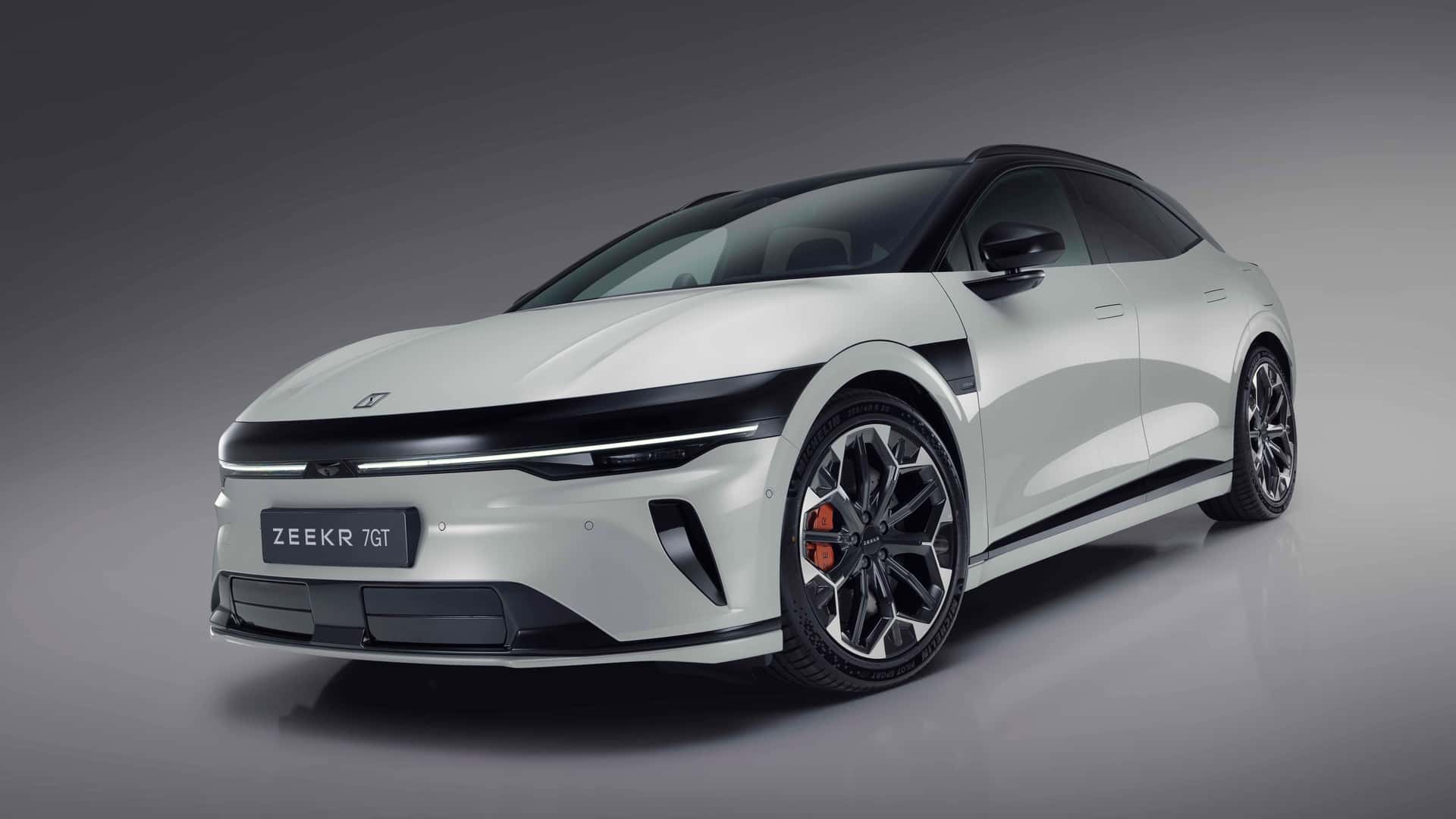
In a notable advancement for the electric vehicle industry, the Zeekr 7GT has demonstrated extraordinary battery replenishment capabilities, setting new standards for rapid charging efficiency. Despite not achieving its theoretical peak charging power, real-world tests reveal that the 75-kilowatt-hour (kWh) variant of the Zeekr 7GT electric vehicle charged from a 10% state of charge (SoC) to a full 100% in a remarkable 21 minutes.
This performance underscores a crucial aspect of electric vehicle charging: the shape and consistency of the charging curve often provide a more accurate measure of real-world efficiency than maximum peak power claims alone. The Zeekr 7GT’s ability to sustain high charging rates deep into its battery capacity marks a significant step forward in optimizing the electric vehicle user experience.

The Zeekr 7GT’s Groundbreaking Charging Performance
The Zeekr 7GT, specifically the rear-wheel-drive 7GT Core model equipped with a 75-kWh Lithium Iron Phosphate (LFP) battery, has redefined expectations for rapid electric vehicle charging. An independent assessment conducted by automotive expert Bjørn Nyland provided compelling evidence of the vehicle’s superior capabilities, even when operating beneath its manufacturer-specified maximums.
During these rigorous tests, the Zeekr 7GT recorded a peak charging power of approximately 325 kilowatts (kW) across multiple charging sessions. While this figure is impressive, it falls more than 150 kW short of the vehicle’s theoretical maximum of 480 kW, which is a testament to its advanced 800-volt architecture.
Efficiency That Exceeds Expectations
Despite not reaching its highest potential power output, the 75-kWh Zeekr 7GT achieved a 10% to 80% state of charge in an astonishing 11 minutes. This result is not only exceptionally fast but also comfortably surpasses Zeekr’s own claim of 13 minutes for the same charging interval, demonstrating a tangible real-world advantage.

The most striking aspect of its performance is the sustained charging speed well beyond the 80% mark. While most electric vehicles experience a significant power taper at higher states of charge, the Zeekr 7GT continued to draw a substantial 220 kW at 80% SoC and an impressive 165 kW even at 90% SoC. This consistent power delivery enabled the vehicle to complete a full 10% to 100% charge in approximately 21 minutes, a benchmark that few other electric vehicles can match.
Understanding the Role of the Golden Battery Technology
The exceptional charging characteristics observed in the 75-kWh Zeekr 7GT are largely attributable to its advanced battery system. The vehicle incorporates Zeekr’s proprietary second-generation Golden Battery technology, an LFP chemistry pack that appears to be meticulously optimized for both energy efficiency and charging speed.
LFP batteries are widely recognized for their robustness, enhanced safety features, and cost-effectiveness compared to Nickel Manganese Cobalt (NMC) alternatives. Historically, LFP batteries have sometimes faced challenges in energy density and ultra-fast charging capabilities. However, Zeekr’s innovative Golden Battery technology seems to have effectively overcome these traditional limitations, enabling the LFP pack to maintain remarkably high and sustained charging rates.
The Strategic Advantage of a Flat Charging Curve
The term ‘charging curve’ illustrates how an electric vehicle’s charging power (measured in kW) varies as its battery’s state of charge increases. Typically, this curve peaks early in the charging cycle and then progressively declines, particularly after the 80% SoC threshold, to safeguard the battery from potential damage due to overheating.
The Zeekr 7GT’s distinguishing ‘unusually flat curve’ signifies its capacity to sustain a high charging power for an extended duration, particularly as it approaches higher state-of-charge percentages. This translates into substantially reduced waiting times for drivers, making the prospect of charging an electric vehicle to 100% significantly more practical. Unlike many conventional EVs where the final 10% of charge can take nearly as long as the preceding 30%, the Zeekr 7GT dramatically shortens this prolonged waiting period.
Comparative Analysis: Zeekr 7GT Against Market Contenders
To fully grasp the magnitude of the 75-kWh Zeekr 7GT’s charging capabilities, a comparative analysis against other contemporary electric vehicles is essential. The independent test also included a long-range 7GT equipped with a 100-kWh NMC battery and an Xpeng G6 featuring an 81-kWh LFP battery, providing a broad overview of differing charging dynamics.
Differentiating NMC and LFP Charging Profiles
The 100-kWh NMC variant of the Zeekr 7GT, which shares the same theoretical peak charging power as its LFP counterpart, initially demonstrated strong performance. It briefly exceeded 420 kW, sustaining this high rate between 12% and 20% SoC, before stabilizing around 380 kW. However, its charging power tapered more sharply at higher states of charge, falling below 100 kW near 90% SoC.
Similarly, the Xpeng G6, with its 81-kWh LFP battery, achieved a comparable peak power early in its charging session but rapidly declined below 400 kW. Although slightly outperforming the NMC Zeekr 7GT at higher SoC, the G6 still accepted only about 125 kW at a 90% state of charge.
In stark contrast, the 75-kWh Zeekr 7GT consistently displayed the flattest charging curve across all three tested vehicles. While the larger-battery 7GT initially delivered more total energy due to its greater capacity, the consistent and high power delivery of the 75-kWh model ultimately allowed it to complete its charging session faster, reaching 100% first among the group.
Zeekr’s Consistent Focus on Charging Innovation
This remarkable charging performance is not an isolated achievement for Zeekr; it reflects a broader strategic emphasis on charging innovation. An earlier model, the Zeekr 7X, equipped with a previous generation of the Golden Battery, also demonstrated impressive charging speeds, reaching a full charge from empty in just over 22 minutes. This consistent pattern indicates a deliberate focus by Zeekr on optimizing both the peak charging power and, more critically, the sustained performance throughout the entire charging cycle, enhancing the overall user experience.
Broader Implications for the Electric Vehicle Market
The Zeekr 7GT electric vehicle’s advanced charging capabilities carry significant implications for the wider electric vehicle market and for potential EV owners. One of the principal deterrents for prospective EV buyers remains ‘range anxiety,’ a concern frequently compounded by lengthy charging times, especially during extended journeys.
By offering consistently rapid charging, even up to a full 100% state of charge, Zeekr directly addresses this critical concern. This innovation renders electric vehicle ownership considerably more practical and appealing, as drivers can minimize time spent at charging stations. Such advancements could substantially accelerate the global adoption of electric vehicles, particularly in highly competitive markets like Europe and China where charging infrastructure is experiencing rapid expansion.
Furthermore, this development signals a pivotal shift in industry focus. It moves beyond merely pursuing theoretical peak power figures towards optimizing the entire charging experience for real-world usability. The practical efficiency of an electric vehicle’s charging system, exemplified by the Zeekr 7GT electric vehicle, is poised to become a key competitive differentiator in the evolving automotive landscape.
The Future of EV Fast Charging Technology
The advancements showcased by the Zeekr 7GT electric vehicle foreshadow an exciting trajectory for fast charging technology. As battery chemistries continue to evolve and vehicle architectures become increasingly sophisticated—such as the widespread adoption of 800-volt systems—the efficiency and speed of charging are projected to improve even further.
Automotive manufacturers are increasingly recognizing that sustained charging rates, coupled with sophisticated thermal management systems, are paramount to enhancing user satisfaction. The overarching goal remains to minimize the duration of charging stops, making them as quick and convenient as refueling a traditional internal combustion engine vehicle. This continuous pursuit of efficiency will undeniably boost the overall appeal and viability of electric mobility globally.
It is important to acknowledge that the performance figures discussed are derived from an independent, real-world test conducted by Bjørn Nyland (YouTube). While these results are highly indicative of the Zeekr 7GT’s exceptional capabilities, they should be regarded as illustrative rather than definitive laboratory validations. Nevertheless, they provide compelling evidence of Zeekr’s significant strides in electric vehicle charging performance.
Frequently Asked Questions (FAQ)
What is the Zeekr 7GT’s most notable charging achievement?
The Zeekr 7GT, with its 75-kWh LFP battery, achieved a 10% to 100% charge in a remarkable 21 minutes during independent testing. This was largely due to its unusually flat charging curve, which maintained high power levels even at high states of charge, significantly reducing overall charging time.
Why is a “flat charging curve” important for EV owners?
A flat charging curve means an electric vehicle sustains high charging power for longer periods, especially past 80% state of charge, where most EVs significantly taper power. This consistency drastically reduces the total time spent at a charging station, making full recharges more practical and alleviating range anxiety for drivers.
Did the Zeekr 7GT reach its advertised peak charging power?
No, the tested 75-kWh Zeekr 7GT peaked at approximately 325 kW, which is more than 150 kW below its advertised maximum of 480 kW. However, its superior overall charging speed from 10% to 80% (11 minutes) still beat its own claim, highlighting the importance of sustained power over peak figures.
What type of battery does the tested Zeekr 7GT use?
The Zeekr 7GT model tested, specifically the 7GT Core, uses a 75-kWh Lithium Iron Phosphate (LFP) battery pack. This LFP battery integrates Zeekr’s advanced second-generation Golden Battery technology, which is designed to optimize both performance and charging efficiency, making it highly competitive.
How does the Zeekr 7GT’s charging compare to other EVs?
Compared to a 100-kWh NMC Zeekr 7GT and an 81-kWh LFP Xpeng G6, the 75-kWh Zeekr 7GT exhibited the flattest charging curve. While the others might have achieved higher brief peaks, the 75-kWh model’s sustained high power delivery led to it completing a full charge faster, demonstrating superior overall efficiency.
What is 800-volt architecture, and how does it benefit EV charging?
800-volt architecture refers to an electric vehicle’s high-voltage system that operates at approximately 800 volts, as opposed to the more common 400-volt systems. This higher voltage allows for significantly faster DC fast charging, reduces heat generation, and enables thinner, lighter wiring, contributing to improved overall efficiency and performance.