
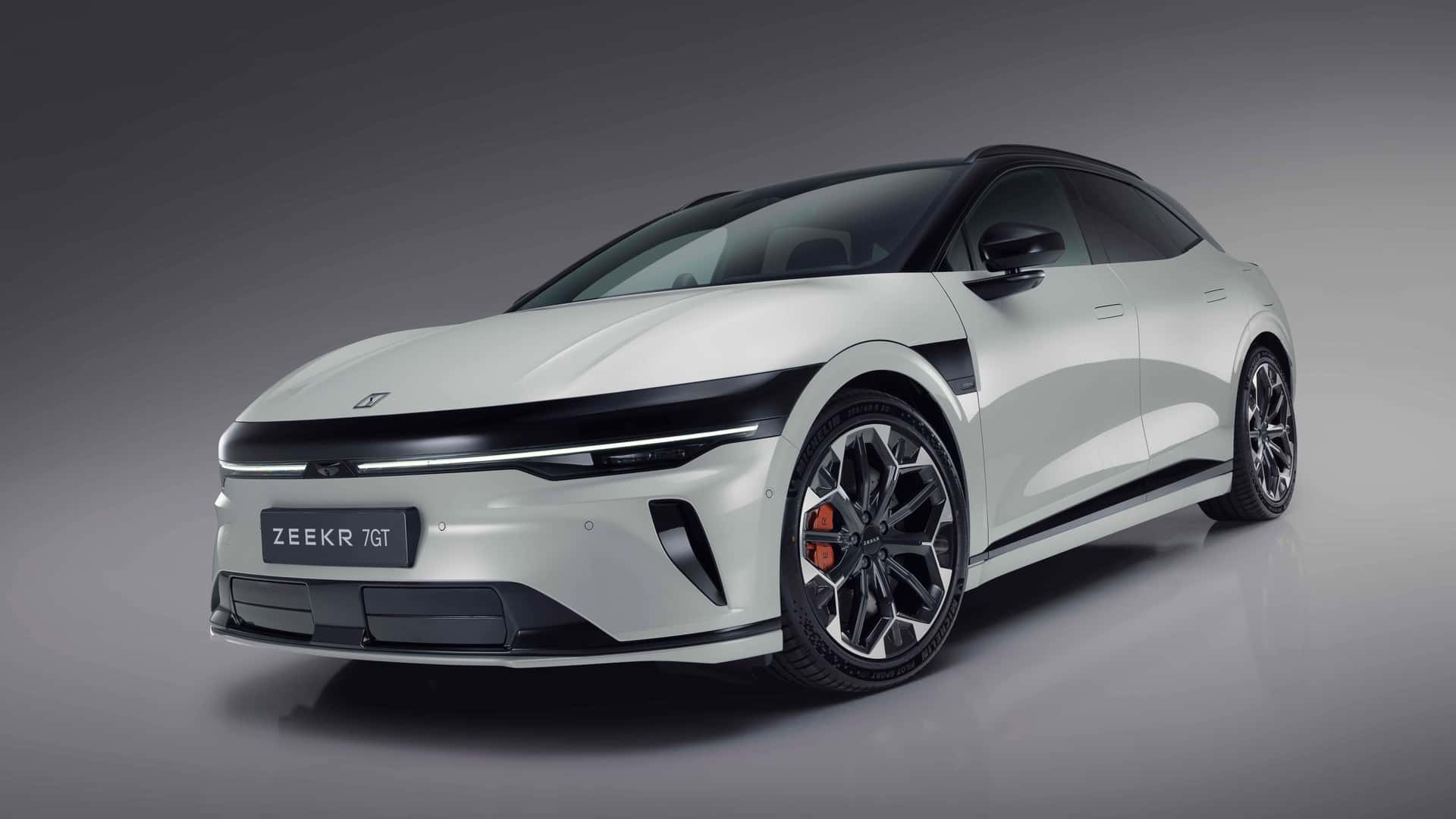
Key Takeaways
- The 75-kWh Zeekr 7GT significantly surpassed its charging claims, reaching 80% state of charge in approximately 11 minutes against a 13-minute official estimate.
- Despite peaking at a lower-than-advertised 325 kW, the electric vehicle showcased an exceptionally flat charging curve, maintaining high power output deep into the charging cycle.
- The Zeekr 7GT’s LFP battery, featuring the brand’s second-generation Golden Battery technology, charged from 10% to a full 100% in a remarkable 21 minutes, outperforming many EVs in the critical final stages of charging.
- This performance highlights that a consistent, high-power charging curve is often more critical for practical user experience than a high, fleeting peak charging power.
In a significant development for the electric vehicle (EV) landscape, the Zeekr 7GT, despite not reaching its advertised peak charging power, has demonstrated a groundbreaking ability to rapidly replenish its battery. Independent real-world testing of the 75-kilowatt-hour (kWh) Zeekr 7GT revealed a charging efficiency that not only exceeded manufacturer claims but also challenged conventional understandings of fast charging.
The vehicle, equipped with an advanced LFP (Lithium Iron Phosphate) battery, showcased an unusually flat charging curve, a characteristic that proved more beneficial for overall charging speed than a momentary high peak power output. This performance positions the Zeekr 7GT as a formidable contender in the rapidly evolving EV market, particularly in the critical aspect of charging convenience.

The Myth of Peak Power: Zeekr 7GT’s Reality
The prevailing narrative in EV charging often focuses on peak power ratings, with manufacturers touting impressive kilowatt figures. The Zeekr 7GT, for instance, boasts an 800-volt architecture capable of theoretically accepting up to 480 kilowatts (kW), a figure among the highest for EVs sold in Europe.
However, real-world conditions frequently present a different picture. In an independent test conducted by automotive expert Bjørn Nyland, the rear-wheel-drive 7GT Core, featuring the 75-kWh LFP battery, never approached its advertised maximum. Instead, it consistently peaked at approximately 325 kW across multiple charging sessions.
While this peak was over 150 kW below the claimed figure, the test results unveiled a more crucial aspect of battery charging: the shape and sustainment of the charging curve. This sustained power output ultimately dictated the exceptional charging times achieved by the Zeekr 7GT.

Redefining Rapid Charging: An Unusually Flat Curve
The true marvel of the 75-kWh Zeekr 7GT lies in its remarkably flat charging curve. While many electric vehicles experience a sharp decline in charging power after reaching a certain state of charge, typically around 50-80%, the Zeekr 7GT maintained an impressive pace throughout its charging cycle.
During the test, the Zeekr 7GT charged from a 10% state of charge to 80% in an astonishing 11 minutes. This performance significantly outpaced Zeekr’s own claim of 13 minutes for the same increment, underscoring the efficiency of its charging management system and Golden Battery technology.
Even more impressively, the electric vehicle proceeded to reach a full 100% charge in approximately 21 minutes. This is a timeframe that many contemporary EVs struggle to achieve for just the 20% to 80% segment, highlighting a significant leap in practical charging speed.
Sustained Power: A Game Changer for Full Charges
One of the most frustrating aspects of EV ownership can be the protracted time required to charge an electric vehicle past 80% or 90% state of charge. In most models, charging power dramatically tapers off, making the final percentages a test of patience as the battery management system prioritizes longevity and safety.
The Zeekr 7GT, however, defies this norm. The 75-kWh LFP pack was still drawing a substantial 220 kW at 80% state of charge. This figure remained remarkably high, with the vehicle accepting approximately 165 kW even at 90% charge.
The charging power only dipped below the 100 kW mark at an impressive 97% state of charge. This sustained high-power delivery fundamentally alters the practicality of charging the Zeekr 7GT to 100%, making it a viable and time-efficient option for long journeys, unlike many other electric vehicles.
Advanced Battery Technology: The Golden Battery Advantage
At the heart of the Zeekr 7GT’s exceptional charging capabilities is its in-house developed second-generation Golden Battery technology. This LFP (Lithium Iron Phosphate) battery pack, known for its robust thermal stability and cost-effectiveness, has been engineered to optimize charging performance beyond mere peak power figures.
LFP batteries typically have a flatter voltage curve during discharge, which can translate into more consistent power delivery during charging if managed correctly. Zeekr’s Golden Battery appears to leverage these inherent advantages, coupled with sophisticated thermal management and cell balancing, to maintain high power input across a wide range of states of charge.
The 800-volt architecture further enhances this efficiency, allowing for higher power transfer with less heat generation, contributing to the battery’s ability to sustain elevated charging rates for longer durations. This combination of battery chemistry, proprietary technology, and advanced electrical architecture creates a synergistic effect, resulting in industry-leading charging performance for the Zeekr 7GT.
Comparative Performance: Zeekr 7GT Against Its Peers
To provide a broader context, the independent test also compared the 75-kWh Zeekr 7GT with a long-range 7GT featuring a 100-kWh NMC (Nickel Manganese Cobalt) battery, as well as an Xpeng G6 equipped with an 81-kWh LFP battery. These comparisons underscored the unique advantage of the smaller-battery Zeekr 7GT’s charging curve.
Long-Range Zeekr 7GT (100-kWh NMC)
The larger-battery Zeekr 7GT, while also rated for high peak charging power, demonstrated a different charging profile. It briefly exceeded 420 kW, sustaining this level from 12% to 20% state of charge, before dropping to around 380 kW. However, its charging power began to taper more significantly earlier in the session, falling below 100 kW near 90% state of charge.
While the 100-kWh variant delivered more actual energy in the early stages due to its larger capacity, its overall charging curve was not as consistently flat as that of its 75-kWh LFP counterpart. This highlights that while a bigger battery can accept more energy, the efficiency of its charging profile is equally crucial for rapid completion.
Xpeng G6 (81-kWh LFP)
The Xpeng G6, another notable EV with an 81-kWh LFP battery, also achieved a similar high peak power early in its charging session. However, its power delivery quickly dropped below 400 kW. While performing slightly better than the 100-kWh Zeekr 7GT in later stages, it was still only accepting approximately 125 kW at 90% state of charge.
The 75-kWh Zeekr 7GT, with its consistently flatter curve, ultimately completed its charging session first among the three tested vehicles. This comprehensive comparison reinforces the idea that an optimized charging curve is a superior indicator of real-world charging speed and convenience than isolated peak power figures.
Zeekr’s Strategic Vision for EV Charging
The charging performance demonstrated by the Zeekr 7GT is not an isolated incident but rather indicative of Zeekr’s broader strategy in electric vehicle development. Previous tests, such as one involving a Zeekr 7X equipped with an earlier iteration of the Golden Battery, showed a charging time from empty to full in just over 22 minutes.
This consistent performance across models suggests that Zeekr is meticulously focusing on both headline-grabbing peak charging power ratings and the practical, sustained delivery of power throughout the charging curve. This dual approach aims to provide users with not just fast charging, but truly efficient and convenient charging experiences.
It is important to acknowledge that these results stem from an independent real-world test, rather than a controlled manufacturer or laboratory validation. Therefore, the displayed times and power figures should be considered indicative, showcasing the exceptional capabilities of the Zeekr 7GT under practical usage conditions.
Impact on the Indian EV Market and Global Adoption
As the global automotive industry, including the burgeoning Indian EV market, transitions towards electric mobility, charging infrastructure and speed remain paramount concerns for consumers. The advancements demonstrated by the Zeekr 7GT directly address range anxiety and the perceived inconvenience of EV charging.
For a market like India, where infrastructure is rapidly expanding, the ability of an electric vehicle to charge quickly and efficiently across a wide state of charge range can significantly boost consumer confidence. The Zeekr 7GT’s performance sets a new benchmark for what is achievable in practical EV charging, potentially influencing future battery development and charging network strategies.
The focus on sustained high charging power, even at higher states of charge, means less waiting time at public charging stations, making long-distance travel in an EV more akin to refueling a traditional internal combustion engine vehicle. This technological stride by Zeekr underlines the industry’s commitment to making electric vehicles an increasingly seamless part of daily life.
Frequently Asked Questions (FAQ)
What makes the Zeekr 7GT’s charging performance stand out?
The Zeekr 7GT stands out due to its unusually flat charging curve. While it didn’t hit its peak advertised power, it maintained high charging rates even at high states of charge (80-90% and beyond), allowing it to charge from 10% to 100% in a remarkable 21 minutes.
Did the Zeekr 7GT reach its claimed peak charging power?
No, the 75-kWh Zeekr 7GT peaked at approximately 325 kW during independent testing, which is more than 150 kW below its theoretical 480 kW claim for its 800-volt architecture. However, its sustained power delivery compensated for this.
What type of battery does the 75-kWh Zeekr 7GT use?
The 75-kWh Zeekr 7GT utilizes an LFP (Lithium Iron Phosphate) battery pack, which incorporates Zeekr’s in-house developed second-generation Golden Battery technology. This chemistry is known for its stability and efficiency.
Why is a flat charging curve more important than peak power?
A flat charging curve ensures that the electric vehicle maintains high charging speeds for a longer duration, especially during the crucial 80-100% charge range where most EVs slow down significantly. This translates to faster overall charging times in real-world scenarios, improving user convenience.
How long did it take the Zeekr 7GT to charge from 10% to 80%?
The 75-kWh Zeekr 7GT charged from 10% to 80% in about 11 minutes during the independent test. This duration is two minutes faster than Zeekr’s own official claim of 13 minutes for the same charging segment.
How does the Zeekr 7GT compare to other EVs in charging speed?
Compared to other EVs like the 100-kWh NMC Zeekr 7GT and the Xpeng G6, the 75-kWh Zeekr 7GT’s flatter charging curve allowed it to finish charging to 100% first. While others might achieve higher momentary peaks, their power tapers off earlier, leading to longer overall charging times.
Is this charging performance based on official manufacturer tests?
No, the impressive charging figures for the Zeekr 7GT are based on independent real-world tests conducted by Bjørn Nyland. While not a controlled laboratory validation, these results provide valuable insights into the vehicle’s performance under practical usage conditions.