
Key Takeaways:
- SpaceX has successfully launched its 11,000th Starlink satellite into low Earth orbit, marking a significant achievement in its mission to provide global broadband internet.
- The milestone was reached during the Starlink Group 17-50 mission on August 19, 2026, which deployed 24 Starlink V2 Mini satellites.
- The program, which began with test satellites in 2018 and operational batches in 2019, has rapidly expanded to serve millions of users across more than 160 countries.
- Future plans for the SpaceX Starlink program include the deployment of next-generation V3 satellites via the Starship vehicle and a proposed Gen3 constellation of up to 100,000 satellites for enhanced capacity.
In a testament to its ambitious vision for global connectivity, SpaceX has achieved a remarkable milestone, successfully launching its 11,000th Starlink satellite into orbit. This accomplishment underscores the rapid deployment capabilities of the company’s reusable rocket technology and its unwavering commitment to expanding high-speed satellite internet access worldwide.

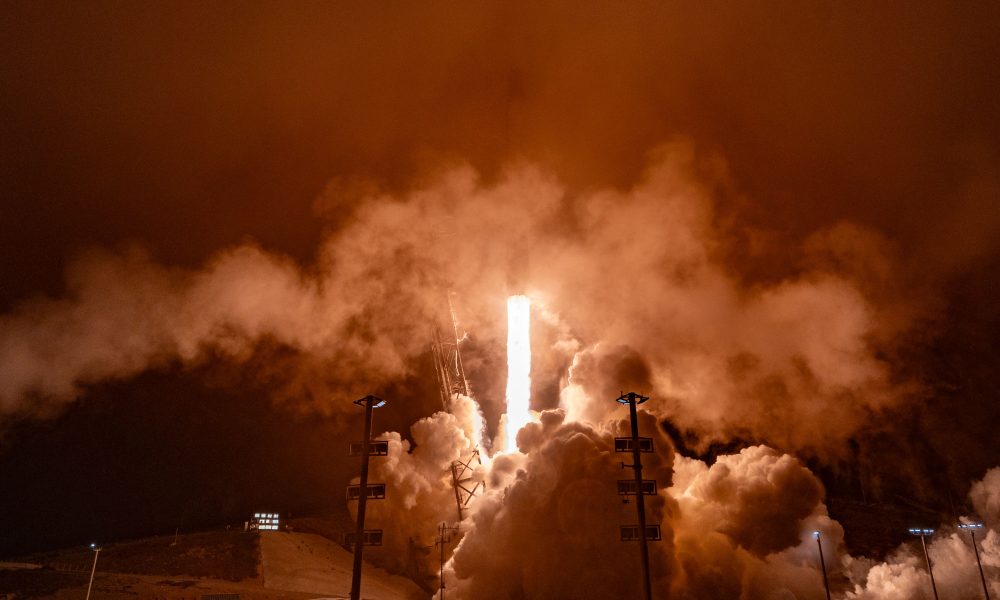
The significant deployment occurred as part of the Starlink Group 17-50 mission, which lifted off on August 19, 2026, at 04:01 UTC. The launch originated from Space Launch Complex 4 East at Vandenberg Space Force Base in California, a critical site for SpaceX’s West Coast operations.
The Latest Milestone: Expanding the Constellation
The recent mission saw a Falcon 9 rocket successfully carry 24 advanced Starlink V2 Mini satellites into low Earth orbit. These satellites were precisely deployed approximately one hour after liftoff, contributing to the ever-growing constellation designed to deliver robust broadband internet.
A critical component of this success was the first-stage booster, identified as B1097, which completed its twelfth flight. Following a flawless ascent, the booster executed a precise landing on the droneship ‘Of Course I Still Love You,’ stationed in the Pacific Ocean. This routine recovery highlights the efficiency and reusability that are fundamental to the economic viability and rapid launch cadence of the SpaceX Starlink program.

According to comprehensive tracking data compiled around the date of the launch, this latest deployment pushed the total number of operational Starlink satellites in orbit to just over 11,000. This continuous expansion is vital for maintaining and enhancing the network’s global coverage, capacity, and overall speed for users.
A Rapid Expansion: The Genesis of Starlink
The journey of the SpaceX Starlink program began with the launch of its pioneering test satellites, Tintin A and B, on February 22, 2018. These initial orbital trials paved the way for the program’s operational phase.
The first batch of 60 operational Starlink satellites followed on May 24, 2019, when a Falcon 9 rocket successfully lifted off from Cape Canaveral. This launch from Florida’s Space Coast marked the official commencement of a rapid expansion strategy that has sustained an impressive pace for over seven years, consistently deploying new tranches of satellites.
Since that inaugural operational launch, SpaceX has conducted hundreds of dedicated Starlink missions. Utilizing its fleet of reusable Falcon 9 rockets, the company has routinely deployed batches of 20 to 30 satellites at a time, ensuring a continuous refresh and expansion of the satellite internet network. By mid-2026, SpaceX had already surpassed 12,000 total satellites launched across all versions, with ongoing replacements for units that deorbit as part of the company’s proactive space debris management strategy.
Scaling Global Connectivity: Current Reach and Impact
The impact of the SpaceX Starlink program on global connectivity has been profound. The network currently serves millions of users across more than 160 countries and diverse territories, bridging the digital divide in many remote and underserved regions.
The versatility of Starlink’s high-speed, low-latency broadband internet is evident in its wide array of applications. It supports essential residential internet services, provides critical connectivity for maritime vessels, enables in-flight internet for aviation, and offers robust communication solutions for emergency services during natural disasters or in areas with compromised infrastructure.
The accessibility and reliability offered by Starlink are transforming how individuals and organizations connect to the internet, fostering economic development and improving communication capabilities across continents.
Innovating for the Future: Next-Generation Satellites
Looking ahead, SpaceX remains at the forefront of innovation within the satellite internet sector. Future plans for the Starlink constellation are centered on the deployment of next-generation hardware, promising even greater performance and capacity.
Central to this evolution are the larger V3 satellites, which are designed to deliver substantially higher throughput compared to their predecessors. These advanced spacecraft will significantly boost the network’s data handling capabilities, enhancing speeds and reducing latency for an ever-increasing user base. The deployment of these larger satellites will necessitate the increased payload capacity offered by the Starship vehicle, which is currently undergoing rigorous development and testing at SpaceX’s facilities.
Ambitious Plans: The Gen3 Constellation Vision
Further solidifying its long-term strategy for the SpaceX Starlink program, the company submitted a significant application to the Federal Communications Commission (FCC) in July. This filing seeks regulatory authority for a monumental Gen3 constellation, potentially comprising up to 100,000 satellites.
These prospective Gen3 spacecraft are envisioned to operate in very low Earth orbit shells, specifically at altitudes near 325 kilometers and 475 kilometers. This lower orbital profile is critical for minimizing latency and enhancing signal strength. The application requests the use of existing Ku, Ka, V, and E band spectrum, alongside the pioneering integration of new greenfield W and D band frequencies, ranging between 92 and 275 GHz. Accessing these higher frequencies will enable unprecedented data transfer capabilities.
SpaceX articulates that this vastly expanded system aims to deliver multi-gigabit symmetrical broadband. Such capabilities would cater to a broad spectrum of users, including consumers, large enterprises, governments, and potentially billions of AI-powered devices worldwide. The company projects that this robust infrastructure could eventually handle a significant majority of global internet traffic.
The realization of this ambitious Gen3 constellation and its subsequent deployment is contingent upon successful regulatory review by the FCC and the operational readiness of the Starship vehicle for high-volume orbital launches. This unparalleled scale in the SpaceX Starlink program reflects the company’s ongoing commitment to providing ubiquitous, high-speed connectivity from space, positioning Starlink as a cornerstone of future global telecommunications infrastructure.
FAQ
What is the latest milestone achieved by the SpaceX Starlink program?
SpaceX recently launched its 11,000th Starlink satellite into orbit. This significant achievement occurred during the Starlink Group 17-50 mission on August 19, 2026, deploying 24 Starlink V2 Mini satellites aboard a Falcon 9 rocket from Vandenberg Space Force Base.
When did the Starlink program officially begin operations?
The Starlink program commenced with the launch of its first test satellites, Tintin A and B, on February 22, 2018. The first operational batch of 60 Starlink satellites was deployed on May 24, 2019, marking the beginning of the network’s rapid expansion for global broadband internet services.
How many countries does Starlink currently serve?
The SpaceX Starlink program currently serves millions of users across more than 160 countries and territories worldwide. Its services provide high-speed, low-latency internet access, particularly benefiting remote areas and critical applications like maritime, aviation, and emergency services.
What are SpaceX’s future plans for the Starlink constellation?
Future plans include deploying larger, next-generation V3 satellites that offer substantially higher throughput, requiring the Starship vehicle for launch. SpaceX has also applied to the FCC for a Gen3 constellation of up to 100,000 satellites, aiming for multi-gigabit symmetrical broadband and handling a majority of global internet traffic.
What is the role of the Falcon 9 rocket in the Starlink program?
The Falcon 9 rocket is the primary launch vehicle for the SpaceX Starlink program. Its reusability is crucial for the rapid and cost-effective deployment of Starlink satellites, allowing SpaceX to launch batches of 20 to 30 satellites at a time and efficiently expand the global broadband constellation.