
Key Takeaways
- Researchers at Hanyang University discovered that manganese, intended to protect high-nickel EV battery cathodes, can accelerate degradation if precursor materials are exposed to air during manufacturing.
- This exposure alters manganese chemistry, creating reactive surface defects known as “Jahn-Teller distorted” species, which lead to electrolyte breakdown and nearly double the rate of capacity fading.
- The findings, published in Energy and Environmental Science, highlight a critical flaw in cobalt-free, high-nickel battery designs aimed at increasing driving range and reducing reliance on expensive critical minerals.
- A proposed solution involves increasing excess lithium during battery synthesis, which can suppress these defects and help maintain over 90% capacity, significantly improving long-term durability.
- This discovery underscores the importance of stringent precursor management in large-scale battery manufacturing to ensure longer-lasting electric vehicles and more stable grid-scale energy storage systems.
Seoul, South Korea — The quest for longer-range, more sustainable electric vehicles (EVs) has faced a significant hurdle, as recent research from Hanyang University in South Korea reveals a hidden manufacturing flaw that could shorten battery lifespans. Scientists have identified that a common element in next-generation battery designs, manganese, can unexpectedly become a catalyst for accelerated EV battery degradation if precursor materials are exposed to air.
This critical discovery, led by Professor Jin Ho Bang and PhD Scholar JinHa Shim, addresses a potential weakness in cobalt-free, high-nickel cathode batteries. These advanced battery types are crucial for extending EV driving ranges and reducing the automotive industry’s dependence on expensive, often geopolitically sensitive critical minerals. However, the study suggests that subtle chemical changes occurring during manufacturing could undermine their promised durability.

Understanding the Core Challenge: Manganese and Cathode Chemistry
The Promise of High-Nickel, Cobalt-Free Batteries
The electric vehicle revolution hinges on continuous advancements in battery technology. One of the most promising avenues has been the development of high-nickel cathode batteries, particularly those designed to be cobalt-free or to significantly reduce cobalt content. These batteries offer a higher energy density, translating directly into longer driving ranges for electric vehicles, a key factor in consumer adoption.
Moreover, the strategic shift away from cobalt, a mineral associated with high costs and ethical sourcing concerns, makes these batteries more economically viable and environmentally responsible. Manganese, in particular, has emerged as a preferred alternative, often used in protective coatings or integrated into the cathode structure to enhance stability and performance in these nickel-rich systems.
Unveiling the Hidden Flaw
Despite the inherent advantages of manganese-coated nickel core batteries, the research from Hanyang University has brought to light an unforeseen vulnerability. The study meticulously investigated the manufacturing conditions of these cutting-edge battery materials. It concluded that the seemingly innocuous exposure of precursor materials to ambient air during processing can initiate a cascade of undesirable chemical transformations.

These alterations to the manganese chemistry within the battery’s core components are not immediately apparent but manifest as a critical flaw that significantly accelerates EV battery degradation. This discovery challenges conventional assumptions about the stability of these materials and points towards the need for more stringent control over the manufacturing environment.
The Science Behind the Degradation
Air Exposure: A Critical Factor
The Hanyang University team identified that the storage of precursor materials in areas exposed to air is the initial trigger for this degradation pathway. Such exposure leads to the oxidation of manganese specifically on the particle surface of the cathode material. This surface oxidation is a key event, setting in motion a series of chemical reactions that compromise the battery’s integrity.
The findings underscore that even seemingly minor environmental factors in a manufacturing setting can have profound consequences for the long-term performance and stability of advanced battery chemistries. This highlights a crucial area for process optimization in large-scale battery production.
Jahn-Teller Distortion: A Molecular Instability
Following the oxidation, the research details how these surface changes lead to the formation of defective regions rich in what are termed “Jahn-Teller distorted” manganese species. This distortion refers to a specific type of structural instability at the atomic level, where the electron configuration of manganese ions causes a deformation in the surrounding crystal lattice.
These distorted surfaces are not merely an academic curiosity; they become highly reactive sites. This heightened reactivity is detrimental to the battery’s functionality, initiating a cascade of destructive processes within the cell. Understanding this molecular-level instability is key to mitigating its effects on battery lifespan.
Consequences for Battery Performance
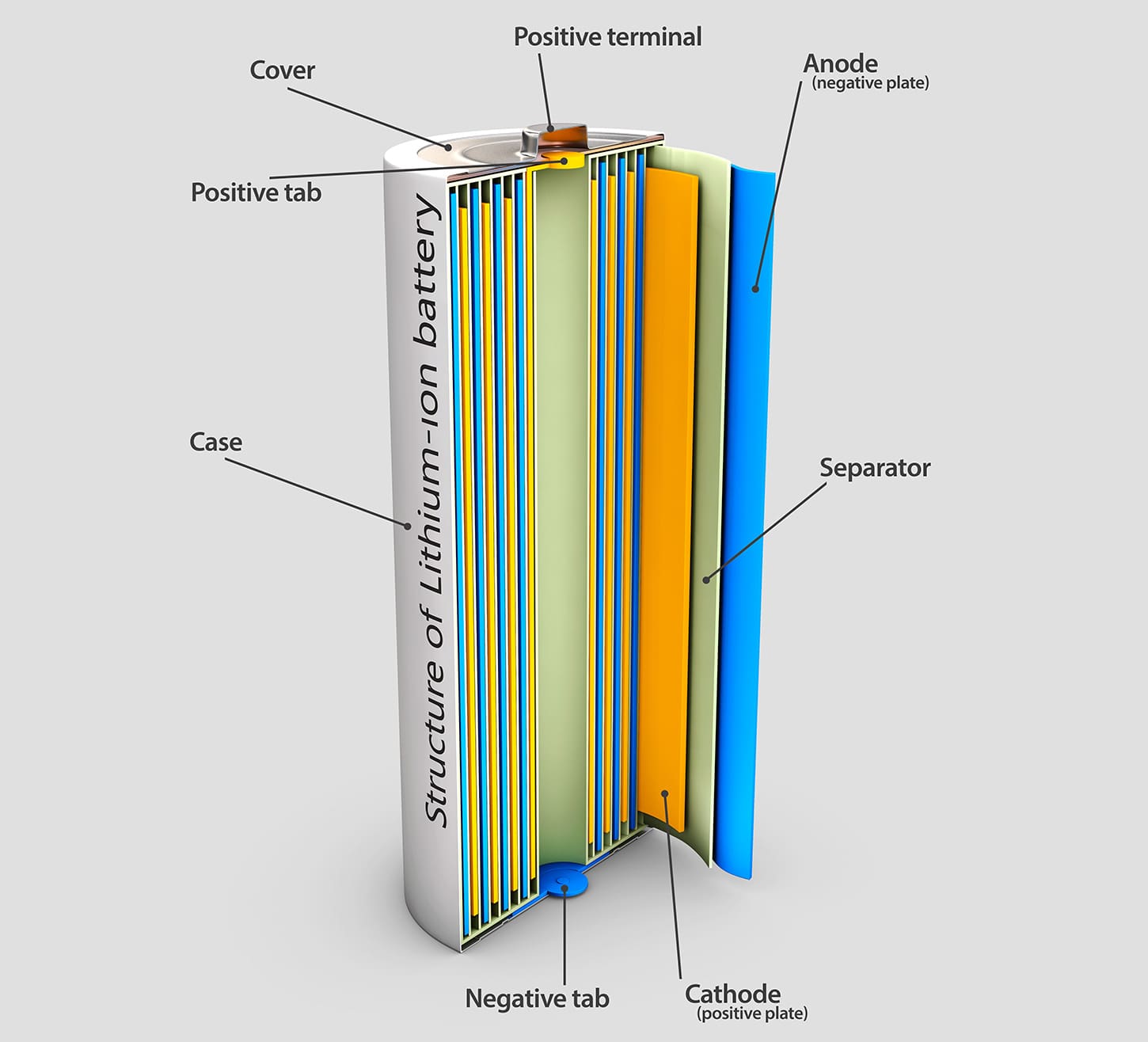
The reactivity of these Jahn-Teller distorted manganese species has severe implications for battery performance. Firstly, they accelerate electrolyte decomposition, which is the breakdown of the liquid medium that facilitates ion movement between the anode and cathode. This breakdown consumes electrolyte, reduces ion conductivity, and generates harmful by-products.
Secondly, these reactions promote transition-metal dissolution, where essential metal ions from the cathode leach into the electrolyte, further degrading the cathode structure. Finally, the distorted surfaces lead to damaging reactions with the graphite anode, the other primary electrode in the battery. Collectively, these processes significantly impair the battery’s ability to store and release energy efficiently.
The study demonstrated the tangible impact of this hidden defect, revealing that it could nearly double the rate of capacity fading in nickel-rich battery systems. This accelerated fading was observed during extended battery cycling tests, which simulate the repeated charging and discharging cycles experienced by an EV during its operational life. Such a significant reduction in capacity retention directly translates to a shorter lifespan and diminished performance for electric vehicles.
Pioneering a Solution: Hanyang University’s Breakthrough
The Role of Excess Lithium
Crucially, the Hanyang University research did not merely identify a problem but also proposed an elegant solution. The team discovered that by increasing the amount of excess lithium during the synthesis phase of the battery materials, the formation of these defective surface phases could be effectively suppressed. Lithium plays a vital role in the cathode structure, and adjusting its stoichiometry during manufacturing proved to be a powerful lever.
This intervention helps to restore stable manganese-oxygen bonding on the particle surfaces. By stabilising these bonds, the propensity for Jahn-Teller distortion and the subsequent reactivity are dramatically reduced, thereby protecting the overall integrity of the cathode material. This approach offers a relatively straightforward adjustment to existing manufacturing processes rather than requiring a complete overhaul.
Restoring Stability and Durability
The effectiveness of this proposed modification was evident in experimental results. The researchers found that cathodes treated with increased excess lithium during synthesis could retain more than 90% of their initial capacity even after extensive cycling. This starkly contrasts with the higher rates of capacity fading observed in cathodes where the precursor materials were air-exposed without this protective measure.
Professor Bang elaborated on the significance of these findings, stating: “We found that a manganese-rich shell, which is normally introduced to protect high-nickel cathodes, can instead become a catalyst for degradation if the precursor chemistry is not carefully controlled. Even small variations in precursor storage history can substantially affect battery stability.” This quote underscores the delicate balance required in advanced battery manufacturing and the critical role of precursor management.
Implications for EV Manufacturing and Energy Storage
Optimising Production for Longevity
The implications of this research for the electric vehicle industry are profound. As manufacturers scale up production of high-energy density batteries, understanding and mitigating potential flaws introduced during synthesis becomes paramount. The findings suggest that by implementing careful control of precursor handling and lithium stoichiometry, manufacturers can significantly enhance the durability of their batteries.
This approach offers a cost-effective pathway to improved battery longevity, as Professor Bang further highlighted: “Our results show that even minor variations in precursor history can have major consequences for battery performance, making precursor management an important consideration for large-scale manufacturing. Rather than requiring expensive coatings or major redesigns of production lines, careful control of precursor handling and lithium stoichiometry could provide a comparatively upfront route towards more durable batteries.” This insight provides a practical, industry-friendly solution to a complex problem.
Broader Impact on Sustainable Energy
Beyond individual electric vehicles, the improvements in battery durability driven by this research have broader societal and environmental benefits. Longer-lasting EV batteries reduce the need for premature replacements, lessening waste and resource consumption. This aligns with the principles of a circular economy and enhances the overall sustainability footprint of electric transportation.
Furthermore, the research points to the positive impact on large-scale energy storage systems, which are vital for integrating renewable energy sources like solar and wind into national grids. Stable, high-energy batteries are essential for these applications, allowing for efficient storage of intermittent renewable power and ensuring grid stability. The Hanyang University study, published in Volume 19, Issue 12 of the journal Energy and Environmental Science, thus contributes significantly to the global push for a sustainable energy future, providing a critical pathway to mitigate EV battery degradation and enhance the reliability of energy storage technologies.
Frequently Asked Questions (FAQ)
What is the primary discovery regarding EV battery degradation?
Researchers at Hanyang University found that exposing precursor materials of high-nickel EV batteries to air during manufacturing can alter manganese chemistry. This creates reactive surface defects, specifically “Jahn-Teller distorted” manganese species, which accelerate electrolyte breakdown and significantly increase the rate of battery capacity fading, thus shortening the lifespan of electric vehicles.
Which type of batteries are affected by this manganese flaw?
The study focuses on cobalt-free, high-nickel cathode batteries, particularly those that incorporate manganese (like manganese-coated nickel core batteries). These batteries are designed to offer increased EV driving range and reduce reliance on expensive critical minerals, making the discovery crucial for the future of sustainable electric transportation.
What causes the manganese to become unstable in these batteries?
The instability arises from the oxidation of manganese on the particle surface of precursor materials when exposed to air during storage or processing. This oxidation leads to the formation of defective regions with “Jahn-Teller distorted” manganese species, which are highly reactive and initiate detrimental chemical reactions within the battery cell.
What are the consequences of these defects on battery performance?
The reactive defects caused by altered manganese chemistry lead to several issues. These include accelerated electrolyte decomposition, dissolution of transition metals from the cathode, and damaging reactions with the graphite anode. Collectively, these processes significantly impair the battery’s capacity retention, nearly doubling the rate of capacity fading during cycling tests.
How did Hanyang University researchers propose to solve this problem?
The research team suggested that increasing the amount of excess lithium during the synthesis of battery materials can suppress the formation of these defective surface phases. This adjustment helps restore stable manganese-oxygen bonding, leading to modified cathodes that can retain over 90% of their capacity and significantly improve long-term durability.
What is the significance of this discovery for EV manufacturers?
This research provides a practical, cost-effective solution for manufacturers. By carefully controlling precursor handling and adjusting lithium stoichiometry, they can produce more durable batteries without requiring expensive coatings or major production line redesigns. This can lead to electric vehicles with longer battery lifespans, enhancing consumer confidence and reducing warranty claims.
How does this research impact large-scale energy storage systems?
The findings are also crucial for large-scale energy storage systems used in renewable energy applications. These systems require stable, high-energy batteries for efficient grid integration. By improving battery durability and reducing degradation, the research contributes to making renewable energy more reliable and supports the broader transition to sustainable energy infrastructure globally.