
Key Takeaways:
- APM Terminals Elizabeth has placed one of Orange EV’s largest orders to date for 96 HUSK-e XP electric terminal tractors.
- This significant procurement underscores a growing trend towards the widespread electrification of port operations across the United States.
- Orange EV, with approximately 2,000 electric trucks already in service, is rapidly becoming the standard for zero-emission yard trucks in major container terminals.
- The ordered units are compliant with the Build America, Buy America Act (BABA) and feature a 310 kWh lithium iron phosphate (LFP) battery, capable of moving up to 180,000 lbs.
- The move signifies a critical shift from pilot programs to full-scale fleet standardization, driven by strong business cases and environmental benefits.
APM Terminals Elizabeth Accelerates Port Electrification with Major Investment
In a significant stride towards sustainable port operations, APM Terminals Elizabeth has announced a substantial order for 96 state-of-the-art electric terminal tractors from Orange EV. This landmark procurement represents one of the largest sales for Orange EV to date, signaling a pivotal moment in the industry’s transition towards zero-emission logistics within major maritime hubs.

The deal not only highlights APM Terminals Elizabeth’s commitment to environmental stewardship but also reflects a broader industry trend where the electrification of yard trucks is moving beyond experimental phases to become a standardized practice. This strategic investment positions the terminal at the forefront of green port initiatives on the East Coast.
The HUSK-e XP: Powering Port Operations
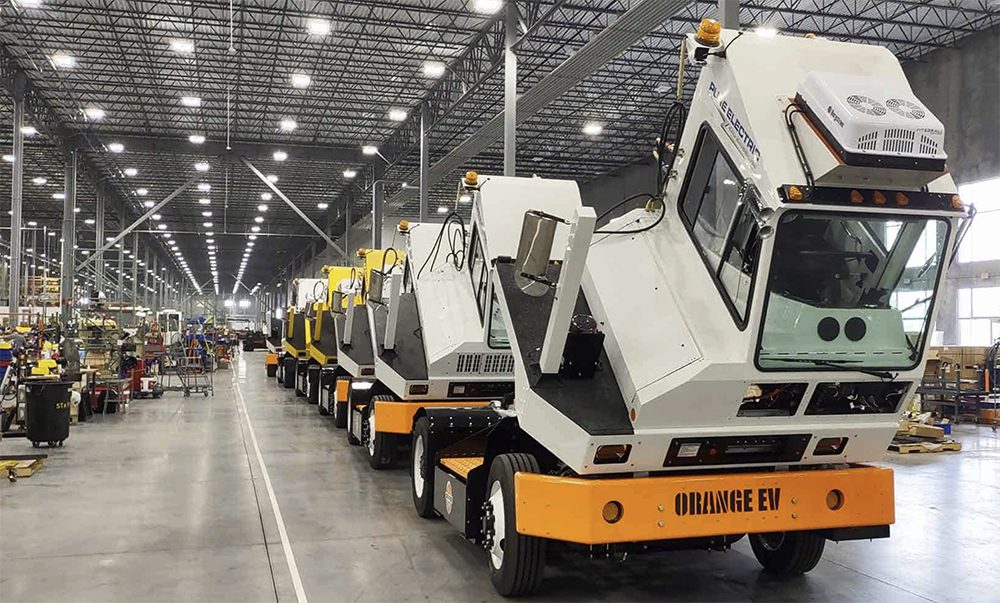
The 96 units ordered are Orange EV’s HUSK-e XP electric terminal tractors, purpose-built to meet the rigorous demands of heavy port and terminal operations. These powerful vehicles are manufactured at Orange EV’s production facility in Kansas City, Kansas, and notably adhere to the stringent requirements of the Build America, Buy America Act (BABA).
Each HUSK-e XP model is engineered for exceptional performance, capable of moving a combined weight of up to 180,000 lbs. Central to their robust capabilities is a 310 kWh lithium iron phosphate (LFP) battery, which stands as the largest available pack in the Orange EV lineup. This substantial battery capacity ensures extended operational cycles and reliable power for continuous heavy-duty use in a bustling port environment.

Orange EV’s Trajectory: From Pilot to Widespread Adoption
Orange EV’s remarkable success in the commercial electric vehicle sector stands in contrast to many startups that have faltered. The company’s strategic approach began with identifying a niche application ideally suited for electrification: terminal trucks, often colloquially known as yard dogs. Through years of diligent pilot programs and rigorous testing, Orange EV has patiently honed its technology and operational model.
Today, Orange EV boasts an impressive fleet of approximately 2,000 electric trucks in service across various operations. This extensive deployment provides a robust dataset demonstrating the reliability, efficiency, and environmental benefits of their solutions. The latest orders, including the substantial one from APM Terminals Elizabeth, are a testament to the company’s proven track record and the growing market confidence in its electric terminal tractors.
Building Momentum Across Coasts
The order from APM Terminals Elizabeth follows a series of significant procurements that underscore the accelerating trend of port electrification across the United States. Earlier this summer, APM Terminals Los Angeles (Pier 400) substantially expanded its electric fleet.
After a successful year-long pilot program involving 20 rental units, the Los Angeles terminal placed an additional order for 40 units, bringing its total electric terminal tractor count to 60. This expansion illustrates the positive operational outcomes experienced during the pilot phase and the subsequent decision to scale up zero-emission infrastructure.
Adding to this momentum, Greenwich Terminals, the operator of the Packer Avenue Marine Terminal in South Philadelphia, recently finalized a deal for two dozen electric terminal tractors from Orange EV. These consecutive high-volume orders from major port operators on both the East and West Coasts reflect a unified industry shift towards sustainable and efficient cargo handling solutions.
The Shifting Tides of Port Logistics
Industry experts and company executives confirm that the recent wave of orders signifies a critical turning point in port logistics. The era of merely testing electric terminal trucks is rapidly evolving into a period of widespread standardization and fleet-wide adoption, driven by tangible operational benefits and evolving regulatory landscapes.
As Orange EV observed, “These deals reflect the same shift taking hold at ports on both coasts: electrification of yard trucks is no longer just being tested—it’s being scaled.” The company further emphasized that “Operators who spent the last several years piloting electric terminal trucks are now standardizing fleet-wide.”
Kurt Neutgens, CEO of Orange EV, elaborated on this transformation, stating, “evidence of an inflection point in ports, as operators move past the pilot and testing phase to standardize around Orange EV’s turnkey solution. Many port operators are accelerating because the Orange EV real-world data shows the business case for electrification and the environmental case align.” This alignment of economic and ecological benefits is a powerful motivator for large-scale adoption.
Economic and Environmental Imperatives
The push for electric terminal tractors is propelled by a dual imperative: economic efficiency and environmental responsibility. From an economic standpoint, electric vehicles often present lower operating costs due to reduced fuel consumption and decreased maintenance requirements compared to their diesel counterparts. The longevity of components, coupled with potential incentives for EV adoption, further strengthens the financial case for electrification.
Environmentally, the transition to electric terminal tractors drastically reduces greenhouse gas emissions and local air pollutants, contributing to cleaner air quality in and around port communities. This aligns with global and national sustainability goals, helping ports meet stricter emissions regulations and enhancing their corporate social responsibility profiles.
Broader Implications for Sustainable Supply Chains
The large-scale deployment of electric terminal tractors at major facilities like APM Terminals Elizabeth holds significant implications beyond the immediate port environment. It contributes to the overall decarbonization of the supply chain, from ship to shore and beyond. As more ports adopt similar strategies, it creates a cascading effect, encouraging other logistics segments to explore and invest in zero-emission technologies.
This widespread adoption also drives innovation in supporting infrastructure, such as charging solutions and grid management, paving the way for a more robust and resilient electric vehicle ecosystem. The BABA compliance of Orange EV’s units also underscores a national commitment to fostering domestic manufacturing and creating jobs within the green economy.
Policy Support and Local Manufacturing
The Build America, Buy America Act (BABA) plays a crucial role in accelerating the domestic production and procurement of goods, including electric vehicles and their components. By ensuring that the electric terminal tractors are BABA compliant, Orange EV and its partners like APM Terminals Elizabeth support American manufacturing and strengthen national supply chains. This policy framework is instrumental in linking environmental goals with economic development.
Such initiatives help create a stable market for advanced manufacturing within the United States, fostering technological expertise and job creation in the rapidly expanding EV sector. The strategic decision to order BABA-compliant vehicles signifies a comprehensive approach to sustainability that encompasses environmental, economic, and national interests.
The Future of Port Operations: An Electric Horizon
The order for 96 electric terminal tractors by APM Terminals Elizabeth marks a pivotal moment in the ongoing transformation of port logistics. It exemplifies a clear shift towards scalable, sustainable solutions that are both economically viable and environmentally responsible. With Orange EV establishing itself as a leading provider of electric terminal tractors and major ports standardizing their operations, the future of cargo handling appears increasingly electric.
This trend is expected to continue, with more ports likely to follow suit as the proven benefits of electric fleets become undeniable. The alignment of business objectives with ecological imperatives promises a greener, more efficient, and sustainable future for global trade and logistics.
Frequently Asked Questions (FAQ)
What is the significance of APM Terminals Elizabeth’s order?
The order for 96 electric terminal tractors is one of Orange EV’s largest sales, signifying a major acceleration in port electrification. It demonstrates APM Terminals Elizabeth’s commitment to sustainable operations and marks a transition from pilot programs to widespread adoption of electric vehicles in port logistics.
What are electric terminal tractors?
Electric terminal tractors, often called yard dogs, are heavy-duty vehicles designed to move shipping containers and cargo trailers within ports, warehouses, and logistics yards. They are powered by electricity, offering a zero-emission alternative to traditional diesel-powered models.
What are the benefits of using electric terminal tractors?
Key benefits include significantly reduced greenhouse gas emissions and local air pollution, lower operating costs due to less fuel consumption and maintenance, and quieter operations. These factors contribute to cleaner air, improved worker conditions, and enhanced operational efficiency.
What are the specifications of the HUSK-e XP units ordered?
The HUSK-e XP units are purpose-built for heavy port operations, capable of moving up to 180,000 lbs. Each features a 310 kWh lithium iron phosphate (LFP) battery, which is Orange EV’s largest available pack, ensuring robust power and extended operational hours.
What is the Build America, Buy America Act (BABA) compliance?
The BABA mandates that federally funded infrastructure projects use American-made materials and products. The compliance of these electric terminal tractors means they meet specific criteria for domestic content and manufacturing, supporting U.S. industries and job creation.
How many electric trucks does Orange EV currently have in service?
Orange EV currently has approximately 2,000 electric trucks in service. This extensive deployment underscores the company’s leading position in the electric terminal tractor market and the proven reliability of its solutions across various commercial applications.
Are other ports also adopting electric terminal tractors?
Yes, there is a clear trend towards port electrification across the U.S. APM Terminals Los Angeles recently expanded its electric fleet to 60 units, and Greenwich Terminals in South Philadelphia also ordered 24 units. These orders indicate a nationwide shift from testing to standardizing electric yard trucks.