
Key Takeaways:
- India-based AI battery data intelligence platform TapFin has selected ELECTRA AI’s EVE-Ai Battery Fleet Analytics.
- The partnership aims to enhance battery-level intelligence across the asset lifecycle for various stakeholders in India’s rapidly growing electric vehicle market.
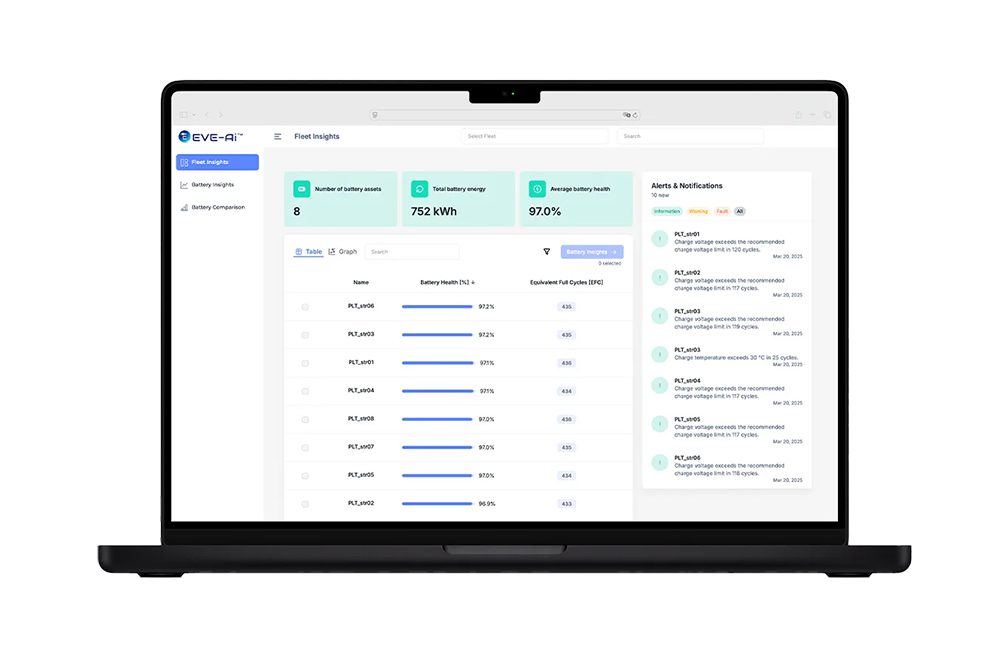
- EVE-Ai Battery Fleet Analytics provides research-grade battery science, offering continuous State of Health (SoH) and Remaining Useful Life (RUL) analytics, alongside advanced fault detection and operational guidance.
- ELECTRA AI, known for its “AI Brain for Batteries” platform, leverages agentic AI, physical AI, and physics-informed battery modeling to optimize battery performance and longevity.
- This collaboration is set to empower lenders, OEMs, and operators with critical insights for more confident decision-making concerning EV assets.
In a significant development for the electric vehicle (EV) ecosystem, especially within the dynamic Indian market, TapFin, an India-based artificial intelligence (AI) battery data intelligence platform, has announced its selection of ELECTRA AI’s EVE-Ai Battery Fleet Analytics. This strategic integration is poised to substantially strengthen TapFin’s capabilities in delivering granular, battery-level intelligence.
ELECTRA AI, a B2B software company that positions itself as the “AI Brain for Batteries,” brings its sophisticated platform to this collaboration. The partnership underscores a growing industry focus on advanced battery analytics, crucial for optimizing performance, extending lifespan, and ensuring the safety of EV power units, a key area of focus in modern EV Engineering News.

Elevating Battery Intelligence for the Indian Market
TapFin’s core mission revolves around transforming complex telemetry, battery health, and utilization data into actionable intelligence. This intelligence is designed to serve a broad spectrum of stakeholders across the asset lifecycle, including lenders, original equipment manufacturers (OEMs), operators, and various players within the burgeoning sustainability ecosystem.
The integration of EVE-Ai Battery Fleet Analytics adds a crucial research-grade battery-science layer to TapFin’s offerings. This advanced layer provides continuous and precise analytics concerning the State of Health (SoH) and Remaining Useful Life (RUL) of batteries. Furthermore, it incorporates sophisticated fault detection mechanisms and offers vital operational guidance, moving beyond rudimentary data aggregation to deliver predictive insights.
The Core of ELECTRA AI’s Technology
ELECTRA AI’s platform, which combines agentic AI, physical AI, and physics-informed battery modeling with large quantitative models (LQMs), is central to its “AI Brain for Batteries” capabilities. This innovative fusion enables battery systems to be meticulously monitored, comprehensively optimized, and precisely controlled across their entire lifecycle, from manufacturing to end-of-life management.

Agentic AI, within this context, refers to intelligent software agents capable of autonomous action and decision-making based on learned patterns. Physical AI integrates real-world physics and engineering principles into the AI models, ensuring that predictions and recommendations are grounded in the actual electrochemical and thermal behavior of batteries. Physics-informed battery modeling further refines this by incorporating detailed scientific understanding of battery degradation and performance, leading to highly accurate and reliable analytics.
The inclusion of large quantitative models (LQMs) allows for the processing and analysis of vast datasets, identifying subtle trends and anomalies that might elude traditional methods. This holistic approach is vital for maximizing battery efficiency and longevity, directly impacting the economic viability and environmental sustainability of EV fleets.
Strategic Expansion and Market Impact
The collaboration comes at a time when ELECTRA AI, previously known as Electra Vehicles, is undergoing a significant corporate transformation. The company has entered into a business combination agreement with Iron Horse Acquisition II, with the combined entity anticipated to list on the Nasdaq stock exchange in the latter half of 2026. This move signals ELECTRA AI’s strategic intent to expand its global footprint and enhance its market presence in advanced battery technology.
The Indian EV market stands out as a critical growth area. Fabrizio Martini, CEO of ELECTRA AI, highlighted India’s strategic importance in a statement. Martini, who co-founded ELECTRA AI in 2015 drawing inspiration from his work as a Principal Investigator on NASA projects, articulated the profound impact of this partnership.
“India is one of the most dynamic EV markets in the world, and TapFin is building exactly the intelligence layer the ecosystem needs. Embedding our battery analytics into their platform means lenders, OEMs and operators can make sharper, more confident decisions about the assets they finance and run,” Martini stated, underscoring the immediate and long-term benefits for the region.
Empowering Stakeholders with Actionable Insights
The actionable intelligence derived from this partnership holds significant implications for various sectors within the EV landscape in India. For lenders, enhanced battery analytics translate into more accurate risk assessments for financing EV assets, leading to better loan terms and improved portfolio management. Understanding the precise SoH and RUL minimizes uncertainties associated with battery degradation, a major concern for asset-backed financing.
OEMs stand to gain by leveraging these insights to optimize their battery designs, refine warranty offerings, and provide better after-sales service. Real-time data on fleet performance can inform future product development, making vehicles more robust and efficient. This continuous feedback loop is invaluable for staying competitive in a rapidly evolving market, a common theme in EV Engineering News.
Operators of EV fleets, ranging from public transport to last-mile delivery services, will benefit from proactive maintenance scheduling and optimized charging strategies. The operational guidance provided by EVE-Ai can help minimize downtime, reduce operational costs, and extend the functional life of their vehicles, directly impacting profitability and service reliability. Early fault detection prevents costly breakdowns and ensures consistent fleet availability.
Furthermore, sustainability ecosystem players, including battery recyclers and second-life application developers, can make more informed decisions regarding battery repurposing and recycling processes. Accurate SoH and RUL data are crucial for determining the residual value and potential for secondary applications of batteries, contributing to a more circular economy and responsible resource management.
The Broader Impact on EV Engineering
The convergence of advanced AI and battery science, as demonstrated by ELECTRA AI’s platform, represents a frontier in EV engineering. Such technologies are not merely about monitoring; they are about predictive analytics that can fundamentally alter how batteries are designed, manufactured, utilized, and ultimately managed throughout their entire lifecycle. This proactive approach mitigates risks, optimizes performance, and unlocks greater value from battery assets.
For the Indian EV market, which is characterized by diverse operational conditions, including varied climates and intense usage cycles, precise battery intelligence is indispensable. It enables local adaptation and optimization, ensuring that EV technologies are not just imported but are effectively integrated and sustained within the country’s unique infrastructure. This makes for compelling EV Engineering News, highlighting localized technological advancement.
The partnership between TapFin and ELECTRA AI serves as a testament to the growing demand for sophisticated data solutions in the EV sector. As India accelerates its transition to electric mobility, the ability to make data-driven decisions about battery health and performance will be a critical differentiator for success, fostering confidence among investors and consumers alike.
Looking Ahead: The Future of Battery Intelligence
The future of EV engineering is undeniably linked to the sophistication of battery intelligence systems. As battery technology continues to evolve, incorporating innovations in cell chemistry and energy density, the complexity of managing these systems will only increase. Platforms like ELECTRA AI’s EVE-Ai and TapFin’s intelligence layer are vital in navigating this complexity.
They ensure that the full potential of EV batteries is realized, enhancing safety, efficiency, and sustainability. This strategic collaboration in India not only strengthens the local EV ecosystem but also sets a benchmark for how advanced analytics can drive the global transition to electric transportation.
With ELECTRA AI’s impending Nasdaq listing and its continued innovation in AI-powered battery solutions, the company is poised to play an increasingly influential role in shaping the future of battery technology and its applications across various industries worldwide.
FAQs:
What is TapFin’s primary objective?
TapFin aims to transform raw telemetry, battery health, and utilization data into actionable intelligence. This information supports lenders, OEMs, operators, and sustainability players throughout the asset lifecycle, enabling informed decision-making regarding EV batteries in the Indian market.
How does EVE-Ai Battery Fleet Analytics enhance TapFin’s platform?
EVE-Ai Battery Fleet Analytics integrates a research-grade battery-science layer. It provides continuous analysis of State of Health (SoH) and Remaining Useful Life (RUL), alongside advanced fault detection and operational guidance, offering deeper insights into battery performance and longevity.
What technologies does ELECTRA AI’s platform utilize?
ELECTRA AI’s platform uniquely combines agentic AI, physical AI, physics-informed battery modeling, and large quantitative models (LQMs). This multi-faceted approach enables comprehensive monitoring, optimization, and control of battery systems across their entire operational lifespan, enhancing efficiency and safety.
Why is India considered a dynamic EV market?
India is experiencing rapid growth in its EV sector, driven by government incentives, increasing environmental awareness, and evolving consumer preferences. This dynamism creates significant demand for advanced solutions in battery management and data intelligence to support sustainable expansion and adoption.
What impact will this partnership have on EV lenders and OEMs?
For lenders, the partnership offers more precise risk assessments for EV asset financing. OEMs can leverage the insights for better product development, optimized warranty provisions, and improved after-sales support. Both will benefit from sharper, more confident decision-making based on accurate battery data.