
Key Takeaways (TL;DR)
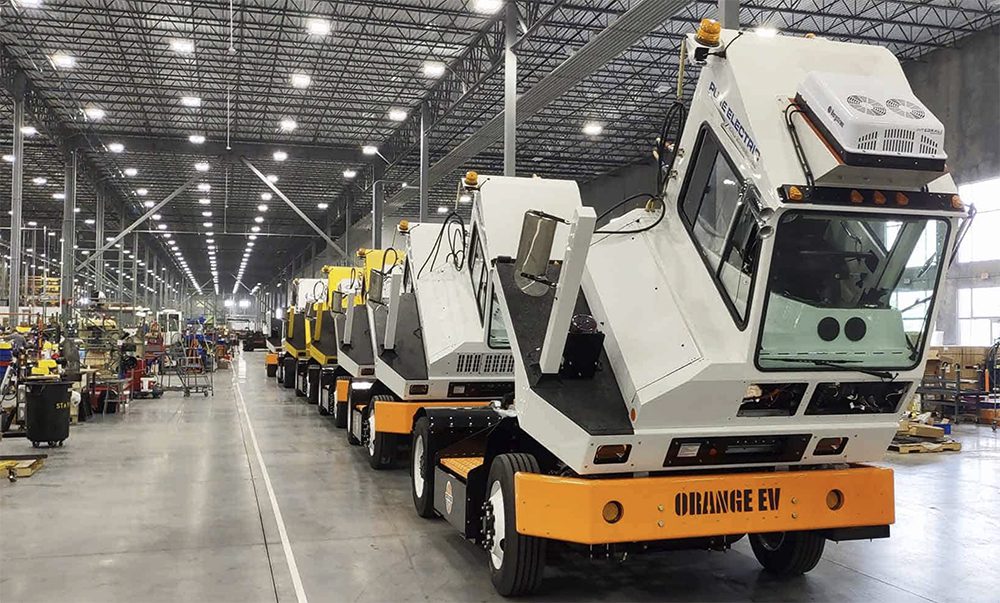
- APM Terminals Elizabeth has placed a significant order for 96 HUSK-e XP electric terminal tractors from Orange EV, marking one of the largest sales for the manufacturer to date.
- This acquisition signals a broader industry shift, moving beyond pilot programs to full-scale standardization of electric fleets in major port operations across both US coasts.
- The ordered units are purpose-built for heavy port use, capable of moving up to 180,000 lbs, and feature a robust 310 kWh lithium iron phosphate (LFP) battery.
- Manufactured in Kansas City, Kansas, the new electric terminal tractors comply with the Build America, Buy America Act (BABA) requirements.
- Orange EV, with approximately 2,000 electric trucks already in service, continues to demonstrate a successful strategy of identifying ideal EV applications and executing a patient, data-driven rollout.
Major Electrification Drive at APM Terminals Elizabeth
APM Terminals Elizabeth, a pivotal hub in the North American supply chain, has announced a landmark order for 96 HUSK-e XP electric terminal tractors from Orange EV. This substantial procurement represents one of Orange EV’s largest sales to date, underscoring a significant commitment to decarbonizing port operations and enhancing environmental sustainability.
The acquisition of these electric terminal tractors is not merely an upgrade but a strategic move towards standardizing zero-emission solutions within the port’s critical logistics infrastructure. This decision by APM Terminals Elizabeth aligns with a growing industry trend, where major port operators are transitioning from exploratory pilot programs to comprehensive fleet-wide electrification initiatives.
Advanced Features of the HUSK-e XP Fleet
Each of the 96 HUSK-e XP units is meticulously engineered to meet the rigorous demands of heavy port and terminal operations. These purpose-built electric terminal tractors are designed to handle immense loads, capable of moving a combined weight of up to 180,000 pounds, essential for efficient cargo handling and intermodal transport.
Powering these heavy-duty machines is Orange EV’s largest available battery pack: a 310 kWh lithium iron phosphate (LFP) battery. This advanced LFP technology is renowned for its durability, extended cycle life, and enhanced safety characteristics, making it an ideal choice for the intensive duty cycles typical of port environments. The substantial battery capacity ensures prolonged operational periods, minimizing downtime for recharging.

Adherence to “Buy America” Standards
A crucial aspect of this significant order is the manufacturing location and compliance. The new fleet of electric terminal tractors will be produced at Orange EV’s state-of-the-art production facility situated in Kansas City, Kansas. This domestic manufacturing footprint ensures adherence to the stringent Build America, Buy America Act (BABA) requirements.
Compliance with BABA regulations is increasingly vital for public and federally funded projects, emphasizing domestic production and job creation. This commitment reinforces the economic benefits of port electrification initiatives by supporting local industries and bolstering the American manufacturing sector.
Orange EV’s Growing Dominance in Port Electrification
Orange EV has carved a unique and successful niche in the commercial electric vehicle market. While many startups in the sector have struggled to gain traction, Orange EV’s strategic focus on terminal trucks, often referred to as ‘yard dogs,’ has proven remarkably effective. The company’s disciplined approach began with identifying an application perfectly suited for electrification and methodically executing through years of rigorous testing and pilot programs.
Today, Orange EV boasts a substantial fleet of approximately 2,000 electric trucks already in active service, a testament to its reliability, performance, and operational efficiency. This robust track record has positioned Orange EV as a leader in providing turnkey electric vehicle solutions for demanding industrial applications.
Scaling Up: Lessons from Los Angeles and Philadelphia
The order from APM Terminals Elizabeth is the latest in a series of significant deployments for Orange EV across major U.S. ports. Earlier in the summer, APM Terminals Los Angeles (Pier 400) substantially expanded its electric fleet. Following a successful year-long rental pilot involving 20 trucks, the Los Angeles terminal placed a follow-up order for an additional 40 units, bringing its total electric fleet to 60 electric terminal tractors.
Similarly, Greenwich Terminals, which oversees operations at the Packer Avenue Marine Terminal in South Philadelphia, recently committed to acquiring two dozen Orange EV units. These successive orders from prominent port operators across both the East and West Coasts illustrate a clear pattern of successful pilot programs leading directly to scaled-up adoption of electric fleets. This trend underscores the proven viability and operational benefits of Orange EV’s solutions in real-world, heavy-duty port environments.
The Strategic Advantage of Purpose-Built EVs
Orange EV’s success is largely attributed to its commitment to purpose-built electric terminal tractors. Unlike adapting existing diesel chassis, Orange EV designs its vehicles from the ground up to be electric, optimizing every component for electric propulsion and the specific demands of yard operations. This integrated approach ensures maximum efficiency, durability, and performance.
The design considers factors such as instant torque for heavy loads, regenerative braking for energy recapture, and simplified maintenance due to fewer moving parts. These inherent advantages contribute to lower operating costs and reduced emissions, providing a compelling case for fleet operators looking to enhance both environmental stewardship and bottom-line performance.
The Broader Shift Towards Zero-Emission Port Operations
The move by APM Terminals Elizabeth reflects a wider, accelerating trend within the global maritime industry towards decarbonization. Ports, often significant sources of localized emissions, are increasingly becoming frontrunners in the adoption of zero-emission technologies. This shift is driven by a confluence of environmental regulations, corporate sustainability goals, and the tangible economic benefits of electrification.
The deployment of electric terminal tractors is a critical component of broader green port initiatives aimed at reducing air pollution, noise, and greenhouse gas emissions within port communities. As port authorities and operators navigate stricter environmental mandates, investment in electric cargo handling equipment becomes indispensable.
Beyond Pilot Programs: A New Era of Standardisation
As Orange EV highlighted, “These deals reflect the same shift taking hold at ports on both coasts: electrification of yard trucks is no longer just being tested—it’s being scaled. Operators who spent the last several years piloting electric terminal trucks are now standardizing fleet-wide.” This statement encapsulates the maturation of electric vehicle technology in the commercial sector.
The industry is moving past initial skepticism and proof-of-concept phases. Comprehensive data from prolonged pilot projects has demonstrated the reliability, cost-effectiveness, and environmental benefits of electric terminal tractors, paving the way for large-scale deployments and fleet standardization. This transition signifies a new era where electric solutions are not just viable alternatives but preferred operational choices.
Aligning Business Case with Environmental Imperatives
Kurt Neutgens, CEO of Orange EV, emphasized this pivotal moment, stating that there is “evidence of an inflection point in ports, as operators move past the pilot and testing phase to standardize around Orange EV’s turnkey solution. Many port operators are accelerating because the Orange EV real-world data shows the business case for electrification and the environmental case align.” This alignment of financial and ecological benefits is a powerful motivator for accelerated adoption.
The robust real-world data collected by Orange EV vehicles in service provides compelling evidence. Lower fuel costs, reduced maintenance requirements, and various government incentives or grants for zero-emission equipment contribute to a strong business case. Simultaneously, the elimination of tailpipe emissions directly addresses environmental concerns, improving air quality for port workers and nearby communities.
The Future of Sustainable Logistics
The large-scale adoption of electric terminal tractors by leading port operators like APM Terminals Elizabeth sets a precedent for the broader logistics and supply chain sectors. This movement towards electrification in heavy-duty applications is expected to accelerate, driven by continuous advancements in battery technology, charging infrastructure, and a global push for sustainable practices.
Ports serve as vital arteries of international trade, and their decarbonization efforts have ripple effects throughout the entire supply chain. As more port activities electrify, it encourages upstream and downstream partners to also explore greener transportation and logistics solutions, fostering a more sustainable global trade ecosystem.
The Role of Battery Technology in Heavy-Duty Applications
The selection of a 310 kWh lithium iron phosphate (LFP) battery pack for these electric terminal tractors highlights the critical role of battery technology in enabling heavy-duty electrification. LFP batteries offer a balance of energy density, power output, safety, and cycle life, making them well-suited for the demanding operational profiles of port equipment.
Continued innovation in battery chemistry, thermal management, and charging speeds will be essential for further expanding the capabilities and operational envelopes of heavy-duty electric vehicles. These advancements promise to address range anxiety and charging infrastructure challenges, making electrification even more attractive for diverse applications.
Challenges and Opportunities in EV Fleet Deployment
While the momentum for EV fleet deployment is strong, challenges remain. These include the initial capital investment, the development of robust charging infrastructure capable of handling large fleets, and ensuring grid capacity. However, these challenges also present significant opportunities for innovation and economic growth.
Government incentives, public-private partnerships, and technological breakthroughs in energy management systems are helping to overcome these hurdles. The increasing scale of orders, such as that by APM Terminals Elizabeth, indicates a growing confidence in the long-term viability and benefits of transitioning to electric fleets, signaling a bright future for sustainable logistics.
Source: Orange EV
Frequently Asked Questions (FAQ)
What is the significance of APM Terminals Elizabeth’s order?
The order for 96 electric terminal tractors is one of Orange EV’s largest sales, signifying a major acceleration in the electrification of heavy-duty port equipment. It reflects a growing industry trend of moving from pilot programs to full-scale adoption of zero-emission fleets for routine operations.
What type of electric terminal tractors were ordered?
APM Terminals Elizabeth ordered 96 HUSK-e XP electric terminal tractors from Orange EV. These units are purpose-built for heavy port and terminal operations, designed to handle combined weights of up to 180,000 lbs, making them highly capable for demanding cargo movements.
What are the key features of these electric tractors?
Each HUSK-e XP electric terminal tractor is equipped with a powerful 310 kWh lithium iron phosphate (LFP) battery, the largest capacity offered by Orange EV. This ensures extended operational hours and robust performance. The vehicles are also compliant with the Build America, Buy America Act (BABA).
Where are these electric terminal tractors manufactured?
The HUSK-e XP units for APM Terminals Elizabeth will be manufactured at Orange EV’s production facility located in Kansas City, Kansas. This domestic manufacturing adheres to the BABA requirements, supporting local industry and ensuring national compliance standards for the procurement.
How many electric trucks does Orange EV have in service?
Orange EV has approximately 2,000 electric trucks currently in service across various operations. This extensive fleet demonstrates the company’s proven expertise and reliability in providing practical, scalable electric vehicle solutions for demanding commercial and industrial applications like port logistics.
What is the broader impact of port electrification?
Port electrification, through the adoption of electric terminal tractors and other equipment, significantly reduces air pollution, noise, and greenhouse gas emissions within port communities. It also aligns with corporate sustainability goals and often results in lower operational costs due to reduced fuel consumption and maintenance requirements, fostering sustainable logistics.