
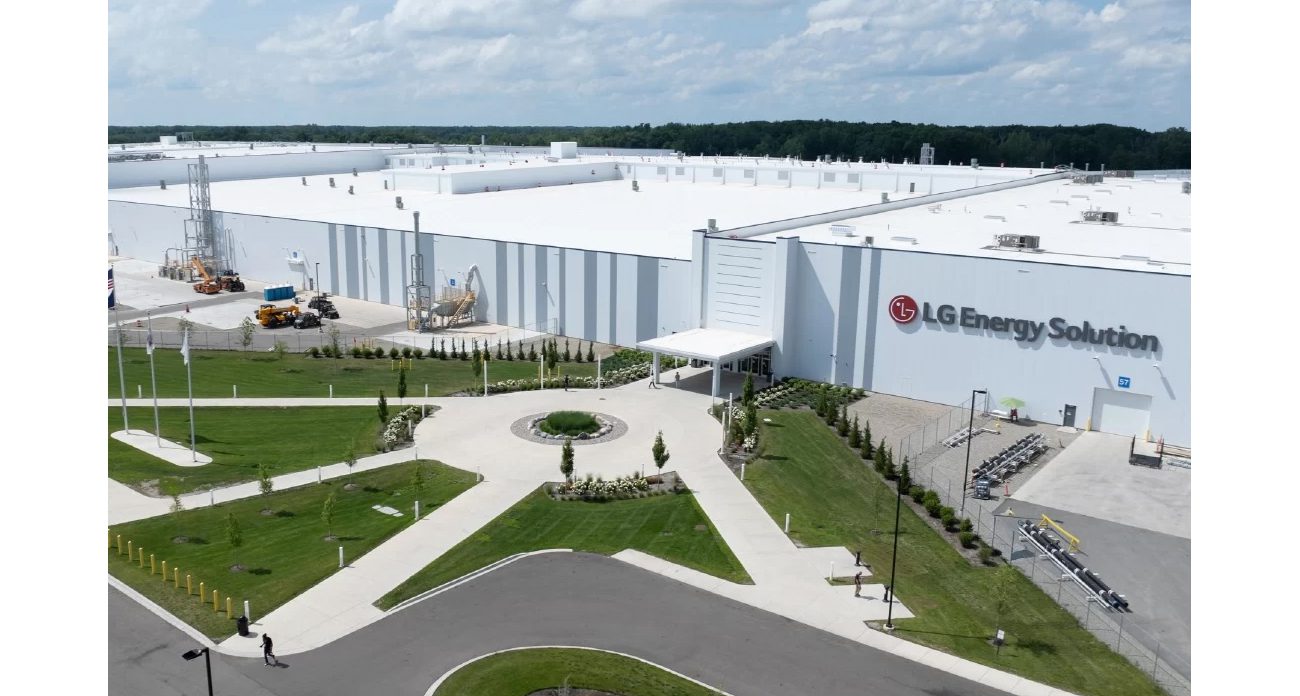
LG Energy Solution has officially commenced production at its sprawling 226-acre battery manufacturing facility in Lansing, Michigan. This strategic plant is poised to become a cornerstone in North America’s rapidly evolving energy landscape, producing large-format cells crucial for both advanced energy storage systems (ESS) and the burgeoning electric vehicle (EV) market.
At its full operational capacity, the Lansing plant is projected to achieve an impressive annual output of 35 GWh. This substantial production capability underscores LG Energy Solution’s commitment to meeting the escalating demand for high-performance battery technology across diverse applications.

Key Takeaways
- LG Energy Solution’s new 226-acre plant in Lansing, Michigan, is now operational.
- The facility will produce both lithium-iron phosphate (LFP) cells for energy storage systems (ESS) and nickel-manganese-cobalt (NMC) cells for electric vehicles (EVs).
- Upon full scale, the plant will have an annual capacity of 35 GWh.
- LFP cells from Lansing will serve utility and grid-scale storage, as well as commercial and industrial applications, with DTE Energy as a key customer.
- NMC cells are designated for Toyota’s battery-electric vehicles, including the 2027 Toyota Highlander EV.
- The production aims to help customers meet US domestic content requirements and strengthen the North American EV battery supply chain.
- LG Energy Solution plans to deploy over 50 GWh of LFP cell capacity across North America by the end of 2026, targeting 80% of its global ESS capacity in the region.
Lansing Plant: A Dual-Purpose Battery Hub
The Lansing facility represents a significant leap forward in domestic battery manufacturing, designed for versatility and scale. Its dual-purpose production model addresses critical needs in two distinct yet interconnected sectors: grid-scale energy storage and electric vehicle propulsion.
This strategic location in Michigan positions LG Energy Solution at the heart of the North American automotive industry, while also providing crucial infrastructure for grid modernization initiatives across the region. The comprehensive scope of the plant’s capabilities highlights the intricate engineering involved in modern battery production.
Powering the Grid: LFP Cells for Energy Storage
A significant portion of the Lansing plant’s output will be dedicated to lithium-iron phosphate (LFP) cells, specifically tailored for stationary energy storage applications. These robust cells are integral to the energy storage systems (ESS) integrated by LG Energy Solution Vertech, the company’s dedicated US energy storage division.

LFP technology is particularly well-suited for grid-scale and commercial and industrial (C&I) storage projects due to its inherent characteristics. These cells are known for their enhanced safety, longer cycle life, and cost-effectiveness, making them ideal for applications where mass and volume are less critical than durability and sustained performance.
Utilities, including DTE Energy, are anticipated to utilize these Lansing-built LFP cells in their future storage projects. The deployment of advanced ESS is vital for stabilizing power grids, integrating renewable energy sources like solar and wind, and ensuring reliable energy supply, thereby enhancing overall grid resilience and efficiency.
Driving Electrification: NMC Cells for Electric Vehicles
In parallel, the Lansing plant will also be a key producer of nickel-manganese-cobalt (NMC) cells. These cells are characterized by their higher energy density, a crucial attribute for powering electric vehicles where maximizing range and minimizing battery pack weight are paramount design considerations.
The NMC cells manufactured at the Michigan facility are earmarked for a significant partnership with Toyota. They will power a new generation of battery-electric vehicles, including the much-anticipated 2027 Toyota Highlander EV, which is slated for assembly at Toyota’s manufacturing facility in Georgetown, Kentucky.
This collaboration is expected to profoundly strengthen Toyota’s US supply chain for its next-generation vehicles, ensuring a localized and reliable source of advanced battery components. The production of these high-performance EV battery cells in the US marks a pivotal step towards accelerating electric vehicle adoption across North America.
Strategic Rationale: LFP vs. NMC Technologies
The decision to produce both LFP and NMC cells at the Lansing plant reflects a sophisticated understanding of the distinct requirements of different battery applications. Each chemistry offers specific advantages that make it optimal for its intended use, a testament to advanced EV engineering.
LFP cells, with their iron-based cathode, excel in applications demanding a high number of charge cycles and robust safety characteristics. The absence of nickel and cobalt also contributes to their lower cost and reduced reliance on these critical, often geopolitically sensitive, minerals. For stationary storage, where the battery pack’s physical size and weight are secondary concerns, LFP’s attributes make it an economically and environmentally sound choice.
Conversely, NMC cells leverage nickel’s high energy capacity to deliver superior energy density. This characteristic is indispensable for electric vehicles, where every kilogram and cubic centimeter counts towards maximizing driving range and vehicle performance. The ability to pack more energy into a smaller, lighter battery directly translates to longer distances on a single charge and faster acceleration, which are crucial for consumer appeal and practical utility in the automotive sector.
Boosting Domestic Content and Supply Chain Resilience
A significant strategic benefit of the Lansing plant’s operation is its direct contribution to fulfilling US domestic content requirements. These requirements, often tied to government incentives and policy objectives, aim to foster local manufacturing, create jobs, and reduce reliance on foreign supply chains for critical components like batteries.
By producing advanced battery cells within the United States, LG Energy Solution enables its customers, including major automakers like Toyota, to meet these localization mandates. This not only streamlines compliance but also enhances the overall resilience and security of the EV and ESS supply chains in North America, mitigating risks associated with global disruptions.
The localization of battery production is a key driver for economic growth and technological independence. It fosters a robust ecosystem of suppliers, researchers, and skilled labor, solidifying the region’s position as a leader in sustainable energy and advanced manufacturing.
LG Energy Solution’s Ambitious North American Expansion
The Lansing plant is a crucial component of LG Energy Solution’s broader, ambitious strategy for North America. The company has articulated plans to deploy over 50 GWh of LFP cell-making capacity across the continent by the close of 2026.
This aggressive expansion involves a network of five facilities: three wholly-owned plants and two joint venture operations. The wholly-owned sites include Holland and Lansing in Michigan, alongside NextStar Energy in Windsor, Ontario. Complementing these are joint venture facilities such as L-H Battery Company in Jeffersonville, Ohio, and Ultium Cells 2 in Spring Hill, Tennessee.
By the end of 2026, LG Energy Solution anticipates that approximately 80% of its global energy storage system capacity will be strategically located within North America. This significant concentration underscores the company’s confidence in the region’s growth potential for both electric vehicles and large-scale energy storage solutions, marking a substantial investment in the continent’s energy future.
The Broader Impact on North America’s Energy Future
The operational launch of LG Energy Solution’s Lansing plant signifies more than just increased manufacturing capacity; it represents a pivotal moment for North America’s transition to a sustainable energy future. By locally producing critical components for both EVs and grid storage, the facility addresses key challenges in electrification and energy independence.
This investment contributes to a more diversified and robust energy infrastructure, reducing carbon footprints and supporting renewable energy integration. The plant’s dual focus on EV battery production and energy storage solutions highlights the interconnected nature of these technologies in building a cleaner, more efficient energy ecosystem across the continent.
Frequently Asked Questions (FAQs)
What type of batteries will the Lansing plant produce?
The Lansing plant will produce two main types of large-format cells: lithium-iron phosphate (LFP) cells for energy storage systems and nickel-manganese-cobalt (NMC) cells for electric vehicles. This dual production strategy addresses distinct market needs.
What is the production capacity of the new Lansing plant?
At full scale, LG Energy Solution’s Lansing plant is designed to have an annual production capacity of 35 GWh. This substantial output will significantly contribute to North America’s supply of advanced battery cells for various applications.
Which customers will benefit from the Lansing plant’s production?
LFP cells from Lansing will supply LG Energy Solution Vertech for utility and grid-scale storage, with DTE Energy being a key utility customer. NMC cells will be supplied to Toyota for its next-generation battery-electric vehicles, including the 2027 Toyota Highlander EV.
Why is LG Energy Solution producing both LFP and NMC cells?
LFP cells are favored for stationary storage due to their long cycle life and cost-effectiveness, while NMC cells offer higher energy density crucial for electric vehicle range and performance. Producing both allows LG Energy Solution to optimally serve different market segments.
How does the Lansing plant impact US domestic content requirements?
By manufacturing battery cells within the US, the Lansing plant directly helps customers meet federal and state domestic content requirements. This fosters local manufacturing, supports job creation, and strengthens the North American supply chain for critical battery components.
What are LG Energy Solution’s broader plans for North America?
LG Energy Solution plans to deploy over 50 GWh of LFP cell capacity across five North American plants by the end of 2026. This aggressive expansion aims for 80% of its global ESS capacity to be located in the region, underscoring its commitment to the continent’s energy future.