
Key Takeaways
- Oslo, Norway, stands as a global leader in EV adoption, with nearly half its passenger cars being electric.
- The city’s innovative
Oslo EV charging strategy
heavily relies on thousands of slower AC charging points (3.6-43 kW) strategically placed where drivers already park.
- Crucial policy changes, such as the legal right for apartment residents to install chargers since 2020, have significantly bolstered private charging access.
- This widespread, convenient AC infrastructure, coupled with incentives like reduced overnight parking fees, minimizes the need for dedicated fast-charging stops and seamlessly integrates EVs into daily life.
- Norway’s broader electrification trend extends beyond private cars, with electric taxis, vans, and trucks also utilising this comprehensive charging ecosystem.
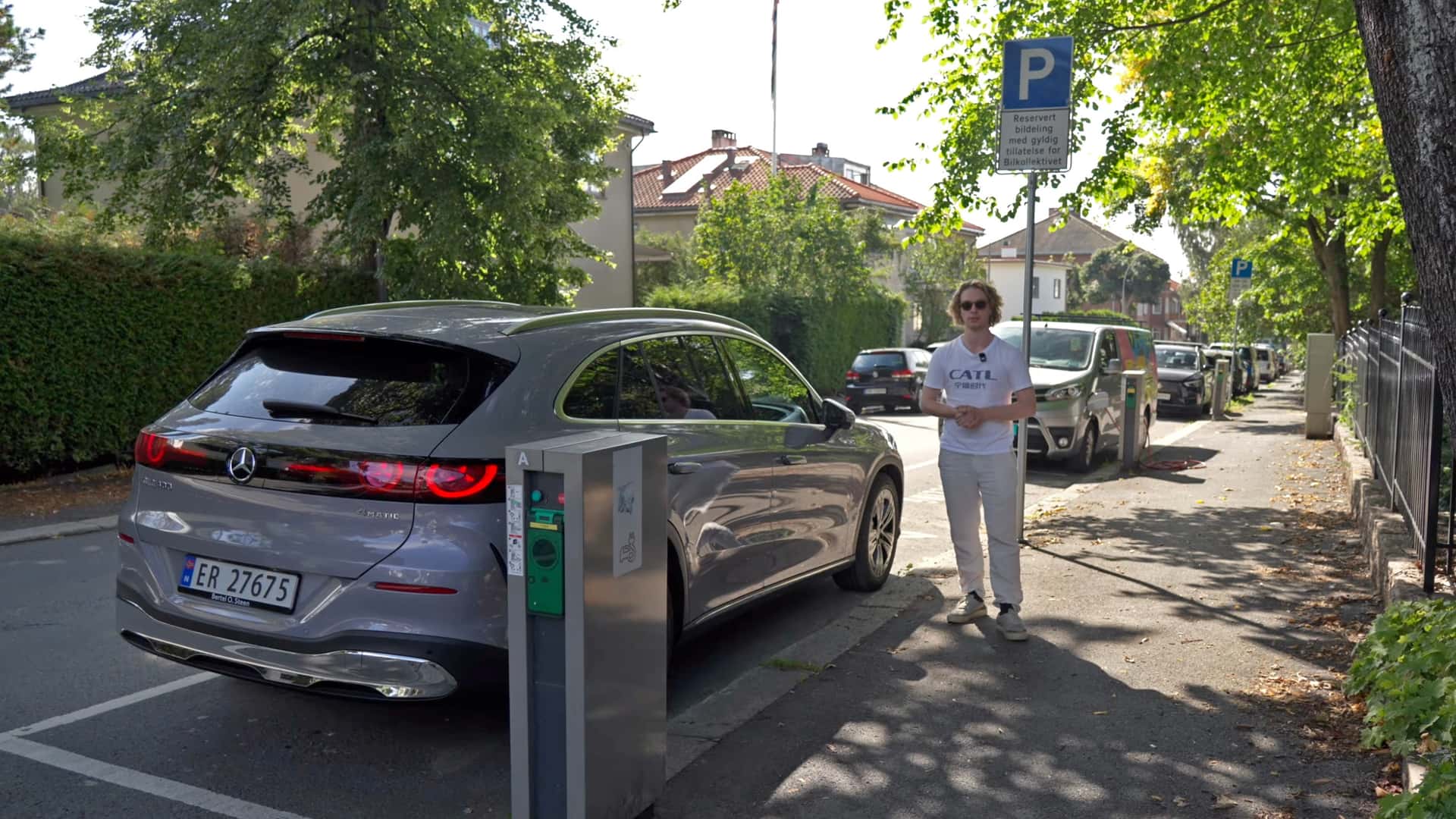
Oslo, Norway, has emerged as a compelling case study in urban electrification, with nearly half of its passenger vehicles now operating on electric power. Far from relying solely on high-speed direct current (DC) chargers, the city’s remarkable transition is underpinned by an expansive network of thousands of simple alternating current (AC) plugs. These charging points are strategically integrated into daily life, predominantly located where drivers typically park for extended periods.

This pragmatic
Oslo EV charging strategy
offers invaluable lessons for cities worldwide grappling with the complexities of scaling electric vehicle adoption. It demonstrates that the future of EV infrastructure may not always hinge on ultra-fast charging, but rather on ubiquitous, accessible, and integrated slower charging solutions that fit seamlessly into existing routines.
The Backbone of Electrification: AC Charging Dominance
Official data from Statistics Norway reveals a nuanced picture of Oslo’s electric vehicle charging landscape. As of the end of 2025, the Norwegian capital boasted a total of 4,519 public charging points. A closer look at these figures highlights a significant emphasis on lower-power infrastructure.
Approximately 78% of these public charging points, amounting to 3,532 units, are AC chargers rated between 3.6 kW and 43 kW. This substantial majority of slower chargers stands in contrast to the commonly perceived need for an abundance of high-speed charging options in rapidly electrifying cities. The remaining infrastructure includes 611 chargers delivering between 50 kW and 250 kW, and 376 units offering more than 300 kW, providing essential coverage for specific use cases.
Strategic Placement and Accessibility
The prevalence of AC chargers is not merely a quantitative fact but a testament to a deliberate
Oslo EV charging strategy
focused on integration. These units are strategically installed in locations where vehicles typically remain stationary for hours, such as workplaces, shopping centres, and residential parking areas. This approach fundamentally alters the user experience, transforming charging from a dedicated stop into an opportunistic, background activity.
Unlike DC fast chargers, which are designed for rapid top-ups during transit, AC charging points cater to the ‘dwell time’ of a vehicle. A modest 6-kW plug, for instance, can add approximately 36 kWh during a six-hour parking period. This energy translates to 100 miles or more of range for many electric vehicles, accumulated effortlessly while owners are at work, asleep, or running errands.
Policy Paving the Way: Apartment Charging Rights
A critical enabler of Oslo’s AC charging success has been proactive policy-making addressing one of the most significant barriers to EV ownership: charging for apartment residents. Since 2020, a progressive legal framework has granted many residents in Oslo the right to install a charging plug at their designated parking space. This legislative backing has empowered individuals to establish personal charging solutions, greatly decentralising the charging burden from public infrastructure.
This policy has been instrumental in extending the convenience of home charging, traditionally enjoyed by single-family home owners, to a much wider segment of the urban population. It fosters an environment where charging is not a privilege but an accessible utility, directly influencing the rapid adoption rates observed across the city.
Economic Incentives and Convenience
Further enhancing the appeal of AC charging, Oslo has implemented policies that remove financial barriers. The city notably waives public-charger parking fees during night hours. This incentive encourages overnight AC charging, allowing drivers to fully replenish their vehicle’s battery while they sleep, often at off-peak electricity rates, which can be more economical.
The design of these public AC charging posts also prioritises durability and user-friendliness. Drivers typically bring their own Type 2 cables, a common standard in Europe. This untethered design reduces instances of cable theft and minimises maintenance requirements for the charging infrastructure, ensuring higher uptime and reliability for users.
Beyond the Kilowatts: A Holistic Charging Philosophy
Oslo’s approach to electric vehicle charging transcends mere technical specifications; it embodies a holistic philosophy centred on convenience and seamless integration. By making charging available wherever a car is already parked, the city has largely eliminated the need for drivers to consciously plan dedicated charging stops. This paradigm shift makes EV ownership inherently less cumbersome and more appealing.
The strategy acknowledges that for most daily commutes and urban travel, high-speed charging is not a constant necessity. Instead, consistent, incremental charging at lower power outputs, spread throughout the day and overnight, suffices to maintain adequate range. This constant topping-up prevents ‘range anxiety’ by ensuring vehicles are consistently charged without demanding significant user effort or time commitment.
Oslo’s Unparalleled EV Adoption Rates
The success of the
Oslo EV charging strategy
is reflected in the city’s astonishing electric vehicle adoption statistics. According to Statistics Norway, by the end of 2025, electric cars constituted 120,469 out of a total of 246,809 passenger cars in Oslo. This translates to an impressive 48.8% EV share, a figure that positions Oslo as a true global leader in urban electrification.
While Oslo leads among major cities, it is noteworthy that Bergen, another Norwegian city, marginally surpasses it with an EV share of 49.7%, highlighting a nationwide commitment to electric mobility. These figures are set to continue their upward trajectory, considering that the vast majority of all new car sales in Norway are now electric vehicles.
A National Trend: Norway’s Rapid Electrification
The electrification trend in Norway extends far beyond Oslo’s city limits and private passenger cars. In the preceding year, just under 96% of all new cars sold across the nation were pure battery electric vehicles. This figure climbed even higher in the first half of 2026, reaching an astounding 97.6%.
This comprehensive shift is visible across various transport sectors. The charging ecosystem in Norway now supports a diverse fleet, including electric taxis, commercial work vans, box trucks, and even battery-powered semi-trucks. This broad adoption underscores the scalability and adaptability of the country’s charging infrastructure and policies.
Maintaining Mobility: Integrating EVs into Daily Life
One of the profound insights from Oslo’s EV success story is that its residents were not compelled to abandon their traditional automotive lifestyles. Many Norwegians continue to rely on personal vehicles not only for local errands but also for longer journeys to remote countryside cabins and other regions less accessible by public transit.
The city’s
Oslo EV charging strategy
did not force a radical change in how people lived or travelled. Instead, it ingeniously integrated the electric alternative into their existing patterns, making it a convenient and practical choice. By aligning EV charging with established routines, Oslo has demonstrated that widespread electric vehicle adoption is achievable without demanding significant sacrifices or lifestyle overhauls from its citizens.
FAQ Section
What is Oslo’s primary EV charging strategy?
Oslo’s primary EV charging strategy focuses on providing thousands of slower AC charging points (3.6-43 kW) located where drivers already park. This opportunistic charging model allows vehicles to top up throughout the day or overnight, making charging a seamless part of daily routines rather than a dedicated stop.
How many public chargers does Oslo have, and what types are they?
As of the end of 2025, Oslo had 4,519 public charging points. A significant 78% (3,532 units) were slower AC chargers (3.6-43 kW), while 611 delivered 50-250 kW, and 376 provided over 300 kW for faster charging needs.
How has Oslo addressed apartment charging challenges?
Since 2020, Oslo has implemented legislation granting many apartment residents the legal right to install a charging plug at their parking space. This policy has been crucial in expanding private charging access and making EV ownership viable for a broader population segment.
What economic incentives are in place to encourage EV charging in Oslo?
Oslo encourages overnight AC charging by dropping public-charger parking fees during night hours. This incentive reduces the cost of charging and promotes the use of slower, more convenient overnight charging solutions, integrating them naturally into daily schedules.
What is the current EV adoption rate in Oslo?
By the end of 2025, electric vehicles accounted for 48.8% of all passenger cars in Oslo, totalling 120,469 EVs out of 246,809 passenger cars. This high adoption rate reflects the success of the city’s comprehensive approach to electric mobility.
Does Norway’s EV transition extend beyond private cars?
Yes, Norway’s electric vehicle transition encompasses more than just private cars. The local charging ecosystem supports electric taxis, commercial work vans, box trucks, and even battery-powered semi-trucks, indicating a broad and holistic shift towards electric mobility across various transport sectors.