
Key Takeaways
- LG Energy Solution’s $2 billion-plus Lansing, Michigan battery gigafactory has strategically pivoted much of its production from electric vehicle (EV) batteries to energy storage systems (ESS) cells.
- This shift follows General Motors’ exit from a planned joint venture, spurred by changes in federal EV tax credits and slower-than-anticipated EV sales growth.
- The facility is now a key supplier for Tesla’s energy storage systems and Michigan’s DTE Energy, producing Lithium-Iron-Phosphate (LFP) pouch cells.
- Despite the pivot, the factory continues to produce Nickel-Manganese-Cobalt (NMC) cells for upcoming EV models like the all-electric Toyota Highlander.
- LGES is actively researching next-generation battery technologies, including Lithium-Manganese-Rich (LMR) with GM, advanced 46-series Lithium-ion cells, sodium-ion, and closely monitoring solid-state battery developments.
- The growth in demand for ESS, particularly from AI data centers and utilities, is breathing new economic life into the plant and bolstering the nation’s critical energy infrastructure.
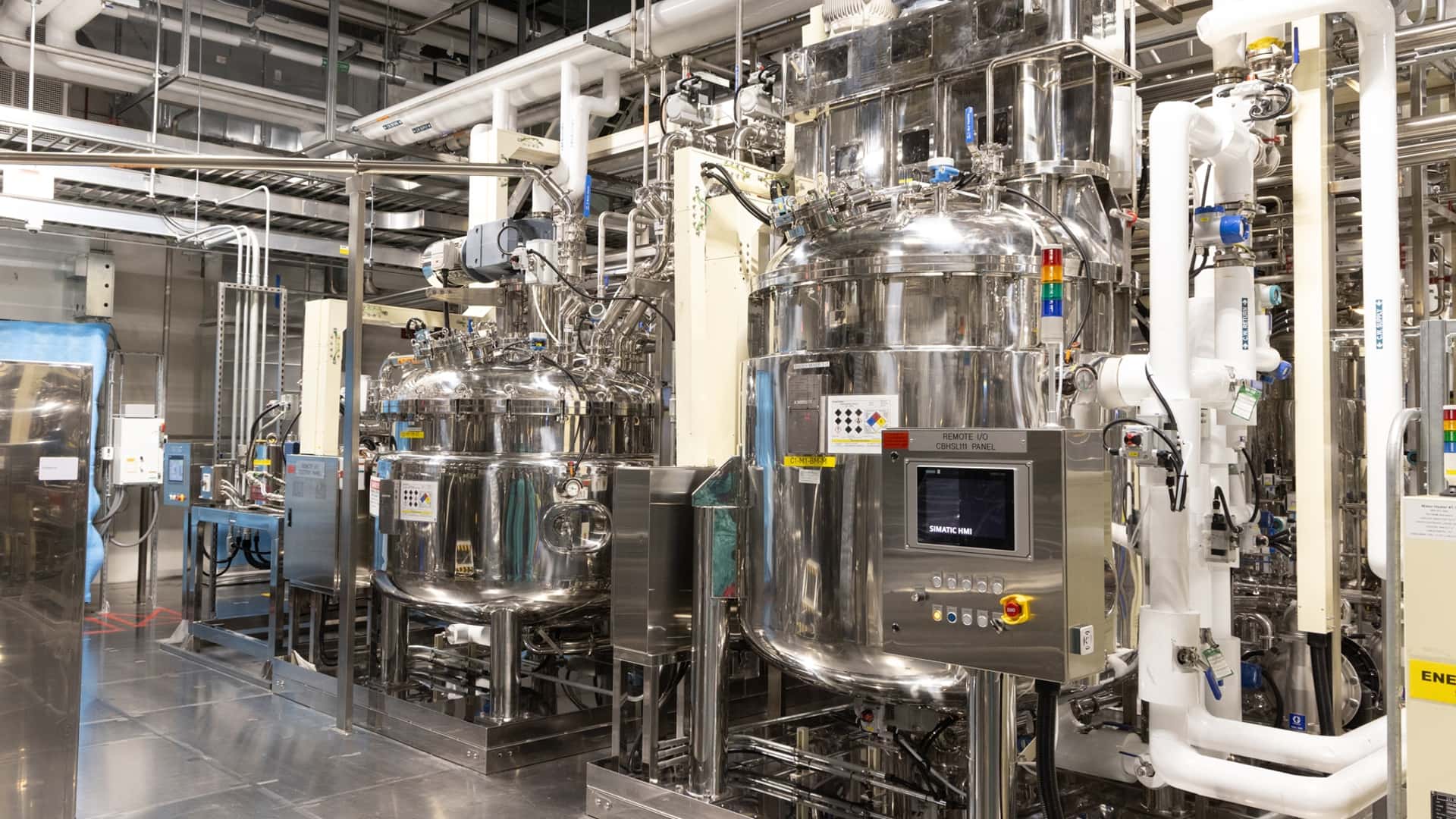
LANSING, MICHIGAN – The sprawling LG Energy Solution (LGES) battery gigafactory in Lansing, Michigan, a facility that spans half a mile in length and a quarter mile in width, is emerging as a pivotal hub in the evolving landscape of global energy storage and electric vehicle (EV) battery production. This 2.8-million-square-foot plant, nestled on a 226-acre site, represents a significant $2 billion-plus investment in advanced manufacturing.
Originally envisioned as a joint venture with General Motors (GM) under the Ultium Cells banner to produce EV batteries, the facility has undergone a strategic transformation. Last year, GM divested its stake, a move influenced by the cessation of federal EV tax credits and a deceleration in EV sales growth. This development placed LGES as the sole proprietor of the colossal Michigan battery gigafactory operations.

The Strategic Pivot: From EV Focus to Energy Storage Dominance
The dissolution of the LGES-GM joint venture reflects a broader trend of restructuring within the American EV battery sector. Similar realignments have been observed with partnerships involving Ford and SK On, GM and Samsung SDI, and Stellantis and LGES, underscoring an industry grappling with regulatory shifts and market fluctuations in the United States.
However, a new wave of demand is reinvigorating the Lansing plant. The escalating need for battery energy storage systems (ESS) from burgeoning AI data centers and utility providers is providing a crucial buffer against the impact of decelerated EV demand. This surge in ESS requirements is not just cushioning; it is breathing new economic vitality into the facility.
Significantly, LGES is at the forefront of bringing lithium-iron-phosphate (LFP) battery production to the United States. While China has historically dominated the commercialization of LFP technology, battery manufacturers are now actively working to repatriate more of this production to the U.S., where the chemistry was initially pioneered in the 1990s.
While the EV battery segment faces current headwinds, LGES anticipates its North American ESS division, LGES Vertech, will achieve profitability by the fourth quarter of the current year. This optimistic forecast is largely attributed to the exponential growth of AI data centers and the increasing integration of ESS batteries across power grids and renewable energy projects.
Powering the Future: Production for Global Leaders
The Lansing plant has already commenced production of LFP pouch cells specifically for Tesla’s advanced energy storage systems, a key component of a substantial $4.3 billion supply agreement finalized between the two companies last year. Furthermore, the facility is slated to supply ESS batteries to Michigan’s DTE Energy, reinforcing regional energy infrastructure.
Despite the strategic pivot, LGES maintains its commitment to EV battery production. The company has confirmed that it is also manufacturing nickel-manganese-cobalt (NMC) cells at the Michigan facility. These high-performance cells are destined for the highly anticipated all-electric Toyota Highlander, with potential future applications for other automakers, including mechanically related models such as the three-row Subaru Getaway and the premium Lexus TZ.
Robert Lee, LGES’s Head of North America, underscored the intricate process of repurposing the plant for ESS production. During a recent media roundtable at the facility, Lee stated, “It’s not easy. LFP coating is thicker and then there are slight differences in the manufacturing process, so you do need to put in some new equipment and validate them in order to build batteries.”
Despite these complexities, LGES views the investment as thoroughly justified, citing the rapidly expanding global demand for energy storage solutions. Drawing upon research from Wood Mackenzie, LGES highlighted that the U.S. has added approximately 25 gigawatt-hours (GWh) of energy storage capacity over the past decade. This year alone, the country has seen an impressive addition of 100 GWh of ESS capacity.
Moreover, the average size of individual energy storage projects has surged dramatically, growing from roughly 10 megawatt-hours (MWh) to an astounding 1,000 MWh. These projects are simultaneously becoming safer, more cost-effective, and quicker to integrate into existing power grids, renewable energy installations, and critical AI data centers.
Lee further emphasized the national imperative for infrastructure investment, noting, “There’s a lot of great infrastructure upgrades that we need in this country. 20 years ago, we had something like twice the power generation of China. Today, they have two and a half times more power generation than the U.S. As a nation, we have to invest in our grid and energy infrastructure.”
Inside the State-of-the-Art Manufacturing Floor
A modern battery factory bears little resemblance to traditional automotive plants. The Lansing facility operates with a quiet, clinical precision, devoid of the metallic clamor often associated with engine or body shell production. Automation is paramount, with robots executing the majority of tasks and automated guided vehicles (AGVs) efficiently transporting raw materials across the vast plant floor. Human personnel primarily oversee and supervise these highly automated battery gigafactory operations.
Given the extreme sensitivity of battery components to contamination, entry into the production areas mandates stringent cleanroom protocols. Visitors, including journalists, are required to wear full white gowns, protective glasses, hair nets, and multiple layers of shoe covers. A high-pressure air blast decontamination process is also mandatory, with shoe covers replaced thrice between different sections of the plant. Strict measures, such as placing stickers over phone cameras, are enforced to safeguard proprietary intellectual property (IP).
The tour provided an insightful look into key LFP battery manufacturing processes. These stages include coating, where the cathode active material—a wet, cake-batter-like slurry—is precisely applied to metal sheets. This is followed by calendering, a roll-pressing technique that compresses the layers to achieve the desired thickness, and subsequent drying to eliminate moisture.
Formation is a critical step where cells are charged and discharged for the first time, activating their electrochemical properties. Finally, degassing removes any gases that accumulate during this initial charging cycle. While LFP and NMC batteries share fundamental cell manufacturing principles, the distinct chemical processes involved in their cathode materials necessitate specific adjustments to manufacturing parameters, equipment, and quality control measures. These differences are even more pronounced upstream in their respective supply chains, as LFP utilizes iron and phosphorus, whereas NMC relies on nickel, manganese, and cobalt.
The finished LFP pouch cells are characterized by their slim, long, and rectangular form factor. These cells are then carefully stacked into containers and transported to LGES’s other large battery factory in Holland, Michigan, where they undergo final assembly into complete ESS systems. While the LFP cells themselves are entirely produced within the U.S., engineers confirmed that the raw materials are sourced from countries including Indonesia and China.
Innovating Beyond Lithium-Ion: Future Battery Chemistries
LGES is not solely focused on current production; it is actively investing in the next generation of battery technologies. The company is collaborating with General Motors on the development of lithium-manganese-rich (LMR) batteries. These advanced cells are designed to significantly reduce the reliance on expensive and environmentally impactful nickel and cobalt, instead utilizing manganese, which can be processed within the U.S. GM has indicated that LMR batteries will power its full-size trucks and SUVs from 2028 onwards, aiming to deliver over 400 miles of range at a cost comparable to lower-cost LFP batteries.
Beyond LMR, LGES is exploring other cutting-edge technologies. This includes more advanced lithium-ion batteries and sodium-ion cells, while closely monitoring the progress in solid-state battery development.
The company is preparing to launch production of its new 46-series lithium-ion cells for EVs at its forthcoming gigafactory in Arizona. These larger-format cells are deemed better suited for next-generation EVs featuring structural battery packs. Future advancements in this technology could potentially enable ultra-fast 10-minute charging times and enhance overall battery pack safety.
Devon Wilson, Vice President of Sales and Marketing at LGES Vertech, articulated the company’s broad technological approach: “We just want to have all those options open. We continue to look at other chemistries [and] sodium that’s a big one for us.” He further revealed that LGES is preparing a pilot program for sodium-ion batteries specifically for energy storage systems. While Chinese battery giant CATL has already made strides in commercializing sodium-ion batteries, the U.S. is beginning to catch up, with General Motors also announcing plans to deploy sodium-ion ESS batteries by the close of the decade.
Regarding solid-state batteries for EVs, Robert Lee highlighted persistent bottlenecks in scaling production. “The problem with solid state is large-scale production,” Lee stated. He elaborated, “It has very good energy density, so if you’re making a small form factor, you should be able to get there. If you’re making very large form factors, most companies are struggling.” Lee predicted that EVs would not be the initial application for mass-market solid-state batteries. “You will see that in your smartphones probably a decade before you would see it in EVs,” he added, concluding, “I would expect specialized applications first before we’re able to contemplate that as fit for EVs or even ESS.”
The Broader Impact: Reshaping America’s Energy Landscape
The journey of the Lansing battery gigafactory operations highlights an unusual irony in the clean energy transition. The cancellation of billions of dollars worth of clean energy projects, including several battery plants, over recent years, inadvertently prompted established battery manufacturers like LGES to adapt and pivot. This strategic shift towards ESS batteries—destined for solar farms, AI data centers, and power grids—is now actively contributing to the development of the very infrastructure required to power America’s next wave of electrification.
Frequently Asked Questions (FAQ)
What is the primary focus of LGES’s Lansing factory currently?
While still producing EV batteries, the Lansing factory has significantly pivoted to manufacturing Lithium-Iron-Phosphate (LFP) cells for energy storage systems (ESS). This shift is driven by surging demand from AI data centers and utilities, breathing new life into the facility.
Why did General Motors exit its joint venture with LGES at this plant?
GM exited the planned Ultium Cells joint venture due to the end of federal EV tax credits and slower-than-expected growth in electric vehicle sales. This left LGES as the sole owner of the $2 billion-plus Michigan battery gigafactory operations.
What types of batteries are produced at the Lansing facility?
The LGES Lansing plant produces LFP pouch cells primarily for energy storage systems, supplying entities like Tesla and DTE Energy. It also continues to produce Nickel-Manganese-Cobalt (NMC) cells for electric vehicles, including the upcoming all-electric Toyota Highlander.
What future battery technologies is LGES actively developing?
LGES is developing several next-generation battery technologies. These include Lithium-Manganese-Rich (LMR) batteries with GM, advanced 46-series lithium-ion cells for EVs, and sodium-ion batteries, for which a pilot program for energy storage systems is underway.
What are the main challenges LGES identifies with solid-state battery production?
According to LGES, the primary challenge with solid-state batteries is large-scale production, particularly for very large form factors required by EVs. While ideal for small devices due to high energy density, mass production for vehicles or ESS still faces significant hurdles.
How is the LGES factory contributing to U.S. energy infrastructure?
By producing ESS batteries for AI data centers, power grids, and renewable energy projects, the Lansing factory is directly supporting critical infrastructure upgrades. This helps build the foundation for a more robust and electrified energy future for the United States, addressing national power generation needs.