
Key Takeaways:
- Toyota has significantly expanded its electric vehicle (EV) offerings with the bZ, C-HR, and bZ Woodland, leveraging a shared e-TNGA platform for increased capability.
- The bZ lineup was America’s best-selling non-Tesla EV in Q1, with Toyota’s U.S. EV sales surging 225% in Q2, demonstrating strong market traction.
- While sharing core components, each of these Toyota EVs caters to distinct buyer preferences in terms of range, performance, and utility.
- The bZ offers the best value, particularly the XLE front-wheel-drive plus trim with its impressive 314-mile EPA range.
- All three models feature improved efficiency and faster charging times, achieving 10-80% charge in approximately 30 minutes.
- The bZ Woodland stands out for its superior ride quality, spacious interior, and enhanced off-road capabilities, though at a higher price point.
- Despite advancements, common challenges across the models include an older infotainment system and an often-obscured digital gauge cluster.
Toyota’s approach to the electric vehicle market has been a subject of keen observation. While the global demand for electric cars soared and federal tax incentives amplified their appeal, the Japanese automaker initially offered a solitary model, the bZ4x, which received a lukewarm reception. However, the narrative has dramatically shifted.

Despite a recent cooling in EV sales and the phasing out of certain incentives, Toyota has strategically introduced a trio of new or updated electric models, with more anticipated additions to its growing portfolio of Toyota EVs. This calculated expansion appears to be yielding significant results.
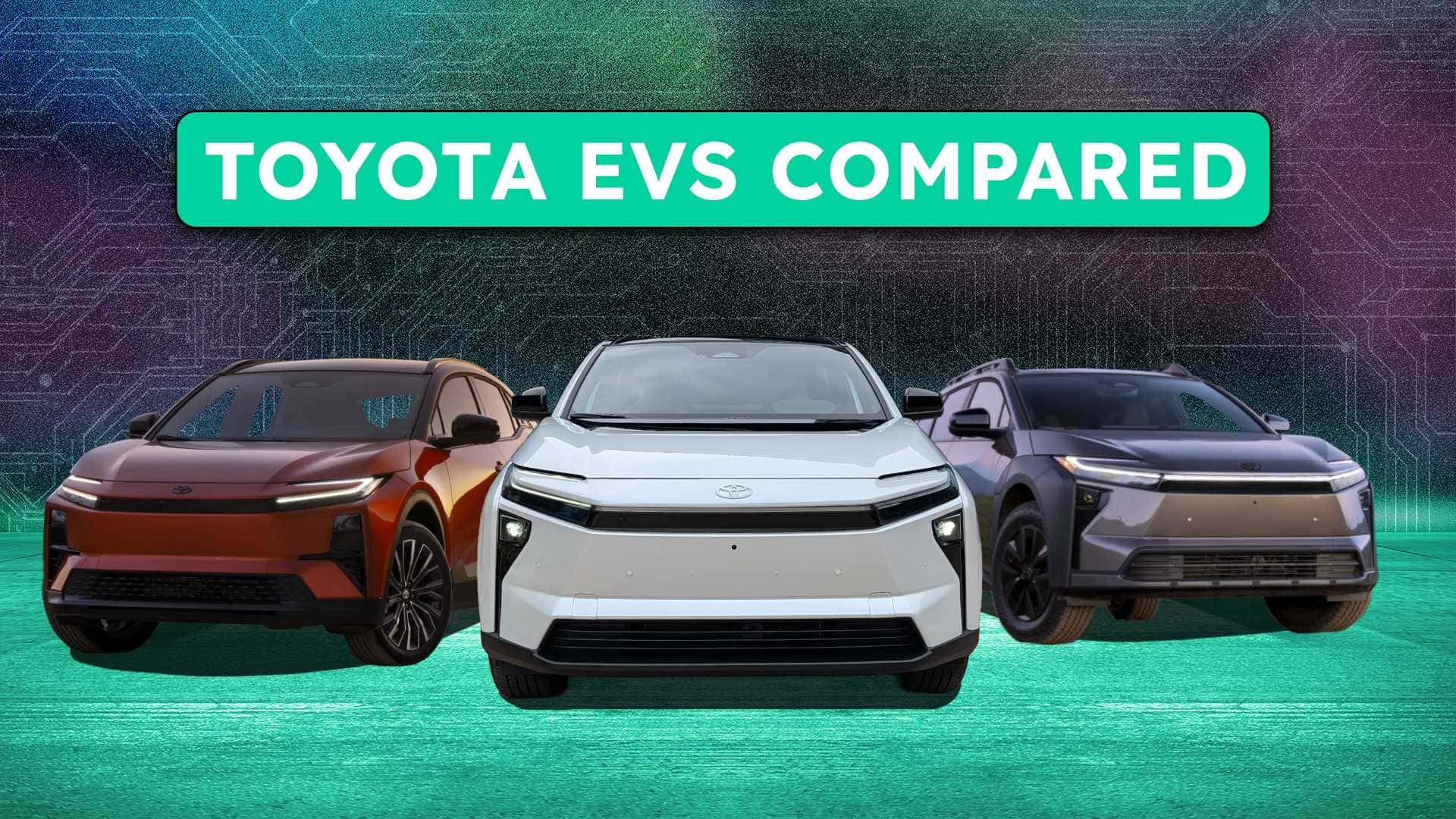
In the first quarter of this year, the bZ emerged as the best-selling non-Tesla electric vehicle in America, a testament to notable improvements in range and charging infrastructure. This model is no longer the sole battery-powered option from the brand, now joined by the more compact C-HR and the versatile, wagon-inspired bZ Woodland.
This broadened selection of Toyota EVs has been a catalyst for remarkable growth, propelling Toyota’s U.S. EV sales by an impressive 225% in the second quarter. For loyal Toyota customers, a more robust and capable array of electric options is now available. The crucial question for prospective buyers, however, remains: which of these advanced Toyota EVs is the optimal choice?
Toyota’s Expanding Electric Horizon: A Deep Dive into the bZ, C-HR, and bZ Woodland
Having rigorously tested all three of these new Toyota EVs, it is evident that while they share foundational elements, there are both obvious and subtle distinctions that set them apart. Understanding these differences is key to identifying the right electric vehicle for individual needs.
This comprehensive analysis will dissect the critical attributes of each model, aiming to guide prospective buyers. Among the impressive lineup, the all-wheel-drive bZ XLE stands out as a particularly compelling choice, a preference that will be elaborated upon throughout this expert review.
The e-TNGA Foundation: Shared Engineering Prowess
At their core, the bZ, C-HR, and bZ Woodland are remarkably similar. These three Toyota EVs are meticulously manufactured in Japan, sharing the advanced e-TNGA platform. This underlying architecture represents a significant evolution, offering enhanced capabilities compared to the platform used in the earlier bZ4x, prior to its rebranding and subsequent improvements.
Each model, with the exception of the entry-level bZ, is equipped with the same 74.7-kilowatt-hour nickel manganese cobalt (NMC) battery. The bZ lineup itself is strategically positioned as a value-driven contender within the fiercely competitive crossover segment, directly challenging popular electric SUVs such as the Tesla Model Y and Hyundai Ioniq 5.
The C-HR, in contrast, offers a more compact footprint and a noticeably sportier driving character. For those seeking greater space and an inclination towards adventure, the bZ Woodland presents itself as the largest and most ruggedly oriented option among the three Toyota EVs.
When considering pricing, including destination charges, the bZ starts at $36,495. The C-HR follows at $38,695, while the more substantial bZ Woodland carries a base price of $46,975. These figures underscore the varied market positioning of each model within the electric vehicle landscape.
Performance and Efficiency: Unpacking the Numbers
The latest iteration of Toyota EVs for model years 2026 and 2027 benefit from significant upgrades to their battery systems and drive motors. This translates into tangible improvements in real-world efficiency, a crucial factor for electric vehicle ownership.
Driving Range and Battery Technology
Range figures for these Toyota EVs vary, reflecting their different designs and target markets. The bZ delivers an EPA-rated range of up to 314 miles, showcasing its efficiency. The C-HR offers a commendable 287 miles of range, while the bZ Woodland, due to its larger size and adventure-focused design, achieves 280 miles, though this can drop to 260 miles when equipped with all-terrain tires.
An entry-level bZ variant is also available with a smaller 57.7-kWh battery, providing a respectable 236 miles of range. Both the C-HR and bZ Woodland come standard with all-wheel drive, a feature that enhances traction and performance.
For buyers prioritizing efficiency and a front-wheel-drive configuration, Toyota offers this option on the bZ, available with both the standard and larger battery packs. It is worth noting that Subaru, with its mechanically identical Uncharted model (a twin to the C-HR), also provides a front-wheel-drive option.
Powertrain Configurations and Output
The power output of these Toyota EVs varies across the lineup. The base bZ features 165 horsepower, while the front-wheel-drive version with the larger battery increases this to 221 horsepower. The all-wheel-drive bZ delivers a robust 338 horsepower.
The C-HR, exclusively available with all-wheel drive, also produces 338 horsepower. Topping the range in terms of power, the bZ Woodland boasts 375 horsepower, making it the most potent of the three.
In real-world driving scenarios during summer conditions, efficiency figures consistently surpassed 3.0 miles per kilowatt-hour across all three Toyota EVs during mixed city and highway driving. The C-HR and bZ Woodland notably achieved up to 5.0 miles per kWh over shorter urban stretches before settling into a 3.5 to 4.0 mile-per-kWh range on extended drives and highway cruises.
However, it is important to contextualize these efficiency observations. Testing predominantly occurred in warmer weather, which is optimal for battery performance. Previous winter testing of the bZ in upstate New York revealed a maximum efficiency of 2.7 miles per kWh, underscoring that actual numbers will fluctuate based on climate, driving style, and road conditions.
Swift Charging Capabilities
A significant improvement across all three Toyota EVs is their consistent and enhanced charging speeds. Toyota reports that each model can charge from 10% to 80% in approximately 30 minutes, representing a substantial upgrade over the previous bZ4x, which required nearly an hour for the same charging interval.
Real-world charging tests corroborate these claims. The C-HR, when charged at an Ionna station, went from 15% to 80% in 26 minutes, adding nearly 200 miles of range. A full 15% to 100% charge took 48 minutes. Similarly, the bZ Woodland charged from 12% to 80% in 28 minutes and to 100% in 46 minutes at an Ionna station under comparable weather conditions.
All three Toyota EVs also support Plug & Charge functionality at select charging networks, facilitated through the Toyota app. Users are advised to consult Toyota’s website for specific details on qualifying networks and setup instructions.
Driving Experience: Agility, Comfort, and Off-Road Capability
The driving characteristics of these Toyota EVs offer distinct experiences, appealing to different driver preferences and needs.
Dynamic Performance Across Models
The C-HR emerges as the most engaging to drive among the trio. Its standard all-wheel drive and 338 horsepower enable a claimed 0-60 mph acceleration in a swift 4.9 seconds. The vehicle exhibits an eager, responsive acceleration, with a notable sensation of the front tires momentarily breaking traction under hard acceleration with traction control disengaged, akin to a performance hot hatch. Its handling is composed, maintaining stability through corners with minimal body roll.
The all-wheel-drive bZ, also delivering 338 horsepower, offers strong off-the-line performance and is far from sluggish. Even the 221-horsepower, front-wheel-drive trim, which provides over 300 miles of range, proved sufficiently quick in earlier tests. For those prioritizing dynamic driving pleasure, the AWD variants of these Toyota EVs are the preferred choice.
The bZ Woodland, with its 375 horsepower, is the most powerful in the lineup. This power is distinctly felt behind the wheel, providing ferocious acceleration that sustains its momentum even beyond 70 mph without any noticeable tapering off.
However, the bZ Woodland’s increased dimensions and mass become apparent in cornering. Its curb weight of 4,497 pounds is 131 pounds heavier than the C-HR and 264 pounds more than the bZ. It is also over a foot longer than the C-HR and 5.6 inches longer than the bZ, contributing to slightly more pronounced body roll during aggressive maneuvers.
Despite these differences, the e-TNGA platform underpins solid chassis dynamics across the Toyota, Lexus, and Subaru electric vehicle range. These Toyota EVs, unlike some larger electric crossovers, avoid feeling overly ponderous on the road.
Ride Comfort and Handling Nuances
Ride quality varies considerably among the three models. The bZ is tuned for maximum comfort, featuring a soft suspension setup that provides an excellent, compliant ride, particularly in urban environments. The C-HR, by contrast, felt marginally stiffer, transmitting lateral jolts into the cabin over larger road imperfections, though it achieves a more planted feel at higher speeds.
Both the C-HR and bZ share a tendency to produce loud, somewhat unrefined thuds over expansion joints, which can detract from the overall ride experience on poorly maintained roads. This characteristic is less noticeable on smoother pavement.
The bZ Woodland excels in terms of ride quality and overall performance. Its longer suspension travel, robust all-terrain tires with thick sidewalls, and an impressive 8.4 inches of ground clearance allow it to navigate challenging roads with ease and without requiring a reduction in speed. The spring rate and damping are expertly calibrated, effectively absorbing bumps, and the side-to-side jolts that sometimes affect its siblings are significantly less pronounced in the bZ Woodland.
Off-Road Aptitude: The Woodland Advantage
While not a dedicated off-roader like a Land Cruiser, the bZ Woodland is undeniably the most off-road-capable of the three Toyota EVs. It includes specialized Snow, Dirt, and Mud driving modes. These modes intelligently adjust the vehicle’s traction management and torque distribution to optimize grip in low-traction scenarios.
Previous testing by Senior Editor Tim Levin demonstrated the bZ Woodland’s prowess, as it competently navigated rut-filled dirt roads and challenging off-camber sections. The bZ AWD also features an X-Mode setting with identical drive modes to the bZ Woodland, narrowing the off-road advantage. The bZ Woodland’s primary edge in this domain lies in its additional ground clearance, all-terrain tires, and greater interior volume.
Experiences with the Subaru Solterra, the bZ’s mechanical twin, on challenging trails in Colorado have also showcased the impressive capabilities of this platform, further cementing confidence in the adventure credentials of these Toyota EVs.
Cabin Experience and Infotainment Technology
Upon entering the cabin, a striking uniformity is immediately apparent across all three Toyota EVs. Their dashboards are virtually indistinguishable, sharing a consistent design language and a suite of technological features.
Shared Interior Aesthetics and Features
Each model comes equipped with the same standard 14-inch touchscreen infotainment system, offering seamless integration with wireless Android Auto and Apple CarPlay. The steering wheel, digital gauge cluster, and rotary gear knob are identical across the lineup, contributing to a cohesive and familiar interior environment for users of these Toyota EVs.
Software Experience: Challenges and Observations
The infotainment experience, while generally functional, can be characterized as adequate rather than exceptional. The systems exhibit a degree of lag and do not possess the same level of polish or comprehensive feature set found in competitors like Tesla. It’s also important to note that the software performance was not entirely consistent during testing.
On several occasions, the bZ Woodland unexpectedly failed to play music via Bluetooth or connect to wireless Android Auto. This intermittent issue led to reliance on smartphone navigation for an hour-long journey, as the vehicle’s native navigation system suggested a longer, less optimal route. These Toyota EVs utilize Toyota’s older-generation software platform.
They do not incorporate the company’s latest Arene software platform, which is present in newer models like the RAV4 and Lexus ES. The Arene platform offers a more responsive touchscreen, customizable widgets, over-the-air updates for both Advanced Driver-Assistance Systems (ADAS) and infotainment, and a built-in dashcam, among other advanced functionalities.
A Toyota spokesperson previously clarified that the bZ, C-HR, and bZ Woodland currently lack the necessary hardware and software architecture to support the Arene platform. This suggests that a significant model-year update would likely be required before these Toyota EVs could integrate the newer software suite.
Ergonomic Considerations: The Gauge Cluster Debate
A shared design quirk across all three Toyota EVs, which has persisted since the bZ4x’s initial release in 2022, is the positioning of the digital gauge cluster. It is recessed significantly towards the windshield, creating an ergonomic challenge for many drivers, including this reviewer. For individuals who prefer a lower, more reclined driving position, the top of the steering wheel can obstruct the view of critical information such as range and speed, necessitating constant head adjustments.
While some drivers may find this a non-issue, it represents a persistent design element that many hope Toyota will reconsider in future updates to its electric vehicles.
Interior Space and Practicality
In terms of interior roominess, the bZ Woodland, being the largest model, predictably offers the most generous cabin space. It provides the most spacious rear seating area and an impressive 33.8 cubic feet of cargo space behind the rear seats. This is significantly more than the bZ’s 27.7 cubic feet and the C-HR’s 25.3 cubic feet.
The bZ also offers ample room, accommodating tall adults comfortably in the rear with sufficient head and shoulder room. The C-HR, while adequate for individuals of average height, features noticeably less legroom and headroom in the rear, making it potentially cramped for taller occupants.
Final Assessment: Navigating Your Toyota EV Choice
While none of these current Toyota EVs are positioned as outright class leaders in the burgeoning electric vehicle market, they represent solid, competent offerings well-suited for the average EV buyer. Coupled with Toyota’s established brand reputation for reliability and quality, this ‘good enough’ strategy may prove to be a judicious short-term play as EV demand stabilizes and competition intensifies.
The Value Proposition
The C-HR, despite its sporty appeal, presents a stiffer ride and a higher starting price than the more spacious bZ, which makes it a less compelling choice for overall value. If budget were not a constraint, the bZ Woodland would undoubtedly take the lead due to its superior ride quality, distinctive design, and expansive interior space. However, its price point is approximately $10,000 higher than the bZ.
Consequently, the bZ emerges as the strongest value proposition among these Toyota EVs. Specifically, the XLE front-wheel-drive plus trim, equipped with the larger battery, delivers an impressive 314 miles of EPA-rated range at a price point nearly identical to the base C-HR. Opting for the all-wheel-drive version adds a few thousand dollars but significantly boosts performance to 338 horsepower and includes the same off-road settings found in the bZ Woodland, enhancing its versatility.
For those seeking a more premium experience, the Lexus RZ and ES models, which have also been reviewed by InsideEVs, offer more luxurious electric alternatives. Additionally, Subaru provides nearly identical versions of these vehicles, including the Solterra, Uncharted, and Trailseeker, with only minor trim-level distinctions. Looking ahead, Toyota plans to introduce the three-row Highlander EV early next year, further expanding its electric portfolio.
Frequently Asked Questions (FAQ) About Toyota EVs
What are the primary differences between the Toyota bZ, C-HR, and bZ Woodland?
The bZ, C-HR, and bZ Woodland share a common platform but differ in size, focus, and base pricing. The bZ is a value-oriented crossover, the C-HR is a compact and sporty option, and the bZ Woodland is the largest, most adventure-focused model with enhanced off-road capabilities and space.
How do the driving ranges compare among these Toyota EV models?
The bZ offers the longest EPA-rated range, up to 314 miles, particularly with the larger battery and FWD. The C-HR provides 287 miles, and the bZ Woodland offers 280 miles (260 miles with all-terrain tires). An entry-level bZ is also available with 236 miles of range.
What improvements have been made to the charging speed of these new Toyota EVs?
All three new Toyota EVs demonstrate significant improvements in charging speed compared to previous models. They are capable of charging from 10% to 80% in approximately 30 minutes, a substantial enhancement over the nearly hour-long charge time of the older bZ4x.
Is the infotainment system consistent across the Toyota bZ, C-HR, and bZ Woodland?
Yes, all three models feature largely identical interior designs, including the same standard 14-inch touchscreen with wireless Android Auto and Apple CarPlay. However, the system runs on an older-generation software platform, leading to occasional lag and a lack of newer features found in Toyota’s latest Arene system.
Which Toyota EV offers the best value for money?
The Toyota bZ, specifically the XLE front-wheel-drive plus trim with the larger battery, is considered the best value. It provides 314 miles of EPA range at a competitive price point, offering an excellent balance of range, performance, and practicality compared to its siblings.
Are these Toyota EVs suitable for off-road driving?
The bZ Woodland is the most off-road-capable among the three, featuring higher ground clearance, all-terrain tires, and specialized driving modes (Snow, Dirt, Mud). The bZ AWD also includes similar off-road settings, making both suitable for moderate off-road excursions, though not heavy-duty trail blazing.