
The electric vehicle landscape is rapidly evolving, prompting a growing number of long-time Tesla owners to ponder a crucial question: Is there a compelling alternative to their current EV? While Tesla has dominated the electric car market for years, an increasing array of competitors are now offering sophisticated alternatives, leading many to explore new horizons in electric mobility. Navigating this expanding market to find the next ideal vehicle can be a significant undertaking for dedicated EV enthusiasts.
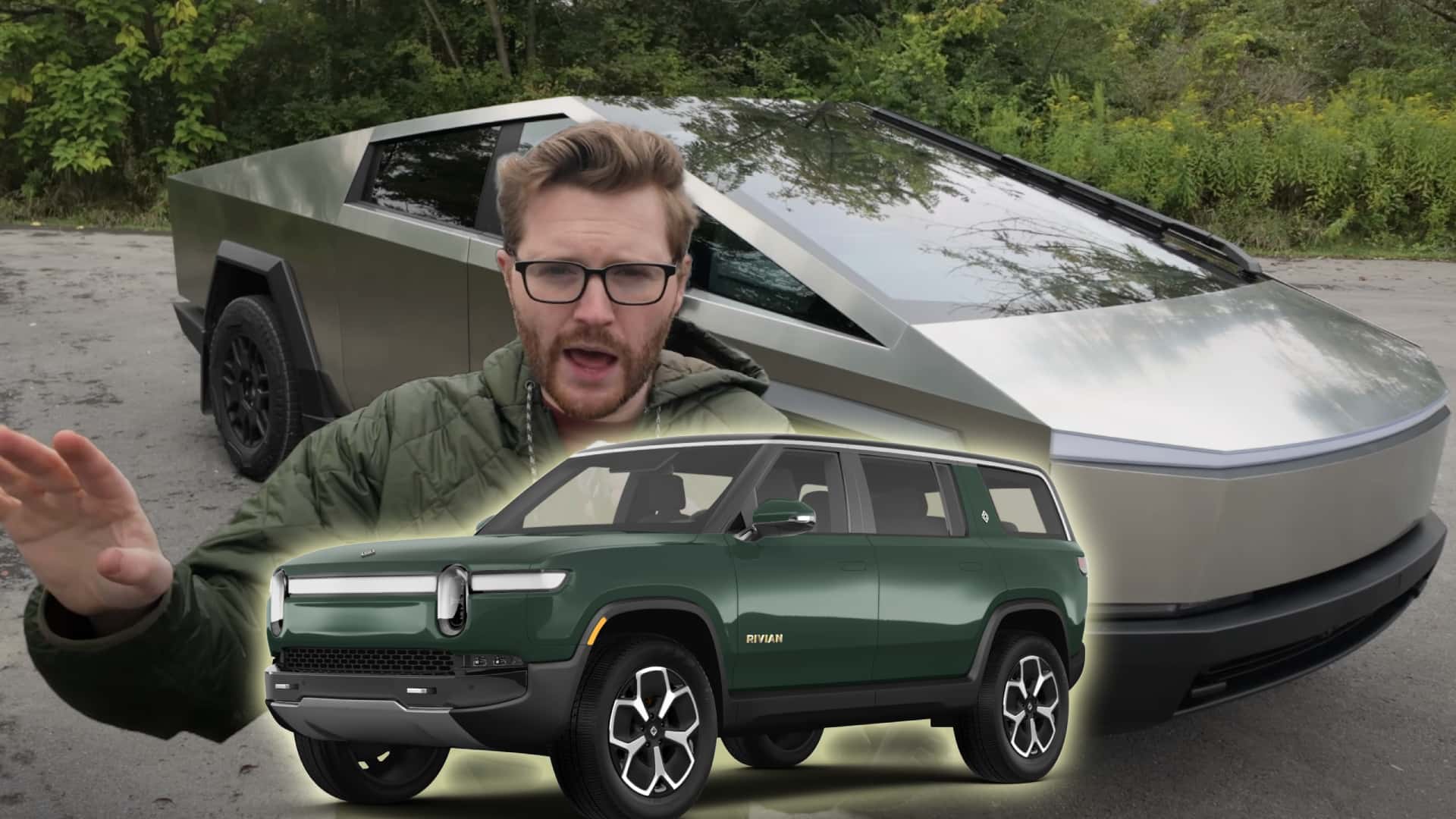
Among those exploring this shift is prominent YouTuber Robert Rosenfeld, a well-known figure in the electric vehicle community. Since 2019, Rosenfeld has exclusively owned Tesla vehicles, progressing from a Model Y to a Model X, and currently, a Cybertruck, all while building a substantial audience on his YouTube channel. Presented with an opportunity to experience what he termed “the other half lives,” Rosenfeld embarked on a week-long trial, exclusively driving a loaner 2025 Rivian R1S, an electric SUV, to assess its capabilities and appeal.
This comprehensive Rivian R1S review provides valuable insights into how this luxury electric SUV stacks up against Tesla’s offerings, particularly from the perspective of a seasoned Tesla owner. While Rosenfeld ultimately decided to retain his Tesla, his detailed observations highlight key distinctions and shared advancements between these two pioneering brands in the EV sector. This exploration is particularly pertinent given Rivian’s rising profile and its often-cited position at the top of many Tesla owners’ lists when considering a switch, despite Rivian’s current lineup being more limited and premium-priced than Tesla’s.
Key Takeaways from the Rivian R1S Review:
- A seasoned Tesla owner with experience across Model Y, Model X, and Cybertruck undertook a week-long trial of the 2025 Rivian R1S.
- The Rivian R1S was praised for its extensive customization options, distinctive design, versatile SUV capability, premium interior, and sophisticated 360-degree camera system.
- Driving dynamics of the R1S, including adjustable regenerative braking and customizable driving modes, received high marks.
- The primary reasons for the Tesla owner’s decision to remain with Tesla were the superior software experience and the advanced Full Self-Driving (FSD) capabilities.
- The Rivian R1S Tri-Motor Max Pack offers a compelling range of 371 miles, surpassing comparable Tesla Model X and Cybertruck configurations.
- This comparison underscores the Apple vs. Android analogy for EV ecosystems, with Tesla offering a more standardized experience and Rivian providing broader customization.
Comparing Premium Electric SUVs: Tesla vs. Rivian R1S
The Rivian R1S, particularly the Tri-Motor Max Pack configuration, presents a formidable contender in the luxury electric SUV segment. Priced at approximately $111,000, this model positions itself directly against well-equipped versions of Tesla’s Cybertruck and Model X Plaid. A notable advantage for the Rivian R1S in this configuration is its impressive estimated range of 371 miles, which significantly exceeds the Model X’s 314 miles and the Cybertruck’s 325 or 301 miles, depending on the specific setup.
Beyond range, the differentiation between these advanced electric vehicles becomes evident in their fundamental design philosophies and user experiences. Both Rivian and Tesla are widely regarded for pioneering software-defined vehicles, characterized by seamless smartphone app integration and continuous over-the-air (OTA) updates. This shared foundation, however, diverges in critical aspects of vehicle design, customization, and driver interface, as meticulously detailed in this Rivian R1S review.
Design Philosophy and Customization Options
One of the immediate points of distinction highlighted by Rosenfeld in his Rivian R1S review was Rivian’s approach to customization. He expressed a strong appreciation for the broader array of options available for the Rivian R1S and R1T, which include diverse trim levels, exterior colors, and wheel designs. This contrasts sharply with Tesla’s configurability, which tends to be considerably more sparse, offering fewer choices for personalization.
Rosenfeld also lauded the Rivian R1S’s robust, boxy design, emphasizing its inherent versatility and substantial SUV capability. “I’ve got a whole lot of room for hauling, which is nice,” he remarked, underscoring the vehicle’s practicality for various utility needs. This design ethos aligns with Rivian’s brand identity, which often emphasizes adventure and utilitarian functionality.
Interior Experience and Control Systems
As a seasoned Tesla owner, Rosenfeld is accustomed to the minimalist “very few buttons” approach that characterizes Tesla interiors. This familiarity allowed him to quickly adapt to the Rivian R1S’s cabin, which he described as feeling like a premium vehicle. He noted that the interior “checks most of the boxes” for a high-end electric SUV, despite acknowledging that Rivian’s distinct “adventure-y vibe” might not resonate with everyone.
However, Rosenfeld shared a personal wish for both brands to incorporate more physical controls, a sentiment echoed by many EV enthusiasts who find fully screen-based interfaces less intuitive for certain functions. A particular highlight for him in the Rivian R1S review was the vehicle’s 360-degree top-down camera system, which he praised extensively, expressing a desire for Tesla to adopt a similar feature for enhanced spatial awareness.
Driving Dynamics and Performance
The driving experience of the Rivian R1S received significant commendation from Rosenfeld. He acknowledged that even dedicated Tesla fans would likely appreciate the enhanced degree of customization available for the R1S’s driving dynamics. This includes adjustable regenerative braking, allowing drivers to tailor the energy recovery system to their preference, as well as customizable display layouts and various driving modes designed for different terrains and conditions, such as the recently added ‘Rally Mode’.
Reflecting on its road-trip readiness, Rosenfeld confidently stated, “I’d have no qualms about taking this on a road trip.” This affirmation speaks to the Rivian R1S’s comfort, stability, and overall performance, positioning it as a strong contender for long-distance travel among electric SUVs.
Software and Autonomy: The Deciding Factor
Despite the numerous positive attributes of the Rivian R1S, Rosenfeld ultimately articulated that software remained the primary tether keeping him loyal to Tesla. His Rivian R1S review revealed reservations regarding Rivian’s menu setups, which he perceived as less intuitive, partly due to his entrenched familiarity with Tesla’s interface. Concerns were also raised about the perceived clunkiness of Rivian’s navigation maps and HVAC controls, areas where he felt Tesla maintained an edge.
Crucially, as a devoted user of Tesla’s Full Self-Driving (FSD) system – a feature not utilized by all Tesla owners, but central to Rosenfeld’s experience – the absence of a direct Rivian equivalent proved to be a significant drawback. While Rivian has recently begun introducing hands-free highway driving assistance and has outlined future plans for broader autonomous capabilities, its current offerings do not match Tesla’s advanced FSD system, which relies on a vast amount of real-world driving data collected over years.
The Broader EV Ecosystem: Apple vs. Android
Rosenfeld aptly summarized his comparative experience using an analogy familiar to many technology consumers: the distinction between Apple and Android ecosystems. Tesla, much like Apple, tends to offer a more curated, standardized experience, dictating precisely what users receive with minimal customization. In contrast, Rivian, akin to Android, provides a platform with a multitude of options, greater customization, and more configuration possibilities, catering to users who prefer a personalized approach.
While switching between these automotive ecosystems can feel daunting, especially for those deeply invested in a particular brand’s technology, the transition might be less rigid than migrating an entire smartphone and gadget universe. The increasing diversity in the electric vehicle market suggests that drivers have more flexibility to find a vehicle that aligns with their specific needs and preferences.
Alternative Perspectives and Future Considerations
Adding another valuable perspective to this evolving debate, YouTuber Darren Byrd, a pilot known for aviation content, recently shared his experience of trading a Model X for a similar Rivian R1S. His video offers a balanced assessment of the upsides and downsides, ultimately expressing satisfaction with his purchase. Byrd characterized the R1S as “a more normal car that happens to be electric” compared to his Falcon Door-equipped Model X, suggesting a desire for a less unconventional daily driver.
Looking ahead, the landscape of premium electric SUVs is set to become even more competitive. Rivian is poised to expand its offerings with the debut of the more accessible Rivian R2, projected to start at around $45,000 next year. This expansion could significantly broaden Rivian’s appeal to a wider segment of the EV market, providing a more direct competitor to Tesla’s mid-range models.
Navigating the Transition from Tesla: Key Factors to Consider
For current Tesla owners contemplating a move to another EV brand, several critical factors should guide their decision. The optimal choice depends heavily on individual priorities and what was most cherished about their previous electric vehicle.
- Range and Charging Access: If extended range and seamless charging were paramount, newer NACS-equipped electric vehicles, such as certain Hyundai Ioniq 5 models, present highly compelling options, leveraging Tesla’s Supercharger network.
- Software and Infotainment: For those prioritizing a sophisticated and intuitive software experience, a key finding from this Rivian R1S review is that Rivian stands as arguably the closest competitor to Tesla. The company is actively working to close any existing technology gaps with continuous software updates.
- Performance: While most modern EVs offer impressive acceleration, drivers seeking exceptional performance might explore options like the Polestar 3 or the Porsche Taycan, both renowned for their dynamic driving characteristics.
- Design and Utility: If a blend of distinctive design, robust utility, and off-road capability is desired, the Rivian R1S makes a strong case, especially for those seeking an adventure-ready electric SUV.
The electric vehicle market continues its rapid expansion, introducing new models and advancements regularly. This ongoing evolution ensures that the field of options for EV enthusiasts is constantly improving, offering diverse choices to meet varying needs and preferences.
FAQ
What were the main reasons the Tesla owner preferred the Rivian R1S?
The Tesla owner, Robert Rosenfeld, appreciated the Rivian R1S for its extensive customization options, distinctive exterior design, versatile SUV capabilities, and premium interior feel. He also highly praised its 360-degree top-down camera system and customizable driving dynamics, including adjustable regenerative braking.
Why did the Tesla owner ultimately decide to keep his Tesla instead of switching to the Rivian R1S?
Despite liking many aspects of the Rivian R1S, Robert Rosenfeld decided to remain with Tesla primarily due to its superior software experience and the advanced capabilities of its Full Self-Driving (FSD) system. He found Rivian’s menu setups, maps, and HVAC controls less intuitive compared to Tesla’s.
How does the Rivian R1S compare to Tesla models in terms of range and price?
The 2025 Rivian R1S Tri-Motor Max Pack, priced around $111,000, offers an impressive 371 miles of range. This range surpasses that of comparable Tesla Model X (314 miles) and Cybertruck configurations (301-325 miles), making it competitive in terms of long-distance capability.
What are some unique features of the Rivian R1S mentioned in the review?
Unique features highlighted include Rivian’s extensive customization choices for trim levels, colors, and wheels, which are more varied than Tesla’s. The R1S also boasts a praised 360-degree camera system and offers highly customizable driving dynamics with various modes and adjustable regenerative braking.
What advice is given for Tesla owners considering switching to another EV brand?
The advice emphasizes prioritizing what was most liked about their Tesla. If range and charging access are key, NACS-equipped Hyundai Ioniq 5 models are recommended. For software, Rivian is a strong contender. For performance, options like the Polestar 3 or Porsche Taycan are suggested, while the R1S excels in design and utility.
Will Rivian introduce more affordable EV options soon?
Yes, Rivian is expected to introduce the Rivian R2 next year, which is projected to have a starting price around $45,000. This new model aims to expand Rivian’s market reach and offer a more accessible option for a broader range of electric vehicle consumers.