
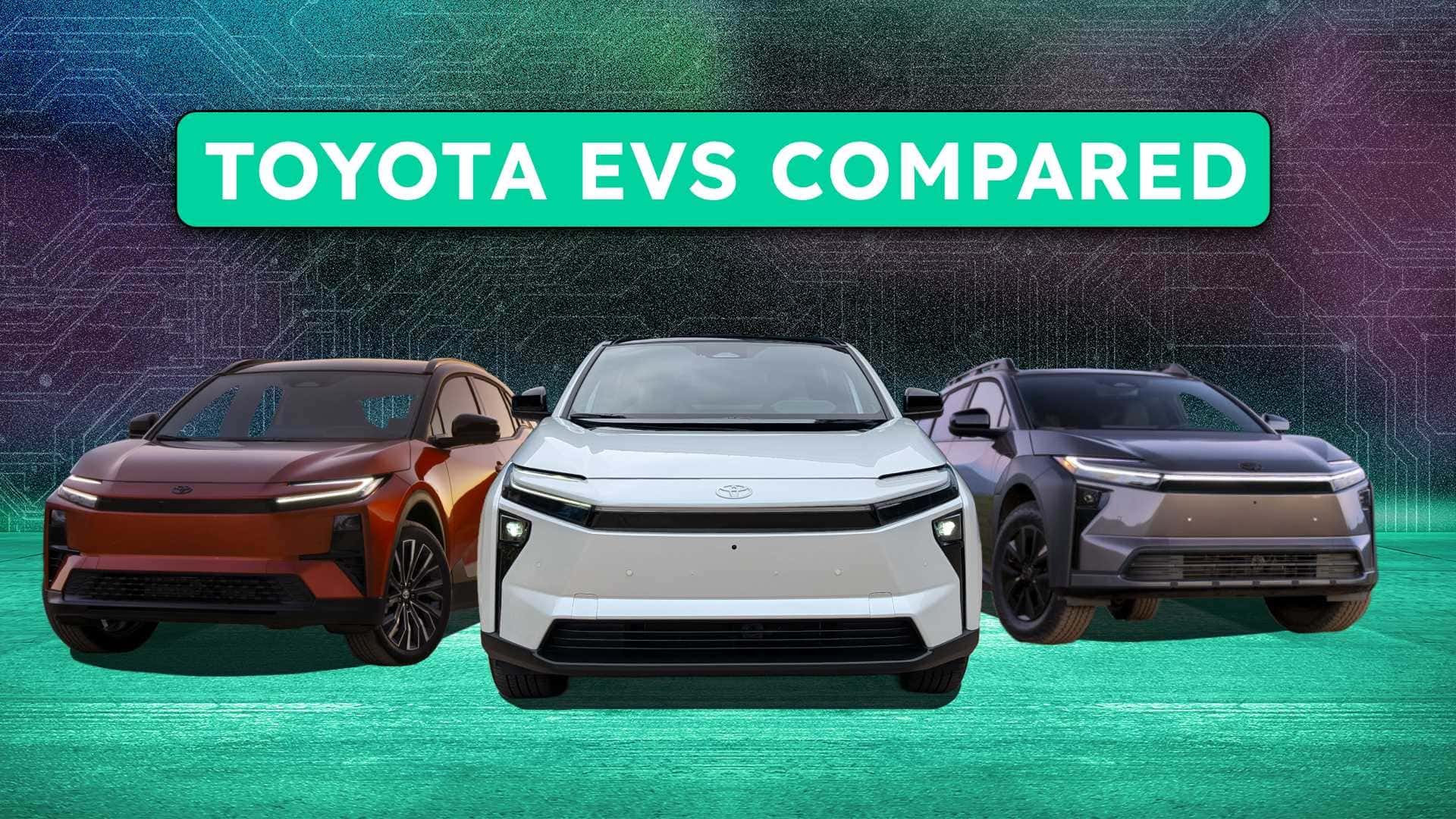
Toyota, a global automotive giant, is strategically recalibrating its electric vehicle (EV) offerings. After a measured approach during the initial EV market boom, the automaker has unveiled a revitalized lineup, significantly expanding its battery-powered portfolio. This shift comes as federal tax incentives have diminished and the rapid surge in EV sales has moderated.
Despite these market dynamics, Toyota’s updated strategy is yielding positive results. In the first quarter of this year, the bZ model emerged as America’s top-selling non-Tesla EV, attributed to substantial enhancements in range and charging capabilities. The bZ is no longer a solitary offering, now complemented by the compact C-HR and the versatile, wagon-like bZ Woodland. This expanded selection contributed to a remarkable 225% increase in Toyota’s U.S. EV sales during the second quarter.

Key Takeaways
- Toyota’s EV sales surged 225% in Q2, driven by new bZ, C-HR, and bZ Woodland models.
- All three models share the e-TNGA platform and a 74.7 kWh NMC battery (bZ also has a 57.7 kWh option).
- The bZ offers the highest EPA range at up to 314 miles, with the C-HR at 287 miles and bZ Woodland at 280 miles.
- All three EVs demonstrate significant charging improvements, achieving 10-80% charge in approximately 30 minutes.
- The C-HR delivers a dynamic driving experience, the bZ offers value and strong performance, while the bZ Woodland excels in ride comfort, space, and off-road capability.
- Expert analysis points to the bZ XLE AWD as a compelling value choice, balancing performance, range, and cost.
Toyota’s EV Trio: An Overview of the bZ, C-HR, and bZ Woodland
For long-standing Toyota customers and new electric vehicle aspirants, the brand now offers a more capable and diverse range of electric options. Understanding the nuances between these models is crucial for making an informed purchase decision. Each model, while sharing foundational technology, targets distinct consumer preferences and use cases.
The Toyota bZ positions itself as a value-oriented contender in the competitive crossover segment, directly challenging popular models like the Tesla Model Y and Hyundai Ioniq 5. The C-HR, on the other hand, presents a more compact profile with a noticeably sportier driving feel. Completing the trio, the bZ Woodland is designed for those seeking a larger, more adventure-ready vehicle, offering enhanced capability and space.
Pricing and Core Specifications
The foundational pricing for these models, including destination charges, reflects their segment positioning. The bZ starts at $36,495, followed by the C-HR at $38,695, and the bZ Woodland at $46,975. These figures establish a clear hierarchy within the Toyota EV lineup, offering options across different budget considerations.
Underneath their distinct exteriors, all three Toyota EV models share a common engineering backbone. They are manufactured in Japan on the advanced e-TNGA platform, which has undergone significant enhancements compared to the platform used in the earlier bZ4x model. This common architecture underpins their shared performance characteristics and efficiency gains.
Range, Battery, and Efficiency Improvements
A critical component shared across the bZ, C-HR, and bZ Woodland is the 74.7-kilowatt-hour (kWh) nickel manganese cobalt (NMC) battery. This standardization ensures consistent energy density and performance characteristics. However, the entry-level bZ also offers a smaller 57.7-kWh battery option, catering to buyers with differing range requirements.
The EPA-rated range figures showcase slight variations based on vehicle design and drivetrain configurations. The bZ, when equipped with its larger battery, delivers an impressive range of up to 314 miles. The C-HR offers a commendable 287 miles, while the more adventure-focused bZ Woodland provides 280 miles (or 260 miles when fitted with all-terrain tires).
A significant improvement across the 2026 and 2027 model year Toyota EVs is the upgrade to batteries and drive motors. These enhancements have demonstrably boosted real-world efficiency. During tests, all three EVs consistently achieved efficiency figures exceeding 3.0 miles per kilowatt-hour in mixed city and highway driving conditions.
In urban environments, the C-HR and bZ Woodland occasionally touched 5.0 miles per kWh over shorter distances, stabilizing between 3.5 to 4.0 miles per kWh on extended drives and highway stretches. However, it is crucial to note that these figures were observed in summer conditions, where battery performance is optimal. Colder climates, such as those experienced during a winter test of the bZ in upstate New York, showed a maximum efficiency of 2.7 miles per kWh, underscoring the influence of environmental factors.
Charging Capabilities: Speed and Convenience
Charging speed represents another area of substantial improvement for Toyota’s latest EV offerings. All three models—the bZ, C-HR, and bZ Woodland—are designed to charge from 10% to 80% in approximately 30 minutes. This marks a considerable advancement over the previous bZ4x, which required nearly an hour for the same charging interval.
Real-world charging tests have validated these claims. For instance, the C-HR achieved a 15-80% charge in just 26 minutes, adding nearly 200 miles of range. A complete charge from 15% to 100% took 48 minutes. Similarly, the bZ Woodland charged from 12% to 80% in 28 minutes, reaching 100% in 46 minutes, under comparable weather conditions at an Ionna station.
For added convenience, all three models support Plug & Charge functionality at select networks, accessible via the Toyota app. Prospective owners are advised to consult Toyota’s website for specific details on compatible charging networks and activation procedures.
Toyota EV Comparison: Key Specifications
| Feature | Toyota bZ | Toyota C-HR | Toyota bZ Woodland |
|---|---|---|---|
| Starting price, with destination | $36,495 | $38,675 | $46,975 |
| EPA Range | 236-314 miles | 287 miles | 280 miles (260 on all-terrain tires) |
| Battery | 74.7 kWh (57.7 kWh on base) | 74.7 kWh | 74.7 kWh |
| Charging 10-80% | Under 30 mins | Under 30 mins | Under 30 mins |
| Drivetrain | FWD or AWD | AWD | AWD |
| Horsepower | 165 (base), 221 (FWD, large battery), 338 (AWD) | 338 hp | 375 hp |
| Cargo space (cu-ft) | 27.7 | 25.3 | 33.8 |
| Ground clearance (inches) | 8.1 | 8.0 | 8.4 |
Driving Dynamics and Performance
The driving experience varies distinctively across the three Toyota EV models, catering to different preferences. The C-HR, equipped with standard all-wheel drive and 338 horsepower, delivers a dynamic and agile performance. It accelerates to 60 miles per hour in a claimed 4.9 seconds, offering a spirited and responsive feel behind the wheel. The vehicle also demonstrates commendable stability in corners, with minimal body roll.
The all-wheel-drive bZ, also boasting 338 hp, offers robust off-the-line performance, aligning closely with the C-HR in terms of acceleration. The front-wheel-drive 221 hp trim of the bZ, which provides over 300 miles of range, also feels sufficiently quick in initial assessments, ensuring a capable driving experience for most users.
With 375 horsepower, the bZ Woodland stands as the most powerful in the lineup, exhibiting strong acceleration that sustains even at higher speeds. However, its increased dimensions and curb weight, at 4,497 pounds (131 pounds heavier than the C-HR and 264 pounds more than the bZ), contribute to slightly more noticeable body roll during cornering. This is a trade-off for its enhanced interior space and cargo capacity.
Despite its larger size, the bZ Woodland’s handling remains competent, a testament to the e-TNGA platform’s solid chassis dynamics, which are shared across Toyota, Lexus, and Subaru EV models. These vehicles generally avoid the perception of excessive weight sometimes associated with other large EV crossovers.
Ride Quality and Off-Road Prowess
Ride quality is a notable differentiator among the three. The bZ offers the most comfort-oriented ride, featuring a soft suspension setup that effectively absorbs city road imperfections. The C-HR presents a slightly firmer ride, with some lateral jolts felt over larger bumps, though it achieves greater composure at higher speeds.
Both the C-HR and bZ can exhibit a tendency towards pronounced thuds over expansion joints, which may detract from overall refinement on poor road surfaces. This characteristic is less noticeable on smoother pavement.
The bZ Woodland, however, distinguishes itself with superior ride quality. Its longer suspension travel, paired with all-terrain tires and 8.4 inches of ground clearance, allows it to navigate rough roads with remarkable ease. The expertly tuned spring rate and damping effectively absorb impacts, and the lateral jolts are significantly less pronounced compared to its siblings.
While not a dedicated off-roader like a Land Cruiser, the bZ Woodland is engineered for enhanced off-road capability. It includes dedicated Snow, Dirt, and Mud driving modes, which optimize traction management and torque distribution for challenging low-grip situations. Expert assessments confirm its proficiency on rut-filled dirt roads and off-camber sections. It is worth noting that the bZ AWD also features an X-Mode setting with identical drive modes, making the Woodland’s off-road advantage primarily rooted in its greater ground clearance, all-terrain tires, and expanded interior volume.
Interior Design, Technology, and Cabin Space
The interiors of all three Toyota EV models share a largely consistent design language. Each features a standard 14-inch touchscreen display, supporting wireless Android Auto and Apple CarPlay. The steering wheel, digital gauge cluster, rotary gear knob, and overall cabin aesthetic are nearly identical across the bZ, C-HR, and bZ Woodland.
The infotainment experience, while functional, is described as adequate rather than exceptional. The systems can exhibit some lag and do not offer the same level of sophistication or feature depth found in some competitors. During testing, the bZ Woodland’s infotainment system displayed intermittent connectivity issues with Bluetooth music and wireless Android Auto, occasionally necessitating reliance on smartphone navigation.
These current Toyota EV models utilize an older generation of the company’s software. They do not incorporate the latest Arene software platform, which is present in newer models like the RAV4 and Lexus ES. The Arene platform offers a more responsive touchscreen, customizable widgets, over-the-air updates for both advanced driver-assistance systems (ADAS) and infotainment, and an integrated dashcam. A Toyota spokesperson previously confirmed that the bZ, C-HR, and bZ Woodland lack the necessary hardware and software architecture for Arene, suggesting a significant model-year update would be required to integrate it.
A persistent ergonomic concern, carried over from the bZ4x’s 2022 debut, relates to the digital gauge cluster’s positioning. For many drivers, particularly those who prefer a lower seating position, the cluster can be partially obscured by the top of the steering wheel. This design choice can hinder the easy visibility of critical information such as range and speed, although some drivers report it as a non-issue.
In terms of cabin spaciousness, the bZ Woodland, being the largest vehicle, naturally offers the most generous interior. It boasts the most expansive rear seating area and a substantial 33.8 cubic feet of cargo space behind the rear seats. The bZ also provides ample head and shoulder room for adult passengers, making it a comfortable option. Conversely, the C-HR’s rear seat, while sufficient for shorter adults, may feel constrained for taller occupants due to reduced legroom and headroom.
Conclusion: Navigating Toyota’s EV Offerings
While Toyota’s current EV lineup may not universally claim class-leading positions, their robust capabilities and the brand’s reputation for reliability make them strong contenders for the average electric vehicle consumer. This strategic market approach could prove advantageous as the broader EV demand matures and competition intensifies.
A comparative assessment of the three models highlights their unique strengths. The C-HR’s firmer ride and higher starting price, relative to the more spacious bZ, present important considerations for buyers prioritizing comfort and overall value. For those with a flexible budget, the bZ Woodland stands out, offering superior ride quality, a distinctive design, and expansive interior space.
Ultimately, the bZ emerges as a compelling value proposition within the lineup. Specifically, the XLE front-wheel-drive plus trim, equipped with the larger battery, delivers an EPA-rated range of 314 miles and is priced similarly to the base C-HR. Opting for the all-wheel-drive bZ adds approximately two thousand dollars to the cost but significantly boosts performance with 338 horsepower and includes the same off-road settings found in the bZ Woodland.
For consumers seeking more premium electric options, Toyota’s luxury brand offers the Lexus RZ and ES. Additionally, Subaru markets near-identical mechanical twins to these Toyota EV models, including the Solterra, Uncharted, and Trailseeker, with minor trim-level distinctions. Looking ahead, Toyota plans to introduce the three-row Highlander EV early next year, further expanding its electric vehicle presence.
Frequently Asked Questions (FAQs)
What is the primary difference between the Toyota bZ, C-HR, and bZ Woodland?
The bZ is a value-focused crossover with high range. The C-HR is a compact, sportier model. The bZ Woodland is larger and more adventure-oriented, featuring greater cargo space and enhanced off-road capabilities. All share the same e-TNGA platform and main battery capacity.
How do the driving ranges compare among the three Toyota EVs?
The Toyota bZ leads with an EPA-rated range of up to 314 miles (with the larger battery). The C-HR offers 287 miles, and the bZ Woodland provides 280 miles (260 miles with all-terrain tires). The bZ also has a base model with a smaller battery delivering 236 miles.
What are the charging times for these new Toyota electric vehicles?
All three models, the bZ, C-HR, and bZ Woodland, demonstrate significant improvements in charging speed. Toyota states they can charge from 10% to 80% in approximately 30 minutes, a considerable upgrade from previous models.
Does Toyota offer all-wheel drive for these EV models?
Yes, both the C-HR and bZ Woodland come standard with all-wheel drive. The Toyota bZ offers all-wheel drive as an option, alongside its front-wheel-drive configurations, providing flexibility for different driving preferences and conditions.
Which Toyota EV offers the most interior and cargo space?
The bZ Woodland provides the most spacious interior and cargo capacity, boasting 33.8 cubic feet behind the rear seats. The bZ offers 27.7 cubic feet, while the more compact C-HR has 25.3 cubic feet, reflecting its smaller footprint.
What infotainment system do these Toyota EVs use?
The bZ, C-HR, and bZ Woodland feature a standard 14-inch touchscreen with wireless Android Auto and Apple CarPlay. They utilize Toyota’s older-generation software platform, not the newer Arene system found in some other recent Toyota and Lexus models.
Are these Toyota EVs suitable for off-road driving?
The bZ Woodland is the most off-road-capable, featuring enhanced ground clearance (8.4 inches), all-terrain tires, and dedicated Snow, Dirt, and Mud driving modes. The bZ AWD model also includes similar X-Mode settings, offering competent capability for light to moderate trails.