
Key Takeaways (TL;DR)
- The 2026 Jeep Recon Moab’s 222-mile electric vehicle range and $66,995 starting price have drawn criticism, but this perspective often overlooks fundamental engineering compromises inherent in high-capability off-roaders.
- Achieving superior off-road performance—demanding features like high ground clearance, large all-terrain tires, a robust 4×4 system, and aggressive gearing—directly conflicts with maximizing energy efficiency and electric vehicle range.
- Unlike its road-focused counterpart, the Wagoneer S (294 miles range), the Jeep Recon electric SUV prioritizes extreme off-road capability through specific design choices, including 9.1 inches of ground clearance, heavy skid plates, 33-inch tires, and short 15:1 gearing for enhanced torque.
- Comparisons with other premium electric off-roaders like the Rivian R1S and Mercedes G580 w/EQ Technology reveal similar trade-offs, where increased range or capability comes with significantly higher costs or specific design limitations.
- The debate underscores a crucial industry reality: electrifying traditionally inefficient vehicle segments, particularly off-road vehicles, necessitates a re-evaluation of expectations regarding electric vehicle range, performance, and pricing in the current battery technology landscape.
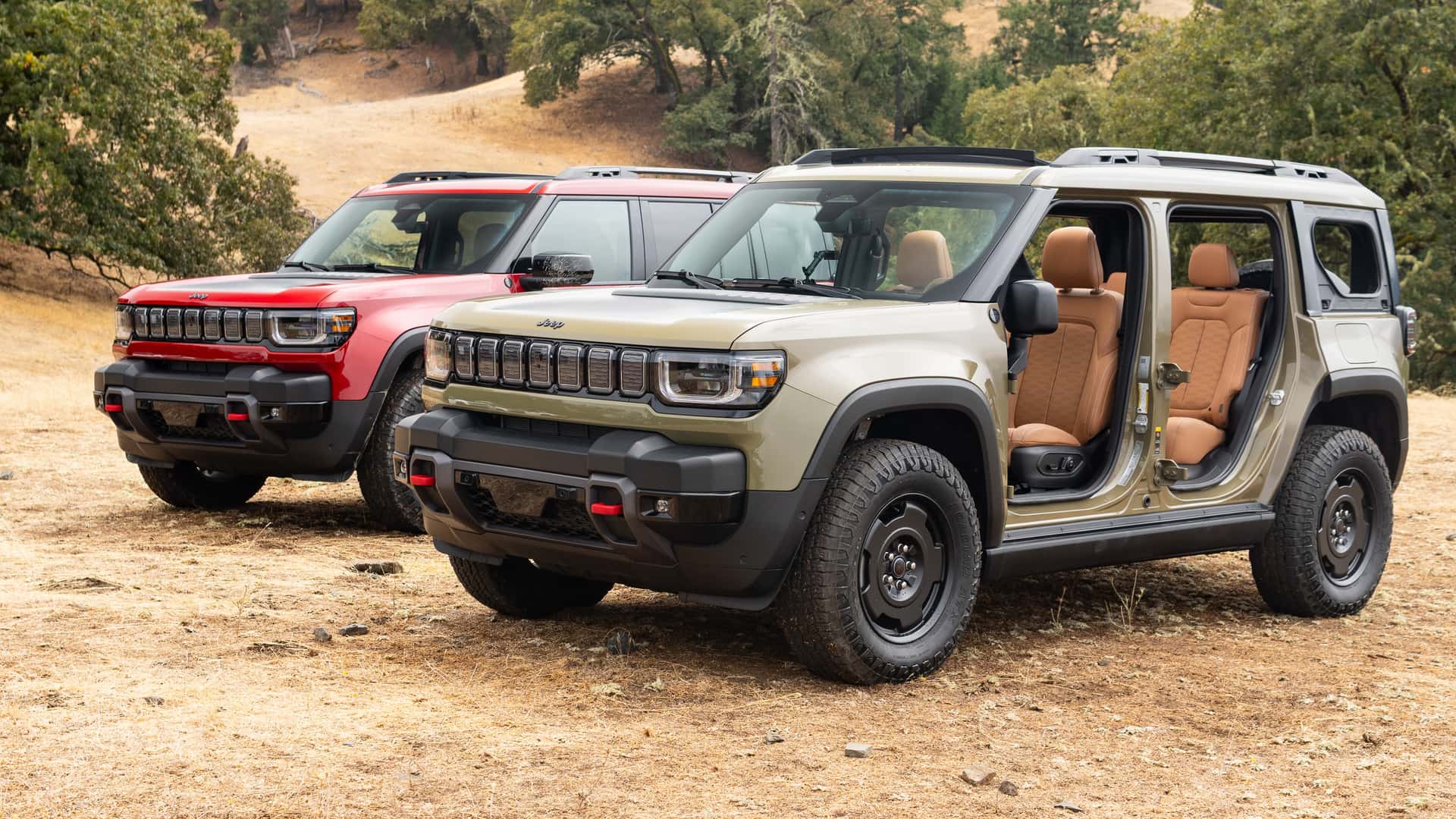
The announcement of the all-electric Jeep Recon Moab’s estimated 222-mile range and $66,995 starting price has ignited considerable debate among automotive journalists and potential consumers. From initial reactions at the Los Angeles Auto Show to widespread online commentary, a prevailing sentiment suggests that the vehicle underperforms on both range and affordability. However, this critical assessment often overlooks the intricate engineering compromises inherent in developing a truly capable electric off-roader.
While acknowledging that the Recon Moab may not be positioned as a mass-market vehicle due to these figures, industry experts emphasize that expecting superior range for less money without any sacrifice in capability represents a fundamental misunderstanding of automotive manufacturing and, specifically, the demands of off-road performance. The very essence of car building and extreme off-roading is an art of compromise, where conflicting goals—such as extensive electric vehicle range, competitive pricing, and robust off-road prowess—must be meticulously balanced.
The Inherent Conflict: Off-Road Capability Versus Efficiency
The pursuit of exceptional off-road capabilities intrinsically works against maximizing energy efficiency, a principle long understood in the realm of internal combustion engine (ICE) vehicles. Drivers of gas-powered, body-on-frame 4×4 trucks, often equipped with lifted suspensions and aggressive gearing, are accustomed to fuel efficiency figures typically below 20 miles per gallon, sometimes as low as 10 or 15 mpg. This reality, intuitive for experienced off-road enthusiasts, holds equally true for electric vehicles.
Several key design elements crucial for navigating challenging terrains significantly diminish a vehicle’s efficiency. Tall suspension systems, while providing essential ground clearance for rock crawling and traversing obstacles, dramatically increase aerodynamic drag. Similarly, large, knobby all-terrain (AT) tires, vital for traction in mud, sand, or snow, are inherently less efficient at highway speeds and often contribute to increased road noise compared to standard street tires.
Furthermore, a dedicated 4×4 system, indispensable for traction in slippery or uneven conditions, incurs an energy penalty whenever engaged. The engineering decisions behind aggressive gearing, designed to amplify torque at the wheels for superior climbing ability and low-speed control, also mean that the powertrain operates at higher revolutions per minute during highway cruising, leading to reduced efficiency.
Consider the stark contrast between a fuel-efficient commuter car, like a Toyota Prius, and a Jeep Wrangler. The Prius is optimized for aerodynamic efficiency and low rolling resistance, while the Wrangler is engineered for rugged durability and off-road dominance. Attempting to enhance a Prius’s off-road capability—by lifting its suspension, adding larger tires, and modifying its aerodynamic components—would invariably lead to a significant reduction in its impressive 50 miles per gallon fuel economy. This illustrates a universal truth: improving a vehicle’s capabilities off-road almost always results in a trade-off in on-road efficiency.
Jeep’s Strategic Engineering Choices for the Recon Electric SUV
The fundamental principles governing efficiency losses in ICE off-roaders are mirrored in electric vehicles. High ground clearance, the integration of dual-motor designs for all-wheel drive, the use of substantial all-terrain tires, and a boxy, upright body shape—all essential attributes for a genuine off-road vehicle—directly impact an EV’s energy consumption and, consequently, its electric vehicle range. These are not merely desirable features; they are foundational requirements for a vehicle claiming serious off-road prowess, as a vehicle with minimal ground clearance and thin tires cannot legitimately claim such capability.
Jeep’s product strategy clearly delineates this compromise. The brand offers the Wagoneer S, an electric SUV designed with 6 inches of ground clearance and street tires, utilizing the same 100.5 kWh battery pack as the Recon. This configuration yields a range of up to 294 miles, demonstrating the efficiency gains from a road-optimized design.
In contrast, the Jeep Recon electric SUV is engineered for genuine off-road performance. It boasts 9.1 inches of ground clearance, features an array of heavy skid plates for underbody protection, comes equipped with 33-inch all-terrain tires, and incorporates a more upright design optimized for superior approach and departure angles. Each of these critical enhancements, while indispensable for its intended purpose, inevitably contributes to a reduction in its overall electric vehicle range.
A often-overlooked factor in EV efficiency is gearing. While electric vehicles do not have multi-speed transmissions in the conventional sense, they employ gear ratios to deliver motor torque. Taller gear ratios (represented by a lower first number, e.g., 9:1 for an EV) are generally favored for cruising efficiency and higher top speeds. Conversely, shorter gearing significantly increases torque delivery at the wheels from a standstill, which is paramount for climbing steep inclines and pushing through tough obstacles in off-road scenarios.
The Recon, prioritizing low-end torque—the cornerstone of off-roading—features a 15:1 gearing ratio on its rear motor. This strategic choice enhances its ability to surmount challenging terrain and offers an incidental benefit of quicker acceleration, allowing the Recon to achieve 0-60 mph in 3.6 seconds. However, this aggressive gearing inherently compromises efficiency, as evidenced by an observed consumption rate of just 2.5 miles per kWh during test drives.
Comparative Analysis: Rivals in the EV Off-Road Segment
Examining other electric off-roaders reinforces the reality of these compromises. The heavier Rivian R1S, for example, often demonstrates greater efficiency than the Recon. However, Rivian does not offer all-terrain tires with its base 108 kWh battery pack. Customers desiring AT tires must upgrade to the larger 140 kWh version, which, despite its increased capacity, sees its range drop from 410 to 370 miles. This configuration comes with an approximate price tag of $96,000, and even then, the Rivian may not possess all the specific off-road advantages of the Recon, such as a locking rear differential.
At the pinnacle of electric off-road capability, the Mercedes G580 w/EQ Technology offers even more advanced features than both the Recon and R1S. It incorporates separate low-range gears for each of its four motors, allowing for superior climbing ability and the flexibility to switch to higher gears for more efficient on-road cruising. Despite its sophisticated hardware, a hefty price tag of $163,000, and a substantial 116 kWh of usable battery capacity, the G580 still achieves an EPA-rated range of only 239 miles. It is also important to note that for all these vehicles, highway range is typically expected to be significantly lower than combined range estimates, as the various efficiency-reducing factors are compounded at higher speeds.
The Broader Implications for EV Off-Roading
The ongoing discussion surrounding the Jeep Recon electric SUV’s range serves as a critical indicator for the nascent electric vehicle industry. It highlights that the path towards a fully electric future is complex, particularly for vehicle segments traditionally characterized by their inefficiency. It should come as no surprise that vehicles designed for maximum utility and ruggedness, such as the Volkswagen ID. Buzz or the Jeep Recon, present challenges in achieving extended ranges.
Integrating an absurdly large battery pack, while theoretically increasing range, comes with prohibitive cost implications and adds significant weight. Even battery packs in the 91-to-100-kWh range, far from small, deliver less effective range when powering a large, boxy, heavy vehicle, especially one outfitted with all-terrain tires, elevated ground clearance, and aggressive gearing. As advancements in battery technology, charging infrastructure, and charging speeds continue, many of these challenges are expected to diminish.
However, for the present, consumers and enthusiasts seeking genuinely capable EV off-roading will likely need to adjust their expectations, anticipating a necessary compromise on both electric vehicle range and overall purchase price. The Jeep Recon Moab’s specifications, therefore, are not an oversight but a calculated outcome of prioritizing formidable off-road performance within the current limitations and technological realities of electric vehicle design.
Frequently Asked Questions (FAQ)
Why is the Jeep Recon’s electric vehicle range lower than some other EVs?
The Jeep Recon electric SUV prioritizes extreme off-road capability. Features like high ground clearance (9.1 inches), heavy skid plates, large 33-inch all-terrain tires, and aggressive gearing (15:1 for torque) significantly increase energy consumption. These design choices, while crucial for off-road performance, inherently reduce the overall electric vehicle range compared to more road-focused EVs.
What is the starting price of the Jeep Recon Moab?
The 2026 Jeep Recon Moab, which is the specific model being discussed, has a starting price of $66,995. This price point reflects the advanced electric powertrain, battery technology, and specialized engineering required to deliver its promised off-road capabilities in an electric format.
How does the Recon’s range compare to its competitors?
When comparing similar off-road capable electric SUVs, the Recon’s 222-mile range is competitive given its design philosophy. For instance, the Rivian R1S with all-terrain tires and a larger battery offers 370 miles but costs around $96,000. The Mercedes G580 w/EQ Technology achieves 239 miles with a 116 kWh battery at a significantly higher price of $163,000, underscoring the range-cost-capability trade-off across the segment.
Does aggressive gearing impact EV off-roading?
Yes, aggressive gearing is critical for EV off-roading. While traditional EVs typically use taller gear ratios for efficiency, the Recon’s shorter 15:1 rear motor gearing maximizes torque at the wheels. This dramatically improves climbing ability and low-speed control over rugged terrain, though it does reduce efficiency at higher speeds on paved roads.
What compromises are made for EV off-roading capability?
Achieving strong EV off-roading capability requires significant compromises, primarily affecting electric vehicle range and price. Design elements essential for off-road performance—such as increased ground clearance, robust protective plating, specific tire types, and torque-optimized gearing—all demand more energy, necessitating larger, more expensive batteries or resulting in shorter ranges.
Is the 100.5 kWh battery in the Recon considered small?
No, a 100.5 kWh battery pack is not considered small in the EV market; it’s a substantial capacity. However, in a vehicle designed to be large, heavy, boxy, and equipped for extreme off-road conditions, this energy capacity is consumed more rapidly compared to a lighter, more aerodynamic, and road-optimized electric vehicle.
What does the term ‘E-E-A-T’ mean in content quality?
E-E-A-T stands for Experience, Expertise, Authoritativeness, and Trustworthiness. In content creation, especially for news and informational articles, it refers to the quality signals Google uses to evaluate content. High E-E-A-T indicates that the content is produced by knowledgeable sources, offers expert insights, is presented authoritatively, and is reliable and factual, enhancing its credibility for readers.