
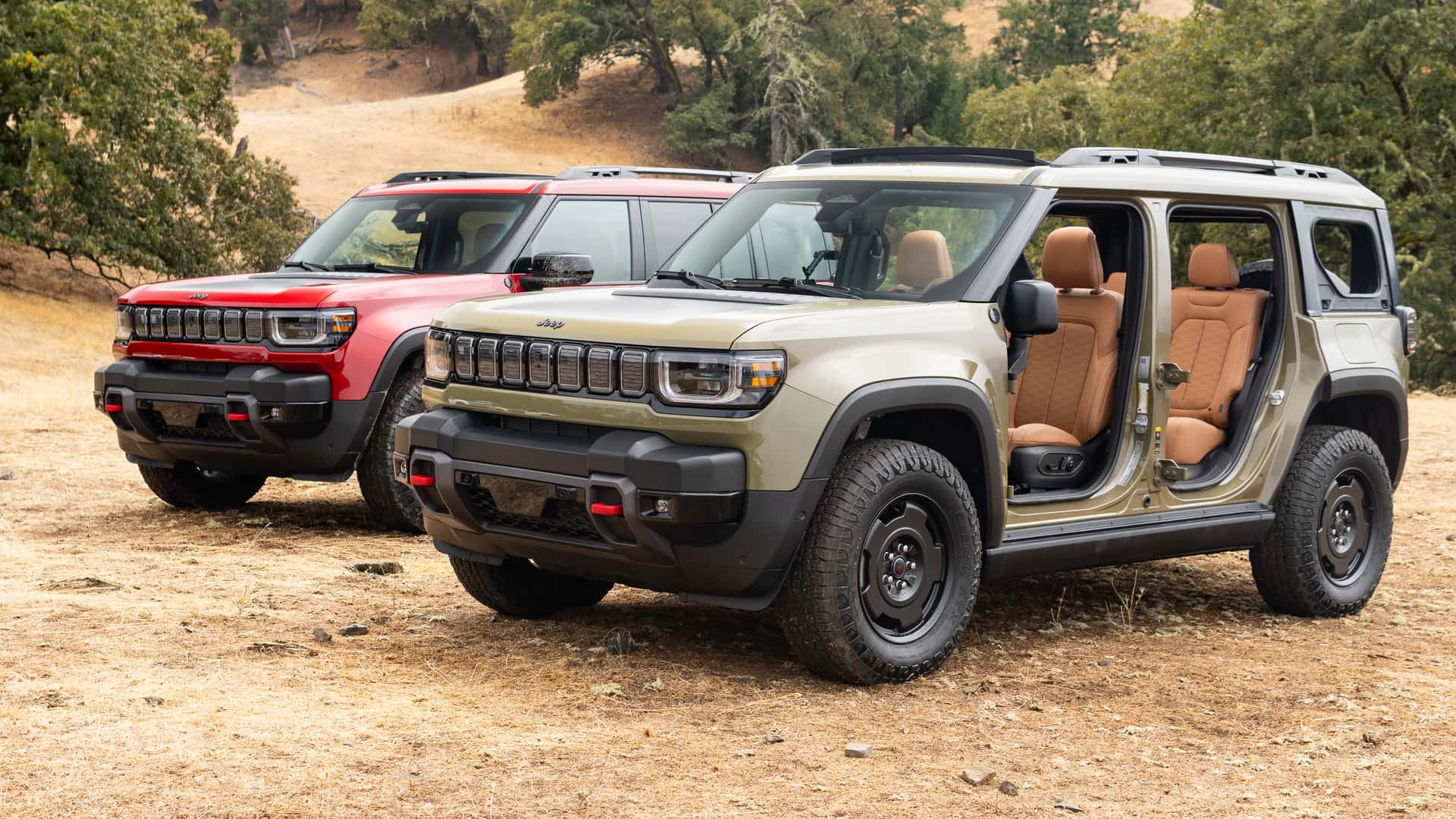
Key Takeaways:
- The all-electric Jeep Recon Moab offers an EPA-estimated range of 222 miles with a starting price of $66,995, sparking significant public debate.
- Critics often overlook the fundamental engineering compromises inherent in developing a highly capable off-road vehicle, whether gasoline or electric.
- Specialized off-road features like high ground clearance, large all-terrain tires, robust 4×4 systems, and aggressive gearing significantly reduce a vehicle’s efficiency and, consequently, its electric range.
- Jeep prioritised extreme off-road prowess in the Recon, equipping it with 9.1 inches of ground clearance, skid plates, 33-inch all-terrain tires, and 15:1 rear motor gearing for superior torque.
- Comparisons with other electric SUVs like the Jeep Wagoneer S (294 miles), Rivian R1S (up to 410 miles, but compromises for AT tires), and Mercedes G580 (239 miles at a much higher price) highlight the industry-wide challenge of balancing range, capability, and cost.
- As electric vehicle technology evolves, advancements in battery density, charging speeds, and infrastructure are expected to mitigate current limitations, but for now, consumers must temper expectations regarding range and price for dedicated electric off-roaders.
The announcement of the all-electric Jeep Recon Moab’s under 230-mile range and its $66,995 starting price has ignited considerable discussion within the automotive community. From journalists at the Los Angeles Auto Show to general consumers, many expressed disappointment, questioning why Jeep could not deliver greater range at a more accessible price point.
While these figures may not position the Recon Moab as a mass-market contender, understanding the underlying principles of automotive engineering reveals a critical reality: the art of compromise. Achieving exceptional off-road capabilities, an extended electric range, and an affordable price simultaneously represents a fundamental conflict in vehicle design. The choices made by Jeep, though seemingly limiting in terms of range and cost, are rooted in a strategic pursuit of uncompromised off-road performance.
The Intrinsic Link Between Off-Road Capability and Efficiency
The notion that a vehicle can offer unparalleled off-road capability without sacrificing efficiency is often a misconception. This principle applies universally, extending from traditional internal combustion engine (ICE) vehicles to the burgeoning segment of electric off-roaders.
Traditional Off-Roaders: A Precedent for Compromise
Consider a typical gas-powered, body-on-frame 4×4 truck equipped with a lifted suspension and aggressive gearing. Such a vehicle routinely delivers less than 20 miles per gallon, often closer to 10 or 15 mpg. This is not an anomaly but a direct consequence of its design for rugged terrain.
Tall suspension, while crucial for increased ground clearance during rock crawling, significantly amplifies aerodynamic drag. Knobby, large all-terrain tires, essential for traction in mud or loose surfaces, are notably inefficient and noisy at highway speeds. A robust 4×4 system, while indispensable in slippery conditions, consumes more fuel whenever engaged. Furthermore, aggressive gearing enhances low-end torque, dramatically improving climbing ability, but simultaneously forces the engine to spin faster at cruising speeds, leading to higher fuel consumption.
For instance, an older Tahoe, despite not being a dedicated off-roader but featuring 33-inch AT tires, a 4WD system with low range, and a potent V-8 engine, could achieve only about 13 mpg in city driving. These inherent trade-offs explain why a fuel-efficient Toyota Prius bears little resemblance to a rugged Jeep Wrangler. Modifying a Prius for off-road use, which involves lifting it and adding larger tires, invariably means a substantial reduction in its celebrated 50 mpg efficiency. Enhancing off-road prowess almost invariably diminishes on-road efficiency.
Electric Powertrains Face Similar Constraints
These physics-based realities are no different for a Jeep Recon electric vehicle. High ground clearance, a dual-motor all-wheel-drive system, large and heavy all-terrain tires, and a boxy, upright aerodynamic profile all contribute to reduced efficiency. Yet, for a vehicle designed for serious off-roading, many of these elements are not mere luxuries; they are fundamental requirements. An off-road vehicle with only 6 inches of clearance and thin, street-oriented tires simply cannot deliver on its promise of conquering challenging trails.
Unpacking the Jeep Recon’s Engineering Decisions
Jeep’s approach to the Recon electric vehicle reflects a deliberate set of engineering choices aimed at maximizing its off-road pedigree, even if it means compromises in other areas.
Strategic Choices for Rugged Performance
To highlight the contrast, Jeep offers the Wagoneer S, an electric SUV with 6 inches of ground clearance and street tires. This vehicle, utilising the same 100.5 kWh battery pack as the Recon, achieves an impressive 294 miles of range. This demonstrates that Jeep is capable of producing more range-centric electric vehicles when off-road capability is not the primary directive.
The Jeep Recon electric vehicle, however, is engineered for legitimate off-road capability. It boasts 9.1 inches of ground clearance, incorporates heavy skid plates for underbody protection, features 33-inch all-terrain tires for superior traction, and exhibits a more upright design optimized for better approach and departure angles. Each of these critical design choices, while enhancing ruggedness, inherently reduces the vehicle’s overall range and efficiency.
The Gearing Factor: Torque Over Tally
A crucial, often overlooked, aspect in electric vehicle efficiency is gearing. While EVs do not have traditional multi-speed transmissions in the same way gasoline cars do, they still employ gear ratios to manage how the electric motor’s torque is delivered to the wheels. Taller gear ratios (represented by a lower first number, e.g., 9:1 for an EV) are generally more conducive to efficient highway cruising.
Conversely, shorter gearing increases the torque delivered to the wheels from a standstill, significantly improving climbing ability and overall low-end grunt, which is paramount for off-roading. However, this configuration typically makes the vehicle less efficient at higher speeds.
For the Jeep Recon electric vehicle, the engineers opted for a 15:1 gearing ratio on its rear motor. This decision directly prioritises maximum low-end torque, enabling the vehicle to surmount more demanding obstacles. An additional benefit of this aggressive gearing is quicker acceleration, allowing the Recon to achieve 0-60 mph in a swift 3.6 seconds. This engineering choice, while enhancing performance, contributes to the observed efficiency figures, such as 2.5 miles per kWh, which are lower than some other electric SUVs.
Competitive Landscape: Range vs. Price vs. Capability
The challenges faced by the Jeep Recon electric vehicle are not unique within the rapidly evolving segment of electric off-roaders. Other manufacturers also grapple with the complex trade-offs between range, price, and extreme capability.
Rivian R1S: Balancing Power and Distance
The Rivian R1S, a heavier electric SUV, often demonstrates better efficiency than the Recon, even when equipped with all-terrain tires. However, Rivian’s strategy highlights similar compromises. All-terrain tires are not available on models featuring the base 108-kWh battery pack. To opt for ATs, customers must upgrade to the larger 140 kWh version, which still sees its range drop from 410 miles to 370 miles. This configuration typically pushes the price point to approximately $96,000. Furthermore, the Rivian R1S, with its taller gearing and absence of a locking rear differential, lacks some of the specific off-road advantages engineered into the Jeep Recon electric vehicle.
Mercedes G580: Pinnacle of Electric Off-Roading at a Premium
At the upper echelon of the electric off-roading market, the Mercedes G580 w/EQ Technology offers even greater off-road capabilities than both the Recon and R1S. This premium vehicle features separate low-range gears for each of its four motors, allowing for superior climbing ability and then transitioning to higher gears for more efficient on-road cruising. Despite this sophisticated hardware, a substantial 116 kWh of usable battery capacity, and a hefty $163,000 price tag, its EPA-estimated range remains at 239 miles. As with most off-road-oriented vehicles, highway range for the G580 is expected to be significantly lower than its combined range estimates, as the various efficiency-reducing factors are amplified at higher speeds.
Navigating the Future of Electric Off-Roading
The primary takeaway for consumers and industry observers is the necessity of adjusting expectations regarding the range and pricing of highly capable electric off-road vehicles. The electrification journey for inherently inefficient vehicle types, such as rugged 4x4s, presents a steeper challenge compared to more aerodynamically optimized cars.
Therefore, it should not come as a surprise when vehicles like the Volkswagen ID. Buzz or the Jeep Recon electric vehicle offer ranges that might seem modest compared to their pavement-focused counterparts. Incorporating a sizable battery, such as the Recon’s 100.5-kWh pack, entails significant cost. However, the energy contained within these batteries does not translate to exceptionally long distances when propelling a large, boxy, and heavy vehicle, especially one equipped with all-terrain tires, extra ground clearance, and aggressive gearing.
As battery technology continues to advance, charging times improve, and the charging infrastructure expands, many of these present limitations are expected to gradually diminish. However, for the foreseeable future, individuals seeking robust electric off-roading capabilities should anticipate a necessary compromise on both driving range and purchase price.
Frequently Asked Questions (FAQ) About the Jeep Recon Electric Vehicle
Why is the Jeep Recon’s electric range lower than some other EVs?
The Jeep Recon electric vehicle prioritises extreme off-road capability. Features like high ground clearance (9.1 inches), heavy skid plates, aggressive 33-inch all-terrain tires, a boxy design, and low 15:1 gearing for maximum torque all inherently reduce aerodynamic efficiency and increase energy consumption, leading to a 222-mile range with its 100.5 kWh battery.
What is the starting price of the Jeep Recon Moab?
The all-electric Jeep Recon Moab has a starting price of $66,995. This pricing reflects the advanced electric powertrain technology, specialized components for off-road performance, and the robust engineering required to deliver its intended capabilities within the electric vehicle market.
How does the Recon’s range compare to other electric off-roaders?
Compared to other electric off-road-capable vehicles, the Recon’s 222-mile range is competitive given its specialized features. The Rivian R1S offers more range but requires a larger battery pack for AT tires. The Mercedes G580 offers similar or slightly better range (239 miles) but at a significantly higher price point, highlighting common trade-offs across the segment.
Are the off-road features the only reason for the range?
Beyond the physical attributes, the Jeep Recon electric vehicle also employs aggressive gearing (15:1 on the rear motor) to maximise low-end torque for climbing. While beneficial for off-roading and quick acceleration, this gearing strategy is less efficient at higher speeds, further contributing to a lower overall range compared to vehicles optimised purely for highway efficiency.
Will electric off-road vehicles ever have longer ranges?
Yes, the range of electric off-road vehicles is expected to improve over time. Advancements in battery technology (higher energy density), more efficient electric powertrains, faster charging infrastructure, and potentially innovative design solutions that balance ruggedness with aerodynamics will likely lead to extended ranges in future models, reducing current compromises.
Is the Jeep Recon electric vehicle meant for the mass market?
Given its specialised focus on extreme off-road capability and its starting price point, the Jeep Recon Moab is not primarily designed as a mass-market electric vehicle. Instead, it targets enthusiasts and consumers who specifically seek a highly capable electric off-roader and understand the inherent engineering trade-offs involved in achieving such performance.