
Key Takeaways (TL;DR):
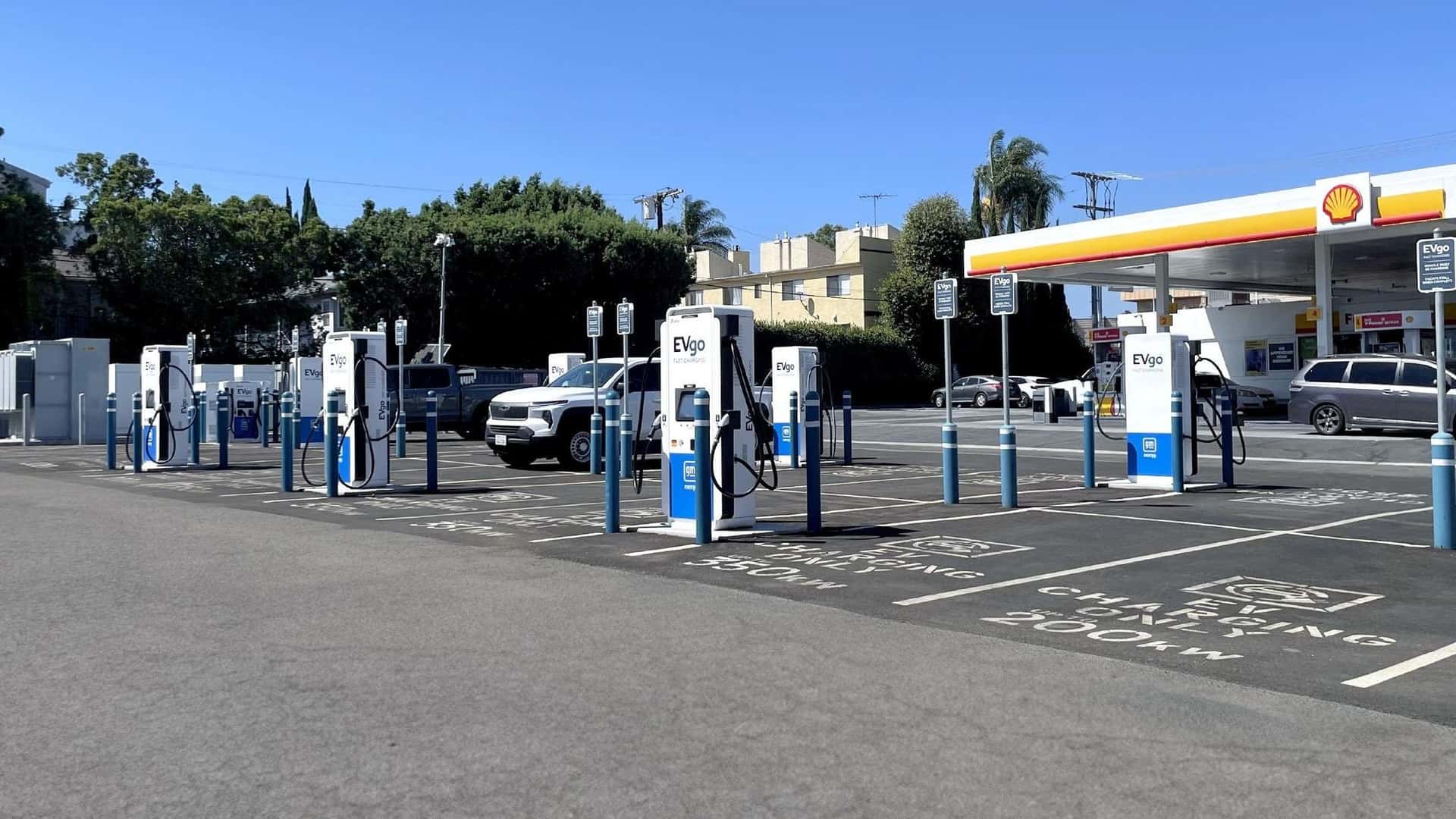
- EVgo has inaugurated Los Angeles’s largest non-Tesla fast charging station on S Robertson Blvd, featuring 10 stalls and 20 plugs.
- The station offers advanced charging speeds up to 350 kilowatts through a mix of 100 kW, 200 kW, and 350 kW stalls.
- Notably, the new facility includes two CHAdeMO ports, providing crucial support for older electric vehicle models like the Nissan Leaf.
- This development underscores EVgo’s commitment to a diverse EV fleet while simultaneously integrating next-generation charging technologies, including NACS plugs at other locations.
- The strategic location in Mid-City enhances public EV charging infrastructure in a vital urban corridor, aiming to improve accessibility and convenience for a wide range of EV drivers.
Los Angeles, a leading hub for electric vehicle adoption, has recently seen a significant enhancement in its EV charging infrastructure. EVgo, one of the largest electric vehicle (EV) charging networks in the United States, has officially opened what it describes as the city’s largest non-Tesla fast charging station. This new facility in the heart of Los Angeles promises to significantly improve charging accessibility for a diverse range of EV owners.
The station, strategically located on S Robertson Blvd, represents a substantial investment in the future of electric mobility. It features state-of-the-art technology, offering high-speed charging capabilities designed to meet the growing demands of modern EVs. This expansion is critical for supporting the burgeoning electric vehicle market within metropolitan areas.
A New Landmark in LA’s Charging Landscape
The newly inaugurated EVgo station boasts an impressive capacity, featuring a total of 10 charging stalls and 20 individual plugs. These units are capable of delivering power levels up to a robust 350 kilowatts (kW), ensuring rapid charging times for compatible electric vehicles. This makes it a pivotal addition to the public EV charging infrastructure in Los Angeles.
The facility’s design incorporates a varied distribution of power levels to cater to different vehicle needs and charging preferences. Drivers will find two 100-kilowatt stalls, three 200-kW stalls, and five ultra-fast 350-kW stalls. This tiered approach maximizes efficiency and ensures that various EV models, from older generations to the newest releases, can charge optimally.
Unprecedented Support for Legacy EVs
What distinguishes this new EVgo station and makes it particularly noteworthy is its continued commitment to older electric vehicle models. Amidst the rapid evolution of charging standards, the facility includes two CHAdeMO ports, capable of delivering up to 100 kW of power. This decision provides a vital lifeline for owners of legacy EVs.
The CHAdeMO connector, while gradually being phased out in favor of newer standards, remains essential for a segment of the EV market. Primarily utilized by earlier iterations of the Nissan Leaf and some Japanese-made plug-in hybrids like the Mitsubishi Outlander PHEV, its inclusion ensures that these vehicles are not left behind. This demonstrates EVgo’s inclusive approach to expanding EV charging infrastructure.
Navigating Charging Standards: CCS, NACS, and CHAdeMO
The electric vehicle charging landscape is characterized by evolving connector standards, each designed to facilitate power delivery from charging stations to vehicle batteries. The new EVgo station primarily features 18 CCS (Combined Charging System) connectors alongside its CHAdeMO ports. CCS is a widely adopted standard for DC fast charging across many non-Tesla electric vehicles in North America and Europe.
The absence of native NACS (North American Charging Standard) cables at this specific site is notable, though not a significant barrier for NACS-equipped vehicles. These EVs can readily utilize charging adapters to connect with CCS chargers, ensuring broad compatibility. Conversely, using a CHAdeMO adapter on a CCS station is generally discouraged due to high cost and recommendations from the CHAdeMO association itself, highlighting the complex interoperability challenges within the EV charging infrastructure.
EVgo, however, is actively adapting to the industry’s shift towards NACS. The company has already commenced installing Tesla Superchargers at various locations. These V4 dispensers offer substantial power, delivering up to 500 kW at 1,000 volts, and seamlessly integrate into Tesla’s in-app navigation system. Furthermore, EVgo is systematically adding NACS plugs to its existing network, signaling a comprehensive strategy for future-proofing its EV charging infrastructure.
Strategic Location for Urban Convenience
The choice of location for this major EV charging facility is highly strategic. Situated just off the Santa Monica Freeway in Los Angeles’s bustling Mid-City neighborhood, the station addresses a critical need in a central corridor. This placement ensures maximum accessibility for drivers traversing the city.
The area surrounding the station offers considerable convenience for EV users. Within easy walking distance, drivers can find a variety of restaurants, essential grocery stores, and diverse shopping options. This integrated approach allows drivers to efficiently utilize their charging time, seamlessly combining essential errands or leisure activities with their vehicle’s charging session.
EVgo’s Expansive Network and User Experience
EVgo’s latest Los Angeles installation is part of a much larger, rapidly expanding national EV charging infrastructure. According to data from the Department of Energy’s Alternative Fuels Data Center (AFDC), EVgo currently operates an impressive 1,175 fast charging stations across the U.S. This network collectively offers 5,185 individual charging ports accessible to the public.
A key feature enhancing the user experience across the EVgo network, including the new LA station, is the widespread availability of Plug & Charge functionality. This innovative technology simplifies the charging process significantly. Once a payment method is securely configured within the user’s account, a charging session automatically initiates upon plugging in the vehicle, eliminating the need for apps or cards. This streamlined interaction underscores EVgo’s focus on user convenience and operational efficiency within the EV charging infrastructure.
Boosting EV Adoption and Future-Proofing Electric Mobility
The launch of such a significant charging hub in a major metropolitan area like Los Angeles is more than just an expansion of services; it’s a critical step in accelerating electric vehicle adoption. A robust and reliable EV charging infrastructure directly addresses range anxiety, a primary concern for many potential EV buyers. Increased access to fast, convenient charging options builds consumer confidence in electric mobility.
Moreover, EVgo’s strategy of supporting both established and emerging charging standards reflects a pragmatic approach to future-proofing the electric vehicle ecosystem. By catering to legacy vehicles while also integrating advanced technologies like NACS, the company ensures that its network remains relevant and accessible to a broad spectrum of EV owners for years to come. This forward-thinking strategy is vital for sustainable growth in the EV sector.
The Road Ahead for Charging Networks
The dynamic evolution of the EV market demands continuous innovation and expansion from charging network providers. The proliferation of high-power charging stations, coupled with initiatives like Plug & Charge, is setting new benchmarks for convenience and efficiency. Such developments are essential as the global shift towards electric transportation gains momentum.
As more vehicle manufacturers embrace common charging standards, the interoperability and accessibility of charging stations will only improve. Investments like EVgo’s latest Los Angeles station are testament to the ongoing commitment by private entities to build a comprehensive and reliable EV charging infrastructure that can support the widespread transition to electric vehicles. This collaborative effort is crucial for a greener transportation future.
The opening of Los Angeles’s largest non-Tesla fast charging station by EVgo marks a significant milestone in the city’s journey towards sustainable transportation. With its advanced charging capabilities, strategic location, and thoughtful inclusion of CHAdeMO support for older models, the facility exemplifies a balanced approach to expanding EV charging infrastructure. This move not only serves the immediate needs of current EV drivers but also lays a stronger foundation for the broader adoption of electric vehicles in one of the world’s most car-centric cities.
Frequently Asked Questions about EV Charging in Los Angeles
Q1: Where is the new EVgo fast charging station located in Los Angeles?
The latest and largest non-Tesla EVgo fast charging station in Los Angeles is situated on S Robertson Blvd, specifically within the Mid-City neighborhood. Its strategic location just off the Santa Monica Freeway makes it easily accessible for drivers across the metropolitan area, enhancing local EV charging infrastructure.
Q2: What types of charging connectors are available at this new station?
The EVgo station offers a variety of charging options. It features 18 CCS (Combined Charging System) connectors, which are standard for many non-Tesla EVs. Additionally, it notably includes two CHAdeMO ports, providing support for older EV models like the Nissan Leaf, ensuring broad compatibility for diverse electric vehicles.
Q3: What are the maximum power delivery capabilities of the new EVgo station?
This state-of-the-art facility is equipped with plugs capable of delivering up to 350 kilowatts (kW) of power. The station includes a mix of stalls: two at 100 kW, three at 200 kW, and five at 350 kW, designed to accommodate varying charging needs and speeds for different electric vehicle models effectively.
Q4: Why is the inclusion of CHAdeMO support significant?
The provision of CHAdeMO ports is significant because it extends charging access to owners of older electric vehicles, such as previous generations of the Nissan Leaf and certain Mitsubishi Outlander PHEVs. This commitment ensures that legacy EV drivers are not marginalized as the industry transitions to newer charging standards, bolstering comprehensive EV charging infrastructure.
Q5: Does the new EVgo station support NACS (Tesla) connectors?
While the new S Robertson Blvd station does not currently feature native NACS cables, NACS-equipped electric vehicles can still utilize the available CCS chargers through the use of compatible adapters. EVgo is, however, actively deploying Tesla Superchargers with NACS plugs at other locations across its network.
Q6: How many EV fast charging stations does EVgo operate nationwide?
According to the Department of Energy’s Alternative Fuels Data Center (AFDC), EVgo operates a substantial network of 1,175 EV fast charging stations throughout the United States. These stations collectively provide access to 5,185 individual charging ports, making EVgo a prominent player in the national EV charging infrastructure landscape.
Q7: What is “Plug & Charge” functionality?
Plug & Charge is a convenient feature that allows an EV charging session to begin automatically simply by plugging the vehicle into the station. This technology requires a pre-configured payment method in the user’s account and eliminates the need for activating the session via an app, credit card, or RFID tag, streamlining the user experience.