
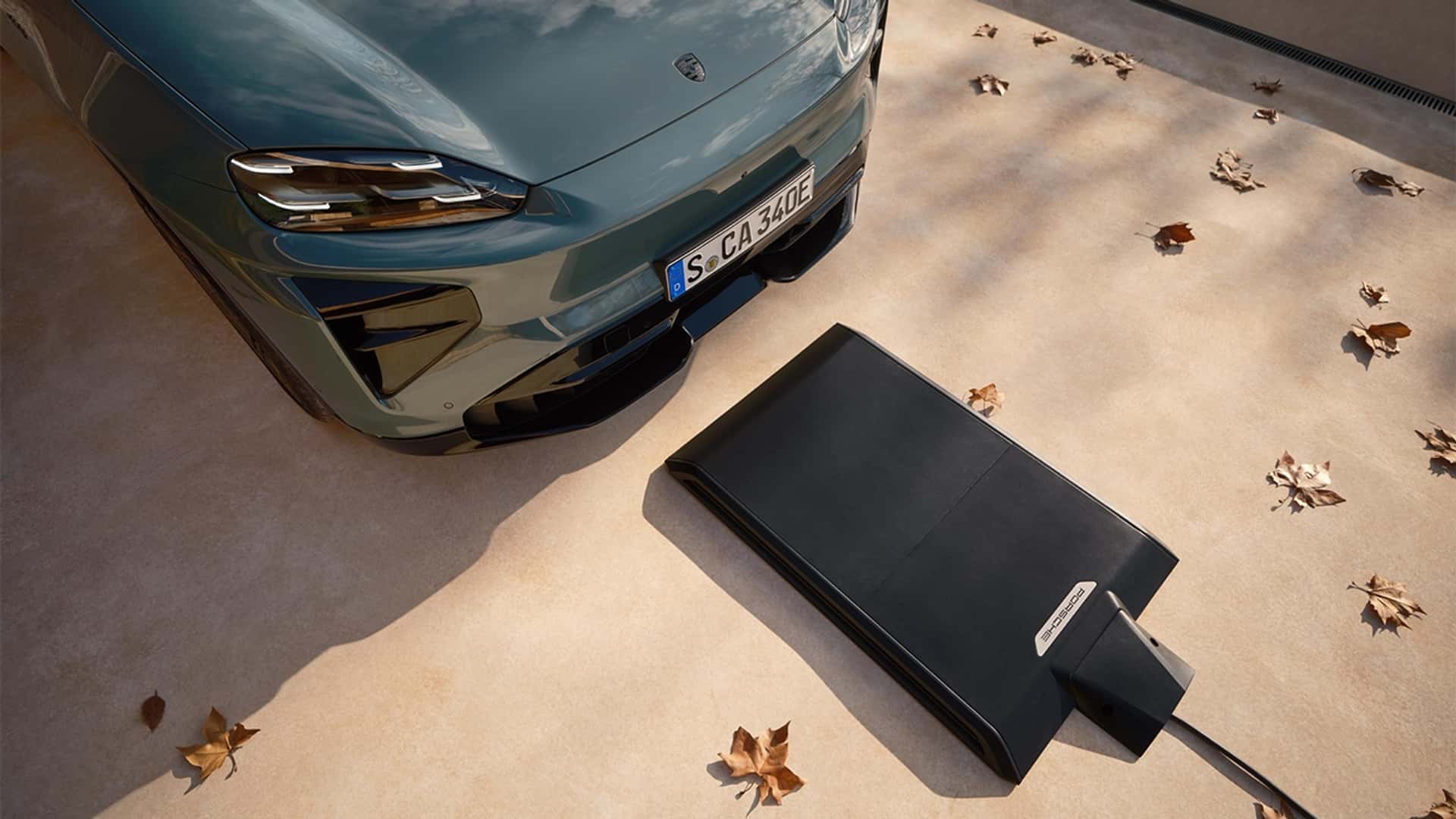
Key Takeaways:
- The Porsche Cayenne Electric now offers 11 kW wireless charging, with its ground pad available in select European markets.
- This marks the first instance of such advanced EV wireless charging technology being commercially available in Europe.
- Porsche reports a high efficiency rate of 90% for its inductive charging system, surpassing typical smartphone wireless charging.
- The 113.0-kWh battery of the Cayenne Electric can be fully charged overnight using this innovative 11 kW wireless solution.
- Safety features include automatic deactivation upon detection of living creatures or metal debris near the charging area.
Stuttgart, Germany – In a significant leap forward for electric vehicle (EV) charging technology, Porsche has officially made its wireless charging pad for the Porsche Cayenne Electric available for order in Germany and other European markets. This development positions the luxury SUV at the forefront of automotive innovation, offering unparalleled convenience and efficiency in EV power replenishment. While wireless charging solutions have previously been deployed in China, the Cayenne Electric is now the first vehicle to offer this sophisticated inductive charging system commercially in Europe, with North America slated for future availability.

Pioneering Wireless EV Charging in Key Markets
The introduction of the Porsche Cayenne Electric wireless charging capability represents a pivotal moment for the electric mobility sector. For years, the concept of simply parking an electric vehicle over a pad to initiate charging has been a futuristic vision. Porsche has now transformed this vision into a tangible reality for its discerning customers in Europe, setting a new benchmark for premium electric SUVs.
This advanced system, compatible with the acclaimed Porsche Cayenne Electric, underscores the brand’s commitment to enhancing the user experience through cutting-edge technology. The ability to charge without physically plugging in eliminates a minor, yet persistent, friction point for EV owners, promising to make daily vehicle operation even more seamless and intuitive. As the automotive industry continues its rapid transition towards electrification, innovations like the Porsche Cayenne Electric wireless charging pad are crucial in driving broader adoption and consumer acceptance of electric vehicles.
The Technology Behind Seamless Power
The core of this innovation lies in inductive charging technology, which allows for the transfer of electrical energy between two objects without physical contact. For the Porsche Cayenne Electric, this involves a permanently installed ground pad and a receiver integrated into the vehicle. This system facilitates an 11 kW power transfer, a robust output that challenges conventional perceptions of wireless charging limitations.

Unlike the slower, less efficient wireless charging typically associated with smartphones, the automotive application leverages larger components and specialized engineering. This scale allows for greater energy transfer and more effective heat management, which are critical factors in achieving high efficiency and power delivery. Porsche’s implementation highlights the potential for inductive charging to become a mainstream solution for EV owners seeking ultimate convenience.
Efficiency and Performance: Redefining Wireless Charging Standards
One of the primary concerns often raised about wireless charging is its energy efficiency. Traditional wireless phone chargers, for example, typically operate at an efficiency of 70-80%, according to charger brand Anker, often leading to noticeable heat generation without optimal power delivery. However, the Porsche Cayenne Electric wireless charging system dramatically outperforms these figures, boasting an impressive 90% efficiency.
This significant improvement in efficiency is attributed to several design advantages inherent in vehicle-scale inductive charging. The larger receiver and transmitter coils allow for a more effective magnetic field coupling, minimizing energy loss. Furthermore, the inherent air gap between the vehicle and the ground pad provides superior heat dissipation compared to compact smartphone charging solutions, preventing performance degradation due to thermal buildup. This high efficiency ensures that the convenience of wireless charging does not come at a significant cost to energy consumption or charging speed.
Overnight Charging Capabilities
The 11 kW power delivery of the wireless charging system is a substantial capability for an inductive solution. To put this into perspective, the Porsche Cayenne Electric is equipped with a sizable 113.0-kWh battery. With an 11 kW charging rate, the system is more than capable of fully recharging the vehicle’s battery overnight. This means that a driver can simply park their Cayenne Electric in their garage at the end of the day, and wake up to a fully charged vehicle without ever having to handle a charging cable.
This level of power output matches or exceeds many conventional Level 2 wired charging stations commonly found in residential settings. It provides ample energy to cover typical daily driving needs and ensures that the vehicle is always ready for longer journeys, making the Porsche Cayenne Electric wireless charging an incredibly practical feature for daily use.
Installation, Safety, and User Experience Considerations
Implementing a wireless charging system for an electric vehicle involves more than just the vehicle itself; it requires dedicated infrastructure. The Porsche system necessitates a permanently installed ground pad at the user’s parking location. This pad is engineered for durability, being both waterproof and robust enough to withstand the weight of the car rolling over it, ensuring long-term reliability in various environmental conditions.
Advanced Safety Protocols
Safety is a paramount concern for any electrical system, especially one involving high power levels and outdoor installation. Porsche has integrated sophisticated safety features into its wireless charging solution for the Cayenne Electric. The system is designed to detect if a living creature, such as a pet, is nearby and will automatically deactivate to prevent any potential harm. This intelligent detection mechanism extends to inanimate objects as well, as the system will also shut down if it identifies regular metal debris in its path, preventing inefficient energy transfer or potential hazards.
These proactive safety measures are crucial for building consumer trust in inductive charging technology and ensuring its safe integration into residential and commercial environments. They reflect a comprehensive approach to product development that prioritizes user safety alongside technological advancement.
User Experience: Precision and Convenience
While the prospect of effortless charging is appealing, a key aspect of the user experience will be the precision required for parking. The original article notes that it is ‘unclear how precise you need to be to use it.’ The practicality of the Porsche Cayenne Electric wireless charging solution will heavily depend on how forgiving the system is to parking variations. An overly precise requirement could diminish the convenience factor, whereas a wider tolerance for alignment would significantly enhance the user’s quality of life. As the technology rolls out, feedback on this aspect will be critical for future iterations and broader acceptance.
Global Rollout and Future Prospects for EV Charging
The introduction of the Porsche Cayenne Electric wireless charging pad is part of a phased global rollout strategy. Following its initial availability in Europe, the technology is expected to reach other major markets. While an earlier timeline had suggested a potential American launch in the second half of this year, Porsche’s latest communications now indicate that American sales are expected to commence sometime in 2027.
This gradual expansion allows Porsche to refine the technology, gather real-world data, and adapt to regional market requirements and charging infrastructure development. The long-term vision is to offer this convenience to a global audience, making the charging experience for the Porsche Cayenne Electric as effortless as possible, regardless of location.
Reshaping the EV Charging Landscape
The commercialization of high-power inductive charging by a premium automaker like Porsche is poised to significantly influence the broader EV charging landscape. It signals a move beyond traditional plug-in models towards more integrated and automated charging solutions. This could spur further investment and innovation in wireless charging infrastructure, potentially leading to its integration in public parking spaces, workplaces, and even dynamic road charging systems in the distant future. The Porsche Cayenne Electric wireless charging system is not just a feature; it’s a precursor to the next generation of EV ownership.
The Porsche Cayenne Electric: A Benchmark for Luxury EVs
Beyond its groundbreaking wireless charging capabilities, the Porsche Cayenne Electric stands as an impressive machine in its own right. It offers an exceptional driving experience, characterized by dynamic performance and refined handling, true to Porsche’s heritage. Its robust charging architecture, coupled with an extensive driving range – as demonstrated by a test drive covering over 350 miles at 70 mph – solidifies its position as a highly competitive and desirable offering in the premium electric SUV segment. While carrying a premium price tag, its comprehensive suite of features and engineering excellence position it as one of the finest Western legacy brand EVs available today.
Conclusion
The launch of the Porsche Cayenne Electric wireless charging system in Europe marks a pivotal moment in the evolution of electric vehicle technology. By offering an efficient, high-power, and remarkably convenient inductive charging solution, Porsche is not only enhancing the ownership experience for the Cayenne Electric but also laying groundwork for the future of EV charging. This innovation signifies a significant step towards a truly seamless and effortless electric mobility future, further solidifying the Porsche Cayenne Electric’s status as a leader in its class.
FAQ Section
What is Porsche Cayenne Electric wireless charging?
Porsche Cayenne Electric wireless charging is an inductive system allowing the vehicle to charge without physical cables. Users simply park their Cayenne Electric over a dedicated ground pad, which then wirelessly transfers 11 kW of power to the vehicle’s battery, offering a highly convenient and efficient charging experience.
How efficient is the Porsche Cayenne Electric wireless charging system?
The Porsche Cayenne Electric wireless charging system boasts an impressive 90% efficiency rate. This significantly surpasses the efficiency of typical smartphone wireless chargers, which usually range from 70-80%, making it a highly effective method for replenishing the EV’s battery.
What is the power output of the wireless charging system?
The wireless charging system for the Porsche Cayenne Electric delivers up to 11 kW of power. This substantial output is sufficient to fully charge the vehicle’s 113.0-kWh battery overnight, providing ample range for daily commuting and longer journeys without extended waiting times.
Where is the Porsche Cayenne Electric wireless charging pad available?
The wireless charging pad for the Porsche Cayenne Electric is currently available for order in Germany and other European markets. This makes the Cayenne Electric the first vehicle to offer such technology commercially in Europe. American sales are projected to commence sometime in 2027.
Are there any safety features built into the wireless charging pad?
Yes, the wireless charging pad includes advanced safety features. It is designed to detect if a living creature is nearby and will automatically deactivate to ensure safety. Additionally, it can identify metal debris in its path and shut down, preventing potential hazards or inefficient energy transfer.
Does the wireless charging pad require permanent installation?
Yes, the system requires a permanently installed ground pad. This pad is built to be waterproof and strong enough to support the weight of the vehicle, ensuring durability and reliability for long-term use in various environmental conditions.
How does car wireless charging differ from phone wireless charging?
Car wireless charging, like that in the Porsche Cayenne Electric, benefits from larger receiver and transmitter components, allowing for higher power transfer and greater efficiency (90%). The air gap also aids in heat dissipation. Phone wireless charging typically has lower efficiency (70-80%) due to smaller components and less effective heat management.