
Key Takeaways
- Red E Charge has launched ‘Red E Go,’ a Plug & Charge service, significantly simplifying the EV charging process for its customers.
- After a one-time setup, electric vehicle drivers can automatically initiate charging and payments by simply plugging in, eliminating the need for smartphone apps or physical credit cards.
- The Detroit-based company is among the fastest-growing DC fast charging networks in the U.S., adding 315 new ports in Q2, surpassing major competitors like Electrify America and EVgo.
- With over 1,000 locations and 4,600 charging ports across 46 states, Red E Charge offers a wide range of power outputs (10 kW to 640 kW) and plug types.
- The network ranks fifth in overall customer satisfaction in JD Power’s latest Electric Vehicle Experience (EVX) Public Charging Study, demonstrating a commitment to user experience.
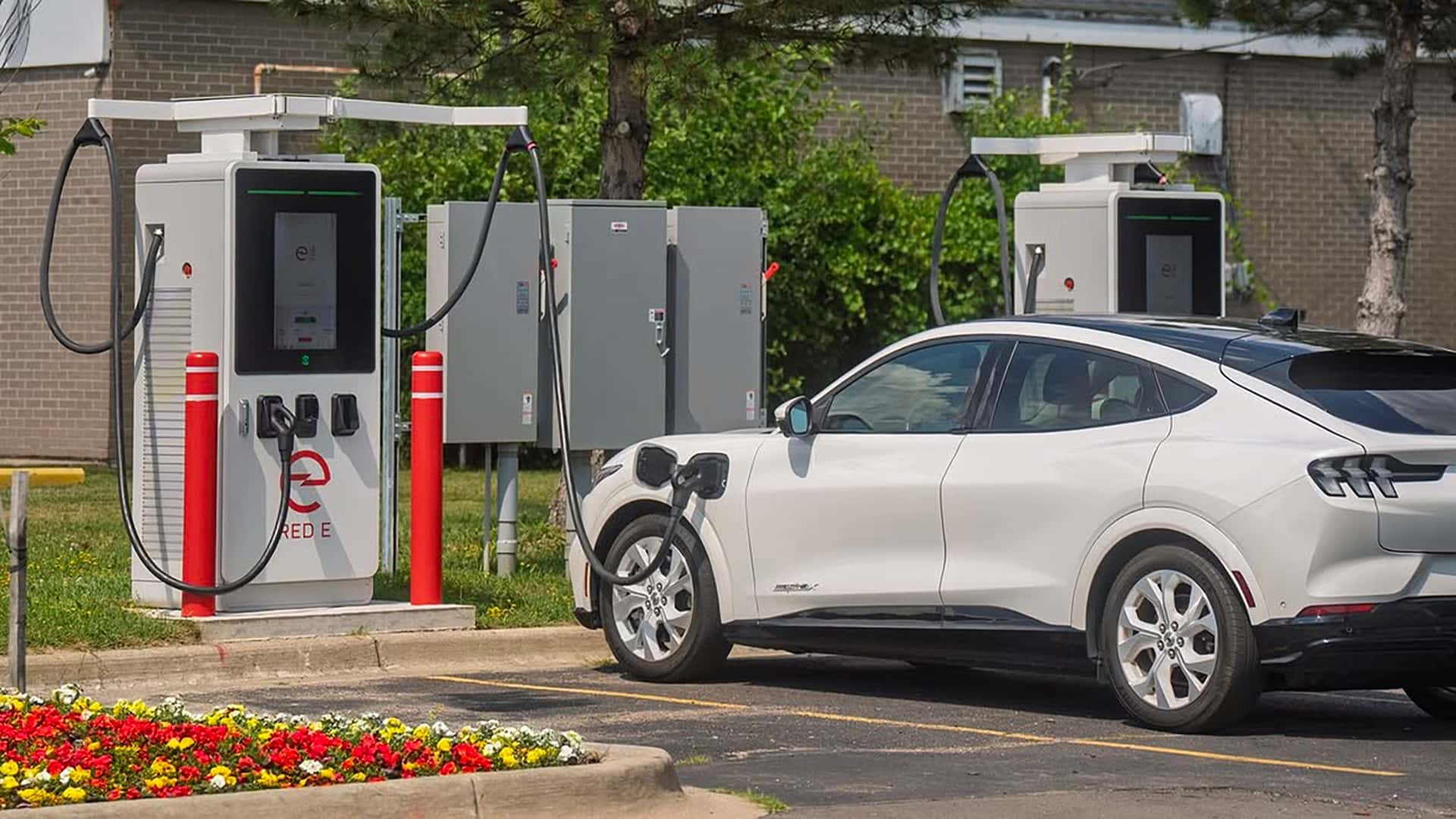
Electric vehicle (EV) drivers across the United States are set to experience a new level of convenience at charging stations. Red E Charge, a rapidly expanding DC fast charging network, has announced the activation of its ‘Plug & Charge’ functionality, branded as Red E Go, at numerous dispensers nationwide. This development marks a significant step towards streamlining the EV charging experience, addressing a common pain point for battery electric vehicle owners.
The introduction of Plug & Charge technology means that once an initial, swift account setup is completed, Red E Charge customers will no longer require a smartphone application or a physical credit card to initiate a charging session. This innovation is poised to simplify the refueling process for EVs, making it as effortless as traditional gasoline vehicle refueling.
The Dawn of Effortless EV Charging: Red E Go Explained
At its core, Plug & Charge technology, now implemented as Red E Go by Red E Charge, represents a crucial advancement in user-friendly electric vehicle charging. This system allows for seamless communication between the EV and the charging station.
Upon initial setup, an EV driver registers their vehicle details and preferred payment method within the Red E Charge smartphone application. This one-time registration securely links the vehicle to the driver’s account.
Once this foundational step is complete, subsequent charging sessions at compatible Red E Charge stations become remarkably simple. Drivers can arrive, plug their vehicle into the charger, and the charging process, along with the payment transaction, is automatically handled.
This eliminates several friction points that have traditionally been associated with public EV charging. The days of scanning QR codes, manually opening a charging app, or fumbling for a credit card at the pump are diminishing for Red E Charge users.
Such advancements are vital for accelerating the mainstream adoption of electric vehicles. By removing complexities from the charging process, Red E Charge is directly contributing to a more appealing and less intimidating experience for both new and seasoned EV drivers.
Expanding Footprint and Rapid Network Growth
Red E Charge’s commitment to enhancing the EV charging ecosystem extends beyond just convenience features. The Detroit-based company has been a significant player in the expansion of the nation’s charging infrastructure.
According to data compiled by the Department of Energy’s Alternative Fuels Data Center, Red E Charge currently boasts an extensive network of over 1,000 locations across 46 American states. These locations collectively host approximately 4,600 charging ports, providing widespread accessibility for EV owners.
A closer look at its fast-charging capabilities reveals 2,159 DC fast charging ports distributed across 579 stations. Additionally, around 600 of these locations also offer nearly 2,500 Level 2 charging ports, catering to various charging needs, from quick top-ups to longer dwell-time charging.
The network’s aggressive expansion strategy has positioned it as one of the fastest-growing DC charging networks in the country. A report by Paren highlighted Red E Charge as the fourth fastest-growing network in the second quarter of this year.
The company added an impressive 315 new fast charging ports during this period. This growth rate placed Red E Charge ahead of established networks such as Electrify America, EVgo, and Ionna, underscoring its dynamic market presence and commitment to infrastructure development. While trailing behind giants like Tesla, Walmart, and ChargePoint in raw numbers, its quarterly growth trajectory signifies robust market penetration and strategic expansion.
Prioritizing the User: Customer Satisfaction and Service Quality
Beyond geographical reach and numerical growth, Red E Charge is also making strides in customer satisfaction, a critical metric for long-term success in the competitive EV charging landscape.
In JD Power’s latest Electric Vehicle Experience (EVX) Public Charging Study, Red E Charge secured the fifth position in terms of overall satisfaction. The network achieved a score of 628 points on a 1,000-point scale. While this placed it slightly below the segment average of 666 points, it notably outranked several prominent competitors, including Electrify America, EVgo, and ChargePoint.
The top spots in the study were occupied by Ionna, the Mercedes-Benz Charging Network, the Rivian Adventure Network, and Tesla’s Supercharger network. Red E Charge’s strong showing indicates a focused approach to service quality and reliability, which are paramount for fostering driver confidence and encouraging greater EV adoption.
High levels of customer satisfaction are indispensable for any service-oriented industry, and EV charging is no exception. A positive charging experience directly contributes to reducing range anxiety and enhancing the overall appeal of electric vehicles for prospective buyers.
Diverse Power Outputs and Universal Compatibility
Red E Charge stations are engineered to cater to a wide spectrum of electric vehicles, offering flexibility in both power delivery and connector types. The power output at Red E Charge stalls varies significantly, ranging from a modest 10 kilowatts (kW) suitable for slower top-ups to an impressive 640 kW for ultra-fast charging needs. This broad range ensures that different EV models, with varying battery capacities and charging acceptance rates, can be efficiently accommodated.
In terms of compatibility, the network supports the most common charging standards in the industry. Drivers can find stations equipped with J1772, CCS1, NACS (North American Charging Standard), and CHAdeMO plugs. This multi-standard approach is crucial for ensuring that a diverse array of electric vehicles, irrespective of their manufacturer or origin, can utilize the Red E Charge network without compatibility issues.
Pricing for the charging services also varies, reflecting the diversity in power output and regional operational costs. According to data from DCFC Tracker, prices at Red E Charge stations typically range from $0.40 per kilowatt-hour ($/kWh) to $1.15/kWh. This transparent pricing structure allows drivers to understand the cost implications before initiating a charge, further contributing to a predictable and user-friendly EV charging experience.
The Broader Impact on EV Adoption and Infrastructure
Innovations like Red E Charge’s Plug & Charge functionality play a pivotal role in maturing the electric vehicle ecosystem. As the market for EVs continues its robust expansion, the ease and reliability of public charging infrastructure become non-negotiable requirements for mass adoption.
The friction points associated with traditional public charging methods, such as app downloads, account registrations, and payment processing, have often been cited as barriers to entry for potential EV owners. By eliminating these complexities, Red E Charge is directly contributing to a more seamless and intuitive experience that mirrors the simplicity of gasoline refueling.
Furthermore, the rapid growth and high customer satisfaction scores achieved by Red E Charge signal a healthy competition within the EV charging sector. This competition ultimately benefits consumers through improved services, expanded networks, and greater technological advancements.
As the United States pushes towards a more sustainable transportation future, the continuous enhancement of EV charging infrastructure by networks like Red E Charge will be instrumental in building confidence among consumers and accelerating the transition to electric mobility. The future of EV charging appears increasingly user-centric, efficient, and accessible, paving the way for a truly electrified transportation landscape.
FAQ Section
What is Red E Go?
Red E Go is Red E Charge’s branded Plug & Charge service, enabling electric vehicle drivers to start charging and process payments automatically by simply plugging in their EV, without needing a smartphone app or credit card after a one-time initial setup.
Which U.S. states have Red E Charge stations?
Red E Charge has established its presence in 46 states across the United States. Its network comprises over 1,000 locations, offering a widespread infrastructure for electric vehicle charging needs.
How many charging ports does Red E Charge operate?
Red E Charge operates approximately 4,600 charging ports in total. This includes 2,159 DC fast charging ports at 579 stations, and nearly 2,500 Level 2 charging ports at 600 locations.
How does Red E Charge compare to other networks in growth?
In the second quarter, Red E Charge was the fourth fastest-growing DC fast charging network in the U.S., adding 315 new ports. This placed it ahead of Electrify America, EVgo, and Ionna, according to a Paren report.
What is the customer satisfaction ranking for Red E Charge?
Red E Charge ranked fifth in overall customer satisfaction in JD Power’s latest Electric Vehicle Experience (EVX) Public Charging Study. It scored 628 points out of 1,000, outperforming Electrify America, EVgo, and ChargePoint.
What types of plugs and power outputs are available?
Red E Charge stations offer a diverse range of power outputs from 10 kilowatts to an impressive 640 kilowatts. They support multiple plug types, including J1772, CCS1, NACS (North American Charging Standard), and CHAdeMO, ensuring broad compatibility for various EV models.
What are the typical charging costs at Red E Charge stations?
According to DCFC Tracker, the pricing at Red E Charge stations generally ranges from $0.40 per kilowatt-hour to $1.15 per kilowatt-hour. These rates can vary depending on the specific location and the type of charging service being utilized by the driver.