
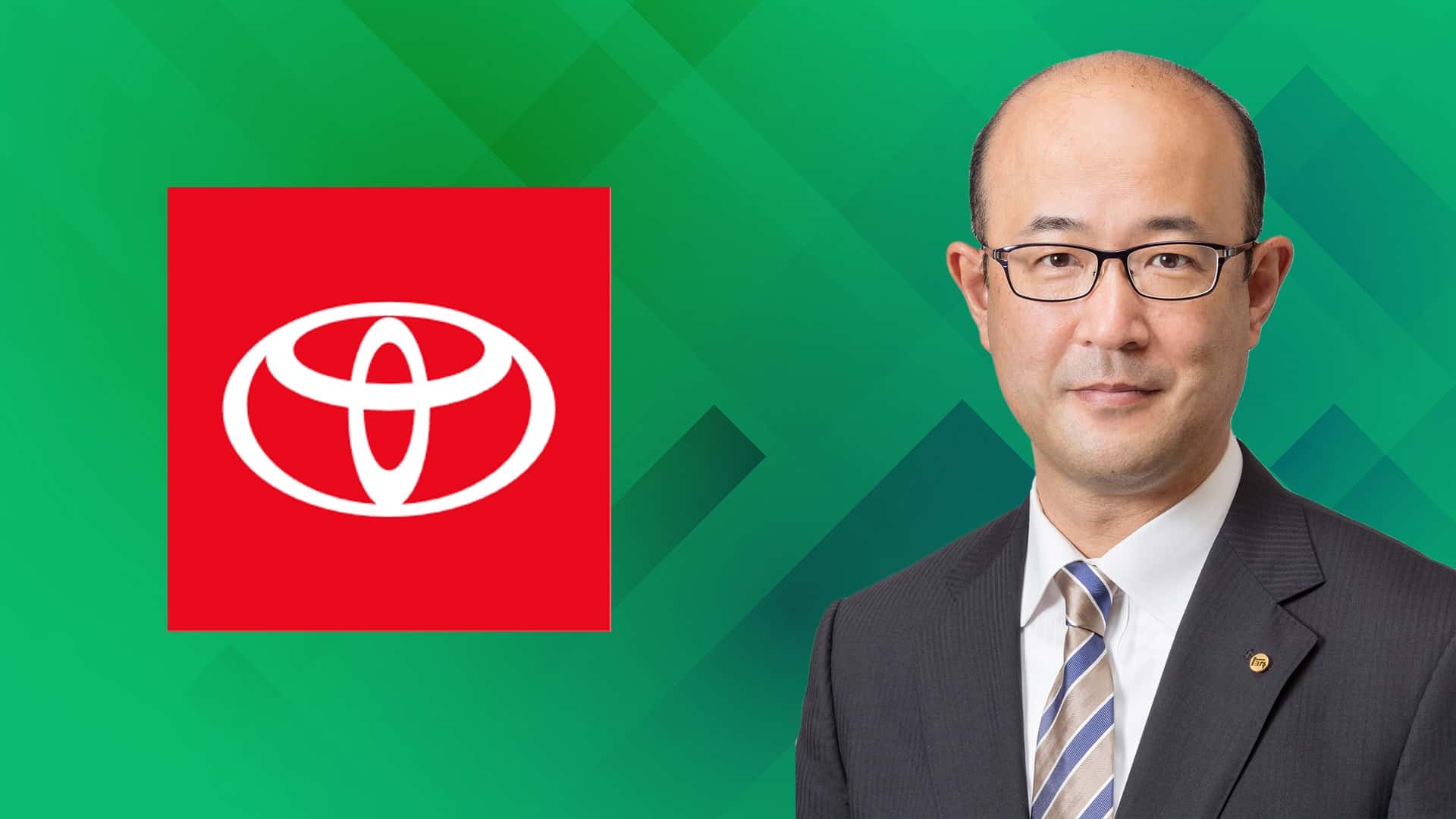
Toyota Motor Corporation, the world’s largest automaker, has announced a significant leadership change, appointing Kenta Kon, its current Chief Financial Officer, as the new President and Chief Executive Officer. This move marks a pivotal moment for the Japanese automotive giant, as it transitions from engineering-focused leadership to a financial expert at the helm, a shift not seen since 2009.
Key Takeaways
- Kenta Kon, Toyota’s CFO, has been named the new President and CEO, effective April 1.
- Kon replaces Koji Sato, whose tenure as CEO lasted just over a year, having taken the role in January 2023.
- This appointment signifies a strategic pivot, placing a financial expert in charge for the first time in 15 years, moving away from leaders with direct engineering or racing backgrounds.
- The leadership change is expected to bolster Toyota’s financial robustness and international competitiveness, particularly against the backdrop of rising Chinese automotive rivals.
- Koji Sato will assume new roles as Vice Chairman and Chief Industry Officer, focusing on broader industry initiatives.
- Under Sato’s brief leadership, Toyota’s ‘multi-pathway’ powertrain strategy proved successful, contributing to a 111% rise in the company’s shares.
A Pivotal Leadership Shift at Toyota
In a notable corporate development, Toyota Motor Corporation announced today that Koji Sato, who assumed the CEO role in January 2023, will step down on April 1. His replacement, Kenta Kon, currently serves as the company’s Chief Financial Officer and is widely recognized for his instrumental role in shaping the automaker’s impressive profit margins.

This leadership transition signals a significant strategic recalibration for the globe’s largest car manufacturer. For the first time since 2009, Toyota will be led by someone without a direct background in automotive engineering or racing, a lineage that defined the tenures of both Sato and his predecessor, now-Chairman Akio Toyoda.
The Rise of a Financial Strategist
Kenta Kon’s appointment as President and Chief Executive Officer places a strong emphasis on financial acumen and strategic investment at the highest level of Toyota’s management. His extensive experience as CFO positions him uniquely to navigate the complex economic currents shaping the global automotive industry.
Beyond his current CFO role, Kon also holds the position of CFO for Woven by Toyota, the automaker’s advanced software unit. This dual responsibility underscores his involvement in critical future-oriented initiatives, combining financial oversight with technological innovation.

During a press conference, Kon addressed the implications of a finance chief leading the engineering-driven company, as reported by *Nikkei Asia*. He articulated his vision, stating, “My role is to create a robust investment environment where they can freely experiment with various ideas.” This suggests a commitment to empowering Toyota’s engineers while ensuring fiscal prudence.
Alongside Kon’s elevation, Yoichi Miyazaki, who currently serves as Toyota’s Operating Officer (OO), will assume Kon’s previous role as CFO, effective April 1. Miyazaki will also retain his current OO position, ensuring continuity in operational management while integrating financial strategy.
Koji Sato’s Tenure and Strategic Vision
Koji Sato’s tenure as CEO, though brief, was marked by a steadfast commitment to Toyota’s distinctive “multi-pathway” powertrain strategy. This approach prioritized a diverse portfolio of vehicle technologies, including hybrids, plug-in hybrids, fuel-cell vehicles, and incrementally expanding electric vehicles (EVs), rather than an exclusive focus on battery-electric vehicles.
This strategic stance notably diverged from many competitors who made substantial early bets on an all-EV future. As various global markets encountered “harsh realities of changing policies and trade barriers” related to EV adoption, Toyota’s diversified strategy proved resilient and financially rewarding. Under Sato’s leadership, the company’s shares recorded an impressive 111% increase, reflecting strong investor confidence in its balanced approach.
Navigating Global Competition: The China Factor
The appointment of Kenta Kon, a finance expert, is also being interpreted as a strategic fortification against escalating international competition, particularly from rapidly emerging Chinese rivals. Toyota officials, in statements carried by *Nikkei Asia*, acknowledged the intensity of this challenge, stating, “As the automotive industry faces a challenging business environment, there is a growing need to accelerate practical initiatives for industry collaboration to strengthen international competitiveness.”
The Japanese automotive sector is significantly intertwined with Toyota, which holds substantial stakes in other major Japanese automakers such as Subaru, Mazda, Isuzu, and Suzuki. Its extensive network of subsidiary companies forms a crucial part of the entire sector’s supply chain. Consequently, the trajectory of Toyota profoundly impacts Japan’s broader car business.
This leadership adjustment is widely perceived as a proactive measure to “shor[e] up defenses against BYD and China’s other automakers.” The strategic imperative is to ensure Toyota maintains its global leadership amidst intense price competition and rapid technological advancements spearheaded by companies like BYD.
Toyota’s Evolving EV Pathway
While maintaining its multi-pathway strategy, Toyota has been progressively enhancing its portfolio of all-electric vehicles. The company’s cautious yet consistent expansion into the EV segment demonstrates a pragmatic approach to market demands and regulatory shifts, ensuring it remains competitive across all powertrain categories.
Under the new leadership, Toyota is expected to continue its calculated investment in EV technologies, leveraging its financial strength to optimize research and development and production efficiencies. The strategic oversight of Kenta Kon, combined with the continued engineering expertise within the organization, aims to balance profitability with technological progression in the electrification race.
Broader Industry Leadership and Future Outlook
Koji Sato, in his new capacity as Vice Chairman and Chief Industry Officer (CIO), will shift his focus to broader industry collaboration and strategic partnerships. This redefined role is designed to address macro-level challenges and opportunities facing the automotive sector at large.
Adding to his influential position, Sato was recently appointed the head of the Japanese Automobile Manufacturers Association (JAMA). He has also served as the Vice Chair of Keidanren (Japan Business Federation) since May of the previous year. These significant external roles highlight Toyota’s commitment to influencing industry-wide policies and fostering a collaborative environment for the Japanese automotive ecosystem.
The organizational reshuffle is structured to create clear lines of responsibility: “under this new leadership structure, Sato will focus on the broader industry, while Kon will focus on internal company management.” This clear division of labor aims to enhance both internal operational efficiency and external strategic positioning.
The Road Ahead for Toyota
The appointment of Kenta Kon as Toyota CEO signals a new era for the automaker, one where financial strategy and operational resilience are paramount. Amidst global shifts in manufacturing, technology, and market competition, Toyota is positioning itself to not only adapt but to lead.
The blend of Kon’s financial acumen, Sato’s industry-wide leadership, and Toyota’s deep-rooted engineering prowess will be crucial in shaping the company’s response to the challenges posed by electrification, digitalization, and intensifying geopolitical dynamics. The world will watch closely as this new leadership team steers Toyota into its next chapter of global automotive dominance.
Frequently Asked Questions
Who is the new CEO of Toyota?
Kenta Kon has been appointed as the new President and Chief Executive Officer of Toyota Motor Corporation. He is currently the company’s Chief Financial Officer (CFO) and is known for his significant contributions to Toyota’s financial performance. His appointment marks a strategic shift towards financial leadership.
Why did Toyota change its CEO so quickly?
Koji Sato’s tenure as CEO lasted just over a year, from January 2023 until April 1. While the article does not specify the exact reasons for the rapid change, it emphasizes a strategic shift towards a financial expert to bolster international competitiveness and internal management amidst a challenging global automotive environment.
What does Kenta Kon’s appointment mean for Toyota’s EV strategy?
Kenta Kon’s background as a financial expert suggests a focus on creating a robust investment environment for technological development. Toyota is expected to continue its “multi-pathway” powertrain approach, gradually expanding its electric vehicle (EV) portfolio while ensuring fiscal strength and profitability across all segments.
What role will Koji Sato play after stepping down as CEO?
Koji Sato will assume new, significant roles as Vice Chairman and Chief Industry Officer (CIO) for Toyota. In these capacities, he will focus on broader industry collaboration, external strategic initiatives, and represent Toyota in key industry associations like JAMA and Keidanren, shifting from internal company management.
How does this leadership change address competition from Chinese automakers?
Toyota officials explicitly linked the change to strengthening “international competitiveness” against rivals like BYD and other Chinese automakers. The appointment of a finance chief like Kenta Kon is seen as a move to reinforce Toyota’s financial defenses and strategic agility in a highly competitive global market, safeguarding its dominant position.
What is the significance of appointing a finance expert as CEO for Toyota?
This is the first time since 2009 that Toyota has appointed a financial expert as CEO, breaking a long-standing tradition of leaders with engineering or racing backgrounds. It signifies a strategic emphasis on financial resilience, optimized investment, and robust internal management, crucial for navigating complex global economic and competitive pressures in the automotive industry.