
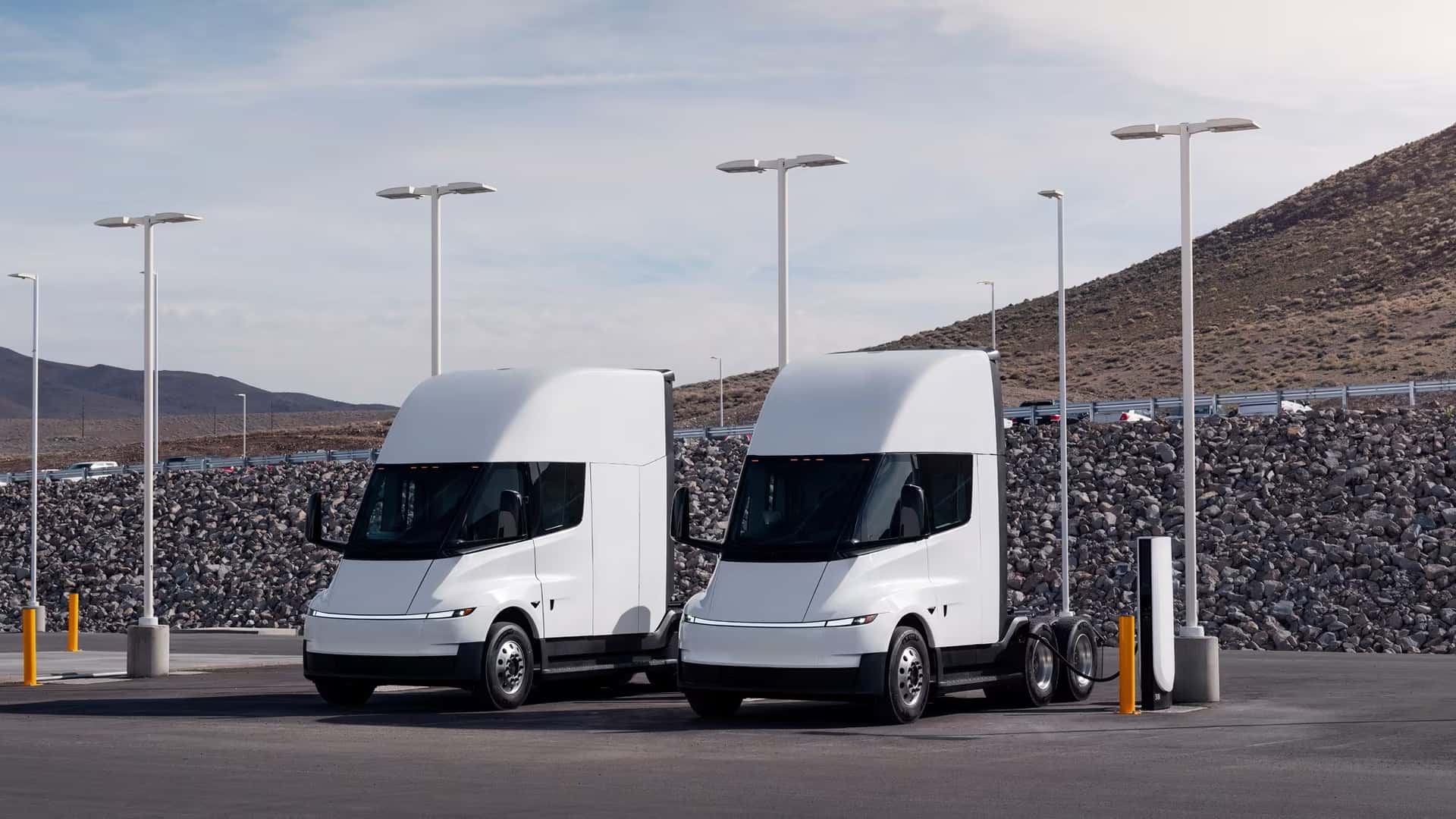
Key Takeaways:
- Tesla is initiating a significant expansion of its high-power charging network across Europe to support the imminent launch of its Semi electric truck.
- The initial phase involves deploying over 100 Megachargers at 21 stations strategically located across Germany, France, the United Kingdom, Sweden, and the Benelux countries.
- These Megachargers, capable of delivering up to 1.2 megawatts, can recharge a Tesla Semi’s battery to 60% in approximately 30 minutes, critical for commercial operations.
- In addition to a public network, Tesla will offer Megachargers and Basechargers for direct purchase by logistics companies, providing comprehensive charging solutions.
- The rollout, with first Semi deliveries slated for next year, underscores Tesla’s commitment to transforming European heavy-duty freight towards sustainable, electric mobility.
Tesla is embarking on a pivotal infrastructure expansion in Europe, setting the stage for the highly anticipated launch of its all-electric Semi truck on the continent. This ambitious undertaking, central to Tesla’s European Megacharger rollout, involves the installation of more than 100 megawatt-capable charging stalls, distributed across 21 strategic locations.

The move represents a critical step in decarbonizing the heavy-duty transport sector, addressing the fundamental need for robust and rapid charging solutions that are indispensable for the operational viability of electric freight. As European markets prepare for the arrival of the Tesla Semi, a comprehensive charging ecosystem is paramount to ensure seamless adoption and efficiency for fleet operators.
The Strategic Importance of Charging Infrastructure
The introduction of electric heavy-duty vehicles like the Tesla Semi demands a paradigm shift in how commercial transport operates, with charging infrastructure being the cornerstone of this transformation. Unlike passenger electric vehicles, commercial trucks require ultra-fast charging to minimize downtime and maintain rigorous delivery schedules. This necessitates a network capable of delivering enormous power swiftly.
Tesla’s commitment to building this specialized charging network proactively mitigates potential adoption barriers. By ensuring that the necessary infrastructure is in place, or well on its way, before the significant fleet deployments, the company aims to demonstrate the feasibility and economic benefits of electric trucking in Europe.

Initial Rollout Details and Key Locations
According to Dan Priestley, Tesla’s head of Semi development, the initial phase of Tesla’s European Megacharger rollout will see over 100 Megachargers strategically placed. These will be clustered at 21 dedicated stations, laying the groundwork for widespread electric truck adoption across key European logistics corridors.
The inaugural countries slated to receive these advanced charging stations are Germany, France, the United Kingdom, Sweden, Belgium, the Netherlands, and Luxembourg. This selection highlights major economic hubs and crucial transit routes within the European Union, indicating a focused approach to support high-volume freight operations where the impact of electric trucks can be maximized.
Technical Prowess of Megachargers
The Tesla Megacharger technology is engineered to meet the demanding energy requirements of heavy-duty electric vehicles. Each Megacharger unit can deliver a formidable 1.2 megawatts of power, a capacity designed to significantly reduce charging times for large battery packs.
This ultra-high power output allows a Tesla Semi to replenish its substantial battery pack to approximately 60% state of charge in roughly 30 minutes. Such rapid charging is essential for commercial trucking, enabling drivers to complete quick turnarounds and adhere to strict logistical timelines without prolonged interruptions. The European Megachargers will incorporate a 1,000-volt power cabinet and feature two stalls, each capable of delivering up to 1,500 amperes to an electric vehicle.
Interoperability and Charging Standards
The Tesla Semi and its dedicated Megachargers are equipped with the Megawatt Charging System (MCS 3.2) connector. This proprietary standard is designed specifically for the high-power demands of electric heavy-duty trucks, distinguishing it from the more common CCS (Combined Charging System) used for passenger vehicles.
While the MCS 3.2 connector ensures optimal performance for the Semi, Tesla acknowledges the need for broader compatibility within Europe’s diverse charging landscape. To address this, Tesla plans to provide CCS adapters to Semi customers, allowing them the flexibility to recharge at existing CCS2 stalls across the continent where Megacharger availability might be initially limited. This strategic provision helps integrate the Semi into the wider European electric vehicle charging ecosystem, enhancing operational flexibility for fleet operators.
Expanding the Charging Ecosystem
Tesla’s strategy for Tesla’s European Megacharger rollout extends beyond a public network, encompassing a versatile approach to address varying logistical needs. This dual strategy aims to provide comprehensive charging solutions, from public access points to private, on-site installations for large-scale fleet operations.
The company recognizes that different businesses will have distinct requirements for charging infrastructure, whether it’s for transient route charging or consistent overnight depot charging. By offering both public access and private procurement options, Tesla is facilitating a more robust and adaptable transition to electric heavy-duty transport.
Public Network vs. Private Solutions
Beyond establishing public Megacharger stations, Tesla is also making its advanced charging hardware available for direct purchase by businesses. This approach targets logistics hubs, distribution centers, and large fleet operators who require dedicated, on-site charging capabilities to manage their electric truck fleets efficiently.
The order books for both the high-capacity Megacharger and the lower-powered Basecharger are already open, with initial European deliveries scheduled for mid-next year. A Megacharger bundle, which includes a power cabinet and two charging stalls, is priced at €163,000. This investment allows companies to integrate state-of-the-art charging technology directly into their existing infrastructure, ensuring consistent access and reducing reliance on public charging facilities.
Basecharger: An Alternative for Flexible Charging
For operations that do not require the ultra-rapid charging speeds of the Megacharger, Tesla offers the Basecharger. This all-in-one unit is designed for companies that can accommodate longer charging periods, often overnight or during scheduled downtime at depots.
The Basecharger, priced at €17,000, requires a mandatory two-unit order. It provides a DC output of 120 kW and an AC output of 125 kW. According to Tesla, the Basecharger can increase the Semi’s state of charge to 80% in approximately four hours, making it an efficient and economical solution for depot charging where trucks can remain stationary for extended periods.
Economic Implications for Fleet Operators
The strategic deployment of Tesla’s European Megacharger rollout, coupled with the option for private charging solutions, has significant economic implications for fleet operators. Investing in electric trucks and the necessary charging infrastructure represents a substantial upfront cost, but promises considerable long-term savings through reduced fuel and maintenance expenses compared to diesel counterparts.
Efficient charging networks are crucial for maximizing uptime, which directly translates to profitability for freight companies. The ability to quickly recharge on routes or reliably charge overnight ensures that electric trucks can maintain demanding operational schedules, making the transition to electric fleets not only environmentally beneficial but also economically compelling.
The Broader Impact on European Logistics
The advent of Tesla’s European Megacharger rollout and the Semi’s introduction are set to profoundly influence the future of freight logistics across the continent. This initiative aligns with broader European efforts to accelerate the energy transition and achieve ambitious climate neutrality targets.
The shift towards electric heavy-duty vehicles will not only reduce direct tailpipe emissions but also stimulate innovation in renewable energy sources for charging, grid management, and supply chain optimization. It marks a crucial step in transforming one of the most carbon-intensive sectors of the economy.
Driving Decarbonization and Sustainability
The European Union has set aggressive targets for reducing greenhouse gas emissions, and the transport sector is a key area for intervention. The deployment of electric trucks, supported by a robust charging infrastructure, is instrumental in achieving these decarbonization goals.
Electric trucks emit zero tailpipe emissions, contributing to cleaner air in urban areas and reducing the overall carbon footprint of goods movement. Tesla’s efforts will play a vital role in encouraging more widespread adoption of sustainable transport solutions, fostering a cleaner and more environmentally responsible freight industry across Europe.
Competitive Landscape and Future Outlook
Tesla’s entry into the European electric truck market with a dedicated charging network intensifies competition within the heavy-duty EV segment. Traditional truck manufacturers and new entrants are all vying for market share in this rapidly evolving space. The readiness of charging infrastructure will be a key differentiator.
The strategic deployment of Megachargers not only supports Tesla’s own vehicles but also signals a broader commitment to building an advanced charging ecosystem that could influence future standards and collaborations. As more electric trucks from various manufacturers enter the market, the scalability and accessibility of high-power charging will become even more critical for sustainable growth in the electric commercial transport sector.
Frequently Asked Questions (FAQ)
What is the Tesla Semi’s European launch timeline?
The Tesla Semi is slated for its official European launch with the first customer deliveries scheduled to commence in the middle of next year. This marks a significant milestone for Tesla’s expansion into the heavy-duty electric vehicle market across the continent, directly challenging traditional diesel trucks and supporting sustainable freight initiatives.
How many Megachargers are planned for initial deployment in Europe?
Tesla plans an initial deployment of over 100 megawatt-capable Megachargers. These chargers will be distributed across 21 strategically located stations throughout key European countries. This extensive rollout aims to establish a foundational charging infrastructure to support the upcoming European launch of the Tesla Semi.
Which European countries will receive the first Megacharger stations?
The first Tesla Megacharger stations in Europe are planned for Germany, France, the United Kingdom, Sweden, Belgium, the Netherlands, and Luxembourg. These countries represent significant logistical hubs and vital transport corridors, making them ideal locations to initiate the deployment of high-power electric truck charging infrastructure.
What is the charging capacity of a Tesla Megacharger?
A Tesla Megacharger can deliver up to 1.2 megawatts (1,200 kilowatts) of power. This ultra-high capacity allows the Tesla Semi to recharge its large battery pack quickly, achieving approximately 60% state of charge in about 30 minutes, which is crucial for maintaining operational efficiency in commercial trucking.
Can other electric trucks use Tesla’s Megachargers in Europe?
Tesla’s Megachargers utilize the MCS 3.2 connector, which is specific to the Tesla Semi. While other power-hungry electric trucks with different connector types won’t be able to use these chargers directly, Tesla will provide CCS adapters to Semi customers, enabling them to charge at widely available CCS2 stalls across Europe.
What is the purpose of the Tesla Basecharger?
The Tesla Basecharger is a lower-powered charging solution designed for logistics companies that can accommodate longer charging periods, such as overnight depot charging. With a DC output of 120 kW and an AC output of 125 kW, it can charge a Semi to 80% in about four hours, offering a flexible and cost-effective option for fleet operators.
How much do Tesla’s private charging solutions cost?
A Tesla Megacharger bundle, including a power cabinet and two stalls for private installation, costs €163,000. The lower-powered Basecharger is priced at €17,000, with a mandatory minimum order of two units. These options allow businesses to establish dedicated charging infrastructure tailored to their operational needs.