
KEY TAKEAWAYS
- LG Energy Solution reported record quarterly earnings, strategically leveraging robust demand in two key markets.
- The company’s energy storage battery business in the U.S. saw significant growth, driven by the needs of power-intensive AI data centers and critical grid infrastructure upgrades.
- Despite earlier slowdowns in North American electric vehicle battery production, strong EV sales across Europe provided a substantial boost to LGES’s automotive battery sector.
- Financial performance was further bolstered by manufacturing credits under the U.S. Inflation Reduction Act and compensation from automakers for unfulfilled purchase commitments.
- LGES is actively expanding its North American supply chain and manufacturing capabilities, including a major lithium off-take agreement and a new $2 billion gigafactory in Michigan.
SEO Keyword: LG Energy Solution
LG Energy Solution Posts Record Q3 Earnings Amid Shifting Market Dynamics
Seoul, South Korea – LG Energy Solution (LGES), a global leader in battery manufacturing and a key supplier to major electric vehicle (EV) producers like Tesla, announced record quarterly earnings on Thursday. The robust financial performance for the third quarter of 2023 was primarily propelled by a strategic pivot towards burgeoning energy storage battery demand in the United States and a significant surge in electric vehicle sales across Europe.
This remarkable achievement underscores the company’s adaptability in navigating a dynamic global battery market. Preliminary results indicate a substantial year-over-year revenue growth of 59%, reaching an impressive $7.21 billion. Concurrently, operating profit saw a 25% increase, climbing to $565 million. The full official results are anticipated to be disclosed in November, providing further granular detail on this strong performance.
Navigating the North American EV Market and The Rise of Stationary Storage
The past few years have presented considerable challenges and opportunities for battery manufacturers in North America. Initial ambitious forecasts for EV adoption led to substantial production expansions, which in some instances outpaced actual market demand. LG Energy Solution, like others, experienced a deceleration in its electric vehicle battery production in the region due to a slower-than-expected uptake in EV sales.
However, the company adeptly offset these setbacks by capitalizing on a rapidly expanding market for stationary energy storage batteries. These systems are experiencing unprecedented demand, fueled by the insatiable power requirements of advanced AI data centers and the urgent need for comprehensive grid upgrades to enhance reliability and integrate renewable energy sources. LGES’s proactive investment in this sector has clearly begun to yield significant returns, transforming a potential weakness into a formidable strength.
European EV Boom Drives Automotive Battery Demand
While the North American EV landscape presented some headwinds, the European market offered a contrasting picture of accelerated growth. Europe has emerged as a powerhouse for plug-in vehicle sales, driven by increasingly stringent emission regulations, robust government incentives, and a growing consumer appetite for sustainable transportation solutions.
LG Energy Solution’s plant in Poland has been a primary beneficiary of this trend. According to reports from The Korea Herald, the facility is witnessing exceptionally strong demand from leading European automakers such as Volkswagen and Renault, whose electric vehicle sales continue to expand across the continent. This strong performance in Europe has significantly buoyed LGES’s overall EV-battery business, contributing substantially to its record quarterly earnings.
Strategic Advantages: U.S. Incentives and Local Production
A critical factor contributing to LG Energy Solution’s surge in earnings has been the strategic advantage derived from U.S. government policies. The U.S. Inflation Reduction Act (IRA) has played a pivotal role, particularly through its Section 45X Advanced Manufacturing Production tax credits.
These credits provide financial incentives for domestic battery manufacturing, significantly improving the profitability of locally produced battery cells and modules. The original article notes that while certain pro-climate policies enacted under the Biden administration faced rollbacks, the Section 45X credits for domestic battery manufacturing were largely preserved and remain available through 2032. This long-term commitment to supporting U.S.-based battery production offers LGES a stable and predictable revenue stream.
Furthermore, the company has benefited from compensation received from automakers. These payments address instances where automotive partners failed to meet their minimum electric vehicle battery purchase requirements, as reported by Reuters. Such contractual clauses provide an additional layer of financial stability for LGES in a fluctuating market.
Expanding North American Supply Chain and Manufacturing Footprint
In a clear demonstration of its commitment to the North American market, LG Energy Solution is aggressively expanding its regional supply chain and manufacturing capabilities. This localization strategy is crucial for meeting growing demand, mitigating supply chain risks, and maximizing the benefits of incentives like the IRA.
A significant step in this direction was the multi-year off-take agreement signed with Canada’s Electra Lithium. Under this landmark deal, LGES will receive a substantial 240,000 metric tonnes of raw lithium concentrate, a vital component for battery production, directly from Electra’s mine in Quebec. This secures a crucial raw material source within North America, enhancing supply security and regional economic integration.
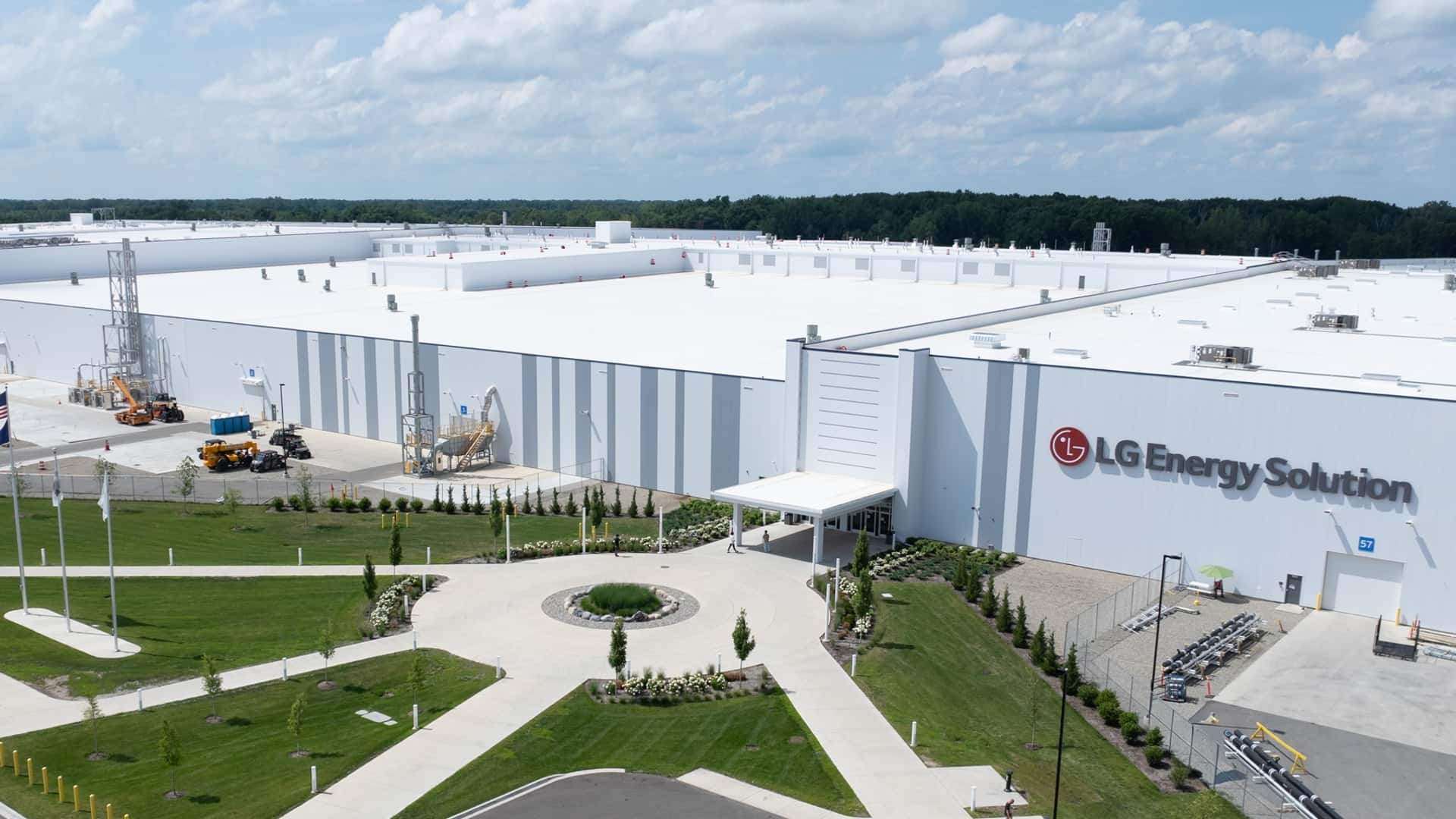
Further cementing its North American presence, LG Energy Solution officially opened its $2 billion gigafactory in Lansing, Michigan, in August. This state-of-the-art facility is strategically positioned to serve both the automotive and stationary storage sectors. It is currently producing lithium-iron-phosphate (LFP) batteries specifically for Tesla’s energy storage systems and nickel-manganese-cobalt (NMC) EV batteries for Toyota, showcasing the company’s diverse product portfolio and its critical role in the electric future.
Future Outlook and Industry Implications
LG Energy Solution’s record-breaking third quarter highlights a strategic masterclass in navigating complex market dynamics. By effectively balancing slowdowns in certain EV segments with explosive growth in energy storage and leveraging regional market strengths like the European EV boom and U.S. manufacturing incentives, the company has established a resilient business model.
The emphasis on localizing both manufacturing and supply chains in North America not only de-risks operations but also positions LGES to be a central player in the region’s energy transition. This dual-pronged approach, focusing on diverse battery applications and geographical market strengths, provides a robust foundation for sustained growth and reinforces LG Energy Solution’s status as a formidable force in the global battery industry.
FAQ Section
What factors contributed to LG Energy Solution’s record Q3 earnings?
LG Energy Solution’s record Q3 earnings were primarily driven by strong demand for energy storage batteries in the U.S., serving AI data centers and grid upgrades. Concurrently, a robust electric vehicle market in Europe, with high sales for brands like Volkswagen and Renault, significantly boosted the company’s EV battery segment. U.S. manufacturing tax credits also played a crucial role.
How has the North American market evolved for LG Energy Solution?
Initially, LG Energy Solution faced slower-than-expected electric vehicle sales in North America, leading to a temporary slowdown in EV battery production. However, the company successfully pivoted to meet the escalating demand for stationary energy storage systems, which are vital for powering AI data centers and modernizing the electrical grid, thereby offsetting earlier losses.
What role do U.S. government incentives play in LGES’s profitability?
U.S. government incentives, specifically the Section 45X Advanced Manufacturing Production tax credits under the Inflation Reduction Act, significantly bolster LG Energy Solution’s profitability. These credits encourage domestic battery manufacturing, making local production more cost-effective. These incentives are a stable financial benefit, available through 2032, and support the company’s U.S. operations.
Where is LG Energy Solution expanding its manufacturing and supply chain?
LG Energy Solution is actively expanding its manufacturing and supply chain in North America. This includes a multi-year agreement with Canada’s Electra Lithium for raw lithium concentrate from Quebec and the recent opening of a $2 billion gigafactory in Lansing, Michigan. These initiatives aim to localize production and secure critical raw materials.
Which types of batteries does LG Energy Solution produce at its new U.S. facilities?
At its new $2 billion gigafactory in Lansing, Michigan, LG Energy Solution is producing two distinct types of batteries. The facility manufactures lithium-iron-phosphate (LFP) batteries specifically for Tesla’s energy storage systems. Additionally, it produces nickel-manganese-cobalt (NMC) batteries, which are designated for electric vehicles manufactured by Toyota.
What is the significance of the energy storage market for LGES?
The energy storage market holds immense significance for LGES, acting as a crucial counterbalance to fluctuations in EV battery demand. Driven by the energy needs of AI data centers and extensive grid modernization projects, this sector provides consistent high demand. LGES’s strategic focus on stationary storage ensures diversification and resilience in its overall business portfolio.
How are LGES’s European operations performing?
LG Energy Solution’s European operations are performing exceptionally well, largely fueled by robust electric vehicle sales across the continent. The company’s plant in Poland is experiencing strong demand, particularly from major automakers like Volkswagen and Renault, whose increasing EV sales underscore Europe’s leadership in electric mobility adoption.