
Key Takeaways:
- Geely Auto Group has launched a new electric vehicle (EV) battery capable of handling charging speeds exceeding 1,000 kilowatts, alongside a groundbreaking 2.2-megawatt charger.
- The automaker has engineered a suite of novel solutions to actively prevent rapid aging and degradation, a common concern with ultra-fast EV charging.
- These innovations include structural changes to battery cells and raw materials, a new manufacturing process, an AI-powered thermal management system, and an extended warranty period.
- The technology aims to balance unprecedented charging speeds with long-term battery health, setting a new benchmark in the competitive EV market.
In a significant leap forward for electric vehicle technology, Chinese automotive giant Geely Auto Group has introduced an innovative battery system designed to withstand extreme charging speeds without compromising long-term durability. Unveiled at a recent launch event in Ningbo, China, the company’s new battery and a formidable 2.2-megawatt (MW) charging station mark a pivotal moment in the global race for faster and more efficient EV charging solutions.

While industry leaders in Western markets are pushing toward 600-750 kilowatt (kW) charging capabilities, Chinese automakers, including BYD and Geely, have already surpassed the 1,000 kW threshold for passenger vehicles. This rapid advancement, however, traditionally presents a critical challenge: accelerated battery degradation due to the intense energy flow. Geely’s latest announcement directly addresses this concern, positioning its new battery as a robust solution to the inherent trade-off between speed and longevity.
Geely’s New Battery: A Paradigm Shift in Ultra-Fast Charging
At the heart of Geely’s latest innovation lies its ability to manage immense power. The newly revealed 2.2 MW charger is reportedly capable of dispensing this colossal power from a single gun, though specific high-end EVs under the Geely Auto Group umbrella will peak at approximately 1,100 kW. Significantly, Geely claims this is the world’s first charging station where two EVs can simultaneously draw megawatt-level speeds.
Jerry Gan, CEO of Geely Auto Group, underscored the company’s commitment to sustainable performance. “We do not advocate fast-charging technologies at the expense of lifespan,” Gan stated, acknowledging the potential pitfalls of high-speed charging. He added, “If a battery frequently fast-charged is not maintained or repaired, its lifespan suffers irreversible decline.” This emphasis on longevity forms a cornerstone of Geely’s new battery development.

Performance and Warranty Enhancements
The performance capabilities of Geely’s new Ultra Short Blade Battery were dramatically showcased in a live demonstration. A Lynk & Co 10 electric vehicle, powered by this advanced battery, achieved a charge from 10 percent to 97 percent in an astonishing 8 minutes and 40 seconds. This feat far surpasses the charging speeds of even the fastest EVs currently available in the U.S., such as the Lucid Gravity and Porsche Cayenne Electric, which typically peak around 400 kW. Most conventional mass-market models in the U.S. require approximately 30 minutes for a 10-80 percent charge.
To instill confidence in the long-term health of its new battery, Geely has extended its warranty significantly. The standard warranty has been increased from eight years or 150,000 kilometers (93,205 miles) to eight years or 200,000 kilometers (124,000 miles). This move underscores Geely’s belief in the efficacy of its integrated technologies designed to combat accelerated aging, a critical factor for consumers considering electric vehicle ownership.
Understanding Battery Degradation in Fast Charging
Geely’s engineers have pinpointed two primary causes of battery aging under high-speed charging conditions: lithium plating and extreme temperatures. These phenomena are exacerbated by the rapid influx of power characteristic of megawatt-level charging.
According to Geely, megawatt speeds contribute significantly to heat generation within the battery, accounting for an estimated 60 percent of the total heat. This is primarily due to the substantial current being pushed through the internal pathways of the cells. Electrochemical reactions contribute another 35 percent of the heat, with the remaining portion attributed to “entropic” heat, which arises from electrode reactions.
Lithium plating represents another major degradation factor. This occurs when lithium ions, during charging, flood the anode—the component of the cell where electrons travel. If these ions are not absorbed properly, they can accumulate on the anode’s surface. Excessive accumulation leads to the formation of lithium dendrites, microscopic spikes that grow within the cell. These dendrites pose a severe risk, potentially causing internal short circuits and irreversible damage to the battery’s structure and performance.
Geely’s Comprehensive Solutions for Battery Longevity
To counteract these challenges, Ren Xiangfei, Chief Engineering Scientist at Geely Auto Group, outlined a multi-faceted approach. The company has implemented modifications across various aspects, including the cell structure, raw materials, manufacturing processes, and the integration of a sophisticated AI-powered charger management system. These innovations collectively prevent the battery from exceeding its crucial thermal limits.
“In an ideal world, the ions settle into the graphite evenly and smoothly,” Xiangfei explained, highlighting the engineering ambition behind their solutions.
Cell Design Innovations
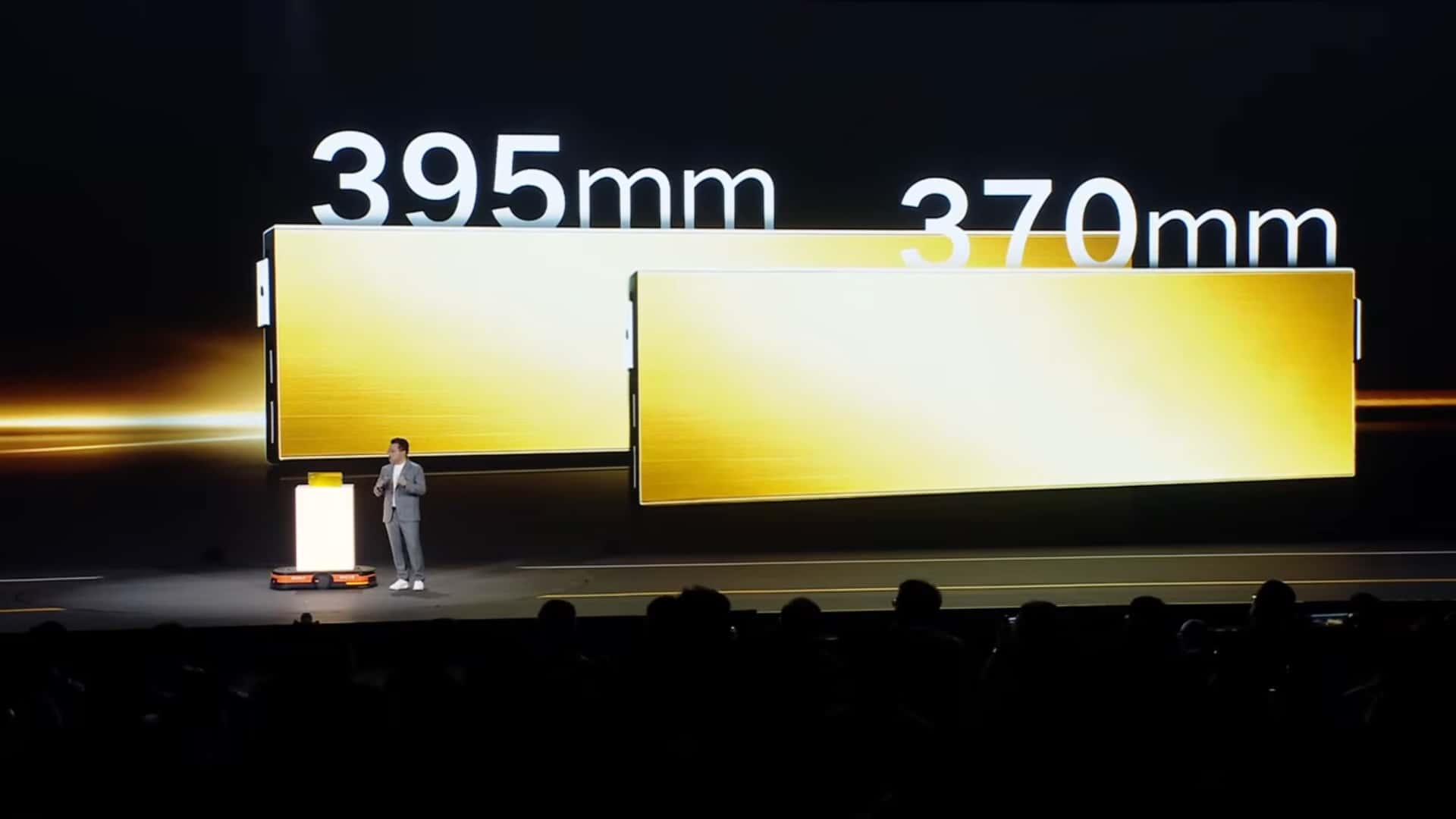
The Ultra Short Blade Battery cell is available in two compact sizes: 395 mm and 370 mm in length. These dimensions are notably smaller than Geely’s previous 580 mm cell and the industry average of around 960 mm. The reduction in cell size is strategic; it shortens the migration path for lithium ions during charging and discharging cycles. This abbreviated journey directly translates to lower internal resistance and, consequently, reduced heat generation within the battery cells.
Material and Structural Enhancements
Geely’s engineers have also implemented fundamental structural changes to both the cathode and the anode to proactively prevent lithium plating. On the cathode side, the introduction of “high entropy elements” effectively widens the pathways through which ions migrate from the cathode to the anode. Xiangfei likened this improvement to “turning a single lane into a multi-lane highway.” Similarly, structural modifications to the graphite anode are described as equivalent to “building a flyover,” facilitating smoother and more efficient ion movement and absorption.
Lithium Pulse Restoration Technology
To further combat ion accumulation, Geely has developed a novel “lithium pulse restoration” technology. This system injects a “micro amplitude pulse current” into the anode at a precise frequency. The aim is to gently disperse and reduce the build-up of ions on the anode surface, thereby mitigating the risk of plating and dendrite formation. Xiangfei used the analogy of a “massage gun on muscles after a workout” to explain how this process relieves tension and promotes healthier cell function.
Advanced Thermal Management
Heat management is paramount for battery longevity, especially under megawatt charging conditions. Geely has deployed an “end-to-end five-point liquid cooling system” that operates in harmony across multiple components: the on-site energy storage battery, the power module, the charger itself, the charging port, and the EV battery. This integrated system ensures comprehensive thermal control.
Complementing the hardware is an AI-powered system named Xingrui PowerMind. This intelligent system is designed to predict battery temperatures up to 30 seconds in advance, allowing for real-time adjustments to charging speeds. The thermal management strategy aims to maintain the battery’s average temperature at an optimal 55 degrees Celsius, with a strict ceiling of 65 degrees Celsius. This 65C threshold aligns with a new national standard in China, implemented in July, specifically to prevent battery overheating.
Broader Industry Context and Consumer Confidence
While Geely’s claims are ambitious, the commercialization of megawatt charging technology is still relatively nascent, having only begun at scale in China last year. The long-term impacts on battery health are yet to be fully observed, and the industry continues to monitor developments closely. For instance, a recent incident involving BYD’s megawatt charging speeds sparked debate when a blogger reported discrepancies between actual and displayed battery temperatures on a Fangchengbao Tai 3 electric SUV, leading to police involvement following his social media posts.
Despite such nascent challenges, Geely’s extended battery warranty signals strong corporate confidence in its engineering solutions. Degradation rates in EV batteries are influenced by a multitude of factors, including individual driving behaviour, charging habits, prevailing climate conditions, and the fundamental underlying battery technology. Some Western research indicates that frequent fast-charging can indeed accelerate battery aging, while other studies suggest that modern EV battery technology has significantly advanced, allowing it to tolerate frequent fast-charging with minimal long-term degradation.
For everyday electric vehicle users, these advancements mean less anxiety about the impact of public fast-chargers like Tesla Superchargers on battery health. It remains prudent to adhere to manufacturer-recommended charging practices. Utilizing home chargers for daily driving requirements and reserving public fast-chargers for longer journeys is a commonly advised strategy to maintain optimal battery condition. As battery and charging technologies continue to evolve, the concerns surrounding rapid degradation are expected to diminish further, paving the way for a more seamless and reliable EV experience.
Frequently Asked Questions About Geely’s New Battery Technology
What is unique about Geely’s new battery?
Geely’s new Ultra Short Blade Battery is designed to handle charging speeds exceeding 1,000 kilowatts without significant degradation. It incorporates innovations like smaller cell sizes, modified raw materials, a ‘lithium pulse restoration’ system, and an advanced AI-powered thermal management system to ensure longevity despite ultra-fast charging.
How fast can Geely’s new battery charge an EV?
In a demonstration, Geely’s new battery charged a Lynk & Co 10 from 10% to 97% in just 8 minutes and 40 seconds. While the charger can deliver up to 2.2 MW, high-end EVs under Geely’s brand will peak at around 1,100 kW, making it one of the fastest charging solutions globally.
What causes battery degradation during fast charging?
Geely identifies two main culprits: lithium plating and extreme temperatures. Lithium plating occurs when ions accumulate on the anode, potentially forming damaging dendrites. High power influxes generate substantial heat, which also accelerates aging. Megawatt speeds account for 60% of heat generated.
How does Geely prevent lithium plating?
Geely’s solutions include structural changes to the cathode and anode, using ‘high entropy elements’ to widen ion pathways, and ‘lithium pulse restoration’ technology. This latter system injects micro amplitude pulse currents into the anode to reduce ion accumulation, effectively preventing plating.
What thermal management system does Geely use?
Geely employs an ‘end-to-end five-point liquid cooling system’ across the entire charging ecosystem, including the energy storage, power module, charger, charging port, and EV battery. An AI-powered system, Xingrui PowerMind, predicts battery temperatures 30 seconds in advance to adjust speeds and maintain optimal operating temperatures.
What is the extended warranty for Geely’s new battery?
Geely has increased its battery warranty from eight years or 150,000 kilometers (93,205 miles) to eight years or 200,000 kilometers (124,000 miles). This extended warranty reflects the company’s confidence in the long-term health and durability of its new battery technology, even with frequent fast charging.
How does Geely’s charging speed compare to Western EVs?
Geely’s 1,100 kW peak charging speeds significantly surpass current Western counterparts, which typically peak around 400-600 kW. While Western companies are planning for higher speeds, Chinese automakers like Geely and BYD have already commercialized megawatt-level charging for passenger vehicles.
Should EV owners worry about fast charging degrading their battery?
Modern EV battery technology has advanced significantly. While historically, frequent fast-charging could accelerate aging, current research suggests that many modern batteries can comfortably handle it with minimal degradation. Following manufacturer-recommended charging practices and using home chargers for daily needs while utilizing fast chargers for longer journeys is generally advised.