
Key Takeaways
- LG Energy Solution (LGES) reported record quarterly earnings, driven by strong performance in its energy storage system (ESS) business and robust European electric vehicle (EV) battery sales.
- Preliminary Q3 results show a 59% year-over-year revenue increase to $7.21 billion and a 25% rise in operating profit to $565 million.
- Growth in the U.S. stationary energy storage market, fueled by demand from AI data centers and grid infrastructure upgrades, has effectively offset slower EV battery demand in North America.
- The company benefited significantly from battery manufacturing credits under the U.S. Inflation Reduction Act and compensation from automakers for unfulfilled purchase commitments.
- LGES is expanding its North American supply chain and manufacturing capabilities, including a new gigafactory in Michigan and a lithium offtake agreement with Canada’s Elevra Lithium.
Seoul, South Korea – LG Energy Solution (LGES), a global leader in battery manufacturing, has announced record preliminary quarterly earnings, signaling a strategic pivot and robust growth in specific market segments. The South Korean battery giant reported a significant surge in its third-quarter financial performance, primarily propelled by burgeoning demand for energy storage batteries in the United States and a resilient electric vehicle (EV) market across Europe.
These impressive financial results underscore LGES’s ability to navigate a dynamic global battery landscape. The company’s focus on stationary energy storage solutions, particularly in response to the escalating needs of data centers and critical grid infrastructure upgrades, has proven to be a crucial growth driver.
Strategic Resilience in a Shifting Market
The battery manufacturing sector, especially for electric vehicles, has experienced a period of considerable disruption in North America over the past two years. Initial ambitious projections for EV sales encountered a slower-than-anticipated market uptake, prompting several battery manufacturers, including LGES, to adjust their production strategies.
Facing these challenges, many industry players have strategically diversified their portfolios, increasingly tapping into the expanding market for stationary energy storage batteries. This shift has proven instrumental for companies looking to mitigate potential losses incurred from reduced EV battery demand in certain regions.
Record Financial Performance in Q3
LG Energy Solution’s preliminary third-quarter results paint a picture of strong financial health. The company’s revenue soared by an impressive 59% year-over-year, reaching $7.21 billion (approximately 9.1 trillion Korean Won). Concurrently, operating profit saw a substantial 25% increase, climbing to $565 million (around 731.2 billion Korean Won).
These figures, disclosed in a recent regulatory filing in South Korea, highlight the effectiveness of LGES’s strategic adjustments and market penetration efforts. The full, official financial disclosures are anticipated in November, offering further detailed insights into the company’s performance.
Driving Forces: Energy Storage and European EV Demand
The stellar financial performance of LGES can be attributed to a confluence of factors across its operational segments. A significant catalyst has been the robust expansion of its energy storage system (ESS) business, particularly within the United States market.
The demand for stationary energy storage batteries in the U.S. has seen unprecedented growth. This surge is directly linked to the proliferation of power-intensive AI data centers and ongoing, critical upgrades to the national electricity grid. These applications require reliable and scalable battery solutions to ensure continuous power supply and enhance grid stability.
North American Energy Storage Boom
In North America, LGES has strategically invested in local production capabilities for its ESS batteries, operating multiple plants across the U.S. This localized manufacturing approach not only caters to the surging domestic demand but also positions the company advantageously within a market increasingly prioritizing localized supply chains and production.
The ability to produce these essential batteries closer to the point of consumption streamlines logistics, reduces lead times, and supports energy independence initiatives within the region. This localized strategy is crucial for bolstering the overall reliability and efficiency of energy grids and supporting the expansion of energy-intensive industries.
Resilient European EV Market
Concurrently, LGES’s electric vehicle battery division has witnessed sustained strength, largely buoyed by a flourishing plug-in vehicle market in Europe. The company’s plant in Poland, a key manufacturing hub for European operations, has experienced strong demand from major automotive players.
Notably, Volkswagen and Renault have contributed significantly to this demand, reflecting the continued robust adoption of electric vehicles across the European continent. This consistent uptake in EV sales underscores the effectiveness of European regulatory frameworks and consumer incentives promoting electric mobility.
Strategic Advantages: Incentives and Supply Chain Integration
Beyond market demand, LGES has also benefited from favorable regulatory environments and strategic supply chain initiatives. The company has capitalized on various incentives designed to bolster domestic battery manufacturing and enhance supply chain resilience.
These advantages are crucial in a highly competitive industry where technological leadership, manufacturing efficiency, and robust supply networks are paramount. They enable LGES to maintain its competitive edge and support its growth trajectory across different battery applications.
U.S. Inflation Reduction Act Benefits
A significant boost to LGES’s bottom line has come from the battery-manufacturing credits provided through the U.S. Inflation Reduction Act (IRA). This landmark legislation includes provisions, such as the Section 45X Advanced Manufacturing Production tax credits, specifically designed to incentivize domestic production of critical clean energy components, including batteries.
These production credits offer substantial financial benefits to companies manufacturing batteries within the United States. The Section 45X credits, which remain available through 2032, are instrumental in fostering a robust domestic battery manufacturing ecosystem, reducing reliance on foreign supply chains, and driving down production costs.
Automaker Compensation and Domestic Sourcing
Furthermore, LGES received compensation from certain automakers. These payments were made due to the automakers’ failure to meet pre-agreed minimum purchase requirements for EV batteries. This compensatory mechanism provides an additional layer of financial stability for battery suppliers in a rapidly evolving market.
The company is also actively strengthening its North American supply chain for crucial raw materials. In a move to secure its lithium supply, LGES recently signed a multi-year offtake agreement with Canada’s Elevra Lithium. Under this deal, LGES will receive 240,000 metric tonnes of raw lithium concentrate from Elevra’s mine located in Quebec.
Expanding Manufacturing Footprint in North America
LGES’s commitment to the North American market is further solidified by its expanding manufacturing footprint. The company has made substantial investments in new production facilities, strategically positioning itself to meet current and future demand for both EV and energy storage solutions.
These manufacturing expansions are critical for scaling production capacity, integrating advanced battery technologies, and ensuring a resilient supply chain in a region vital for global energy transition.
Michigan Gigafactory: A Hub for Innovation
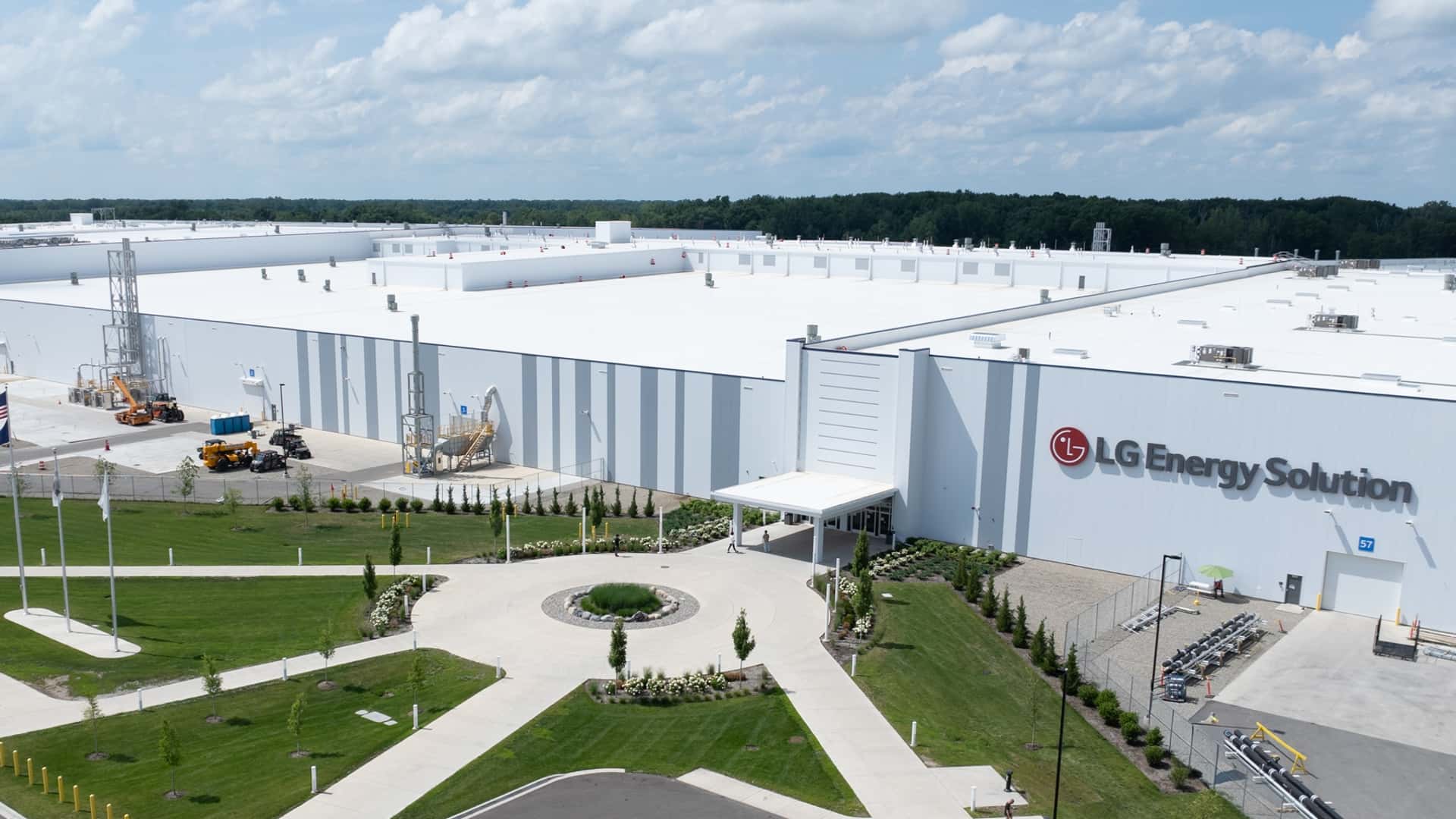
In August, LGES inaugurated its state-of-the-art $2 billion gigafactory in Lansing, Michigan. This massive facility represents a significant investment in advanced battery manufacturing and is poised to become a critical hub for the production of diverse battery chemistries.
The Lansing gigafactory is responsible for producing energy storage lithium-iron-phosphate (LFP) batteries, which are being supplied to Tesla. Concurrently, the facility also manufactures nickel-manganese-cobalt (NMC) EV batteries, specifically designed for Toyota, showcasing its versatility and capability to cater to different automotive and energy storage demands.
Outlook: Powering Future Growth
LG Energy Solution’s record earnings in the third quarter of the year underscore its strategic agility and robust execution in a complex global market. By effectively balancing investments in both the electric vehicle and energy storage sectors, and by leveraging supportive regulatory frameworks, LGES is well-positioned for sustained growth.
The continued demand for high-performance batteries, driven by the global transition towards sustainable energy and electric mobility, ensures a strong market outlook for LGES. Its ongoing commitment to technological innovation, localized manufacturing, and secure supply chains will be pivotal in maintaining its leadership position and powering future advancements in the battery industry.
Frequently Asked Questions (FAQ)
Q1: What drove LG Energy Solution’s record Q3 earnings?
A1: LG Energy Solution’s record Q3 earnings were primarily driven by a robust demand for its energy storage system (ESS) batteries in the U.S. and strong sales of electric vehicle (EV) batteries in Europe. Additionally, U.S. Inflation Reduction Act tax credits and compensation from automakers for unfulfilled battery purchase quotas contributed significantly to its financial performance.
Q2: How much did LG Energy Solution’s revenue and profit grow in Q3?
A2: In the third quarter, LG Energy Solution reported a preliminary revenue increase of 59% year-over-year, reaching $7.21 billion. Its operating profit also saw a substantial rise of 25% year-over-year, amounting to $565 million, reflecting strong market demand and operational efficiencies.
Q3: Why is demand for energy storage batteries increasing in the U.S.?
A3: The demand for stationary energy storage batteries in the U.S. is increasing due to the proliferation of power-hungry AI data centers that require stable power solutions. Furthermore, ongoing critical upgrades to the national electricity grid are driving demand for advanced battery systems to enhance reliability and integrate renewable energy sources.
Q4: What role does the U.S. Inflation Reduction Act play for LGES?
A4: The U.S. Inflation Reduction Act (IRA) provides significant battery-manufacturing credits, specifically the Section 45X Advanced Manufacturing Production tax credits, to companies like LGES. These incentives encourage domestic battery production, reduce manufacturing costs, and support the development of a resilient North American supply chain, boosting LGES’s profitability.
Q5: Where is LG Energy Solution expanding its manufacturing in North America?
A5: LG Energy Solution is significantly expanding its manufacturing in North America. The company opened a new $2 billion gigafactory in Lansing, Michigan, which produces LFP batteries for Tesla and NMC EV batteries for Toyota. Additionally, it secured a multi-year lithium supply deal with Canada’s Elevra Lithium.
Q6: Which European automakers are driving demand for LGES EV batteries?
A6: In Europe, LG Energy Solution’s EV battery business is experiencing strong demand, particularly from major automotive manufacturers such as Volkswagen and Renault. Their growing electric vehicle sales across the continent are a key factor in the robust performance of LGES’s Polish manufacturing plant.