
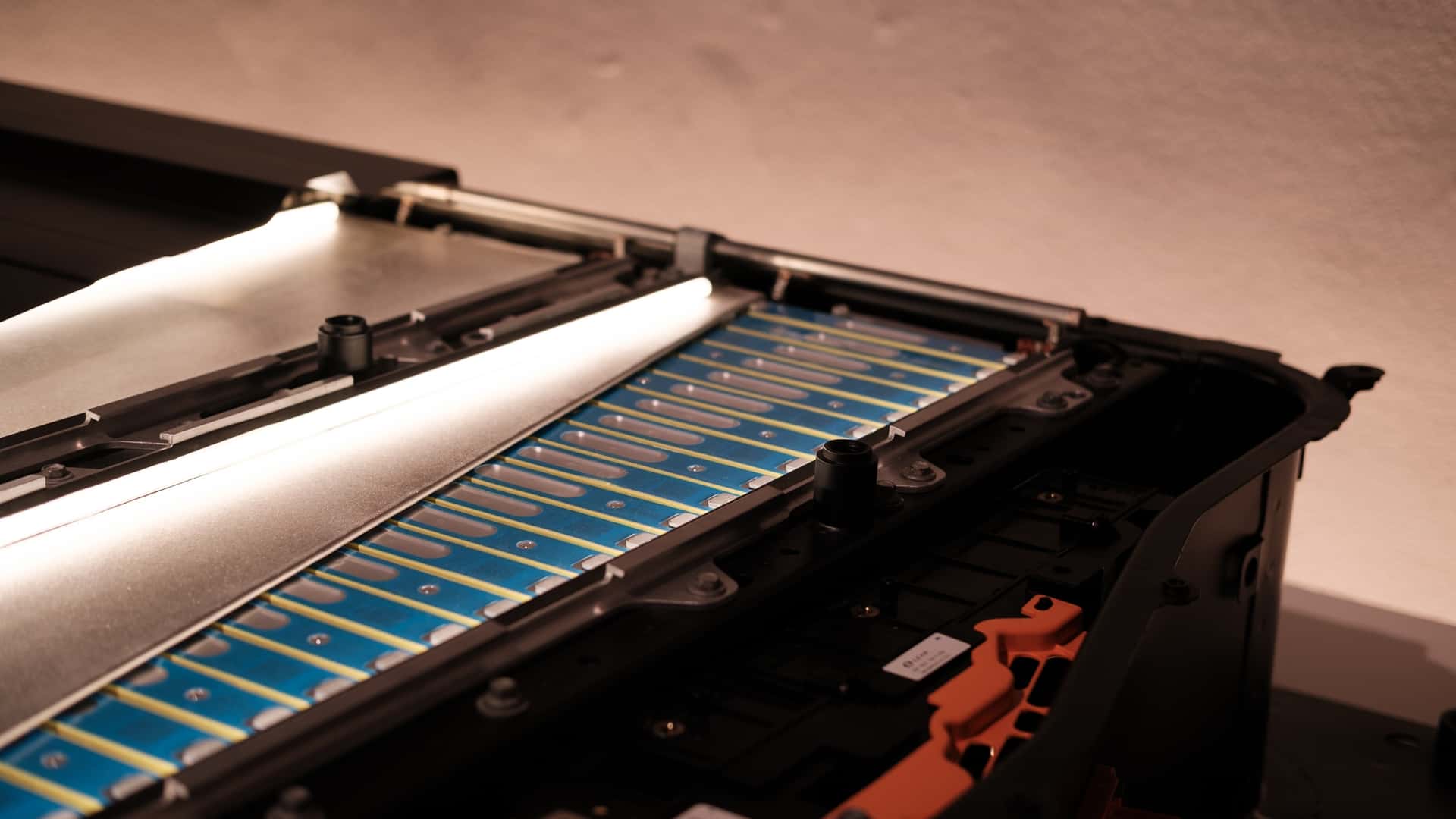
Key Takeaways:
- General Motors has officially designated its Ultium Cells joint venture plant in Spring Hill, Tennessee, as the primary site for the mass production of its advanced lithium-manganese-rich (LMR) battery cells.
- This marks a significant commitment to GM’s next-generation EV battery technology, which promises a superior balance of range and cost-effectiveness compared to current industry standards.
- The LMR chemistry is projected to deliver an impressive 33% increase in range over existing lithium-iron-phosphate (LFP) batteries, aiming for over 400 miles EPA range in full-size trucks and SUVs.
- Factory upgrades are slated to commence by late 2024, with the full completion of the facility and the rollout of LMR-equipped electric vehicles anticipated by 2028.
- These prismatic LMR cells leverage a higher proportion of manganese, reducing reliance on more expensive and environmentally challenging cobalt and nickel, positioning them as a strategic mid-tier option in GM’s diverse battery portfolio.
General Motors has announced a pivotal development in its electric vehicle (EV) strategy, confirming that its innovative lithium-manganese-rich (LMR) battery cells will enter mass production at the Ultium Cells joint venture facility in Spring Hill, Tennessee. This disclosure marks the first time the Detroit-based automaker has publicly identified a specific production location for its cutting-edge next-gen EV battery technology, underscoring its commitment to advancing the electric revolution.

The move is a critical step in GM’s broader electrification roadmap, aiming to enhance the performance and accessibility of its forthcoming electric models. The Spring Hill plant, a collaborative effort with LG Energy Solution, is poised to become the world’s inaugural facility for the mass production of these advanced prismatic LMR cells, signaling a new era for battery manufacturing.
Pioneering LMR Battery Technology at Scale
GM’s decision to localize mass production of the lithium-manganese-rich cells at its Ultium Cells plant in Spring Hill, Tennessee, is a strategic imperative. The facility, a cornerstone of the Ultium Cells joint venture, currently focuses on producing lithium-ion battery cells for a range of GM’s electric vehicles. With the integration of LMR cell manufacturing, its capabilities will significantly expand, driving the evolution of EV power solutions.
The automaker revealed that extensive factory upgrades will be initiated towards the end of the current year, with a projected completion target set for 2028. This ambitious timeline aligns with GM’s vision to introduce a new class of electric vehicles powered by this advanced battery chemistry within the next five years. The Spring Hill location was strategically chosen to leverage existing infrastructure and expertise, streamlining the transition to LMR cell production.

The Promise of Enhanced Range and Cost Efficiency
One of the most compelling attributes of General Motors’ next-gen EV battery, the LMR chemistry, is its potential to deliver superior driving range. GM engineers anticipate that these new batteries will offer an approximate 33% increase in range compared to current lithium-iron-phosphate (LFP) batteries, which are widely utilized in various electric vehicle applications, particularly in Asia, and are valued for their low cost.
This substantial range improvement is particularly aimed at full-size electric trucks and SUVs within GM’s lineup. The company projects that vehicles equipped with LMR batteries will be capable of achieving an impressive EPA-estimated range exceeding 400 miles on a single charge. Such a capability is crucial for alleviating range anxiety among consumers, especially those considering larger, utility-focused electric vehicles that demand extended operational distances.
Innovative Chemistry: Reducing Reliance on Scarce Materials
At its fundamental level, the lithium-manganese-rich battery chemistry shares similarities with the more traditional nickel-manganese-cobalt (NMC) cells, a widely adopted standard in the EV industry. However, a key differentiator lies in its optimized material composition. The LMR battery significantly reduces the proportion of cobalt and nickel, two materials that are both expensive and often associated with complex and environmentally sensitive mining practices.
Instead, the LMR battery design emphasizes a much higher percentage of manganese. This strategic shift is driven by several advantages: manganese is generally easier to source globally and typically incurs lower costs in both mining and processing compared to cobalt and nickel. This material optimization is a core reason why GM anticipates the LMR battery will maintain a cost profile nearly on par with the more economical LFP batteries, despite offering superior performance metrics.
Strategic Positioning within GM’s Battery Portfolio
The introduction of the LMR battery chemistry is designed to fill a critical niche within General Motors’ multifaceted battery strategy. The company envisions a tiered approach to battery technology, catering to diverse vehicle segments and consumer needs. At the pinnacle of performance and range, NMC batteries will continue to power GM’s premium electric vehicle offerings, where maximizing driving distance and power output is paramount.
The lithium-manganese-rich cells are strategically positioned to slot between the high-performance NMC batteries and the cost-effective LFP cells. This mid-tier placement allows GM to offer a compelling balance of extended range and competitive pricing, making advanced EV technology more accessible across a broader spectrum of its vehicle lineup. For instance, LFP batteries, while offering lower energy density, will likely continue to be utilized in entry-level EV models or stationary energy storage systems, where cost-efficiency is the primary driver.
From Research to Reality: The Development Journey
The journey of the LMR battery from concept to confirmed mass production underscores GM’s extensive research and development efforts. Last year, General Motors offered a glimpse into this meticulous process, inviting industry experts to its R&D facility in Warren, Michigan. It was at this state-of-the-art center that the LMR cells underwent intensive development and testing, showcasing GM’s commitment to internal innovation.
The transition from a research environment to a large-scale manufacturing operation in Spring Hill highlights the maturity and confidence GM has in this technology. This progression is vital for ensuring that the theoretical advantages of the LMR chemistry translate into tangible benefits for consumers in real-world driving scenarios. The development process involved rigorous evaluation of cell performance, durability, and safety protocols, paving the way for its commercial deployment.
The Road Ahead: 2028 and Beyond for GM Electric Vehicles
With factory upgrades scheduled to commence in late 2024 and production ramping up, the automotive industry and electric vehicle enthusiasts eagerly await the arrival of the first GM EVs powered by LMR cells. The company has set 2028 as the target year for these vehicles to begin rolling out to consumers.
This timeline reflects the significant undertaking involved in retooling a major production facility and integrating a new, complex battery chemistry into a diverse vehicle architecture. The success of these lithium-manganese-rich batteries could substantially alter the economic landscape of owning and operating large electric SUVs and trucks, potentially making them more competitive and appealing than current models. The ability to offer extended range at a competitive cost is expected to be a key driver for broader EV adoption, aligning with General Motors’ long-term vision for an all-electric future.
FAQ Section
What is the significance of General Motors’ announcement regarding LMR batteries?
GM’s announcement to mass-produce lithium-manganese-rich (LMR) batteries in Spring Hill, Tennessee, is significant because it confirms the production site for its next-gen EV battery. This move is crucial for enhancing the range and cost-effectiveness of future GM electric vehicles, particularly large trucks and SUVs, signaling a major step in its electrification strategy.
What are LMR batteries and how do they differ from existing EV batteries?
LMR batteries are a new type of lithium-ion chemistry that uses a higher percentage of manganese, with significantly less cobalt and nickel compared to traditional nickel-manganese-cobalt (NMC) cells. This composition aims to offer a better balance of range and cost-efficiency than lithium-iron-phosphate (LFP) batteries, while reducing reliance on more expensive raw materials.
What benefits do LMR batteries offer for electric vehicles?
LMR batteries are expected to deliver a 33% increase in range over LFP batteries, enabling full-size GM electric trucks and SUVs to achieve over 400 miles of EPA range. They also aim to offer these benefits at a cost comparable to LFP batteries, making longer-range electric vehicles more affordable and accessible to consumers.
When will electric vehicles with LMR batteries be available to consumers?
General Motors projects that the first electric vehicles equipped with its new lithium-manganese-rich (LMR) battery cells will begin to roll out to the market in 2028. This follows the planned factory upgrades at the Ultium Cells plant in Spring Hill, Tennessee, which are scheduled to be completed by the same year.
Where will General Motors’ LMR batteries be manufactured?
The lithium-manganese-rich (LMR) battery cells will be mass-produced at the Ultium Cells joint venture plant with LG Energy Solution located in Spring Hill, Tennessee. This facility will undergo significant upgrades starting late this year to accommodate the new production processes for these advanced prismatic cells.
How does GM’s LMR battery strategy fit into its overall EV plans?
The LMR battery strategy positions GM to offer a diverse range of EV options. LMR cells will serve as a mid-tier solution, providing an optimal balance of range and cost for full-size trucks and SUVs, complementing higher-range NMC batteries for premium vehicles and cost-effective LFP batteries for entry-level models and energy storage systems.