
Key Takeaways
- The 2026 Paris Auto Show marked a significant shift from 2022, with European automakers actively challenging Chinese dominance in the affordable electric vehicle (EV) segment.
- European brands, including Renault Group and Stellantis, unveiled numerous new EV concepts and production models, emphasizing affordability and practical application for daily life.
- The Citroën 2CV concept, targeting a price of 15,000 euros, exemplifies Europe’s aggressive push for accessible EVs, joining a growing list of budget-friendly options.
- Chinese manufacturers maintained a strong presence, with an estimated 25 brands, but are increasingly investing in Europe’s manufacturing base rather than solely exporting.
- Collaborations, such as Stellantis working with Leapmotor, are accelerating product development and timelines across the industry, fostering mutual learning and integration.
- The vibrant competition in Europe contrasts sharply with the limited affordable EV choices currently available in the U.S. market.
Four years ago, the sentiment surrounding the Paris Auto Show mirrored a broader skepticism about auto exhibitions in the United States. Many declared the traditional auto show concept obsolete, with major brands often opting for independent reveals. In 2022, even Mercedes-Benz, despite revealing its EQE SUV in France, conspicuously abstained from an official presence at the Paris event, signalling a perceived decline in the show’s relevance.
Indeed, numerous prominent European brands were notably absent from the 2022 show, and those that did attend largely showcased mild refreshes or existing internal combustion engine models. The overall atmosphere suggested a waning interest from established players in engaging with such platforms, leaving many to question the future of these automotive spectacles.
However, amidst this European reluctance, Chinese automakers seized the opportunity. Brands like BYD and Great Wall Motors, through their Ora and WEY sub-brands, made a significant splash. They introduced a range of new electric vehicle (EV) and plug-in hybrid electric vehicle (PHEV) models, focusing on small, affordable hatchbacks and crossovers. These vehicles offered competitive ranges and price points, directly appealing to value-conscious European buyers who found existing electrified options largely out of reach.
This marked the first substantial foray for many Chinese manufacturers into the Paris Auto Show, transforming the Paris Auto Show EV Landscape. While largely unknown to the broader European public at the time, their offerings garnered considerable interest from French consumers. This initial strategic move allowed Chinese manufacturers to establish a crucial foothold, capturing a segment of the market that traditional European automakers had overlooked or failed to adequately address: the demand for accessible, electrified mobility.
The Shifting Tide: Europe’s Resurgence in 2026
Fast forward to 2026, and the narrative has dramatically shifted. What once appeared to be a one-sided advancement by Chinese brands has evolved into a fiercely competitive arena. While auto shows and the EV market in the United States continue to navigate challenges, Europe has demonstrably ‘gotten its rear in gear,’ mounting a robust challenge to its Asian counterparts. The atmosphere at the most recent Paris Auto Show was one of palpable energy and renewed determination.
The 2026 exhibition witnessed a full-on assault of new models and innovative concepts from both established European players and emerging Chinese giants. This year’s show was characterized by an unprecedented level of competition, with manufacturers from both continents bringing their A-game. It highlighted a critical turning point in the global push for electrification, creating a vibrant and dynamic Paris Auto Show EV Landscape.
European Automakers’ Strategic Push for Affordable EV Choices
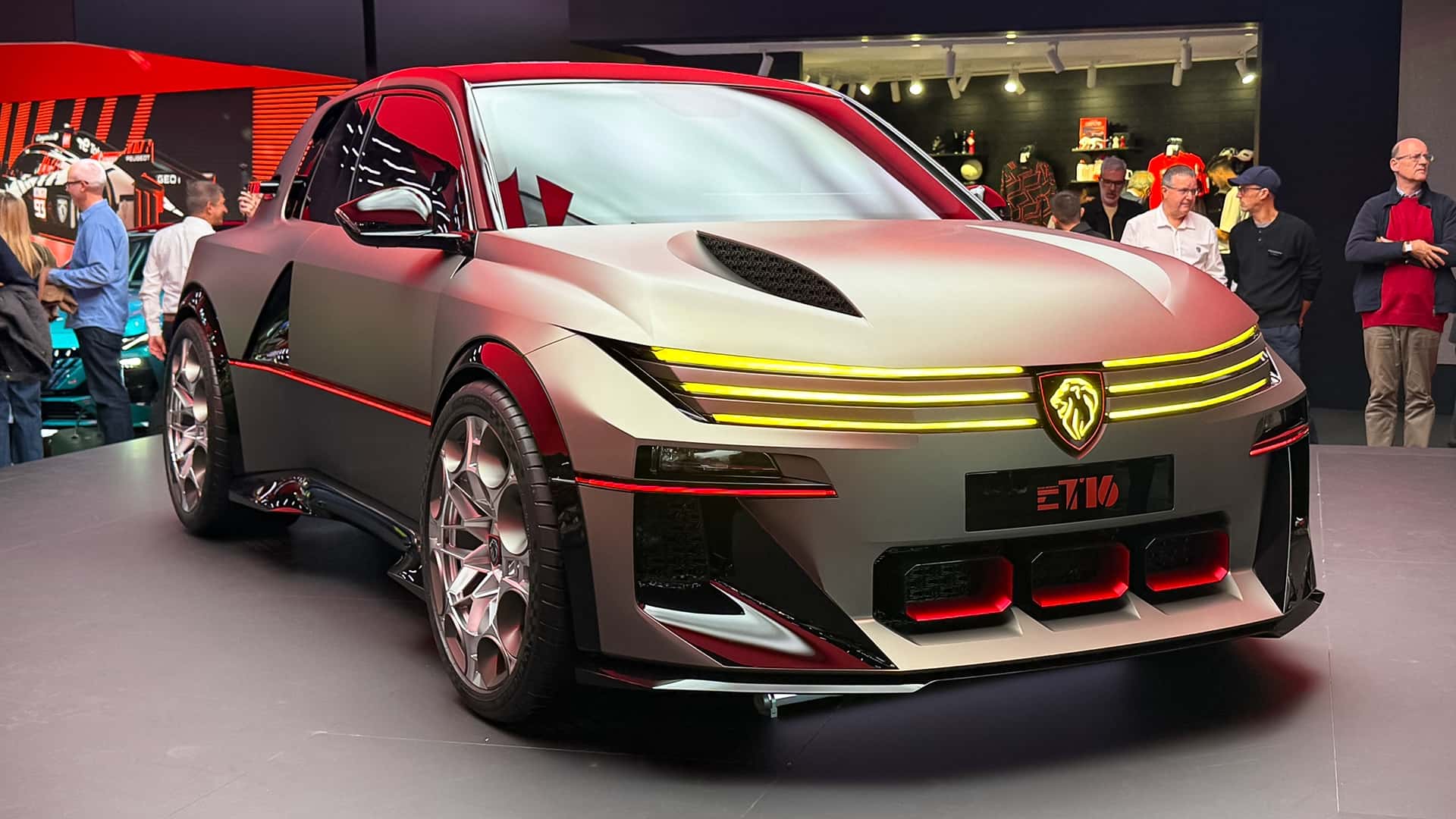
European automotive giants are now actively spearheading a strategic offensive to meet the burgeoning demand for reasonably-priced EVs. Renault Group, for instance, garnered significant attention with its production models from Dacia, alongside captivating concepts from Alpine and Renault. The Renault E-Space concept, an intriguing preview of a future electric MPV, consciously evoked the design ethos of the original 1980s Renault Espace, blending heritage with forward-looking electrification.
The overarching theme among all of Renault Group’s showcased concepts was a commitment to electrification. Fabrice Cambolive, Renault Group Chief Growth Officer, articulated this vision as “Voitures à vivre,” or “cars for living.” This philosophy centres on developing vehicles that seamlessly integrate electrification into daily life, addressing practical needs and exploring new avenues for mobility across the group’s diverse brands.
Similarly, Stellantis presented an array of concepts from its European brands, many of which were fully electric. This concerted effort by European automakers aims to pre-empt the further expansion of Chinese brands by directly addressing the market for budget-friendly electric vehicles. Their strategy focuses on delivering models that are both economical and appealing, prioritizing accessible EV options for a broad consumer base.
The Citroën 2CV concept arguably stole the show, capturing the nostalgic charm of its iconic predecessor while targeting an ambitious price point of 15,000 euros—just under $17,000 at current exchange rates. This concept stands as a powerful testament to Europe’s commitment to providing truly affordable EV choices. When it transitions to production, the 2CV is expected to join a burgeoning roster of similarly priced electric vehicles.
This list of forthcoming affordable options from European brands includes models such as the Renault Twingo, Dacia Spring, Nissan Pixo, Kia EV2, and the Volkswagen ID. Polo. These nameplates represent a significant expansion of budget-friendly electric mobility, a selection that was largely non-existent just four years prior at the 2022 Paris Auto Show. This concerted effort underscores a revitalized and competitive European stance within the evolving Paris Auto Show EV Landscape.
Chinese Presence and Deepening Integration in Europe
The 2026 Paris Auto Show reaffirmed the strong and expanding presence of Chinese automotive manufacturers. An estimated 25 different Chinese brands showcased a diverse array of models spanning all price ranges. However, this robust presence is no longer solely indicative of a potential ‘market meltdown’ for European incumbents, as some observers might have initially perceived.
Instead, the nature of Chinese engagement has evolved significantly. Several prominent Chinese brands, including BYD, Geely, and Xpeng, have moved beyond mere export strategies to initiate substantial investments in Europe’s manufacturing infrastructure. This shift signals a long-term commitment to the European market, fostering local production and supply chains.
A prime example of this deepening integration is Xpeng’s L03 compact crossover. Since its launch this summer, the L03 has garnered an impressive 12,000 orders, demonstrating strong consumer demand. Crucially, Xpeng has confirmed that this model will be manufactured in Austria by Magna-Steyr, illustrating a direct investment in the European production ecosystem. This strategic move highlights a more nuanced and integrated Chinese presence within the competitive Paris Auto Show EV Landscape.
Collaboration and Accelerated Development in the EV Sector
The changing dynamics of the European automotive market extend beyond direct competition to include strategic collaborations. Analyst and consultant Lei Xing provided insightful commentary on the current state, stating via email, “If I had to summarize this year’s Paris Motor Show, it would be hope, introspection, and integration. European brands are trying hard, and they are starting to figure some things out, even if it means the Chinese providing a compromise in terms of halving the hybrid/plug-in export volume but at the same time getting help from the Chinese.”
This expert perspective rings true, reflecting a growing trend of mutual learning and technological exchange. While some Chinese brands are establishing manufacturing facilities directly within Europe, others, such as Leapmotor, are serving as crucial partners and knowledge providers for established European marques. This collaborative approach is proving instrumental in accelerating product development cycles and meeting aggressive market demands.
Reporting from Reuters highlighted this synergy, with Antonio Filosa, head of Stellantis Pro One, noting that working with Leapmotor has enabled a complementary relationship between the brands. Leapmotor’s renowned speed and expertise in EV development have been a significant boon for the Stellantis conglomerate, empowering it to expedite the manufacturing of new models and rapidly bring them to market. This partnership is a testament to the new era of cooperation in the Paris Auto Show EV Landscape.
The 2026 Paris Auto Show prominently featured the debut of the Leapmotor B03 hatchback, which complements the previously introduced B03X small crossover. Both models were launched merely weeks after their Chinese counterparts, underscoring the remarkable pace of development and market introduction. This accelerated timeline is also evident in other European ventures, such as the Dacia Spring, which was developed in less than two years.
These rapid development cycles demonstrate that the entire industry is adapting and learning at an unprecedented pace. Manufacturers are quickly responding to evolving consumer preferences and market pressures, striving to meet buyers’ needs efficiently. This collaborative and competitive environment is driving innovation and ensuring a diverse range of new electric vehicles become available, intensifying the battle for market share against a backdrop of global electrification.
The Global Disparity: A Look at the U.S. Market
From an external vantage point, observing the dynamic evolution of the European EV market can be a source of frustration for those in the United States. While Europe is now seeing a wide variety of truly affordable EV choices emerge, the options available to American consumers continue to remain relatively limited. This disparity highlights a significant gap in market offerings and strategic priorities across different regions.
Historically, much of the global discourse surrounding affordable electric vehicles has centered almost exclusively on China, and for very valid reasons given its pioneering role in mass-market EV production. While China undeniably retains a dominant position in this conversation, the recent developments in Europe signal a crucial diversification.
It is now evident that a serious and expanding selection of electrified vehicles is emerging from manufacturers beyond China, particularly within the European market. This shift offers a more balanced global perspective on EV accessibility. The urgent drive to create more affordable EV choices seen at events like the Paris Auto Show underscores a pressing global need, and there is a strong hope that this level of urgency and market innovation will extend to the United States in the near future, benefiting American consumers with more accessible and diverse electric mobility options.
Conclusion: A Positive Outlook for Electrification
The 2026 Paris Auto Show stands as a powerful testament to the rapid and transformative evolution of the global automotive industry. What began with Chinese manufacturers filling a void in the European market has swiftly evolved into a vibrant, competitive landscape. This competition is now driving innovation, fostering strategic collaborations, and most importantly, accelerating the availability of genuinely affordable electric vehicle options for consumers.
The renewed vigour from European brands, coupled with the strategic integration of Chinese automakers into the continent’s manufacturing base, signals a maturing EV ecosystem. This dynamic environment is undoubtedly a positive development for everyone involved. A wider selection of accessible and technologically advanced electric vehicles benefits consumers directly, offering more choices and driving down costs. Furthermore, the accelerated shift towards electrification contributes significantly to global environmental sustainability goals, making the future of mobility brighter and cleaner.
Frequently Asked Questions About the Paris Auto Show EV Landscape
What was the key difference between the 2022 and 2026 Paris Auto Shows regarding EVs?
The 2022 show saw limited European brand presence and Chinese automakers like BYD making initial inroads with affordable EVs. By 2026, European brands aggressively countered with numerous new electric models and concepts, creating fierce competition and a much more diverse array of affordable EV choices.
How are European automakers responding to Chinese EV competition?
European automakers are now strategically focusing on developing reasonably-priced electric vehicles. Brands like Renault and Stellantis are launching new EV concepts and production models, such as the Citroën 2CV concept targeting 15,000 euros, to meet consumer demand for accessible electrification.
What is the significance of the Citroën 2CV concept?
The Citroën 2CV concept is highly significant for its targeted price of 15,000 euros, making it a key example of Europe’s commitment to producing truly affordable EVs. It blends nostalgic charm with modern electric technology, aiming to broaden EV accessibility for a wider consumer base.
Are Chinese EV manufacturers only exporting to Europe, or are they investing?
Chinese EV manufacturers are increasingly investing deeply in Europe’s manufacturing base. Brands like Xpeng, BYD, and Geely are establishing local production facilities, such as Xpeng’s L03 being made in Austria by Magna-Steyr, signifying a long-term integration strategy beyond mere exports.
How is collaboration impacting the European EV market?
Collaboration, exemplified by Stellantis working with Leapmotor, is accelerating product development and innovation. Leapmotor’s expertise in speed and technology helps European brands quickly bring new models to market, fostering mutual learning and driving faster timelines for models like the Dacia Spring.
What is the current state of affordable EV options in the U.S. compared to Europe?
The U.S. market currently offers relatively limited affordable EV choices compared to Europe, which is witnessing an explosion of budget-friendly electric models from both European and Chinese manufacturers. There is a strong call for similar urgency in the U.S. to broaden accessible EV options.