
Key Takeaways: Navigating the Global EV Shift
- Chinese EV Technology Leads: Brands like BYD, Li Auto, and Zeekr showcased advanced electric vehicle technology at the Paris Motor Show, featuring rapid charging times (as low as 9 minutes for 10-97% charge), high-voltage platforms, and innovative interior designs.
- European Strategy: Heritage and Design: European automakers, facing a significant technological gap, largely presented concept versions of iconic models, banking on brand legacy and emotional connection to attract consumers.
- Charging Speed Disparity: Chinese production EVs consistently outperform Western counterparts in charging speeds, with multiple models achieving 10-80% charge in under 11 minutes, highlighting a critical technological advantage.
- Multi-Front Market Challenges: European manufacturers are contending with collapsing sales in China, aggressive tariffs in the U.S., and increasing competition from Chinese brands in their home market, alongside higher operational costs.
- Urgency for European Innovation: While heritage and design hold appeal, the article underscores the urgent need for European firms to accelerate product development, embrace risk, and enhance technological competitiveness to withstand the aggressive market entry of Chinese EV manufacturers.
PARIS – The recent Paris Motor Show served as a stark battleground, spotlighting the intensifying competition within the global electric vehicle (EV) market. What was once a showcase for European automotive prowess now reveals a significant shift in influence, with a palpable dominance of advanced Chinese EV technology. As industry titans convened in the French capital in October, the narrative was clear: Chinese manufacturers are aggressively setting new benchmarks in EV innovation, leaving European stalwarts to lean heavily on their storied heritage and design legacy.
Walking through the vast halls of the Paris expo Porte de Versailles, advertisements for formidable Chinese brands like Geely and BYD were ubiquitous. The immediate impression upon entry was the prominent display by Li Auto, setting the tone for a show where cutting-edge **Chinese EV technology** commanded attention.
Chinese EV Technology: Setting New Benchmarks
Unveiling Advanced Innovations
The Chinese contingent, including Zeekr, Li Auto, Denza, and BYD, unveiled an array of production-ready electric vehicles that boasted impressive specifications once thought unimaginable. These offerings highlighted rapid charging capabilities, groundbreaking power figures, and unconventional designs that challenge traditional automotive aesthetics.
For instance, the ultra-plug-in-hybrid Zeekr 9X showcased an impressive 111-mile electric range, coupled with luxurious plush recliners, signaling a focus on both efficiency and passenger comfort. Li Auto’s Megahome concept pushed boundaries with its vision of a “mobile home from the future,” reflecting a readiness to innovate beyond conventional vehicle segments.
BYD further underscored this technological leadership by presenting cars capable of achieving a 10-97% charge in a mere nine minutes – a figure that significantly outpaces many global competitors. Li Auto’s first European-market EV, the i6, is engineered to charge from 10-80% in under 11 minutes and comes equipped with massaging rear recliners, advanced software, and plush air suspension, emphasizing a blend of luxury and high-tech functionality.
The Rapid Pace of Development
These innovations are not isolated feats but rather a testament to the rapid development cycles characteristic of Chinese automakers. While many Western luxury brands, such as Mercedes and BMW, are just now introducing their initial software-defined, 800-volt EVs, their Chinese counterparts are often several iterations ahead, operating on second, fifth, or even tenth generations of their advanced software-defined vehicle (SDV) platforms.
This generational lead allows for quicker product launches, more refined technology, and a proactive approach to market demands. Even the plug-in hybrid Zeekr 9X operates on a sophisticated 900-volt architecture, indicating a broad adoption of high-voltage systems across various powertrain types within the **Chinese EV technology** landscape.
Europe’s Counter-Strategy: The Power of Heritage
Reviving Icons for the Electric Age
In stark contrast to the aggressive technological displays from Asia, European manufacturers largely opted for a different strategy: a deep dive into their rich automotive heritage. Brands like Renault, Peugeot, Citroën, and Alpine presented re-interpreted concept versions of their most beloved and iconic models.
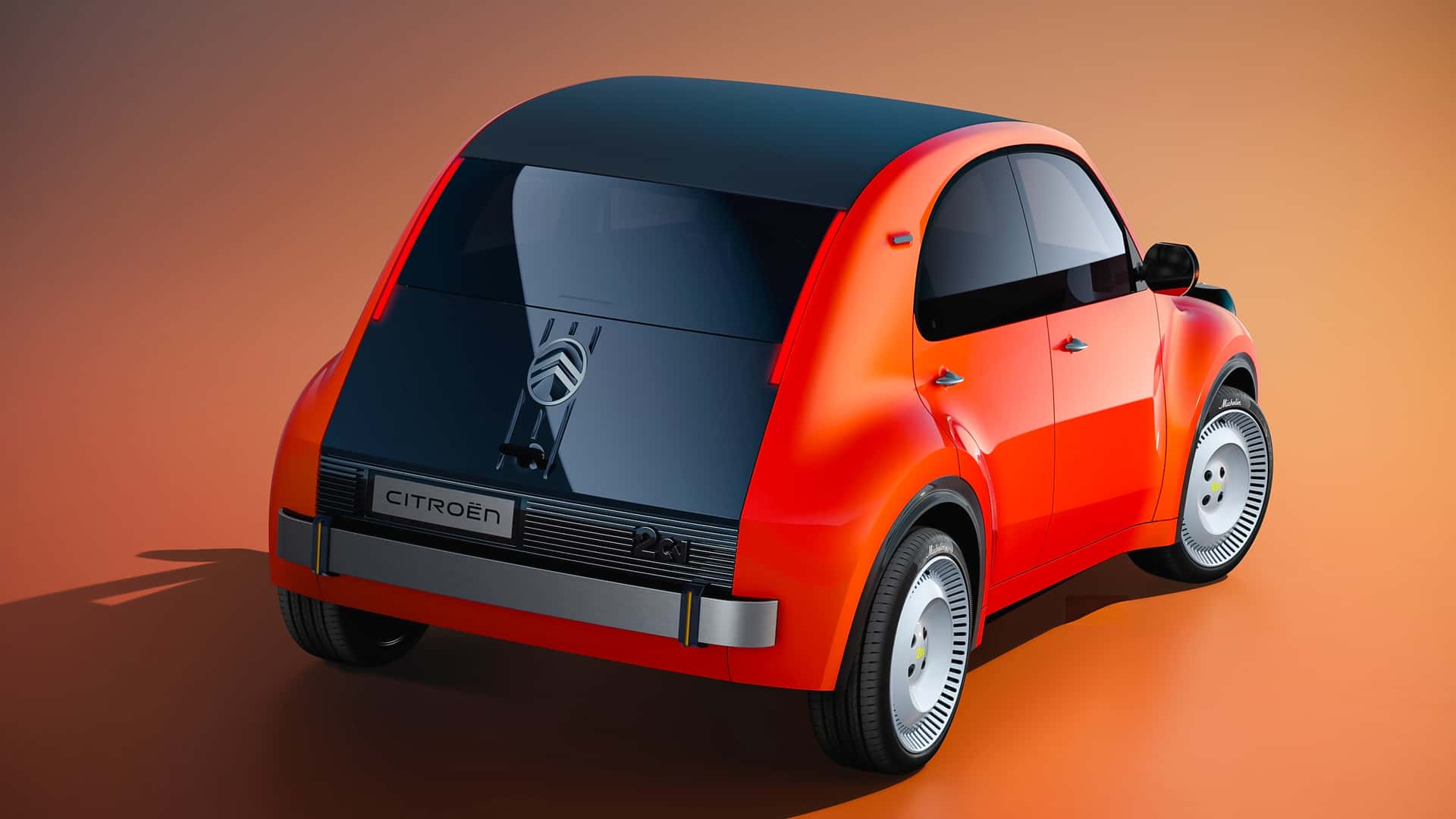
Examples included modern renditions of the Renault Espace, the much-anticipated return of the Citroën 2CV in an electrified format, and the reimagined Alpine A310. The underlying message from these presentations was clear: a reassurance to loyal customers to “stick with us, and it’ll be just like the good ole’ days,” banking on nostalgia and established brand identity.
A Bet on Brand Loyalty and Design
This strategy implicitly suggests that while European firms may struggle to match the raw technological specifications of new **Chinese EV technology**, they believe in the enduring appeal of their design prowess and deep-rooted customer loyalty. The presentation focused on evocative designs and concepts that tap into an emotional connection with consumers, hoping to differentiate themselves in an increasingly commoditized market.
However, a critical question remains: Can these compelling concepts translate into production vehicles that integrate competitive technology? The true challenge lies in transforming these visionary designs into market-ready EVs that can stand toe-to-toe with the advanced capabilities offered by Chinese competitors.
The Global Charging Speed Divide
Accelerating Beyond Western Capabilities
One of the most telling indicators of the technological gap observed at the Paris Motor Show was the disparity in charging speeds. At least five production models on display, all from Chinese brands, boasted the ability to charge from 10-80% in under 11 minutes. This rapid replenishment capability is a crucial factor for EV adoption and convenience.
While Mercedes-Benz proudly announced that its upcoming AMG GT 4-Door could achieve this feat in precisely 11 minutes, this figure was overshadowed by the commonality of even faster charging times among Chinese offerings. Zeekr, for instance, noted that its updated 7X model, already with a waiting list in Europe, now charges from 10-80% in 10.5 minutes, a detail mentioned almost casually, highlighting how commonplace such speeds are within their portfolio.
Beyond Megawatt Charging: Systemic Advantages
The innovation in **Chinese EV technology** extends to Megawatt charging speeds. Companies like Geely and BYD are already delivering vehicles that can charge from 10-97% in less than 9 minutes, and even from 10-70% in under five minutes. This makes the 10-minute charging time for the Li Auto Li 6, its inaugural model for the European market, feel more like a basic expectation than a competitive advantage.
This significant lead is not merely about battery chemistry but reflects a systemic advantage. While European luxury brands are in the nascent stages of deploying their first software-defined, 800-volt EV architectures, Chinese automakers have been refining these advanced platforms over multiple generations. This iterative development process has allowed them to achieve higher voltage systems and more efficient charging protocols, giving them a distinct qualitative and quantitative edge.
Navigating a Multi-Front Battleground
Market Erosion and Economic Pressures
European automakers are currently operating from a precarious position, facing significant pressures across multiple global markets. Their sales are experiencing a notable decline in China, a market where domestic competitors are rapidly gaining ground. Simultaneously, aggressive tariffs imposed by the United States are eroding profit margins from American operations.
Compounding these external challenges is an intensifying threat within their home market, as a growing number of Chinese brands seek to capture market share. This complex scenario is exacerbated by higher energy, labor, and regulatory costs within Europe, which collectively make it increasingly difficult for local manufacturers to compete effectively on a global scale.
Tariffs and Trade Dynamics
Recognizing the severe implications for one of their most valuable industries, European governments are beginning to implement defensive measures. Chinese EVs already face substantial tariffs, with some brands like Li Auto experiencing cumulative duties exceeding 40%. Furthermore, Europe is moving to tighten restrictions on hybrid imports, a segment previously less affected.
Despite these protective barriers, the competitive pressure from **Chinese EV technology** remains intense. Li Auto, for example, plans to price its Li 6 model in line with BMW’s iX3, even with the added tariffs. The Li 6 offers superior interior space and faster charging, positioning it as a compelling alternative to established European models, demonstrating that tariffs alone may not be sufficient to curb the inflow of competitively priced and technologically advanced Chinese vehicles.
The Path Forward: Innovation Meets Legacy
Designing for Emotional Connection
Amidst this challenging landscape, there are glimmers of hope for European brands. The automotive market, at its core, often revolves around emotional purchases. The enduring appeal of strong design and brand identity can still resonate with consumers. The sight of multi-colored Renault Twingo EVs, for instance, evokes a sense of charm and individuality that can transcend purely technical specifications, such as those found in a BYD Dolphin Surf.
Similarly, the concept of a reborn Citroën 2CV, retaining the friendly and unique aesthetic of the original but with a modern twist, highlights the potential for beloved designs to carve out a niche. The E-Space concept, with its lounge-on-wheels and coach-door design, while not unique in concept, becomes viable given the existence of similar swivel-seat Chinese production EVs, suggesting that European visions for comfort and modularity could indeed reach production.
Urgency in Execution: A Critical Imperative
However, the success of these design-led strategies hinges entirely on swift and decisive execution. Unlike European companies that often tease concepts for years before market delivery, Chinese manufacturers are renowned for their rapid product development cycles, quickly introducing new models and agilely discarding less successful ideas. This dynamism is a critical lesson for European automakers.
For brands like Renault to see their Twingo and R5 EVs become enduring successes, or for the 2CV concept to be a hit, they must bring these designs to market quickly, backed by competitive pricing and specifications that, if not matching, at least closely rival the offerings from China. This requires European companies to accelerate their pace, embrace calculated risks, and adopt a position of humility, acknowledging their current competitive disadvantage.
In an environment characterized by dwindling profits and heightened competition, making bold bets is a difficult proposition. Yet, as observed at the Paris Motor Show, European automakers appear to be taking this gamble. They are betting that their unparalleled designs, rich legacies, and deeply loyal customer bases will provide the necessary resilience until they can truly match the advanced **Chinese EV technology**, blow for blow. The path ahead is fraught with challenges, but for European automotive giants, the question remains: what other choice do they truly have?
Frequently Asked Questions About the European vs. Chinese EV Market
Q1: What is the main challenge European automakers face from Chinese EV technology?
European automakers are struggling to match the rapid pace of technological innovation, particularly in areas like battery charging speeds, high-voltage vehicle architectures (800V/900V), and advanced software-defined vehicle (SDV) platforms. Chinese manufacturers are often several generations ahead in these critical areas, leading to more advanced and competitively priced products.
Q2: How are Chinese EV brands outperforming European ones in charging speeds?
Chinese EV brands consistently showcase production vehicles capable of achieving a 10-80% charge in under 11 minutes, with some models offering 10-97% in 9 minutes or 10-70% in 5 minutes. This contrasts with European efforts, where comparable charging times are often only just being introduced or are limited to fewer high-end models.
Q3: What strategy are European car companies employing to compete?
European car companies are primarily leaning on their rich automotive heritage and strong design capabilities. They are re-interpreting iconic models as electric concepts (e.g., Citroën 2CV, Renault Espace) to leverage brand loyalty and emotional connections with consumers, hoping that distinctive design can compensate for a technological gap.
Q4: What market pressures are affecting European automakers globally?
European automakers face a multi-front assault: declining sales and market share loss to domestic brands in China, profit erosion due to tariffs in the U.S., and increasing competition from Chinese EV brands entering their home European market. Additionally, higher operational costs in Europe further complicate their competitive position.
Q5: Are tariffs effective in protecting the European market from Chinese EVs?
While European governments have implemented substantial tariffs on Chinese EVs (over 40% for some brands) and are tightening restrictions on hybrid imports, these measures may not be entirely effective. Chinese brands, like Li Auto, demonstrate a willingness and ability to price their advanced vehicles competitively even with tariffs, challenging the protective efficacy of these barriers.
Q6: What should European automakers do to regain competitiveness?
To regain competitiveness, European automakers need to significantly accelerate their product development cycles, embrace more risks, and foster a culture of humility and rapid innovation. They must swiftly translate promising concepts into production, ensuring that new models offer competitive technology, pricing, and features to stand against the aggressive market entry of Chinese EV technology.