
Key Takeaways
- Tesla is shifting its battery design philosophy for the upcoming Cybercab, moving away from the fully structural battery packs seen in some Model Ys and the Cybertruck.
- The new ‘semi-structural’ approach for the Tesla Cybercab battery features four separate modules of 4680 cells, significantly enhancing repairability.
- Robert Sumpf, Tesla’s Director of Mechanical Design Engineering for battery modules, gave the Model Y’s structural battery a ‘D’ grade for its manufacturing complexity and severe repairability issues.
- This strategic change is driven by the imperative of Total Cost of Ownership (TCO) for robotaxi fleets, where quick and affordable repairs are crucial for high-mileage vehicles.
- Engineering firm Munro & Associates previously highlighted the ‘zero repairability’ of the Model Y’s structural battery, reinforcing the need for this design evolution.
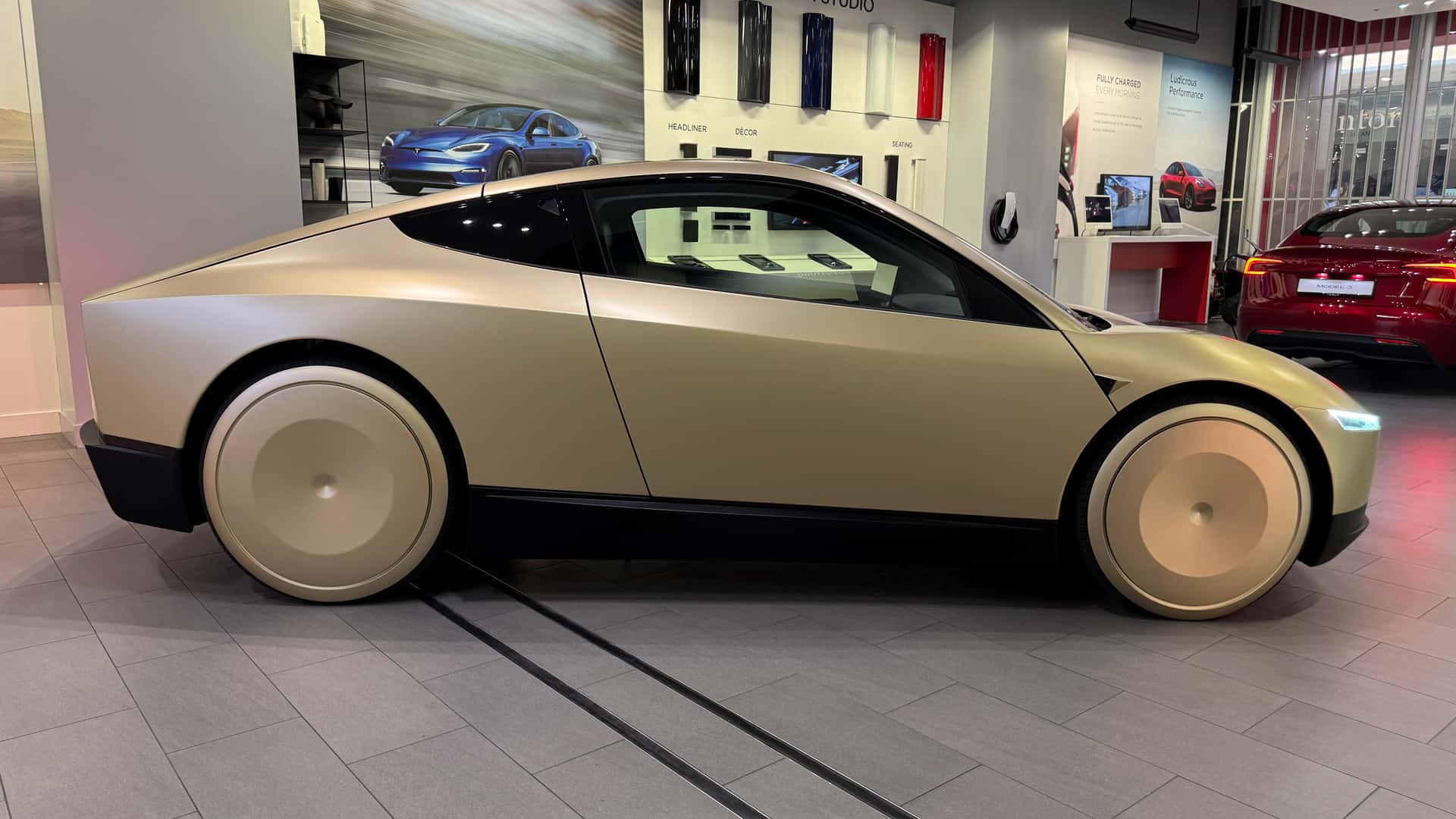
In a significant strategic pivot, electric vehicle pioneer Tesla is rethinking its cutting-edge structural battery pack architecture for its forthcoming Cybercab. While the company has championed integrating battery cells directly into the vehicle’s chassis to save weight and maximise energy density, its latest design for the Tesla Cybercab battery embraces a more modular, repair-friendly approach. This shift acknowledges the practical challenges associated with the maintenance of tightly integrated battery systems, particularly for vehicles destined for rigorous commercial use.
The original structural battery concept, prominently featured in certain Model Y variants and the Cybertruck, involved embedding hundreds of in-house 4680 battery cells into a single, cohesive assembly. This design aimed to streamline manufacturing and enhance structural rigidity. However, Tesla executives have now openly critiqued this approach, citing manufacturing difficulties and nearly insurmountable repair challenges.

Evaluating the Model Y’s Structural Battery Challenges
Robert Sumpf, Tesla’s Director of Mechanical Design Engineering for battery modules and packs, offered a candid assessment of the existing structural battery. Speaking in a video on the YouTube channel of engineering firm Munro & Associates, Sumpf stated, “It’s good to be self-critical.” He continued, “I’m going to give our Model Y structural battery a grade D,” acknowledging that while it was an “awesome product” for the customer in terms of performance, its manufacturing complexity was a significant hurdle.
The primary issue, beyond production, revolved around serviceability. In the Model Y’s structural pack, individual cells are consolidated within a hard potting material. This encapsulation method, while robust, renders the battery practically impossible to repair if even a single cell becomes defective. This critical flaw was previously identified by industry experts; after a comprehensive teardown of a Model Y featuring this structural pack, Munro & Associates concluded that its battery had “zero repairability.”
This design choice meant that any significant internal battery fault could necessitate the replacement of the entire expensive pack, a costly and resource-intensive undertaking. Such limitations posed a substantial barrier to long-term ownership costs and sustainability, particularly for high-use applications.

The Industry Trend Towards Structural Packs and Tesla’s Deviation
The automotive industry has been increasingly exploring structural battery designs, where battery cells directly feed into packs or even become integral to the vehicle’s body structure. Manufacturers like BMW, Porsche, and Ford are developing vehicles with similar concepts, driven by the potential for increased energy density, reduced weight, and improved crash safety. Eliminating conventional module structures, the traditional building blocks of a battery pack, allows for a more compact arrangement of cells and can yield minor material cost savings.
However, Tesla’s leadership has re-evaluated this trade-off for the Cybercab, concluding that the serviceability implications outweighed the benefits. The new Tesla Cybercab battery design moves towards a ‘semi-structural’ configuration. This innovative setup incorporates four distinct modules of 4680 battery cells, a notable departure from the single, integrated unit.
This modular construction allows for a faulty battery module to be individually swapped out, circumventing the need to replace the entire battery pack. This approach signifies a practical evolution in automotive engineering, directly addressing the maintenance and repair cost concerns that emerged from earlier structural designs.
Understanding the ‘Semi-Structural’ Advantage
Sumpf elaborated on the rationale behind this new ‘semi-structural’ battery architecture. “You’re going to get maybe 10% more volume for cells in a structural pack when you delete the structure,” he explained. “You’re going to save a little cost as a result, but the issue is the service cost.” This statement underscores the core tension between initial manufacturing efficiency and long-term operational expenses in electric vehicle technology.
While the initial structural design might offer a marginal increase in cell volume, translating to slightly better range, the subsequent service costs associated with its lack of repairability prove prohibitive. The new Tesla Cybercab battery system seeks a balanced approach, retaining some of the structural benefits while critically enhancing its maintainability.
Traditionally, EV batteries are designed for longevity, with predictable degradation over a consumer vehicle’s lifespan. Studies generally indicate a low rate of catastrophic battery failure in passenger EVs. However, the operational demands on a robotaxi, such as the Cybercab, are vastly different from those of a personal vehicle.
Total Cost of Ownership (TCO) for Robotaxi Fleets
The Cybercab is envisioned as a robotaxi, designed for relentless, round-the-clock operation and expected to accumulate hundreds of thousands of miles. In such a high-utilization, fleet-based business model, the Total Cost of Ownership (TCO) becomes the paramount consideration. Every aspect of vehicle design, from acquisition to maintenance and eventual disposal, is meticulously scrutinised for its impact on operational profitability.
For a robotaxi fleet, reliability and rapid, cost-effective maintenance are non-negotiable. A vehicle out of service for extended battery repairs directly translates to lost revenue. This is where the serviceability of the Tesla Cybercab battery becomes a critical differentiator. The ability to quickly diagnose and replace a single faulty module dramatically reduces downtime and repair expenses compared to replacing an entire structural pack.
Eric Earley, the Cybercab’s chief engineer, underscored this point in the interview with Munro Live. “When you think of TCO as we’ve talked about, replacing an entire pack before half a million miles is a killer on cost,” Earley stated. “So we have to think of [remanufacturing], we have to think of pack serviceability, we have to think of all those things that actually get us to our cost target for the product.” This perspective highlights Tesla’s sophisticated understanding of the economic realities facing commercial fleet operators.
This pragmatic shift in battery design for the Tesla Cybercab battery signifies a maturing approach within Tesla, balancing groundbreaking innovation with the practical demands of large-scale commercial deployment. It demonstrates a responsiveness to engineering feedback and an acute awareness of the financial implications for its future robotaxi network.
Frequently Asked Questions (FAQ)
What is a structural battery pack?
A structural battery pack integrates individual battery cells directly into the vehicle’s chassis, making the battery itself a load-bearing part of the car’s structure. This design aims to save weight, improve energy density by reducing housing, and potentially enhance crash safety by acting as a rigid element.
What are 4680 battery cells?
4680 battery cells are Tesla’s larger, cylindrical lithium-ion battery cells, measuring 46mm in diameter and 80mm in height. They are designed to offer increased energy density, improved power output, and a more efficient manufacturing process compared to previous cell formats, playing a crucial role in Tesla’s battery strategy.
Why was the Model Y’s structural battery hard to repair?
The Model Y’s structural battery was difficult to repair because its 4680 cells were tightly bound together in a single assembly using a hard potting material. This integration made it practically impossible to access and replace individual defective cells without damaging the entire pack, leading to ‘zero repairability’ for minor faults.
How does the Tesla Cybercab battery address repairability issues?
The Tesla Cybercab battery adopts a ‘semi-structural’ design with four separate, swappable modules of 4680 cells. This modularity means that if one module fails, it can be replaced independently without needing to replace the entire battery pack, significantly reducing repair time and cost, a key factor for fleet operations.
What is Total Cost of Ownership (TCO) and why is it important for the Cybercab?
TCO refers to the overall expenses associated with a product over its entire lifespan, including purchase price, maintenance, repairs, and operational costs. For the Cybercab, designed as a high-mileage robotaxi, TCO is critical because frequent and costly battery repairs would severely impact profitability and operational efficiency for fleet owners.
Is Tesla abandoning structural batteries entirely?
Not entirely. While the Cybercab moves to a ‘semi-structural’ design for enhanced repairability, Tesla still acknowledges the benefits of structural integration. This decision appears to be a pragmatic adaptation for a specific use case (robotaxi fleet) where maintenance and operational costs are paramount, balancing innovation with practical economic realities.